Category Archives: Food Microbiology Testing

Germany – TT TAVUK SPECIAL 1000g – Listeria monocytogenes

LMW

Alert type: Food
Date of first publication: 09/26/2022
Product name:

TT TAVUK SPECIAL 1000g

Product images:

Tamtürk Tavuk Special.png
Manufacturer (distributor):

Manufactured for: Sivas GmbH Arnold-Dehnen-Strasse 44 47138 Duisburg Tel.: 0203 / 41711301 Fax: 0203 / 41711311 sivas-gmbh@gmx.de

Reason for warning:

Listeria contamination

Packaging Unit: 1000g
Durability: 09/21/2022, 10/18/2022 and 11/24/2022
Lot identification:09/21/2022, 10/18/2022 and 11/24/2022

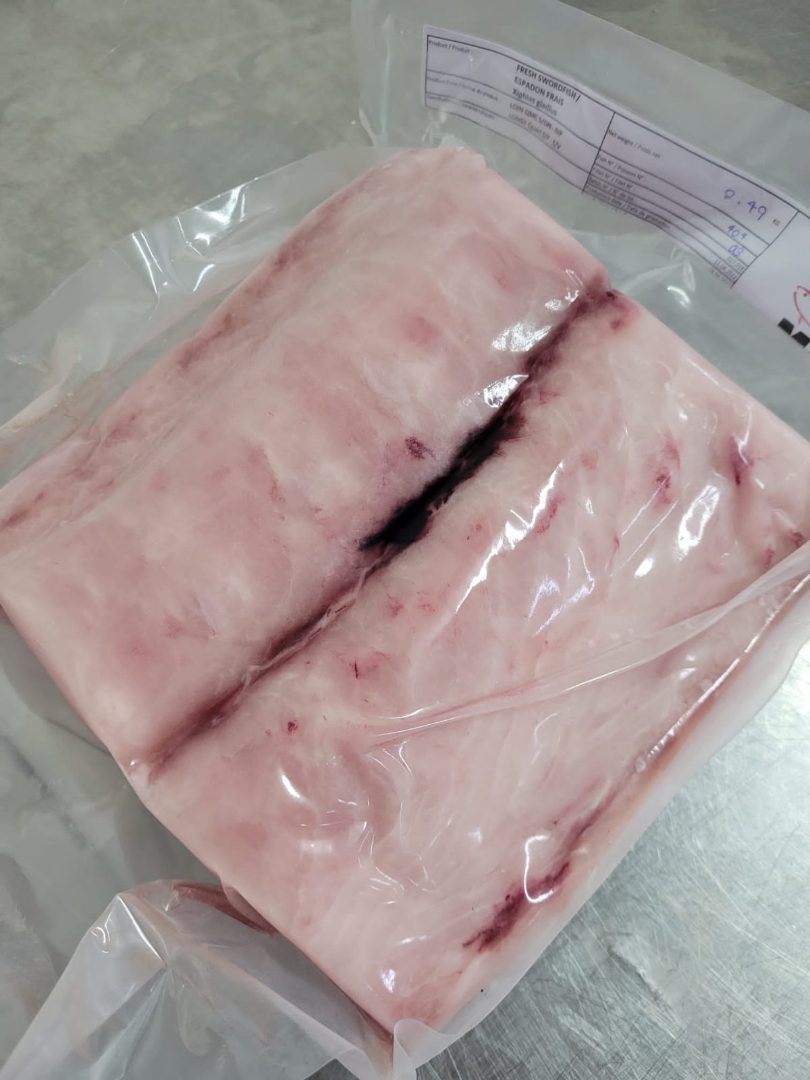
France -SWORDFISH sold in the tide and self-service department of the Carrefour Noisy le Grand store between September 9 and 16, 2022 – Histamine

Gov france

Identification information of the recalled product

  • Product category Feed
  • Product subcategory Fishery and aquaculture products
  • Product brand name without brand (tide stand) and crossroads (self-service section).
  • Model names or references SWORDFISH sold in the tide and self-service department of the Carrefour Noisy le Grand store between September 9 and 16, 2022.
  • Identification of products
    GTIN Batch
    1111111111111111 sold in the seafood and self-service section of the Carrefour Noisy le Grand store between September 9 and 16, 2022.
  • Packaging retail sale fish and vacuum section self-service section
  • Marketing start/end date From 09/09/2022 to 16/09/2022
  • Storage temperature Product to be stored in the refrigerator
  • Health mark021/89/C
  • Further information Atlantic sailboat – Istiophorus albicans sold in the tide and self-service department of the Noisy le grand crossroads store between September 9 and 16, 2022.
  • Geographic area of ​​sale Noisy le Grand crossroads
  • Distributors Crossroads Noisy le Grand

Practical information regarding the recall

  • Reason for recall Suspicion of the presence of histamine.
  • Risks incurred by the consume Other biological contaminants
    Endogenous toxins: histamine (fish, cheese, alcoholic beverages, meats)

USA – Behrmann Meat and Processing Inc. Recalls Various Ready-to-Eat Meat Products Due to Possible Listeria Contamination

FSIS USDA

Behrmann Meat and Processing Inc., an Albers, Ill. establishment, is recalling approximately 87,382 pounds of various ready-to-eat (RTE) meat products that may be adulterated with Listeria monocytogenes, the U.S. Department of Agriculture’s Food Safety and Inspection Service (FSIS) announced today. FSIS expects there to be additional product labels added in the near future and urges consumers to check back frequently to view updated labels.

The various RTE meat items were produced from July 7, 2022, to Sept. 9, 2022. The list of products and product codes for the RTE meat products that are subject to recall can be found here and includes all package sizes for all products with the affected lot codes. Available labels for the RTE meat products can be found here.

The products subject to recall bear establishment number “EST 20917” inside the USDA mark of inspection. These items were shipped to retail locations and wholesale distributors in Illinois, Kentucky, and Missouri.

The problem was discovered through product and environmental testing performed by FSIS and the establishment, which identified Listeria monocytogenes in the processing environment and in products produced by the establishment.

There have been no confirmed reports of illness or adverse reactions due to consumption of these products. Anyone concerned about an injury or illness should contact a healthcare provider.

Research – Evaluation of the Impact of Compliance with Mitigation Strategies and Frequency of Restaurant Surface Cleaning and Sanitizing on Control of Norovirus Transmission from Ill Food Employees Using an Existing Quantitative Risk Assessment Model 

Journal of Food Protection

Norwalk_Caspid

ABSTRACT

Reduction of foodborne illness caused by norovirus (NoV) continues to be a focus for the food safety community. Using a previously published quantitative risk assessment model, we evaluated more than 60 scenarios examining the impact of implementation of and compliance with risk management strategies identified in the U.S. Food and Drug Administration Food Code for (a) surface cleaning and sanitizing, (b) hand hygiene, (c) exclusion, or (d) restriction of ill employees. Implementation of and compliance with hand hygiene and ill food employee exclusion strategies had the largest impact on the predicted number of highly contaminated food servings and associated consumer illnesses. In scenarios in which gloves were always worn and hand washing compliance was 90%, the model estimated reductions in the number of highly contaminated food servings and ill consumers to 39 and 43% of baseline estimates (i.e., typical practice), respectively. Reductions were smaller when gloves were never worn. Hand washing compliance after using the restroom strongly impacted predicted numbers of highly contaminated servings and consumer illnesses. Ten percent compliance with removing or excluding ill food employees was predicted to increase the number of highly contaminated food servings and ill consumers to 221 and 213% of baseline estimates, respectively. Ninety-four percent compliance with exclusion of ill food employees was predicted to decrease these numbers to 69 and 71% of baseline estimates, respectively. Surface cleaning in food establishments had a relatively small impact on these measures. Restriction of food employees (removed from contact with food and food contact equipment and utensils) was not effective for reducing NoV illness unless this restriction included additional provisions. The results from this study can help risk managers prioritize mitigation strategies and their implementation for controlling the transmission of NoV and subsequent consumer foodborne illness.

HIGHLIGHTS
  • We adapted a discrete event NoV transmission model for use in a food establishment.
  • Compliance with exclusion and hand hygiene rules had the most impact on consumer illnesses.
  • Washing hands before donning and changing gloves efficiently reduces NoV transfer.
  • Restriction of food employees needs additional provisions to be effective.
  • Surface cleaning and sanitizing has the least impact on consumer illnesses.

Research – Inhibitory Effect against Listeria monocytogenes of Carbon Nanoparticles Loaded with Copper as Precursors of Food Active Packaging

MDPI

Human listeriosis is a serious foodborne disease of which outbreaks are occurring increasingly frequently in Europe. Around the world, different legal requirements exist to guarantee food safety. Nanomaterials are increasingly used in the food industry as inhibitors of pathogens, and carbon nanomaterials are among the most promising. In the present study, novel carbon nanoparticles loaded with copper (CNP-Cu) were prepared, and their antimicrobial activity against Listeria monocytogenes was assessed. CNPs of two sizes were synthesized and characterized by dynamic light scattering (DLS), electrophoretic light scattering (ELS) and electron microscopy (EM). The minimum inhibitory concentration (MIC) of CNP-Cu was determined in accordance with the available standard. To get insights into its mechanism of action, the release of copper ions into a cell media was assessed by inductively coupled plasma optical emission (ICP-OE), and the ability of loaded CNPs to generate cytotoxic reactive oxygen species (ROS) was evaluated by EPR spectroscopy. Finally, the extent of release of copper in a food simulant was assessed. The results demonstrated the antimicrobial effectiveness of CNP-Cu, with growth inhibition up to 85% and a release of copper that was more pronounced in an acidic food simulant. Overall, the results indicate CNP-Cu as a promising agent for the design of active food packaging which is able to improve food shelf-life.

Research – Toxoplasma gondii Antibodies in Raw Milk and Sera of Cows in China

MDPI

Toxoplasma gondii is a worldwide food-borne protozoa that has harmful influences on animal and human health. Raw milk containing T. gondii has been considered as one of the possible infectious sources for humans. Although China is one of the world’s leading milk consumers, there is still no study to investigate the seroprevalence of T. gondii in raw cow milk in China; especially for cows in rural areas. Thus, we conducted this study to examine the specific anti-T. gondii IgG-antibody in the raw milk and sera of domestic cows in China. In total, 894 cows were randomly selected from rural areas in northeastern China. The positive rate of T. gondii in the milk and serum samples were 6.38% (57/894) and 7.16% (64/894), respectively. Moreover, a history of abortion (OR = 2.03, 95% CI: 1.11–3.72, p = 0.022) was identified as the only risk factor for T. gondii infection in the studied cows. This study investigated the seroprevalence of T. gondii in the raw milk and sera of cows in China; it provided timely and useful data for public health and food safety, especially in rural areas. View Full-Text

Research – Project seeks to grow knowledge of Listeria in dairy sites

Food Safety News

An ongoing project is identifying the bacteria present in dairy processing environments to evaluate the impact on Listeria monocytogenes.

Teagasc in Ireland and the University of Veterinary Medicine Vienna in Austria are collecting samples from dairy processing plants and characterizing the microorganisms, with the aim being to prevent the presence of harmful pathogens.

The LmRNA project is gaining an understanding of Listeria monocytogenes’ response to dairy environment conditions. Mock communities of microorganisms are being created in the laboratory to mimic what is found in dairy environments. The role of other microorganisms is being investigated to determine their impact on Listeria monocytogenes.

A food processing environment is not sterile and the presence of some microorganisms in cheese production can be desired. During dairy processing, milk components may adsorb to surfaces enhancing attachment and biofilm formation.

Research – Sources and trends of human salmonellosis in Europe, 2015–2019: An analysis of outbreak data

Science Direct

Highlights

•

Salmonella outbreaks in Europe provide a picture of the most important sources at exposure level.

•

Relative importance of different food sources by year, European region and serotype is determined.

•

Eggs continue to be the most important food source of salmonellosis outbreaks in Europe.

•

Reported Salmonella outbreaks increased significantly in Eastern European countries.

Abstract

Salmonella remains a major cause of foodborne outbreaks in Europe despite the implementation of harmonized control programmes. Outbreak data are observed at the public health endpoint and provide a picture of the most important sources of human salmonellosis at the level of exposure. To prioritize interventions, it is important to keep abreast of the sources and trends of salmonellosis outbreaks. The objective of this study was to determine the main food sources and recent trends of Salmonella outbreaks in Europe. Salmonella outbreak data from 34 European countries in 2015–2019 were obtained from the European Food Safety Authority (EFSA). For the source attribution analysis, implicated foods were categorized according to EFSA’s zoonosis catalogue classification scheme. An established probabilistic source attribution model was applied using the information on the implicated foods, overall and by region and serotype. To assess significant trends in outbreak occurrence, overall and by region and serotype, mixed-effects Poisson models were used. Overall, the most important food source of salmonellosis outbreaks was eggs (33 %, 95 % Uncertainty Interval [UI]: 31–36 %), followed by pork (7 %, 95 % UI: 6–8 %), and (general) meat products (6 %, 95 % UI: 5–8 %). While eggs were the most important food source in all regions, pork was the second most common food source in Northern and Western Europe, and (general) meat products in Eastern and Southern Europe. Outbreaks caused by S. Enteritidis (SE) and other known serotypes (other than SE and S. Typhimurium and its monophasic variant [STM]) were mostly attributed to eggs (37 %, 95 % UI: 34–41 % and 17 %, 95 % UI: 11–25 %, respectively), whereas outbreaks caused by STM were mainly attributed to pork (34 %, 95 % UI: 27–42 %). Overall, there was a significant increase in the number of outbreaks reported between 2015 and 2019, by 5 % on average per year (Incidence Rate Ratio [IRR]: 1.05, 95 % Confidence Interval [CI]: 1.01–1.09). This was driven by a significantly increased number of outbreaks in Eastern Europe, particularly those caused by SE (IRR: 1.15, 95 % CI: 1.09–1.22), whereas in Northern and Southern Europe, outbreaks caused by SE decreased significantly from 2015 to 2019 (IRR: 0.72, 95 % CI: 0.61–0.85; IRR: 0.70, 95 % CI: 0.62–0.79, respectively). Regional, temporal and serotype-associated differences in the relative contributions of the different sources were also observed.

Research – Listeria monocytogenes survives better at lower storage temperatures in regular and low-salt soft and cured cheeses

Science Direct

Highlights

•

Salt reduction did not affect the behaviour of Listeria monocytogenes in soft cheeses.

•

The pathogen showed greater survival capacity at 4 °C than at 22 °C in both types of cheeses.

•

The prevalence of the serovar 1/2c strain increased over storage time in soft cheeses.

Abstract

The behaviour of Listeria monocytogenes was investigated in soft pasteurized milk cheese elaborated with different salt concentrations (1.17 and 0.30% w/w) and in cured raw sheep milk cheese over storage up to 189 days at different isothermal conditions. Commercial 25-g cheese samples were inoculated with a 4-strain cocktail of L. monocytogenes (serovars 4b, 1/2a, 1/2b and 1/2c) at approximately 104 CFU/g. The inoculated samples were stored at 4 and 22 °C and withdrawn at proper intervals for L. monocytogenes enumeration. The prevalence of the different serovar strains of L. monocytogenes was characterized on soft cheese samples over storage at 4 °C using multiplex PCR. Salt reduction did not affect the survival of L. monocytogenes in soft cheeses and a maximum of 1-log reduction was observed in both regular and low-salt cheeses after 189 days of storage at 4 °C. The pathogen showed greater survival capacity in both soft and cured cheeses during storage at 4 °C compared to the storage at 22 °C, where more than 2.5 log reductions were computed. The fate of L. monocytogenes was described through a Weibull model fitted to survival data. The time required for a first tenfold reduction of the L. monocytogenes population (δ) at 4 °C is around 150 days in soft and 72 days in cured cheeses. At 22 °C, the estimated δ values are at least 60% lower in both cheese types. Among the four L. monocytogenes serovars present in the inoculated cocktail, the serovar 4b strain was the most sensitive to refrigerated storage, while the prevalence of serovar 1/2c strain increased over time in soft cheeses. Overall, the data obtained in this study help to deepen knowledge into factors affecting L. monocytogenes behaviour on cheeses and evidenced the variability between serovars in terms of survival capacity, which may be considered when performing microbial risk assessments.

France – Chilled cooked peeled shrimp tails – Vibrio vulnificus

Gov france

Identification information of the recalled product

  • Product category Feed
  • Product subcategory Fishery and aquaculture products
  • Product brand name Unbranded
  • Model names or references Chilled cooked peeled shrimp tails
  • Identification of products
    GTIN Batch Date
    3760082438906 2222570003 2222580130 Use-by date between 26/09/2022 and 27/09/2022
  • Products List List_of_products_CRUSTA_C.pdf Attachment
  • Packaging Trays under modified atmosphere 300 g
  • Marketing start/end date From 09/14/2022 to 09/23/2022
  • Storage temperature Product to be stored in the refrigerator
  • Health mark EN 62.160.112 EC
  • Geographic area of ​​sale Whole France
  • Distributors H CENTRAL IN THE FOUR SEASONS
  • List of points of saleClient_list_CRUSTA_C.pdf

Practical information regarding the recall

  • Reason for recall Vibrio vulnificus
  • Risks incurred by the consumer Vibrio vulnificus