Category Archives: Food Microbiology Testing

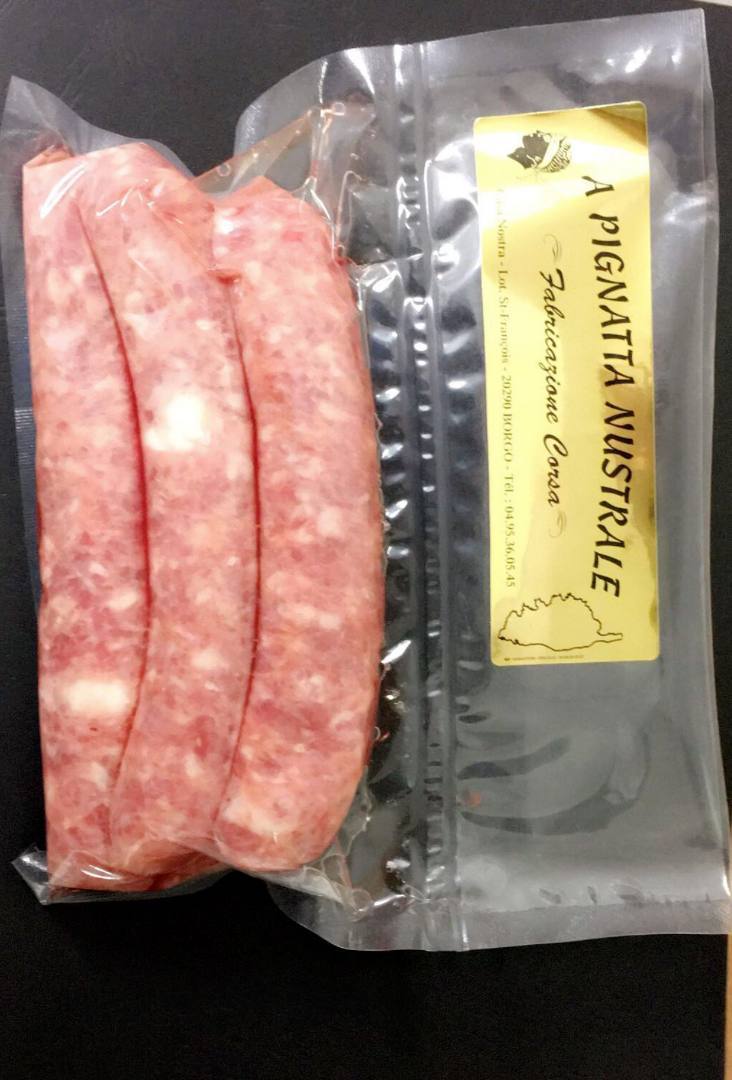
France – chipolata olives – Listeria monocytogenes

Gov france

Identification information of the recalled product

  • Product category Feed
  • Product subcategory Meats
  • Product brand name a pignatta nustrale
  • Model names or references self-service and cutting
  • Identification of products
    Batch
    All lots
  • Storage temperature Product to be stored in the refrigerator
  • Geographic area of ​​sale Regions: Corsica
  • Distributors All food sellers and food wholesalers in Corsica

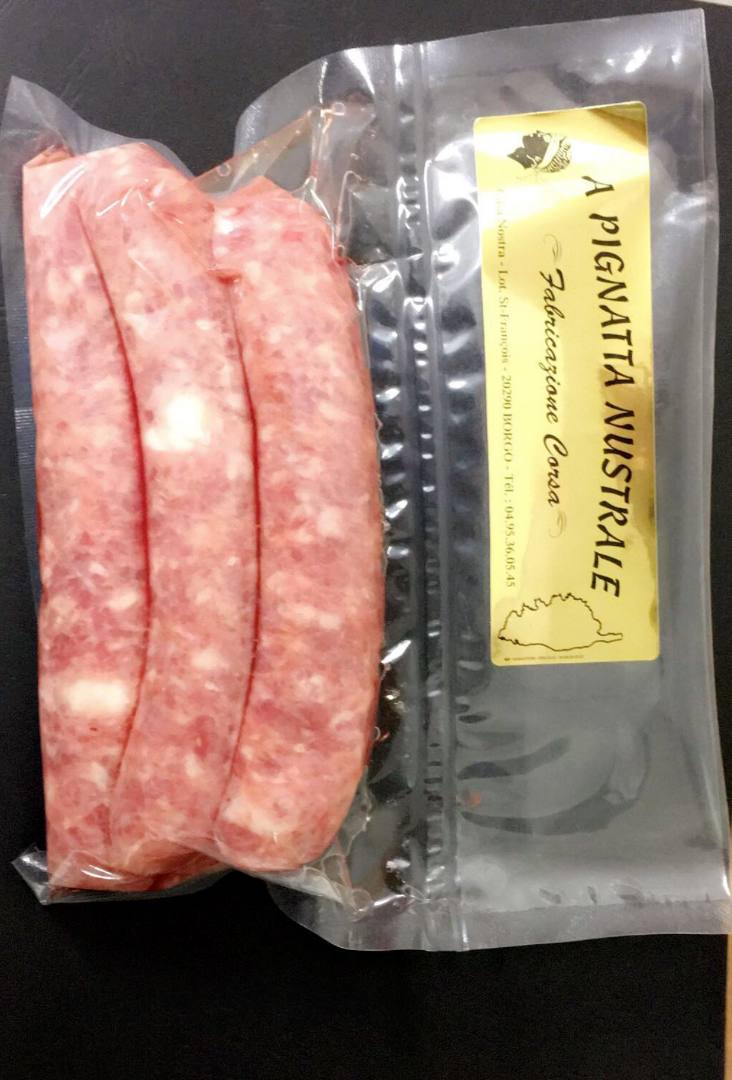
France – Toulouse Sausage – Listeria monocytogenes

Gov france

Identification information of the recalled product

  • Product category Feed
  • Product subcategory Meats
  • Product brand name a pignatta nustrale
  • Model names or reference sself-service and cutting
  • Identification of products
    Batch
    All lots
  • Products Lista.pdfAttachment
  • Storage temperature Product to be stored in the refrigerator
  • Geographic area of ​​sale Regions: Corsica
  • Distributors All food sellers and food wholesalers in Corsica

France -chipolata tomme d alta cima – Listeria monocytogenes

Gov france

Identification information of the recalled product

  • Product category Feed
  • Product subcategory Meats
  • Product brand name a pignatta nustrale
  • Model names or references self-service and cutting
  • Identification of products
    Batch
    All lots
  • Products List A.pdf Attachment
  • Storage temperature Product to be stored in the refrigerator
  • Geographic area of ​​sale Regions: Corsica
  • Distributors All food sellers and food wholesalers in Corsica

Research- When Does Milk Spoil? The Use of Rejection Threshold Methodology to Investigate the Influence of Total Microbial Numbers on the Acceptability of Fresh Chilled Pasteurised Milk

MDPI

Abstract

The consumer rejection threshold (RjT) method was applied to determine the total microbial numbers (TMNs) where consumers find that the quality of whole fresh chilled pasteurised milk (WFCPM) and skim milk (Trim) stored at 4.5 ± 0.5 °C is no longer acceptable. Food spoilage progression was supported by measurements of VOCs and the terms consumers used to describe the ageing fresh chilled pasteurised milk (FCPM). RjTs for TMN of 7.43 and 7.34 log10 CFU.mL−1 for WFCPM and Trim, respectively were derived using Hill’s equation from a series of paired preference tests comparing fresh and aged milks (3–26 days) assessed by consumers (WFCPM, n = 55; Trim, n = 52). A poor relationship between storage time and TMN was found, owing mainly to batch-to-batch and within-batch variation in the milk’s post-pasteurization contamination (PPC) levels. At the RjT, there was a significant change in the signal intensities for a number of spoilage-related VOCs that occurred in the FCPM headspace (p ≤ 0.05), which were measured using proton transfer reaction–mass spectrometry (PTR-MS), including m/z 33, 45, 47, 61, 63, 69, 71, 87, and 89, tentatively identified as methanol; acetaldehyde; ethanol; acetate (acetic acid and acetate esters); dimethyl sulphide (DMS); isoprene, furan, and aldehydes; 2-butanone; and pentanal and butyrates (butyric acid and butyrate esters), respectively. Consumers described the milks at TMN greater than the RjTs using terms like off, expired, sour, spoilt or rancid. This multidisciplinary study has provided data on the importance of PPC and subsequent increases in TMN on VOCs associated with FCPM and consumer’s preferences and highlighted the value of measuring a range of variables when investigating consumer’s perception of food quality and shelf-life.

Research – The Application of Ultraviolet Treatment to Prolong the Shelf Life of Chilled Beef

MDPI

Abstract

This study simulated the storage conditions of chilled beef at retail or at home, and the sterilization and preservation effects of short-time ultraviolet irradiation were studied. The conditions of different irradiation distances (6 cm, 9 cm, and 12 cm) and irradiation times (6 s, 10 s, and 14 s) of ultraviolet (UV) sterilization in chilled beef were optimized, so as to maximally reduce the initial bacterial count, but not affect the quality of the chilled beef. Then, the preservation effect on the chilled beef after the optimized UV sterilization treatment during 0 ± 0.2 °C storage was investigated. The results showed that UV irradiation with parameters of 6 cm and 14 s formed the optimal UV sterilization conditions for the chilled beef, maximally reducing the number of microorganisms by 0.8 log CFU/g without affecting lipid oxidation or color change. The 6 cm and 14 s UV sterilization treatment of the chilled beef was able to reduce the initial microbial count, control the bacterial growth, and delay the increase in the TVB-N values during storage. Compared with the control group, the total bacterial count decreased by 0.56–1.51 log CFU/g and the TVB-N value decreased by 0.20–5.02 mg N/100 g in the UV-treated group. It was found that the TBARS value of the UV treatment group increased during late storage; on days 9–15 of storage, the TBARS values of the treatment group were 0.063–0.12 mg MDA/kg higher than those of the control group. However, UV treatment had no adverse impact on the pH, color, or sensory quality of chilled beef. These results prove that UV treatment can effectively reduce the microbial count on the surface of beef and improve its microbial safety, thus maintaining the quality of beef and prolonging its shelf life. This study could provide a theoretical basis for the preservation technology of chilled beef in small-space storage equipment.

Research- Impact of nanoscale coating of stainless steel on Salmonella Enteritidis and Escherichia coli

Wiley Online

Cross-contamination in the poultry slaughtering process can lead to thespread of zoonotic bacteria like Salmonellaenterica. Surfaces of equiptment may facilitate contamination of carcasses due to bacterial adherence and transfer. In this study, attachment, proliferation, and detachment of Salmonella Enteritidis and Escherichia coli were comparatively investigated on uncoated and silica-coated stainless-steel surfaces. The conditions occurring in the slaughtering workflow were imitated on laboratory scale, for example, spilling of contaminated liquid onto equipment surfaces, pressing or sliding of carcasses against surfaces during the slaughtering procedure, and cleaning of contaminated stainless-steel surfaces with water or detergent. Growth on stainless-steel surfaces was measured for 8 h. The applied silica coating led to a partly higher repelling effect without impact on proliferation for the target organisms on stainless steel. Further development of the coating and daption to the exact circumstances as well as more extending testing under real conditions would be the next steps.

USA – Scenic Fruit Company Recalls Organic Pineapple Because of Possible Health Risk

FDA

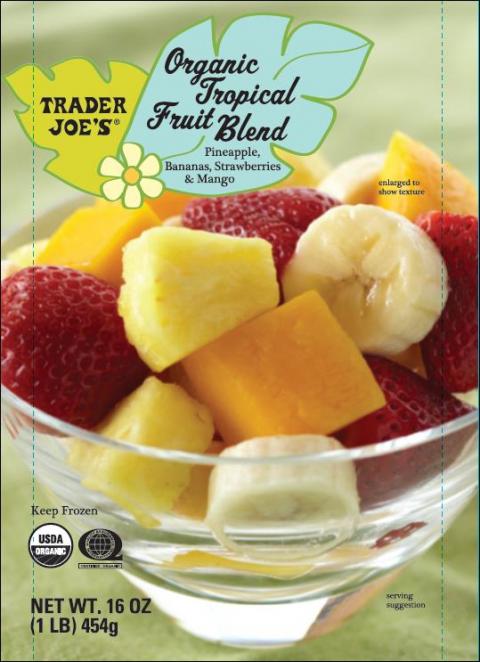
June 22, 2023, Scenic Fruit Company of Gresham, Oregon is recalling frozen organic pineapple and frozen fruit blends containing organic pineapple as the product has the potential to be contaminated with Listeria monocytogenes, an organism which can cause serious and sometimes fatal infections in young children, frail or elderly people, and others with weakened immune systems. Although healthy individuals may suffer only short-term symptoms such as high fever, severe headache, stiffness, nausea, abdominal pain and diarrhea, listeria infection can cause miscarriages and stillbirths among pregnant women.

Recalled products were sold at Trader Joe’s retail stores, nationwide, and Health Food stores in CA, IL, IN, FL, MD, OR and TX.

Brand Name Product Name Net Wt. UPC Best By Date
Best If Use
Dates Best
Before Date
Lot No. Distributed in States
Cadia Organic Pineapple 10 oz 815369014540 05/12/2024
09/08/2024
B2243316
C0305067
CA, IL, IN, FL, MD, OR, and TX.
Trader Joe’s Organic Tropical Fruit Blend
(Pineapple, Banana, Strawberry, Mango)
16 oz 00511919 04/24/24
08/04/24
10/13/24
11/04/24
B22098297
C20171035
C20450103
C20511124
Nationwide

The recall is being initiated in response to Sunrise Growers Inc.’s recall due to the potential presence of Listeria monocytogenes.

To date, there have been no illnesses associated with this voluntary recall.

This recall is being made with the knowledge of the U.S. Food and Drug Administration (FDA).

All inventories of the affected lot should be removed from sale.

Consumers should not consume the recalled products. Consumers who have purchased the products are urged to destroy or return it to the place of purchase for a full refund. Consumers with questions may contact the company at customer.service@scenicfruit.com.


Company Contact Information

Consumers:
Scenic Fruit Company
 customer.service@scenicfruit.com

Product Photos

India – 10 MP students hospitalised due to food poisoning while travelling

InShorts

At least 10 students from Madhya Pradesh, who were travelling by train, were rushed to the Civil Hospital after they complained of severe food poisoning-like symptoms at Ludhiana railway station. Government Railway Police officials said the students who were travelling in a group of around 125, had brought packed food from a hotel, after which some of them started vomiting.

USA – Nationwide outbreak from Cyclospora tops 200; officials continue to seek source

Food Safety News

The number of patients in a nationwide outbreak of infections from the foodborne Cyclospora parasite continue to increase, having reached 210 laboratory-confirmed cases.

Federal, state and local public health officials are investigating the outbreak, which is spread across 22 states and New York City, according to a June 22 update from the Centers for Disease Control and Prevention.

The CDC and the Food and Drug Administration have been tracking the outbreak since April 1. Additional infections could have started before that date.

Also, there are likely more than 210 people in the ongoing outbreak because of the lag time between when patients become ill and when confirmation testing can be completed and results filed with the CDC. Some sick people don’t seek medical attention, also impacting the outbreak count. The parasite is killed by using antibiotics. Specific tests are required to diagnose Cyclospora infections.

“No specific food items have been identified as the source of most of these illnesses. State and local public health officials are interviewing people with cyclosporiasis to find out what foods they ate before getting sick,” the CDC reported.

USA – Rare Salmonella type behind multi-country outbreak

Food Safety News

Almost 70 people became ill this past year as part of a Salmonella outbreak involving 11 countries, including the United States.

France has the most patients in the Salmonella Ball outbreak but two people from the U.S., aged 44 and 62, were ill in August 2022. They both reported travel to France.

Salmonella Ball is very rare in Europe. Between 2007 and 2021, only 52 cases were reported from 14 countries, with an average of three per year.

Information was shared in a Joint Notification Summary (JNS). These are not made public but Food Safety News has seen a copy. It is prepared by the European Food Safety Authority (EFSA), European Centre for Disease Prevention and Control (ECDC) and affected countries.

An ECDC spokesman said this week that the agency had not received any updates on the number of people or countries affected since the JNS was produced.