Category Archives: Food Microbiology Testing

Czech Republic – Chilled boneless and skinless chicken steak – Salmonella

Potravinynapranyri

Place of inspection:
Vodochody ( Prúběžná 5, 25069 Vodochody )
ID: 24211249
Food group: Meat and meat products Unpackaged: meat, minced meat, semi-finished meat

Chilled boneless and skinless chicken steak
Category: Dangerous foods
Invalid parameter:

Salmonella Enterica sera. Enteritidis

The pathogenic bacterium Salmonella Enterica sera were detected in chilled chicken meat . Enteritidis . This bacteria can cause a disease called salmonellosis.

Best before date: 15/09/2023
Manufacturer: BOMAFAR Sp. , PL 02204303 WE
Country of origin:  Poland
Date of sample collection: 11/09/2023
Reference number: 23-000035-SVS-CZ
The sample was detected by the official control of the State Veterinary Administration.

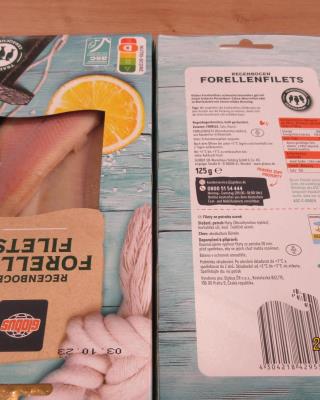
Czech Republic – Globus smoked trout fillets – Listeria monocytogenes

Potravinynapranyri

Illustrative photo #1

Place of inspection:
Prague 10 – Štěrboholy ( Nakupní 389/3, 102 00 Prague 10 – Štěrboholy )
ID: 63473291
Food group: Fish, aquatic animals Smoked fish and animal products

Globus smoked trout fillets
Category: Dangerous foods
Invalid parameter:

Listeria monocytogenes

The presence of the pathogenic bacterium Listeria monocytogenes , which causes a disease called listeriosis, was proven in the product  .

Batch: L 23250G
Expiration date: 03.10.23
Packaging: plastic tub, protective atmosphere, paper
Quantity of the product in the package: 125 g
Manufacturer: DK4566EG
Distributor: Made for: Globus ČR vos, Kostelecká 822/75, 196 00 Prague 9
Country of origin:  Denmark
Date of sample collection: 20/09/2023
Reference number: 23-000745-SZPI-CZ
The sample was detected by the official control of the State Agricultural and Food Inspection.

Foodborne sources suspected in fatal South African cases

Food Safety News

Officials in South Africa have issued a warning after several cases of children falling seriously ill after eating different types of snacks.

Authorities appealed for calm following reports claiming children had died after consuming items bought from spaza shops. These sites are also called tuck shops and are informal grocery stores.

The Gauteng Health Department confirmed the deaths of at least five children due to suspected foodborne sources.

In one incident, four boys aged 2, 3, 4, and 6 allegedly ate sweets and chips from a vendor in Westonaria. The youngest two died. In another case, two 6-year-olds died after consuming biscuits and juice from a local shop. Police have taken samples for processing to find the source.

 Belgium – “Shrimp” salad (200g) from the LINAH brand – Listeria monocytogenes

AFSCA

Recall of European Halal Food SPRL
Product: “Shrimp” salad (200g) from the LINAH brand.
Problem: Possible presence of Listeria monocytogenes.
In agreement with the FASFC, EUROPEAN HALAL FOOD SPRL is withdrawing the LINAH brand “Shrimp” salad from sale and recalling it from consumers following the possible presence of Listeria monocytogenes.

EUROPEAN HALAL FOOD SPRL asks its customers not to consume this product and to return it to the point of sale in which it was purchased, the refund will be made on site).

Product description

– Product name: Shrimp (salad)
– Brand: LINAH
– Best before date (Best before): 11/13/2023
– Batch number(s): 021023
– Sales period: from 10/11/23 to 10/19/23
– Nature of packaging: plastic container
– Weight: 200g

The product was sold in various points of sale in Belgium.

For any further information , contact: Mr ZIANI YOUSSEF
Telephone number: 0478847606
Email: info@europeanhf.com

EU – Multi-country outbreak of Salmonella Enteritidis in chicken meat and chicken meat products

EFSA

Between January and October 2023, 14 EU/EEA countries, the UK and the US reported 335 cases related to this outbreak.

Chicken meat and chicken meat products (kebab) are the likely source of a multi-country outbreak caused by three types of Salmonella Enteritidis, according to EFSA and ECDC’s latest Rapid Outbreak Assessment.

Bacteria similar to those causing the outbreak have been detected in samples of chicken meat and chicken kebab. While food traceability data points to producers located in Poland (7 producers) and Austria (1 producer), no microbiological evidence of a contamination at their facilities has been found.

Scientists expect that new cases are likely to occur in this multi-country outbreak as the source has not yet been identified. EFSA and ECDC experts recommend further investigations to identify the potential locations within the chicken meat production chain where the contamination may have occurred.

Germany – Lemon thyme cheese 50% – Listeria monotcytogenes

Recall Notice

Google Translation

As part of our routine self-inspections as a cheese packing company, one supplied to us
A microbiological deviation was found in the raw material.
During the examination there was positive evidence of listeria. A listeria disease is extremely common usually within 14 days of infection with diarrhea and fever. People who after consuming the
If you notice these symptoms as mentioned above, you should seek medical help
and point out a possible listeria infection.
Because of this, we acted immediately with regard to our consistent consumer protection
have the affected best-before dates (best before dates) of the product removed from sale.
The product with the above-mentioned best before date was sold in parts of Bavaria. The best before date is located on an Eke? on the back of the packaging.
Customers who have purchased the relevant product are asked not to use it
consume the goods and can receive a refund of the purchase price even without presenting the receipt
return them to their shopping malls.
The affected raw material was processed exclusively in this area with the above-mentioned best before date. More Items are not affected.

Quebec – Notice not to consume Genoa salami prepared and sold by the company Les Fermes Valens inc – Listeria monocytogenes

Quebec

QUEBEC CITY , Oct. 27 , 2023 /CNW/ – The Ministry of Agriculture, Fisheries and Food (MAPAQ), in collaboration with the company Les Fermes Valens inc., located at 62 York Street, in Huntingdon , warns the population not to consume the product indicated in the table below, because this food is likely to contain the bacteria Listeria monocytogenes .

Product name

Format

Target lot

“GENOA SALAMI”

UNITARY

Best before :

31.10.23

The product which is the subject of this warning was offered for sale at the establishment designated above, on the company’s website and in several establishments in the province of Quebec. The product was presented in plastic packaging with a transparent front and was sold refrigerated. The product packaging included, in addition to its name, the words “Les Fermes Valens”.

The operator is recalling the product in question. He agreed with MAPAQ to broadcast this warning as a precautionary measure. In addition, people who have this product in their possession are advised not to consume it. They must return it to the establishment where they purchased it or throw it away.

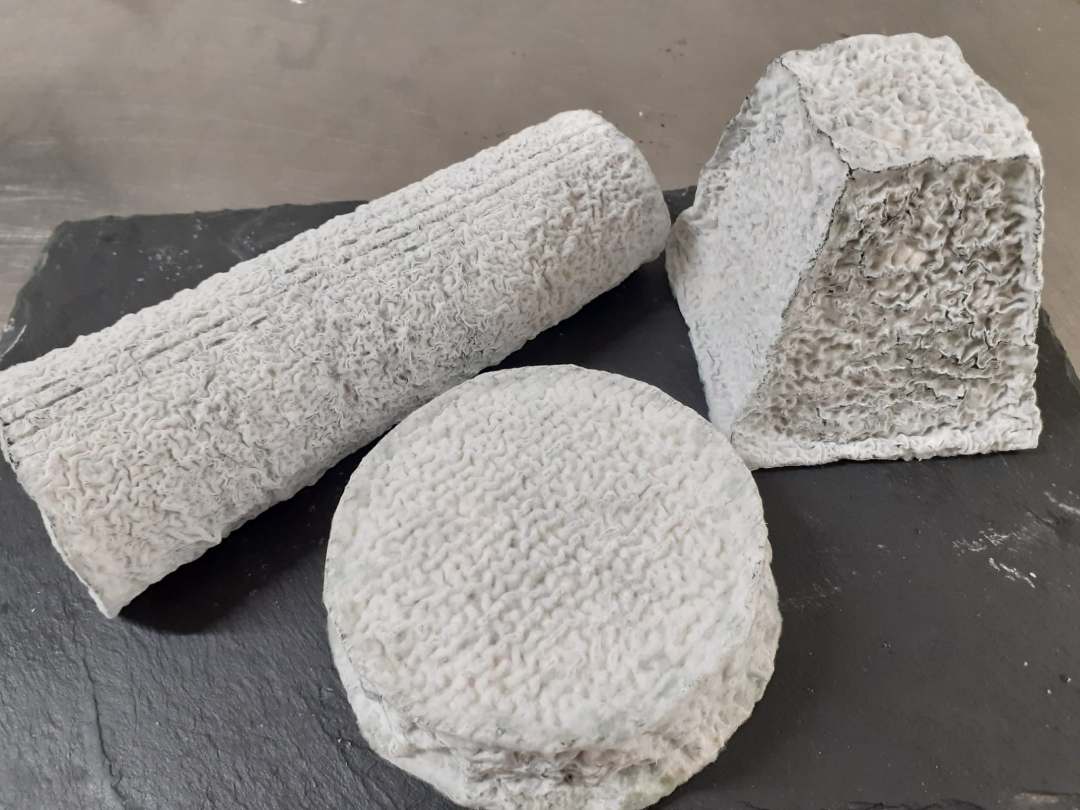
France – GOAT CHEESE – STEC E.coli

Gov france

  • Product category Food
  • Product subcategory Milk and dairy products
  • Product brand name Prairie Farm
  • Model names or references Faisselles, small fresh rounds, fresh salted, fresh ash, Selles sur Cher AOP, pyramids, logs, logs
  • Product identification
    Batch Date
    Lot renneted on 09/10/2023
    Lot renneted on 11/10/2023 including a cheese with DLC Use-by date 10/21/2023
    Lot renneted on 10/16/2023
  • Packaging Paper packaging
  • Start/end date of marketing From 10/13/2023 to 10/20/2023
  • Storage temperature Product to keep in the refrigerator
  • Geographical sales area Sale on Parisian markets: St Charles, Antwerp, Charonne
  • Distributors Direct sales on Parisian markets: St Charles, Antwerp, Charonne

Italy – SALAMINO TASTY PS -Salmonella

Salute

Brand : SAN BONO SRL (IT 629 L CE)

Name : SALAMINO TASTY PS

Reason for reporting : Recall due to microbiological risk

Publication date : 27 October 2023

Documentation

Documentation

Research – Haemolytic uraemic syndrome in children England, Wales, Northern Ireland, and Ireland: A prospective cohort study

Cambridge Org

Abstract

Haemolytic uraemic syndrome (HUS) caused by infection with Shiga toxin-producing Escherichia coli (STEC) is a relatively rare but potentially fatal multisystem syndrome clinically characterised by acute kidney injury. This study aimed to provide robust estimates of paediatric HUS incidence in England, Wales, Northern Ireland, and the Republic of Ireland by using data linkage and case reconciliation with existing surveillance systems, and to describe the characteristics of the condition. Between 2011 and 2014, 288 HUS patients were included in the study, of which 256 (89.5%) were diagnosed as typical HUS. The crude incidence of paediatric typical HUS was 0.78 per 100,000 person-years, although this varied by country, age, gender, and ethnicity. The majority of typical HUS cases were 1 to 4 years old (53.7%) and female (54.0%). Clinical symptoms included diarrhoea (96.5%) and/or bloody diarrhoea (71.9%), abdominal pain (68.4%), and fever (41.4%). Where STEC was isolated (59.3%), 92.8% of strains were STEC O157 and 7.2% were STEC O26. Comparison of the HUS case ascertainment to existing STEC surveillance data indicated an additional 166 HUS cases were captured during this study, highlighting the limitations of the current surveillance system for STEC for monitoring the clinical burden of STEC and capturing HUS cases.