Detection of listeria in hummus from France in West Bank and Gaza Strip
Listeria monocytogenes in smoked trout fillet from Chile, via the Czech Republic in Austria

Detection of listeria in hummus from France in West Bank and Gaza Strip
Listeria monocytogenes in smoked trout fillet from Chile, via the Czech Republic in Austria
Posted in food contamination, food handler, Food Hazard, Food Hygiene, Food Inspections, Food Micro Blog, Food Microbiology, Food Microbiology Blog, Food Microbiology Research, Food Microbiology Testing, Food Pathogen, Food Quality, food recall, Food Safety, Food Safety Alert, Food Safety Management, Food Safety Regulations, Listeria, Listeria France, Listeria monocytogenes, Listeria Smoked Fish, RASFF
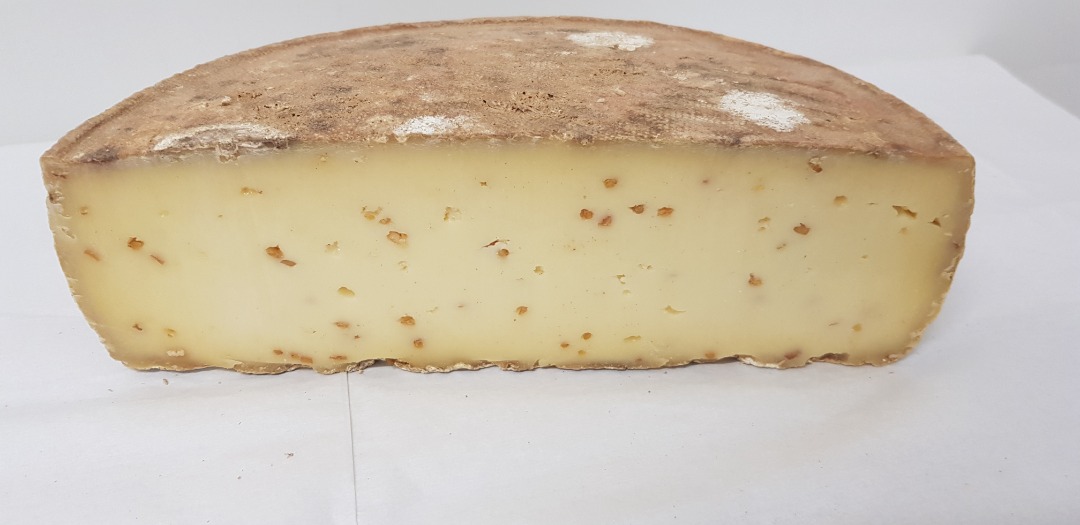
Brand : Beppino Occelli
Name : CASTELMAGNO DOP
Reason for reporting : Recall due to microbiological risk
Publication date : 1 March 2024

Posted in E.coli, food contamination, food handler, Food Hazard, Food Hygiene, Food Inspections, Food Micro Blog, Food Microbiology, Food Microbiology Research, Food Microbiology Testing, Food Pathogen, Food Quality, food recall, Food Safety, Food Safety Alert, Food Safety Management, Food Safety Regulations, Food Testing, STEC, STEC E.coli

In all inspected packages, the presence of green mold was detected on the surface of the food under the intact packaging. Food is not considered safe if it shows signs of spoilage.
Unsuitable storage temperatures of this product were not detected during the inspection. The food did not have an expiration date.
| Expiration date: | 18 03 2024 |
| Packaging: | PE bag |
| Quantity of the product in the package: | 0.2 kg |
| Manufacturer: | Jaroměřická mlékárna, as, Kaunicova 198, 675 51 Jaroměřice nad Rokytnou |
| Country of origin: |  Czechia Czechia |
| Date of sample collection: | 4/1/2024 |
| Reference number: | 24-000127-SZPI-CZ |
Posted in food contamination, food handler, Food Hazard, Food Hygiene, Food Inspections, Food Micro Blog, Food Microbiology, Food Microbiology Blog, Food Microbiology Research, Food Microbiology Testing, Food Pathogen, Food Quality, food recall, Food Safety, Food Safety Alert, Food Safety Management, Food Safety Regulations, mold, Mold/ MouldAscospores, Mould/Mold, Potravinynapranyri, Visible Mould/Mold
A European court has backed a decision by Greek authorities not to approve a product designed to prevent Listeria in certain products.
The case involves Listex P100, a product from Dutch company Micreos, intended for use against Listeria monocytogenes in ready-to-eat food of animal origin. The court ruled that the EU Commission must approve such a product.
A Greek court requested a preliminary ruling in late 2022 in the case between Micreos Food Safety and the Hellenic Food Authority (EFET).
EFET refused to authorize Listex P100 for the Greek market, as the EU Commission has not approved. The phage-based product is a spray designed to prevent the presence of Listeria monocytogenes in ready-to-eat (RTE) food of animal origin, such as fish, dairy, and meat products.
Posted in Food Microbiology Research, Listeria, Research
Listeria monocytogenes is a foodborne pathogen that causes listeriosis, a group of human illnesses that appear more frequently in countries with better-developed food supply systems. This review discusses the efficacy of actual biocontrol methods combined with the main types of food involved in illnesses. Comments on bacteriophages, lactic acid bacteria, bacteriocins, essential oils, and endolysins and derivatives, as main biological antilisterial agents, are made bearing in mind that, using them, food processors can intervene to protect consumers. Both commercially available antilisterial products and solutions presented in scientific papers for mitigating the risk of contamination are emphasized. Potential combinations between different types of antilisterial agents are highlighted for their synergic effects (bacteriocins and essential oils, phages and bacteriocins, lactic acid bacteria with natural or synthetic preservatives, etc.). The possibility to use various antilisterial biological agents in active packaging is also presented to reveal the diversity of means that food processors may adopt to assure the safety of their products. Integrating biocontrol solutions into food processing practices can proactively prevent outbreaks and reduce the occurrences of L. monocytogenes-related illnesses.
Posted in food contamination, food handler, Food Hazard, Food Hygiene, Food Inspections, Food Micro Blog, Food Microbiology, Food Microbiology Blog, Food Microbiology Research, Food Microbiology Testing, Food Pathogen, Food Quality, food recall, Food Safety, Food Safety Alert, Food Testing, Listeria, Listeria monocytogenes, Research
Product category
Food
Product subcategory
Milk and dairy products
Product brand name
Baechler
Model names or references
Raclette Baechler Fenugreek Raclette des Croquants Fenugreek Cheese Baechler Fenugreek
Product identification
Batch Date
Raclette Baechler Fenugreek 23 086 4 Minimum durability date between 02/21/2024 and 02/25/2024
Raclette des Croquants Fenugreek 23 086 4 Minimum durability date 02/22/2024
Baechler Fenugreek Cheese 23 086 4 Minimum durability date 02/22/2024
Products List
Fenugreek_-_Consumer_reporting_sheet_-_February_2024.pdfAttachment
Packaging
Whole cheese for sale by the cut or self-service
Start/end date of marketing
From 11/23/2023 to 11/27/2023
Storage temperature
Product to keep in the refrigerator
Geographical sales area
Whole France
Distributors
wholesalers and large retailers
List of points of sale
Lists_of_concerned_customers.pdf
Posted in food contamination, food handler, Food Hazard, Food Hygiene, Food Inspections, Food Micro Blog, Food Microbiology, Food Microbiology Blog, Food Microbiology Research, Food Microbiology Testing, Food Pathogen, Food Quality, food recall, Food Safety, Food Safety Alert, Food Safety Management, Food Safety Regulations, Food Testing, Listeria, Listeria in Cheese, Listeria monocytogenes
Posted in Food Micro Blog, Food Microbiology, Food Microbiology Blog, Food Microbiology Research, Food Microbiology Testing, Listeria, Listeria monocytogenes, Listeria Smoked Fish, listeriosis, microbial contamination, Microbial growth, Microbiological Risk Assessment, Microbiology, Microbiology Investigations, Microbiology Risk, Research
France reported a record high number of foodborne outbreaks in 2022, according to recently released data.
Notified outbreaks were at their highest since the start of surveillance in 1987 and continued the upward trend observed before the COVID-19 pandemic.
In 2022, 1,924 outbreaks were declared, affecting 16,763 people, of whom 643 went to hospital, and 17 died, said Santé publique France.
For 376 outbreaks, a pathogen could be confirmed in the food or in at least one sick person. A pathogen was suspected without microbiological confirmation for 1,260 outbreaks. For 288 outbreaks, no infectious agent was identified or suspected.
Posted in food bourne outbreak, Food Micro Blog, Food Microbiology, Food Microbiology Blog, Food Microbiology Research, Food Microbiology Testing, Food Pathogen, foodborne outbreak, foodbourne outbreak, microbial contamination, Microbial growth, Microbial Spoilage, Microbiological Risk Assessment, Microbiology, Microbiology Investigations, Microbiology Risk, outbreak, Pathogen, pathogenic
QUEBEC , February 22 2024 /CNW/ – The Ministry of Agriculture, Fisheries and Food (MAPAQ), in collaboration with the company Avril, located at 2600, boulevard Laurier , local 005, in Quebec, advises the population not to consume the product indicated in the table below, because this food may contain E. coli bacteria .
|
Product name |
Format |
Target lot |
|
“SAND.” WHOLE WHEAT NUTS CHICKEN » |
UNITARY |
Lot whose “best before” date |
The product which is the subject of this warning was offered for sale until February 8, 2024, and only at the establishment designated above. The product was sold in transparent plastic packaging. It was offered in a refrigerated state.
Posted in E.coli, food contamination, food handler, Food Hazard, Food Hygiene, Food Inspections, Food Micro Blog, Food Microbiology, Food Microbiology Blog, Food Microbiology Research, Food Microbiology Testing, Food Pathogen, Food Quality, food recall, Food Safety, Food Safety Alert, Food Safety Management, Food Safety Regulations, Food Testing
Campylobacter is the most reported zoonotic pathogen in humans in the European Union. Poultry is a major source of human infection with Campylobacter. Although many studies are done on the presence of Campylobacter in broilers and theoretically effective control measures are known, their relative importance at broiler farms remains poorly understood. Therefore the aim of this study was to investigate the presence of Campylobacter on selected broiler farms in the Netherlands, to determine the moment of introduction, and associated risk factors. A longitudinal study on 25 broiler farms was carried out between June 2017 and December 2020. Fecal samples were collected weekly from 43 broiler houses. In total 497 flocks were sampled. Putative variables on flock and farm characteristics for a risk factor analysis were gathered through questionnaires. Risk factors associated with the presence of Campylobacter in a broiler flock were determined using regression models. In total 30% of the flocks included in the study were positive for Campylobacter. Factors associated with presence of Campylobacter at slaughter age included: season, mowing lawns and presence of agricultural side activities. While summer/autumn and mowing lawns were associated with an increase in Campylobacter presence in flocks, the farmer having agricultural side activities other than poultry production was associated with a decrease. Analysis of the age at which flocks first tested Campylobacter positive revealed that slower growing breeds became positive on average one week later compared to regular growers. This study revealed a delayed introduction of Campylobacter in slower grower versus regular grower broiler flocks reared indoors. In addition it confirmed importance of season as major risk factor. The relevance of mowing and preceding positive flocks as risk factors needs further investigation.

 FoodWorld