Category Archives: Food Microbiology Research

USA – Listeria Outbreak Linked to Deli Meat and Cheese

CDC

This outbreak is over. Even when there are no ongoing Listeria outbreaks, people who are pregnant, aged 65 or older, or have a weakened immune system should reheat deli meat and deli-sliced cheese to an internal temperature of 165°F or until steaming hot to kill any germs.

Fast Facts
  • Illnesses: 16
  • Hospitalizations: 13
  • Deaths: 1
  • States: 6
  • Recall: No
  • Investigation status: Closed
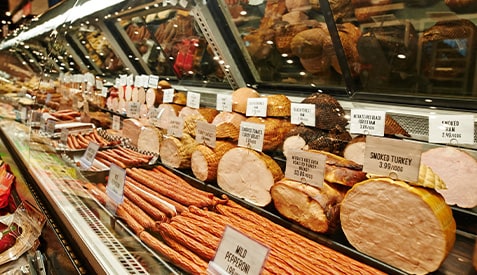
Store with deli meat and cheese on shelves
Listeria in Deli Meat and Deli-Sliced Cheese

Deli meats (cold cuts, lunch meats, hot dogs, and pâtés) and deli-sliced cheeses are known sources of Listeria illnesses. This is because Listeria can easily spread among food, food preparation surfaces like deli slicers, and hands. Listeria is a hardy germ that can be difficult to fully remove once it is present in a deli or a food processing facility. It can survive and grow at cold temperatures in a refrigerator.

Outbreak Investigation Summary

Data showed that deli meat and cheese bought at deli counters in multiple states were the likely sources of this outbreak.

  • Of 12 people interviewed, 11 reported eating meat or cheese from deli counters.
  • The outbreak strain of Listeria was found in open packages of mortadella, ham, and salami sliced at the deli, as well as a deli in Brooklyn, New York.

A single deli or food source was not identified. It is difficult for investigators to identify the specific source of outbreaks linked to deli meats and cheeses. This is because Listeria spreads easily between food and the deli environment, and it can live for a long time in deli display cases and on equipment. A contaminated food likely introduced the outbreak strain of Listeria into delis in multiple states.
France – Nestle closes French Buitoni factory hit by E.coli outbreak

Reuters

PARIS, March 30 (Reuters) – Swiss packaged-food giant Nestle (NESN.S) is closing a frozen-pizza factory in northern France that saw sales fall sharply after an E. coli outbreak last year, it said on Thursday.

The group had suspended operations at the factory, which French media said employs 140 people, earlier this month.

French prosecutors last year opened a probe over the death of one person, the injuring of 14 others and breaches of food safety requirements which they alleged were linked to the E.coli outbreak at the factory, which produced frozen pizzas.

Research – Multi-country outbreak of Salmonella Virchow ST16 infections linked to the consumption of meat products containing chicken meat

EFSA

Abstract

Since June 2017, a persistent cross-border outbreak of Salmonella Virchow ST16 has been ongoing in five European Union/European Economic Area (EU/EEA) countries, the United Kingdom (UK), and the United States (US). A total of 210 cases have been reported from the following countries: Denmark (2), France (111), Germany (26), Ireland (4), the Netherlands (34), the UK (32), and the US (1). Among the interviewed cases (55), hospitalisation rates ranged from 16.7% (2/12) in the UK, to 29.4% (5/17) and 38.5% (10/26) in France and Germany, respectively. No deaths have been reported. A majority of cases have been linked to local restaurants serving kebab meat. The number of confirmed cases represents only a small proportion of all infections in the EU/EEA, partly due to the varying sequencing capacities of countries.

The comparison of the representative outbreak strains with the available genome profiles of S. Virchow ST16 from non-human isolates, revealed that most of the matching isolates belonged to broiler meat and broiler-related environments, thereby supporting the hypothesis of chicken meat as a vehicle of infections.

The available information from case interviews, traceback investigations, and whole genome sequencing (WGS) cluster analysis, showed that kebab meat products containing contaminated chicken meat are the likely vehicles of infections, and that the clone has been circulating in the EU poultry meat production chain at least in France, Germany, and the Netherlands. In the absence of batch numbers of the contaminated kebab products and related Salmonella testing information, the source(s) of the infections could not be established.

New infections are likely to occur in the EU/EEA affecting any age group, until further investigations are performed to identify the source(s) and point(s) of contamination along the chicken meat production chain, including the primary production upstream lines. This will allow appropriate control measures to be implemented.

Research – Escherichia coli, the Shiga toxin-producing serotype (STEC). Control measures in beef

ACSA

USA – FDA Core Investigation Table Update

FDA

What’s New

  • A new outbreak of Salmonella Infantis (ref #1141) linked to a not yet identified product has been added to the table. FDA has initiated traceback. This investigation is ongoing and additional information will be provided as it becomes available.
  • For the Salmonella Hartford outbreak in a not yet identified food, the case count has increased from 50 to 53 cases.
Date
Posted
Ref Pathogen
or
Cause of
Illness
Product(s)
Linked to
Illnesses

(if any)
Total
Case
Count

Status
3/29/2023 1141 Salmonella Infantis Not Yet
Identified
12 Active
3/8/2023 1144 Salmonella Hartford Not Yet
Identified
53 Active
3/1/2023 1143 Hepatitis A Virus Frozen Organic
Strawberries
See
Outbreak
Advisory
Active
2/15/2023 1123 Listeria
monocytogenes
Not Yet
Identified
See
CDC
Investigation
Notice
Active
11/9/2022 1127 Listeria
monocytogenes
Enoki
Mushrooms
See
Outbreak
Advisory
Active

USA – Stewart Parnell looks for better Habeas in Atlanta than he just had in Mid-Georgia – Peanut Butter Salmonella Outbreak

Food Safety News

A decade after his indictment and a year after United States Magistrate Judge Thomas Q. Langstaff denied his petition for early release, one-time peanut butter mogul Stewart Parnell still has one more card to play.

Parnell, 68, has 15 years to run on his sentence imposed after a 2014 jury conviction for numerous federal felonies associated with the deadly 2008-09 multistate Salmonella outbreak traced to his Peanut Corporation of America peanut processing facility in Blakely, GA. He is serving his time at the federal correctional facility at Hazelton, WV.

Parnell begins this year with a new appeal of his Habeas corpus petition in the U.S. Court of Appeals for the 11th U.S. Circuit in Atlanta. A Habeas petition claims unlawful detention or imprisonment because of constitutional infractions. It can open cell doors,

USA – FDA and Stop Foodborne Illness to Co-Host Webinar on Assessing Food Safety Culture

FDA

Today, the Food and Drug Administration (FDA) announced the seventh in the ongoing series of webinars exploring food safety culture will take place on May 11, 2023, from 3:45 pm 5:00 pm ET. The webinar series Collaborating on Culture in the New Era of Smarter Food Safety is in partnership with Stop Foodborne IllnessExternal Link Disclaimer, a non-profit public health organization.

The upcoming webinar “Live from the Food Safety Summit: Measure What You Treasure”, will focus on the importance of assessing food safety culture in an organization.

Guest speakers on May 11, include:

  • Donald A. Prater, DVM, Acting Director, Office of Food Policy and Response, FDA
  • Conrad Choiniere, PhD, Director, Office of Analytics and Outreach, Center for Food Safety and Applied Nutrition, FDA
  • Lone Jespersen, Principal and Founder, Cultivate SA
  • Vanessa Coffman, Director, Alliance to Stop Foodborne Illness
  • Brian Perry, Executive Food Safety & Quality Leader, TreeHouse Foods, Inc
  • Karleigh Bacon, Director of U.S. Supply Chain Food Safety, Science & Regulatory, McDonald’s Corporation
  • Philip Bronstein, Ph.D., Assistant Administrator, Office of Field Operations, Food Safety and Inspection Service, Food Safety and Inspection Service, USDA

The webinar series engages experts from the public and private sectors in a collaborative exchange of ideas and experiences related to the importance of a robust food safety culture in helping to ensure safe food production.

Food safety culture is one of the core elements in FDA’s New Era of Smarter Food Safety blueprint, which states that dramatic improvements in reducing the burden of foodborne illness cannot be made without doing more to influence the beliefs, attitudes, and, most importantly, the behaviors of people and the actions of organizations.

Register for Session 7External Link Disclaimer

To learn more about this webinar series and to listen to recordings, visit Collaborating on Culture in the New Era of Smarter Food Safety.

For More Information 

Research – Cronobacter sakazakii Infections in Two Infants Linked to Powdered Infant Formula and Breast Pump Equipment — United States, 2021 and 2022

CDC

Summary

What is already known about this topic?

Infections caused by Cronobacter sakazakii are rare but can cause severe illness and death in infants.

What is added by this report?

Whole genome sequencing analysis was used to link one case of Cronobacter sakazakii infection in a full-term infant to an opened can of powdered infant formula, and another unrelated fatal case in a premature infant to contaminated breast pump equipment.

What are the implications for public health practice?

Increased awareness of the widespread presence of Cronobacter in the environment, along with promotion of safe preparation and storage of powdered infant formula, and careful cleaning and sanitization of breast pump equipment, could prevent potentially devastating infections.

Cronobacter sakazakii, a species of gram-negative bacteria belonging to the Enterobacteriaceae family, is known to cause severe and often fatal meningitis and sepsis in young infants. C. sakazakii is ubiquitous in the environment, and most reported infant cases have been attributed to contaminated powdered infant formula (powdered formula) or breast milk that was expressed using contaminated breast pump equipment (13). Previous investigations of cases and outbreaks have identified C. sakazakii in opened powdered formula, breast pump parts, environmental surfaces in the home, and, rarely, in unopened powdered formula and formula manufacturing facilities (2,46). This report describes two infants with C. sakazakii meningitis reported to CDC in September 2021 and February 2022. CDC used whole genome sequencing (WGS) analysis to link one case to contaminated opened powdered formula from the patient’s home and the other to contaminated breast pump equipment. These cases highlight the importance of expanding awareness about C. sakazakii infections in infants, safe preparation and storage of powdered formula, proper cleaning and sanitizing of breast pump equipment, and using WGS as a tool for C. sakazakii investigations.

Research – Effect of Composite Edible Coatings Combined with Modified Atmosphere Packaging on the Storage Quality and Microbiological Properties of Fresh-Cut Pineapple

MDPI

Abstract

This study investigated the effect of edible coating (EC), modified atmosphere packaging (MAP), and edible coating + modified atmosphere packaging (EC + MAP) treatments on the quality of fresh-cut pineapples during storage at 4 °C. The quality differences were analyzed by measuring the quality, physiological indicators, and total microbial counts. After 8 d of storage, the brightness (L*) values of the EC + MAP and control samples were 72.76 and 60.83, respectively. The water loss and respiratory rate of the EC + MAP were significantly inhibited from 0% and 29.33 mg CO2 kg−1 h−1 to 4.13% and 43.84 mg CO2 kg−1 h−1, respectively. Furthermore, the fresh-cut pineapples treated with EC + MAP presented a good appearance, with lower total soluble solids (TSS) and relative conductivity and higher titratable acid (TA), ascorbic acid (AA), total phenol content, and firmness compared to the other treatment groups. At the end of storage, the EC + MAP samples exhibited the lowest polyphenol oxidase (PPO) activity, peroxidase (POD) activity, and malondialdehyde (MDA) content at 28.53 U, 60.37 U, and 1.47 nmol·g−1, respectively. Furthermore, the efficiency of EC + MAP treatment exceeded that of EC or MAP alone, preventing key problems involving the surface browning and microbiological safety of the fresh-cut pineapples. The results showed that EC + MAP treatment was more successful in maintaining the storage quality and extending the shelf life of fresh-cut pineapples.

Research – Climate warming and increasing Vibrio vulnificus infections in North America

Nature.com

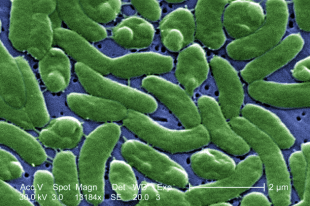
Vibrio_vulnificus_01

Vibrio vulnificus is an opportunistic bacterial pathogen, occurring in warm low-salinity waters. V. vulnificus wound infections due to seawater exposure are infrequent but mortality rates are high (~ 18%). Seawater bacterial concentrations are increasing but changing disease pattern assessments or climate change projections are rare. Here, using a 30-year database of V. vulnificus cases for the Eastern USA, changing disease distribution was assessed. An ecological niche model was developed, trained and validated to identify links to oceanographic and climate data. This model was used to predict future disease distribution using data simulated by seven Global Climate Models (GCMs) which belong to the newest Coupled Model Intercomparison Project (CMIP6). Risk was estimated by calculating the total population within 200 km of the disease distribution. Predictions were generated for different “pathways” of global socioeconomic development which incorporate projections of greenhouse gas emissions and demographic change. In Eastern USA between 1988 and 2018, V. vulnificus wound infections increased eightfold (10–80 cases p.a.) and the northern case limit shifted northwards 48 km p.a. By 2041–2060, V. vulnificus infections may expand their current range to encompass major population centres around New York (40.7°N). Combined with a growing and increasingly elderly population, annual case numbers may double. By 2081–2100 V. vulnificus infections may be present in every Eastern USA State under medium-to-high future emissions and warming. The projected expansion of V. vulnificus wound infections stresses the need for increased individual and public health awareness in these areas.