Category Archives: Food Inspections

Research – An Assessment of Listeriosis Risk Associated with a Contaminated Production Lot of Frozen Vegetables Consumed under Alternative Consumer Handling Scenarios

Journal of Food Protection

ABSTRACT

Frozen foods do not support the growth of Listeria monocytogenes (LM) and should be handled appropriately for safety. However, consumer trends regarding preparation of some frozen foods may contribute to the risk of foodborne listeriosis, specifically when cooking instructions are not followed and frozen products are instead added directly to smoothies or salads. A quantitative microbial risk assessment model FFLLoRA (Frozen Food Listeria Lot Risk Assessment) was developed to assess the lot-level listeriosis risk due to LM contamination in frozen vegetables consumed as a ready-to-eat food. The model was designed to estimate listeriosis risk per serving and the number of illnesses per production lot of frozen vegetables contaminated with LM, considering individual facility factors such as lot size, prevalence of LM contamination, and consumer handling prior to consumption. A production lot of 1 million packages with 10 servings each was assumed. When at least half of the servings were cooked prior to consumption, the median risk of invasive listeriosis per serving in both the general and susceptible population was <1.0 × 10⁻¹⁶ with the median (5th, 95th percentiles) predicted number of illnesses per lot as 0 (0, 0) and 0 (0, 1) under the exponential and Weibull-gamma dose-response functions, respectively. In scenarios in which all servings are consumed as ready-to-eat, the median predicted risk per serving was 1.8 × 10⁻¹³ and 7.8 × 10⁻¹² in the general and susceptible populations, respectively. The median (5th, 95th percentile) number of illnesses was 0 (0, 0) and 0 (0, 6) for the exponential and Weibull-Gamma models, respectively. Classification tree analysis highlighted initial concentration of LM in the lot, temperature at which the product is thawed, and whether a serving is cooked as main predictors for illness from a lot. Overall, the FFLLoRA provides frozen food manufacturers with a tool to assess LM contamination and consumer behavior when managing rare and/or minimal contamination events in frozen foods.

HIGHLIGHTS
  • A tool for frozen food manufacturers to assess listeriosis risk was developed.

  • Scenarios of low-level L. monocytogenes in frozen vegetables did not typically result in illness.

  • Listeriosis cases depended on model inputs related to consumer handling and initial concentration.

  • Scenarios of more testing increased the probability of finding a contaminated lot and reduced risk.
USA – Veggie Noodle Co. Recalls Cece’s Brand Product Because of Possible Health Risk – Listeria monocytogenes

FDA

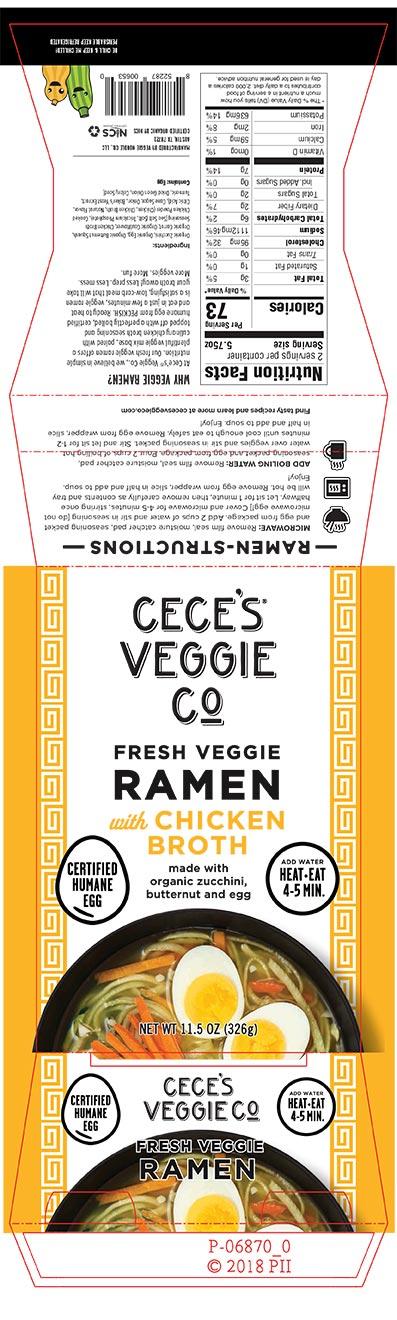
Veggie Noodle Co., LLC is voluntarily recalling its Cece’s® Veggie Co. brand Fresh Veggie Ramen with Chicken Broth (11.5 oz, UPC 5228700653), all expiration dates, sold at retail stores nationally, because the separately packaged egg ( branded Peckish) that is included in the product has the potential to be contaminated with Listeria monocytogenes. No other Cece’s brand products are subject to this recall. Veggie Noodle is issuing this voluntary recall out of an abundance of caution, due to a recall by a provider of the eggs, Almark Foods, used in the product.

Listeria monocytogenes is an organism which can cause serious and sometimes fatal infections in young children, frail or elderly people, and others with weakened immune systems. Although healthy individuals may suffer only short-term symptoms such as high fever, severe headache, stiffness, nausea, abdominal pain and diarrhea, Listeria infection can cause miscarriages and stillbirths among pregnant women.

Veggie Noodle has received no reports of illness associated with the recalled Fresh Veggie Ramen with Chicken Broth product. No other Veggie Noodle/Cece’s products are affected by the recall, and may be consumed.

An illness outbreak appears to be associated with eggs supplied by Almark Foods that were ingredients in foods produced by other companies.

Veggie Noodle contacted all affected customers to confirm that the recalled product has been removed from store shelves.

Label, Cece’s® Veggie Co. Veggie Ramen with Chicken Broth

Australia – Kienfat Trading Pty Ltd — Sriracha Hot Chilli Sauce 481g and 793g – Lactic Acid Bacteria

Product Safety Australia

Photograph of Sriracha Hot Chilli Sauce

Identifying features

Other
APN/EAN 024463061095, 024463061163

What are the defects?

Lactic acid may build up, causing certain bottles to “bloat” and continue to ferment.

What are the hazards?

Food products with excessive pressure build up may splatter on to property or persons on opening, increasing the risk of injury.

What should consumers do?

Do not open bottles that feel “bloated”. Consumers should return the products to the place of purchase for a full cash refund.

For further information, contact Kienfat Trading Pty Ltd on 0412 012 362.

Supplier
Kienfat Trading Pty Ltd
Traders who sold this product

Asian Grocery Stores
Coles
IGA’s
Independent Grocery Stores
Woolworths

Where the product was sold
Nationally
Dates available for sale
  • 27 June 2019 – 27 December 2019

Recall advertisements and supporting documentation

Coordinating agency

Food Standards Australia New Zealand is the coordinating agency for this recall.

USA – Listeria positives prompt recall of ready-to-eat product including smoked pork loins, ham hocks, and smoked hams

Food Poison Journal listeria

The Kansas Department of Health and Environment (KDHE) is alerting consumers that a voluntary recall will be issued on Monday by Clay Center Locker Plant for any ready-to-eat product including smoked pork loins, ham hocks, and smoked ham from the Clay Center Locker Plant produced on Nov. 21, 2019, because of potential contamination with Listeria monocytogenes.

KDHE urges the public not to consume any product that will be part of this recall. This includes products purchased at the retail counter in the plant and the hams that were delivered to the Future Farmers of America Clay Center and Chapman chapters.

This recall was initiated after Listeria monocytogenes was found in a food sample tested as part of a routine sampling program by the Kansas Department of Agriculture. All known affected distributors and retail and food service customers are being notified. Some of the products were sold through FFA chapters in Chapman and Clay Center. To date, no illnesses have been linked with this recall.

USA – Sprouts Unlimited Inc. is Recalling Clover Sprouts in 4-ounce Packages Due to a Possible Health Risk – STEC E.coli O103

FDA

Sprouts Unlimited of Marion IA is recalling clover spouts in 4 oz packages because it may be contaminated with Escherichia coli O103 bacteria (E. coli O103). E. coli O103 causes a diarrheal illness often with bloody stools. Although most healthy adults can recover completely within a week, some people can develop a form of kidney failure called Hemolytic Uremic Syndrome (HUS). HUS is most likely to occur in young children and the elderly. The condition can lead to serious kidney damage and even death.

The affected batches of clover sprouts were distributed to Hy Vee Food stores, Fareway Food Stores and Jimmy John’s restaurants in Iowa.

The sprouts available at retail were packaged in in pint containers from Sprouts Unlimited Inc. with a blue label on the lid. The UPC code 7 32684 00013 6 is stamped on the bottom right side of the label.

Sprouts Unlimited Inc. became aware of the potential contamination after receiving information from the Iowa Department of Inspections and Appeals, Des Moines, IA that a cluster of E. coli O103 illnesses epidemiologically linked to clover sprouts from Sprouts Unlimited Inc. An investigation and further tests are being conducted to determine the source.

If consumers have affected product in their home, they should discontinue use of the product immediately and return any product to the retail store for a full refund. If you have any questions, please call Bill Beach at Sprouts Unlimited Inc. at 319-360-4586.


USA -Great American Deli Egg Salad Sandwich Recalled For Listeria monocytogenes

Food Poisoning Bulletin

Great American Deli of Ooltewah, Tennessee is recalling their Egg Salad Sandwich for possible Listeria monocytogenes contamination.  The eggs were supplied by Knott’s Fine Foods, which buys hard cooked eggs from Almark Foods. There is a Listeria monocytogenes outbreak associated with Almark Foods hard-boiled eggs, but there are no reports of illness related to the consumption of these egg salad sandwiches.

Great American Deli Egg Salad Sandwich Recalled For Listeria


USA -Outbreak Investigation of Listeria monocytogenes Linked to Hard-Boiled Eggs, December 2019

FDA

Case Counts

Total Illnesses: 7
Illnesses in 2019: 4
Hospitalizations: 4
Deaths: 1
Last illness isolation date: November 12, 2019

On December 23, 2019 Almark Foods expanded its voluntary recall to include all hard-boiled eggs manufactured at its Gainesville, Georgia facility. The initial recall included bulk hard-boiled eggs in pails and now includes product packaged for sale at retail within shelf-life, which have “Best If Used By Dates” through March 2, 2020. At this time, Almark Foods is no longer producing products from this facility.

Companies who received recalled product from Almark Foods have initiated recalls of products containing these eggs. Additional companies and products may be added as the investigation continues.

Recommendation

Consumers should not eat any of the recalled products. A full list of products sold at retail is available below.

Food processors, restaurants, and retailers should not sell or serve any of the recalled hard-boiled and peeled eggs from Almark Foods. These products were sold in bulk pails to food processors, restaurants and retailers, and in retail packaging to retailers for direct-sale to consumers. The full list of products is below.

Additionally, FDA recommends that food processors, restaurants and retailers who have received  Almark Foods bulk, fresh hard-boiled eggs, use extra vigilance in cleaning and sanitizing any surfaces that may have come in contact with these products, to reduce the risk of cross-contamination.

Background

As of December 17, 2019, a total of seven people infected with the outbreak strain of Listeria monocytogenes have been reported from five states. In interviews, ill people answered questions about the foods they ate and other exposures in the month before they became ill. Of the five people for whom information was available, four reported eating products containing eggs. Three of these people reported eating hard-boiled eggs in deli salads purchased from grocery stores and in salads eaten at restaurants. Illnesses started on dates ranging from April 10, 2017 to November 12, 2019.

Additionally, based on whole-genome sequencing, the Listeria monocytogenes found in  environmental samples collected at the firm’s processing facility during FDA inspections conducted in February 2019 and December 2019 are a genetic match to the outbreak strain. Almark Foods has been cooperating with the ongoing investigation and announced an initial voluntary recall of hard-boiled and peeled eggs in pails on December 20, 2019. On December 23, 2019 Almark Foods expanded the initial recall to include all hard-boiled eggs produced at its Gainesville, Georgia facility.

This outbreak strain was found during environmental sampling in 2017 of one other food facility. That facility is not currently handling food and ceased operation in 2018.

The investigation is ongoing and additional information will be provided as it becomes available.

Australia – Sriracha Hot Chilli Sauce 17oz and 28oz – Recall – Lactic Acid Bacteria

FSANZ

26 December 2019

Product information

Kienfat Trading Pty Ltd is conducting a recall of Sriracha Hot Chilli Sauce 17oz and 28oz. The product has been available for sale at Coles, Woolworths, IGA’s, independent’s and Asian grocery stores nationally.

Date markings

Best Before MAR 2021

Problem

The recall is due to lactic acid build up causing certain bottles to “bloat” and continue to ferment.

Food safety hazard

Product may splatter on to property or persons on opening.

Country of origin

United States

What to do​

Do not open bottles that feel bloated and return the products to the place of purchase for a full refund.

For further information please contact:

Kienfat Trading Pty Ltd

​0412 012 362

Related links:

Norway – Shigella outbreak sickens eight, Linked to imported sugar peas from Kenya

Outbreak News Today

The Institute of Public Health in Norway is reporting a Shigella sonnei outbreak that has sickened at least eight people in several counties across the country.

sugarsnaps

In early December 2019, several people became ill with gastrointestinal symptoms after eating in a canteen in Oslo. The bacterium Shigella sonnei was found in samples from 5 of the patients. The local outbreak was investigated in collaboration with the infection control superior and the Food Safety Authority in Oslo. Imported sugars from Kenya were likely sources of infection.

RASFF Alerts – Aflatoxin – Groundnuts – Hazelnut Kernels – Pistachios – Brazil Nuts – Dried Figs

RASFF-Logo

RASFF – aflatoxins (B1 = 11; Tot. = 11 µg/kg – ppb) in shelled groundnuts from the United States in the Netherlands

RASFF – aflatoxins (B1 = 55; Tot. = 69 µg/kg – ppb) in groundnuts from Egypt in the Netherlands

RASFF – aflatoxins (B1 = 12; Tot. = 13 µg/kg – ppb) in groundnuts from the United States in Denmark

RASFF – aflatoxins (Tot. = 91.2 µg/kg – ppb) in hazelnut kernels from Turkey in the UK

RASFF – aflatoxins (B1 = 20; Tot. = 21 µg/kg – ppb) in pistachios from Turkey in the Netherlands

RASFF – aflatoxins (B1 = 6.8; Tot. = 6.8 / B1 = 16; Tot. = 18 µg/kg – ppb) in groundnuts from the United States in the Netherlands

RASFF – aflatoxins (B1 = 4.1; Tot. = 4.1 / B1 = 10; Tot. = 13 µg/kg – ppb) in groundnuts from the United States in the Netherlands

RASFF – aflatoxins (B1 = 80; Tot. = 92 µg/kg – ppb) in groundnuts from the United States in the Netherlands

RASFF – aflatoxins (B1 = 11; Tot. = 13 µg/kg – ppb) in groundnuts from Argentina in the Netherlands

RASFF – aflatoxins (B1 = 36.6; Tot. = 77.2 µg/kg – ppb) in organic Brazil nuts from Bolivia, via the Netherlands in Germany

RASFF – aflatoxins (B1 = 23.96; Tot. = 26.42 µg/kg – ppb) in dried figs from Turkey in Germany

RASFF – aflatoxins (B1 = 9.6; Tot. = 11 µg/kg – ppb) in groundnuts in powder from Paraguay in Portugal