
RASFF – histamine (740 mg/kg – ppm) in tuna loins from Vietnam in Portugal
RASFF – histamine (2600 mg/kg – ppm) in frozen tuna from Vietnam in Belgium

RASFF – cake from Denmark infested with moulds in Denmark
RASFF – norovirus (GII /25g) in frozen seaweed salad from Taiwan in Italy
RASFF – Salmonella (in 1 out of 5 samples /25g) in sesame seeds from Sudan in Greece
RASFF – Salmonella (presence /25g) in sesame seeds from Sudan in Greece
RASFF – Salmonella (presence /25g) in black pepper from Brazil in the Netherlands
RASFF – Salmonella enterica ser. Kedougou (presence /25g) in frozen salted chicken fillets from Thailand, via the Netherlands in Finland
RASFF – Salmonella (presence /25g) in sesame seeds from India in Poland
RASFF – Salmonella (presence /25g) in sesame seeds from Sudan in Greece
RASFF – Salmonella (presence /25g) in sesame seeds from Sudan in Greece
RASFF – Salmonella (presence /25g) in frozen salted chicken half breasts from Brazil in the Netherlands
RASFF – Salmonella (presence /25g) in chilled smoked bacon from Belgium in France
RASFF – Salmonella enterica ser. Enteritidis (presence /25g) in frozen chicken fillets from Poland in France
RASFF – Salmonella (presence /25g) in ginger from Italy, with raw material from Nigeria, via Poland in Italy
Les Spécialités Prodal (1975) Ltée is recalling certain The Deli-Shop Pâtés from the marketplace for possible Listeria monocytogenes contamination. There have been no reported illnesses conducted with the consumption of these recalled products. The Pâtés were sold in Quebec at the retail level.
The recalled products are all The Deli-Shop brand. They are: Country-style Pâté – Cognac packaged in 150 gram sizes, with UPC number 0 59749 95188 3 and code 2019SE26; Country-style Pâté – Pepper in 150 gram packages, with UPC number 0 59749 95189 0 and code 2019SE26; and Country-style Pâté – Old Fashioned, also sold in 150 gram packages, with UPC number 0 59749 95187 6 and code 2019SE26.
Also recalled is Liver Pâté – Fine Herbs, packaged in 150 gram containers, with UPC number 0 59749 95191 3 and code 2019SE26; Liver Pâté – Garlic, sold in 150 gram containers and with UPC number 0 59749 95190 6 and code 2019SE26; and Liver Pâté – Old Fashioned, packaged in 150 gram containers with UPC number 0 59749 95192 0 and code 2019SE26.
The recalled was triggered by Canadian Food Inspection Agency (CFIA) test results. The CFIA is conducting a food safety investigation, which may lead to the recall of more products. If more products are recalled, they will be listed on the web site. You can see pictures of the recalled product labels at the CFIA web site.
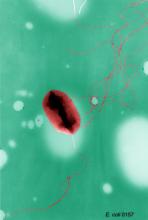
Image CDC
Julie Gilmartin, 39, said her son Matthew Bennett, 10, started to develop symptoms including diarrhea on the plane home from a week-long stay at the Bone Club Sunset Hotel & Spa, Antalya, at the start of July.
Following several tests, his mother was advised Matthew had been diagnosed with E.coli O157, a serious bacterial infection that can cause serious long-term complications and sometimes even death.
When North Carolina State University microbiologist Benjamin Chapman makes a smoothie, he like many of us uses frozen berries. But first, Chapman microwaves his frozen berries to boiling and then refreezes them again before tossing them into the blender.
Why the extra steps? Chapman wants to be sure that there are no pathogens in the frozen berries that could cause a foodborne illness for him or his family.
“What I am doing may be overkill, but it makes me feel good,” says Chapman, who has been making smoothies this way for the past eight to 10 years, since his children were infants and toddlers. “I don’t have any thoughts that the berries are super high-risk to making us sick. But to me, it is something that is quick and easy to do. It’s my own risk management.”
Nor is he alone in taking extra precautions with frozen berries. In May, the Food and Drug Administration announced that it began sampling frozen berries last fall to look for hepatitis A and norovirus, two of the most common foodborne illnesses. The federal agency said that it plans to test 2,000 samples over the next 18 months from both domestic and imported sources, including food processors, distribution centers, warehouses and retailers, such as grocery stores.
Four people are part of a foodborne botulism outbreak in Spain after eating DIA brand tuna.
A batch of canned tuna in sunflower oil of the brand DIA has been removed from sale. The Spanish Agency for Food Safety and Nutrition (AESAN) said those who became ill ate a homemade salad that included the tuna. Spanish media reported one of the patients was still in hospital.
The foodborne outbreak was suspected to be caused by the tuna or grated carrots from Spain with distribution including Andorra, according to a Rapid Alert System for Food and Feed (RASFF) notice.
AESAN became aware on Aug. 9, through the Spanish rapid information exchange system (SCIRI), of a notification from health authorities in Castilla y León of a food poisoning outbreak caused by botulinum toxin linked to consumption of canned tuna in a homemade “Russian” salad.
A total of 71 people have sought medical help after eating kebabs and sandwiches at a fast food facility in Srebrenik and 22 people coming from the Tuzla, Gradacac and Srebrenik area reported to the Infectious Diseases Clinic of the University Clinical Center in Tuzla.
“We are in contact with the hygienic-epidemiological services in the Tuzla Canton and we are working on the remediation of the epidemic,” said Dr. Blasko Topalovic from the Public Health Institute of Tuzla Canton.


