Category Archives: food bourne outbreak

USA – Sofia Produce, LLC DBA Trufresh Expands Recall to Include all “Malichita” Brand and “Rudy” Brand Fresh Cantaloupe Because of Possible Health Risk Due to Salmonella

FDA

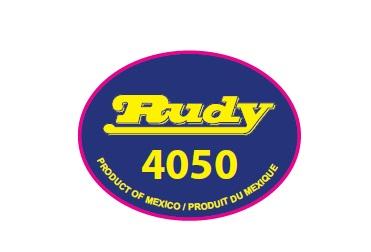
Rudy PLU 4050

Summary

Company Announcement Date:
FDA Publish Date:
Product Type:
Food & Beverages
Reason for Announcement:
Potential Foodborne Illness, Salmonella
Company Name:
SOFIA PRODUCE, LLC dba Trufresh
Brand Name:
Malichita, Rudy
Product Description:
Cantaloupes

Company Announcement

For Immediate Release, November 22, 2023 SOFIA PRODUCE, LLC, of Nogales, Arizona which does business under the name “Trufresh” (“Trufresh”) has expanded its recall of all sizes of fresh cantaloupes packaged in cardboard containers labeled with the “Malichita” label, and also labeled with the “Rudy” label to include all cantaloupes sold between the dates of October 10, 2023 and November 3, 2023, because they have the potential to be contaminated with Salmonella.

The cantaloupes were distributed directly to the following States in the United States: Arizona, California. Connecticut, Maryland, Missouri, Montana, Nevada, New Jersey, New York, Oregon, Pennsylvania, Tennessee, Utah, Illinois, Michigan, Wisconsin, Texas, Florida and Canada. The cantaloupes would have reached consumers through retail produce markets which may be located in states other than those listed above.

Trufresh has been advised that there are 97 illnesses reported to date that have been associated with this strain of Salmonella.
USA – FDA- Investigations of Foodborne Illness Outbreaks

FDA

What’s New

  • The outbreak of Listeria monocytogenes (ref #989) has been linked to peaches, plums, and nectarines. FDA issued an advisory on this outbreak. FDA’s investigation is ongoing.
  • A new outbreak of Salmonella Sundsvall (ref #1203) linked to cantaloupe has been added to the table. FDA issued an advisory on this outbreak. FDA’s investigation is ongoing.
  • A new outbreak of Salmonella Newport in a not yet identified food had been added to the table. FDA has initiated a traceback investigation. FDA’s investigation is ongoing.
Date
Posted
Ref Pathogen
or
Cause of
Illness
Product(s)
Linked to
Illnesses

(if any)
Total
Case
Count

Status
11/22/

2023

1201 Salmonella
Newport
Not Yet
Identified
40 Active
11/22/

2023

1203 Salmonella
Sundsvall
Cantaloupe See

Advisory

Active
11/15/

2023

989 Listeria
monocytogenes
Peaches, Plums,
and Nectarines
See

Advisory

Active
11/15/

2023

1192 E. coli
0103
Not Yet
Identified
12 Active
11/8/

2023

1198 Elevated Lead
Levels
Apple
Cinnamon
Puree
See

Advisory

Active
11/1/

2023

1195 E. coli
O121:H19
Not Yet
Identified
37 Active
10/4/

2023

1190 Salmonella
Thompson
Onions See

Advisory

Active

USA- CDC – Salmonella Outbreak Linked to Cantaloupes

CDC

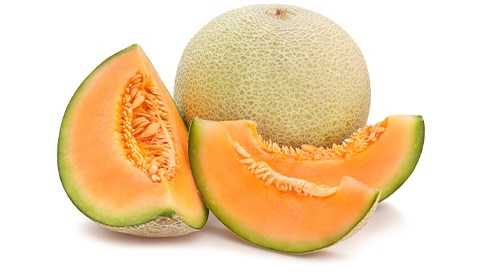
Cantaloupe on a white background.

Fast Facts
  • Illnesses: 43
  • Hospitalizations: 17
  • Deaths: 0
  • States: 15
  • Recall: Yes
  • Investigation status: Active   (first posted on November 17, 2023)
Recalled Food

Whole cantaloupes

  • Might have a sticker that says “Malichita”, “4050”, and “Product of Mexico/produit du Mexique”
  • See recall notice and expanded recall for more details

Vinyard brand pre-cut cantaloupes

  • Includes cantaloupe cubes, melon medleys, and fruit medleys
  • Sold in Oklahoma stores between October 30 and November 10, 2023
  • Most have a yellow label with “Vinyard,” and some have a red label with “Fresh”
  • See recall notice for product photos and more details

ALDI whole cantaloupe and pre-cut fruit products

  • Includes whole cantaloupes, cantaloupe chunks in clamshell packaging, and pineapple spears in clamshell packaging
  • Best-by dates between October 27 and October 31, 2023
  • Sold in ALDI stores in Illinois, Indiana, Iowa, Kentucky, Michigan, and Wisconsin
  • See recall notice [PDF – 2 pages] for more details

Investigators are working to identify any additional cantaloupe products that may be contaminated.

World – Nearly 150 sick in Salmonella outbreak affecting 11 countries

Food Safety News

Eleven countries, including the United States, have recorded almost 150 Salmonella infections that could be linked to tomatoes.

Since January 2023, 149 cases of Salmonella Strathcona have been reported. Germany has the most patients, with 47, while Italy has 34. Most people fell sick between August and October.

The U.S. has eight cases. Six interviewed sick people had been to Spain, Italy, Croatia, France, and Slovenia. Four patients reported travel to Italy.

Austria has 17 cases, the Czech Republic and the United Kingdom have 13, and France has nine. Other affected countries are Finland, Denmark, Luxembourg, and Norway.

Read more at the link above

USA – FDA jumps in on Listeria Outbreak linked to HMC Peaches, Plums and Nectarines after 10 sick and 1 dead

Food Poison Journal

The FDA and CDC, in collaboration with state and local partners, are investigating a multistate outbreak of Listeria monocytogenes infections linked to peaches, plums, and nectarines (stone fruit).

Total Illnesses: 11
Hospitalizations: 10
Deaths: 1
Last Sample Collection: August 16, 2023
States with Cases: California, Colorado, Florida, Illinois, Kansas, Michigan, Ohio
Product Distribution: Nationwide

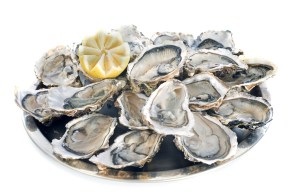
UK -FSA assesses risk of Norovirus from oysters

Food Safety News

Scientists at the Food Standards Agency (FSA) have looked at the key topics to consider when dealing with norovirus outbreaks linked to oysters.

Microbiological experts at the FSA assessed the public health risk of raw oysters, to help with development of risk management options during outbreaks.

Work was done in response to recurring norovirus outbreaks linked to consumption of raw oysters. In England, between 2013 and 2022, there were 1,307 cases of norovirus linked to oysters. In Scotland, from 2017 to 2023, there were 259 reported cases. In the same periods, there were 28 outbreaks in England and eight in Scotland caused by oysters.

Earlier this month, two incidents of norovirus in oysters from France were reported to have sickened six people in Norway and 14 in Sweden.

China – Rice noodles behind Bacillus cereus outbreak in China

Food Safety News

A large outbreak with almost 200 cases in China was caused by poor hygiene at the producer and inadequate food storage at schools, according to a recent study.

An outbreak of acute gastrointestinal illness occurred at two middle schools in a rural region of Chongqing in 2021. The source was rice noodles contaminated with Bacillus cereus.

In May 2021, an outbreak was reported in the two schools. More than 100 students from the schools had symptoms of vomiting and nausea, prompting the Chongqing Center for Disease Control and Prevention and the local CDC to investigate and implement control measures.

Salmonella tainted Cantaloupe sickens over 50 in the United States and Canada

Food Poison Journal

As of November 17, 43 people infected with the outbreak strain of Salmonella have been reported from 15 states. Illnesses started on dates ranging from October 17, 2023, to November 6, 2023. Of 30 people with information available, 17 have been hospitalized. No deaths have been reported.

Public health investigators are using the PulseNet system to identify illnesses that may be part of this outbreak. CDC PulseNet manages a national database of DNA fingerprints of bacteria that cause foodborne illnesses. DNA fingerprinting is performed on bacteria using a method called whole genome sequencing (WGS). WGS showed that bacteria from sick people’s samples are closely related genetically. This suggests that people in this outbreak got sick from the same food.

Canada is also investigating a Salmonella outbreak linked to cantaloupes. The strain causing the outbreak in Canada is the same as the US outbreak strain. The Canadian Food Inspection Agency found Salmonella in a sample of Malichita brand cantaloupe, and WGS showed that the Salmonella on the cantaloupe is closely related genetically to the bacteria from sick people in Canada. This suggests that people in the Canadian and US outbreaks likely got sick from eating cantaloupe.

On November 1, 2023, Malichita brand cantaloupes were recalled in Canada.

On November 8, Trufresh recalled Malichita brand whole cantaloupes that were sold to US businesses between October 16 and October 23. On November 15, Trufresh expanded their recall to include additional whole cantaloupes.

Additional products containing Malichita brand cantaloupes were also recalled. On November 14, Vinyard Fruit and Vegetable Company recalled pre-cut fruit products and ALDI recalled [PDF – 2 pages] its whole cantaloupe, cantaloupe chunks, and pineapple spears.

CDC is advising people not to eat, sell, or serve recalled fruit.

USA – FDA – Core Outbreak Investigation Table

FDA

What’s New

  • A new outbreak of Listeria monocytogenes (ref #989) linked to a not yet identified product has been added to the table. FDA has initiated sample collection and analysis. FDA’s investigation is ongoing.
  • A new outbreak of E. coli O103 (ref #1192) linked to a not yet identified product has been added to the table. FDA has initiated a traceback investigation. FDA’s investigation is ongoing.
  • For the investigation of illnesses (ref #1198) linked to apple cinnamon fruit puree pouches, the FDA has updated the advisory to include expanded recall information from the firm and additional reports of illness.

USA -Hepatitis A risk at Dockside Grill on Falmouth

Food Poison Journal

The Maine Center for Disease Control and Prevention (Maine CDC) has identified a case of hepatitis A in a Falmouth food service worker. Hepatitis A is a contagious liver disease caused by the hepatitis A virus. It can spread through person-to-person contact or by consuming contaminated food or water.

The individual worked during their infectious period at The Dockside Grill, 215 Foreside Rd, Falmouth, on the following dates:

  • October 23-25
  • November 6-8

Anyone who dined in or ordered takeout from this restaurant during these days could be at risk for hepatitis A infection. The restaurant is working closely with the Maine CDC and there is no concern about ongoing exposure outside of these dates.

You can prevent getting hepatitis A with a vaccine and those exposed to hepatitis A can avoid getting sick if they get the vaccine within 14 days of the exposure The hepatitis A vaccine is a two-dose series. After one dose, at least 94 out of 100 people become immune to the hepatitis A virus for several years. Getting the second dose ensures long-term protection.