Category Archives: food bourne outbreak

USA – Why Are There So Many HUS Complications in the E. coli O157:H7 Romaine Outbreak? An Attorney Answers

Food Poisoning Bulletin 

The hospitalization rate and hemolytic uremic syndrome case count in the deadly E. coli O157:H7 HUS outbreak that is linked to romaine lettuce has been very high. Typically, in an E. coli outbreak, about 30% of patients are hospitalized, and about 5 to 10% develop hemolytic uremic syndrome (HUS).

But in this outbreak, the hospitalization rate is almost 50%, and 13% of those patients have developed HUS. Why is the hospitalization rate and the HUS rate so high in this particular outbreak?

Typically, the group most susceptible to developing HUS is children under the age of 5. The patient age range in this outbreak is from 1 to 88. There could be quite a few children sick, which may explain the high HUS rate.

Another explanation for the high HUS rate and the high hospitalization rate is the type of toxins the E. coli bacteria are producing. Shiga toxin-producing E. coli bacteria make two types of those toxins: Stx1 and Stx2. Unfortunately, the bacteria in this outbreak are making Stx2, which causes more damage to the body.

Another factor could be that the lettuce was contaminated with an unusually high number of bacteria. It takes just 10 E. coli bacteria to make someone sick. More bacteria can release more toxins and cause more damage.”

USA – North Dakota added to nationwide E. coli Outbreak linked to Romaine Lettuce from Yuma

Food Poison Journal Eurofins Food Testing UK

The North Dakota Department of Health (NDDoH) reports North Dakota’s first case of E. coli infection associated with romaine lettuce originating from the Yuma, Arizona growing region. The NDDoH has been working with the Centers for Disease Control and Prevention (CDC), the U.S. Food and Drug Administration (FDA), and other state and local health officials in this national investigation. A second case in ND possibly associated with the outbreak is still under investigation.

North Dakota Department of Health Reports Case of E. coli Linked to Romaine Lettuce

Information – Will Washing Romaine Lettuce Remove E. coli O157:H7?

Food Poisoning Bulletin 

Consumers are asking questions about this outbreak; namely, how can they protect themselves and their families? One of the questions is: will washing romaine lettuce and other produce eliminate the pathogenic bacteria?

The answer is, unfortunately, no. There are several reasons for this.

First, it only takes 10 Shiga toxin-producing E. coli bacteria to make a person very sick. That tiny amount is invisible to the eye. Washing romaine lettuce will not remove all the bacteria from microscopic surface of every leaf. Experts say that washing romaine lettuce and other produce can only reduce the number of bacteria that may be present, not completely eliminate them.

Second, pathogenic bacteria such as E. coli O157:H7 can form biofilms. These bacteria tend to cluster in small clumps so they can communicate with each other and protect each other. The bacteria produce a matrix made up of proteins, polysaccharides, and nucleic acids. The matrix is very dense and protects the bacteria from cleaning agents. It also protects the bacteria from antibiotics, and even desiccation. A simple rinse with water or a cleaning solution may not penetrate that biofilm.

And finally, the deeply crenelated surface of leafy greens provides lots of places for bacteria to hide. The same is true for other types of produce, especially cantaloupe. And, if there are tiny tears, bruises, or rips in the lettuce leaf, the bacteria can actually get inside. No amount of washing any kind of produce can reach the bacteria then.

The only thing that will kill E. coli bacteria is heat; the food must be heated to 160°F. There are very few recipes that call for cooked romaine lettuce. Grilling romaine lettuce halves will not increase the temperature enough to kill any bacteria that may be present.

Information – At least 9 countries affected by US eggs salmonella outbreak

Poultry World 

At least 9 countries have been caught up in the US egg salmonella outbreak, according to the US Food and Drug Administration (FDA).

The FDA said this week that eggs from Rose Acre Farms, the company at the centre of the massive egg recall, were distributed to:

  1. the United Arab Emirates,
  2. Haiti, the Bahamas,
  3. Hong Kong,
  4. Cayman Islands,
  5. Turks and Caicos Islands,
  6. Saint Barthélemy,
  7. Saint Martin
  8. Aruba
  9. the US Virgin Islands.

South Africa – Listeria Outbreak Update Report

NICD

  1. HIGHLIGHTS

 Phase 1 of the listeriosis emergency response plan (ERP) to strengthen the response to the listeriosis outbreak has been completed. This includes development of the ERP, obtaining approval for the ERP, communication of the plan with provincial and district stakeholders, development of a risk-assessment tool to identify high-risk food production facilities for inspection, development of training material and checklists to support inspections of facilities, capacitation of NHLS food testing laboratories. These activities build on the response activities conducted before 9 April 2018, which include identification of the source, product recall and risk communication.

 A meeting to orient the provincial communications, environmental health and communicable disease authorities to the ERP was held on 24-25 April at NICD in Johannesburg. Agreement was reached on the role of the provinces and the next steps to implement the ERP.

 The number of cases of laboratory-confirmed listeriosis reported per week has decreased since the implicated products were recalled on 04 March 2018, with five additional cases reported this week (epidemiological week 15).

 As of 24 April 2018, a total of 1 024 laboratory-confirmed listeriosis cases have been reported to NICD since 01 January 2017. Since the recall 7 weeks ago, a total of 55 cases have been reported, whereas for the 7 weeks prior to the recall, 169 cases were reported. All cases that have been identified after the recall are being fully investigated.

  1. BACKGROUND

Prior to 2017, an average of 60 to 80 laboratory-confirmed listeriosis cases per year (approximately 1 per week), were reported in South Africa. In July 2017, an increase in laboratory-confirmed cases of listeriosis was reported to National Institute for Communicable Diseases (NICD) which was followed by investigations into the reported increase. On 05 December 2017, the listeriosis outbreak was declared by the Minister of Health, Dr. Aaron Motsoaledi. The source of the outbreak was identified as ready-to-eat processed meat products

manufactured at Enterprise Foods’ Polokwane production facility. A recall of affected products was initiated on 04 March 2018.

USA – Norovirus cases linked to raw British Columbia oysters: California health officials

Outbreak News Today Norwalk_Caspid

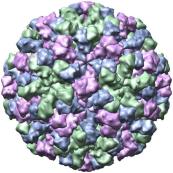
California health officials say raw oysters from British Columbia are linked to a recent outbreak of norovirus illnesses in the state, prompting warning for consumers to avoid eating raw oysters harvested from south and central Baynes Sound, in British Columbia, Canada.

In California, as of April 27, approximately 100 individuals have reported illness after they consumed raw British Columbian oysters sold by restaurants and retailers throughout the state. Laboratory testing has confirmed norovirus infection in several patients from both California and Canada. Although the number of reported new illnesses has decreased during the last week, the investigation is ongoing.

Canada has reported 172 cases of gastrointestinal illness linked to consumption of raw oysters.

USA – Multistate Outbreak of E. coli O157:H7 Infections Linked to Romaine Lettuce

CDC

What’s New?

  • Twenty-three more ill people from 10 states were added to this investigation since the last update on April 27, 2018. One death was reported from California.
  • Three more states have reported ill people: Kentucky, Massachusetts, and Utah.
  • The most recent illness started on April 21, 2018. Illnesses that occurred in the last two to three weeks might not yet be reported because of the time between when a person becomes ill with E. coli and when the illness is reported to CDC.

USA- FDA: Rodents, Filth Linked to Egg Recall

Quality Assurance Mag 

An inspection report released Thursday by the U.S. Food and Drug Administration indicates that the North Carolina farm linked to a multistate outbreak of Salmonella from contaminated eggs had an ongoing rodent infestation, unsanitary conditions and poor employee practices, CNN reported.

On April 13, Rose Acre Farms voluntarily recalled nearly 207 million eggs produced at its Hyde County farm in North Carolina that it believed were at risk of contaminated with Salmonella bacteria. Three days later, Cal-Maine Foods Inc. voluntarily recalled 280,800 eggs purchased from the same Rose Acre Farm.

Canada – CFIA – FDA – Norovirus Outbreak

FDA 

The U.S. Food and Drug Administration, along with the Centers for Disease Control and Prevention (CDC), the Public Health Agency of Canada, the Canadian Food Inspection Agency, and state and local partners, are investigating a multi-state outbreak of Norovirus illnesses that are linked to oysters.

What is the Problem and What is being Done About It?

The U.S. Food and Drug Administration is working with federal, state, and local officials regarding a norovirus outbreak linked to raw oysters from British Columbia, Canada. The FDA has confirmed that potentially contaminated raw oysters harvested in the south and central parts of Baynes Sound, British Columbia, Canada, were distributed to CA, IL, MA, and WA. It is possible that additional states received these oysters either directly from Canada or through further distribution within the U.S.

FDA and the states are conducting a traceforward investigation to determine where the raw oysters were distributed and ensure they’re removed from the food supply. Retailers should not serve raw oysters harvested from the following harvest locations (or landfiles) within Baynes Sound: #1402060, #1411206, #1400483, and #278757.

Oysters can cause food-related illness if eaten raw, particularly in people with compromised immune systems. Food contaminated with noroviruses may look, smell, and taste normal.

CFIA

Public Health Notice — Ongoing outbreak of norovirus and gastrointestinal illnesses linked to raw oysters

April 27, 2018 – Update

This notice has been updated to include additional cases of illness associated with this outbreak. In the last week, the Public Health Agency of Canada has seen a decrease in the number of cases being reported to the outbreak investigation team which indicates the outbreak may be slowing. The outbreak investigation remains active and findings to date have identified that most people who became sick were infected after consuming oysters that were harvested in the south and central parts of Baynes Sound, British Columbia. The investigation into a specific source of contamination impacting the shellfish farms in that area is ongoing.

USA – FDA Identifies One Farm Where Some of the Romaine in E. coli O157:H7 HUS Outbreak Was Grown

Food Poisoning Bulletin Eurofins Food Testing UK

The FDA has identified one farm that grew some of the romaine lettuce linked to an E. coli O157:H7 HUS outbreak that has sickened almost 100 people in 22 states. That facility is Harrison Farms of Yuma, Arizona. Lettuce grown there sickened inmates at the Anvil Mountain Correctional Center in Nome, Alaska