Category Archives: Enteropathogenic E. coli

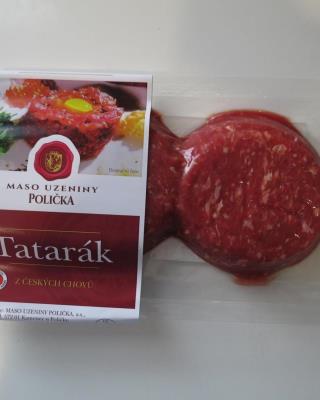
Czech Republic – Shelf Steak Tartar 250 g – Enteropathogenic Escherichia coli (EPEC) – Intimin (eaeA)

Potravinynapranyri

Illustrative photo #1

Place of inspection:
Olomouc ( Velkomoravská 488/29, 779 00 Olomouc )
ID: 26178541
Food group: Meat and meat products Non-heat-treated non-perishable products

Shelf Steak Tartar 250 g
Category: Dangerous foods
Invalid parameter:

Enteropathogenic Escherichia coli (EPEC) – Intimin (eaeA)

The presence of enteropathogenic Escherichia coli was detected in the food  . The presence of this bacterium in food intended for direct consumption represents a high risk of illness in the consumer.​

Batch: L: 145448
Expiration date: 09/08/2024
Packaging: plastic sealed foil
Quantity of the product in the package: 250 g
Manufacturer: Sausage meat, Polička, as, no. 300, 57201 Kamenec u Polička, Czech Republic
Date of sample collection: 31/07/2024
Reference number: 24-000513-SZPI-CZ
The sample was detected by the official control of the State Agricultural and Food Inspection.

Czech Republic – MEAT SAUSAGE SHELF Tartare – Enteropathogenic Escherichia coli (EPEC) – Intimin (eaeA)

Potravinynapranyri

Illustrative photo #1

Place of inspection:
Olomouc – Pavlovičky ( Sladovní 113/1, 779 00 Olomouc – Pavlovičky )
ID: 26178541
Food group: Meat and meat products Non-heat-treated non-perishable products

MEAT SAUSAGE SHELF Tartare
Category: Dangerous foods
Invalid parameter:

Enteropathogenic Escherichia coli (EPEC) – Intimin (eaeA)

The presence of enteropathogenic Escherichia coli was detected in the food  . The presence of this bacterium in food intended for direct consumption represents a high risk of illness in the consumer.​

Batch: L:106938
Expiration date: 20/06/2024
Packaging: sealed plastic tub
Quantity of the product in the package: 250 g
Manufacturer: MASO UZENINY POLIČKA, as, no. 300, 572 01 Kamenec u Polička
Date of sample collection: 12/06/2024
Reference number: 24-000512-SZPI-CZ
The sample was detected by the official control of the State Agricultural and Food Inspection.

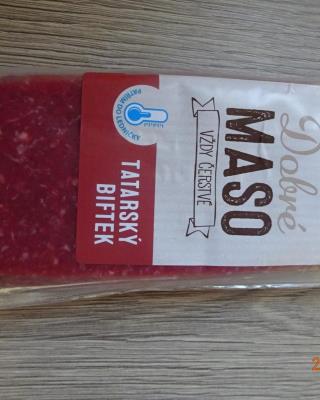
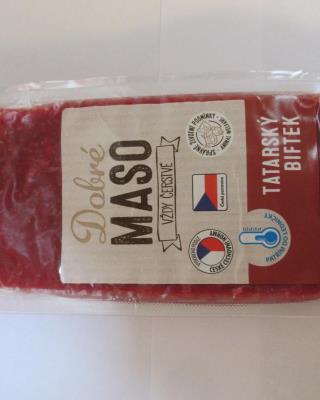
Czech Republic – Good MEAT TATAR STEAK, Uncooked meat product – Enteropathogenic Escherichia coli (EPEC) – Intimin (eaeA)

Potravinynapranyri

Illustrative photo #1

Place of inspection:
Hrádek nad Nisou ( Sokolská 756, 463 34 Hrádek nad Nisou )
ID: 64945880
Food group: Meat and meat products Non-heat-treated non-perishable products

Good MEAT TATAR STEAK, Uncooked meat product
Category: Dangerous foods
Invalid parameter:

Enteropathogenic Escherichia coli (EPEC) – Intimin (eaeA)

The presence of enteropathogenic Escherichia coli was detected in the food  .  The presence of this bacterium in food intended for direct consumption represents a high risk of illness in the consumer.​

Expiration date: 29/07/2024
Packaging: vacuum packed in PA-PE packaging
Quantity of the product in the package: 0.25 kg
Manufacturer: Uzeniny Příbram, as, Antala Staška 1670/80, Prague 4
Date of sample collection: 23/07/2024
Reference number: 24-000459-SZPI-CZ
The sample was detected by the official control of the State Agricultural and Food Inspection.

Czech Republic- GOOD MEAT Steak tartare – Enteropathogenic Escherichia coli (EPEC) – Intimin (eaeA)

Potravinynapranyri

Illustrative photo #1

Place of inspection:
Bystřice nad Pernštejnem ( Novoměstská 849, 59301 Bystřice nad Pernštejnem )
ID: 64945880
Food group: Meat and meat products Non-heat-treated non-perishable products

GOOD MEAT Steak tartare
Category: Dangerous foods
Invalid parameter:

Enteropathogenic Escherichia coli (EPEC) – Intimin (eaeA)

The presence of enteropathogenic E. coli was detected in the food . The presence of this bacterium in food intended for direct consumption represents a high risk of disease in the consumer.

The food was evaluated as harmful to health.

Batch: 07/08/2024
Expiration date: 07/08/2024
Packaging: PP
Quantity of the product in the package: 250 g
Manufacturer: Uzeniny Příbram, as, Antala Staška 1670/80, Prague 4
Country of origin:  Czechia
Date of sample collection: 26/06/2024
Reference number: 24-000410-SZPI-CZ
The sample was detected by the official control of the State Agricultural and Food Inspection.

Research – Acid Adaptation Enhances Tolerance of Escherichia coli O157:H7 to High Voltage Atmospheric Cold Plasma in Raw Pineapple Juice

MDPI

Abstract

Pathogens that adapt to environmental stress can develop an increased tolerance to some physical or chemical antimicrobial treatments. The main objective of this study was to determine if acid adaptation increased the tolerance of Escherichia coli O157:H7 to high voltage atmospheric cold plasma (HVACP) in raw pineapple juice. Samples (10 mL) of juice were inoculated with non-acid-adapted (NAA) or acid-adapted (AA) E. coli to obtain a viable count of ~7.00 log10 CFU/mL. The samples were exposed to HVACP (70 kV) for 1–7 min, with inoculated non-HVACP-treated juice serving as a control. Juice samples were analyzed for survivors at 0.1 h and after 24 h of refrigeration (4 °C). Samples analyzed after 24 h exhibited significant decreases in viable NAA cells with sub-lethal injury detected in both NAA and AA survivors (p < 0.05). No NAA survivor in juice exposed to HVACP for 5 or 7 min was detected after 24 h. However, the number of AA survivors was 3.33 and 3.09 log10 CFU/mL in juice treated for 5 and 7 min, respectively (p < 0.05). These results indicate that acid adaptation increases the tolerance of E. coli to HVACP in pineapple juice. The potentially higher tolerance of AA E. coli O157:H7 to HVACP should be considered in developing safe juice processing parameters for this novel non-thermal technology.

Research – A Comprehensive Review for the Surveillance of Human Pathogenic Microorganisms in Shellfish

MDPI

Abstract

Bivalve molluscan shellfish have been consumed for centuries. Being filter feeders, they may bioaccumulate some microorganisms present in coastal water, either naturally or through the discharge of human or animal sewage. Despite regulations set up to avoid microbiological contamination in shellfish, human outbreaks still occur. After providing an overview showing their implication in disease, this review aims to highlight the diversity of the bacteria or enteric viruses detected in shellfish species, including emerging pathogens. After a critical discussion of the available methods and their limitations, we address the interest of technological developments using genomics to anticipate the emergence of pathogens. In the coming years, further research needs to be performed and methods need to be developed in order to design the future of surveillance and to help risk assessment studies, with the ultimate objective of protecting consumers and enhancing the microbial safety of bivalve molluscan shellfish as a healthy food.

Research – Antimicrobial Susceptibility and Molecular Characterization of Escherichia coli Recovered from Milk and Related Samples

MDPI

There is a rising concern about illnesses resulting from milk consumption due to contamination by pathogenic microorganisms including Escherichia coli. This study examined the occurrence and antimicrobial susceptibility of E. coli isolated from cow milk and related samples. Furthermore, partial sequencing was done to ascertain the genetic relatedness and possible cross contamination among the samples. In all, 250 samples, that is, 50 each of raw milk, cow teat, milkers’ hands, milking utensils, and fecal matter of cows, were cultured for the identification of E. coli. E. coli was detected in 101/250 samples (40.4%). Milk and fecal samples recorded the highest percentages of 68.0% and 66.0%, respectively. Forty-two (42) E. coli strains examined for antimicrobial resistance showed an overall 25.5% resistance, 15.0% intermediate resistance, and 59.5% susceptibility. The isolates had a high level of resistance to teicoplanin (100.0%), but were susceptible to chloramphenicol (95.2%) and azithromycin (92.9%). The Multiple Antibiotic Resistance (MAR) index pattern ranged from 0.1 to 0.5, and 40.5% exhibited multiple drug resistance. The E. coli strains formed 11 haplotypes, and a phylogenic tree analysis showed relatedness among the isolates in other African countries. This observation is an indication of cross contamination among the milk and its related samples. View Full-Text

Research – Shiga Toxin-Producing Escherichia coli and Milk Fat Globules

MDPI

Shiga toxin-producing Escherichia coli (STEC) are zoonotic Gram-negative bacteria. While raw milk cheese consumption is healthful, contamination with pathogens such as STEC can occur due to poor hygiene practices at the farm level. STEC infections cause mild to serious symptoms in humans. The raw milk cheese-making process concentrates certain milk macromolecules such as proteins and milk fat globules (MFGs), allowing the intrinsic beneficial and pathogenic microflora to continue to thrive. MFGs are surrounded by a biological membrane, the milk fat globule membrane (MFGM), which has a globally positive health effect, including inhibition of pathogen adhesion. In this review, we provide an update on the adhesion between STEC and raw MFGs and highlight the consequences of this interaction in terms of food safety, pathogen detection, and therapeutic development. View Full-Text

Research – Risk evaluation of E. coli ST 131 as a foodborne pathogen in Switzerland

BLV

Within recent years, the topic of multidrug-resistant, uropathogenic Escherichia coli strains has seen a rise in occurrence as foodborne pathogens. At the core of this topic is the specific clonal group referred to as Escherichia coli O25b:H4 sequence type 131 (ST 131). It is an extended-spectrum β-lactamase (ESBL) producing E. coli strain, postulated to be responsible for the spread of ESBL-encoding genes world-wide.
This literature review aimed to evaluate ST 131 as a foodborne pathogen in Switzerland, in order to assess the risk it poses for food producers in Switzerland specifically. On a global scale, ST 131 has been identified on all continents. It is mostly associated with chicken and poultry meat, and has been isolated from retail products many times.
Not exclusive to chicken, it was rarely identified from fish guts and gills. In all other meat products, ST 131 was found only in faecal matter, not in the product itself. Besides meat, the pathogen was not identified from any sources such as dairy, fruit and vegetables.
The situation is similar in Switzerland, where it was isolated frequently from chicken, rarely from fish and a complete absence of the pathogen in all other food product groups. The risk, ST 131 poses towards Swiss food producers has been evaluated as a medium risk factor for both chicken and fish products, and a low risk factor for any other products. Despite ST 131 being evaluated as a medium-to-low risk factor, depending on the product, it is still recommended to perform further research on the topic. Especially looking towards prevalence in Swiss food, in chicken and poultry meat, but also in fish.
Specifically fish designated for raw consumption (Sushi, Sashimi). Moreover, the spread of afore-mentioned ESBL-encoding genes is hypothesized to occur also during infection of humans. This leads to the recommendation, that ST 131 should be considered a food-safety risk in all products, in order to eliminate said spread. Whether this consideration as a food-safety risk is feasible, cannot be said without further analysis of products and viable treatment options.

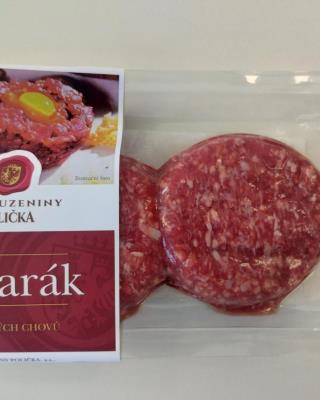
Czech Republic- Beef tartare – E.coli EPEC

Potravinynapranyri

Illustration photo no. 1

Place of inspection:
Velka Bystrice ( CSA 987, 783 53 Velka Bystrice )
Company ID: 64945880
Unsatisfactory parameter:

Escherichia coli enteropathogenic (EPEC)

Escherichia coli enteropathogenic, which causes diarrhea and vomiting , has been detected in the product  .

Lots: DP 10.05.2021
Expiration date: 10.05.2021
Packaging: food packaging
Quantity of product in package: 250 g
Producer: Uzeniny Příbram, as Antala Staška 1670/80, Prague 4, Czech Republic
Date of sampling: 4. 5. 2021
Reference number: 21-000165-CAFIA-CZ
The sample was found by an official inspection of the State Agricultural and Food Inspection Authority.