Category Archives: E.coli

Research – From field to plate: How do bacterial enteric pathogens interact with ready-to-eat fruit and vegetables, causing disease outbreaks?

Science Direct

Abstract

Ready-to-eat fruit and vegetables are a convenient source of nutrients and fibre for consumers, and are generally safe to eat, but are vulnerable to contamination with human enteric bacterial pathogens. Over the last decade, Salmonella spp., pathogenic Escherichia coli, and Listeria monocytogenes have been linked to most of the bacterial outbreaks of foodborne illness associated with fresh produce. The origins of these outbreaks have been traced to multiple sources of contamination from pre-harvest (soil, seeds, irrigation water, domestic and wild animal faecal matter) or post-harvest operations (storage, preparation and packaging). These pathogens have developed multiple processes for successful attachment, survival and colonization conferring them the ability to adapt to multiple environments. However, these processes differ across bacterial strains from the same species, and across different plant species or cultivars. In a competitive environment, additional risk factors are the plant microbiome phyllosphere and the plant responses; both factors directly modulate the survival of the pathogens on the leaf’s surface. Understanding the mechanisms involved in bacterial attachment to, colonization of, and proliferation, on fresh produce and the role of the plant in resisting bacterial contamination is therefore crucial to reducing future outbreaks.
Denmark Solves E. coli Outbreak; More Sick in Norwegian outbreak

Food Safety News

The SSI, Danish Veterinary and Food Administration (Fødevarestyrelsen), and DTU Food Institute investigated the outbreak that was linked to a type of beef steak, thanks to patient interviews.

Meanwhile, in Norway, four other cases have been added to a different E. coli outbreak.

The Norwegian Institute of Public Health (FHI) reported that E. coli O26:H11 had been detected in 24 people. It is one of the country’s most severe E. coli outbreaks.

Fifteen of those infected are under the age of 13, and nine children have developed hemolytic uremic syndrome (HUS).

USA – Miguel’s Cocina now linked to 35 with E. coli

Food Poison Journal

According to news reports, Miguel’s Cocina in San Diego’s 4S Ranch neighborhood had a “soft” reopening Friday night 10 days after voluntarily closing its doors in response to an E. coli outbreak that, as of Friday, has sickened at least 35 people including 10 who had to be hospitalized.

The news of the soft opening was confirmed Friday evening by San Diego County Health and Human Services (HHSA) Agency director of communications Tim McLain. The restaurant plans to return to normal operations Saturday.

Those who fell ill, or their families, reported eating at Miguel’s 4S Ranch location from October 6 to October 18 and developed symptoms from October 13 to October 19, according to the HHSA.

RASFF Alert – E.coli – Clams

RASFF

E.coli beyond limits in clams (tapes decussatus) from Portugal in Italy

Canada – E. coli O157 outbreak at Calgary daycare centres is over, Alberta Health Services says

CBC

The E. coli outbreak that was declared in September and infected hundreds of kids at several Calgary daycares is now over, Alberta Health Services (AHS) said in a release on Tuesday.

A total of 11 sites, including six branches of the daycare service and five other locations that shared a central kitchen, have been declared outbreak-free, AHS said.

The outbreak left 38 kids and one adult hospitalized. Doctors diagnosed 23 patients with severe illness or hemolytic uremic syndrome while eight received peritoneal dialysis.

No fatalities were reported and all patients have been discharged from the hospital, AHS said, adding that 1,581 kids who were linked to the outbreak have now been cleared by doctors to return to daycare.

Central kitchen still closed

USA – FDA – Investigations of Foodborne Illness Outbreaks

FDA

What’s New

  • A new outbreak of E. coli O121:H19 (ref # 1195) in a not yet identified product has been added to the table. FDA has initiated traceback.
  • For the outbreak of Listeria monocytogenes (ref # 1172) linked to Ice cream, the advisory was updated on October 26, 2023. The outbreak has ended, and FDA’s investigation is closed.
Date
Posted
Ref Pathogen
or
Cause of
Illness
Product(s)
Linked to
Illnesses

(if any)
Total
Case
Count

Status
11/01/

2023

1195 E.Coli
O121:H19
Not
Yet
Identified
37 Active
10/4/

2023

1190 Salmonella
Thompson
Onions See Advisory Active

Research – Inactivation Kinetics of Foodborne Pathogens in Carrot Juice by High-Pressure Processing

MDPI

Abstract

In this study, Salmonella Typhimurium, Escherichia coli, and Listeria monocytogenes were separately inoculated in sterilized carrot juice and subjected to various types of high-pressure processing (HPP) at 200–600 MPa for 0.1–15 min to observe the effects of HPP on the inactivation kinetics of foodborne pathogens in carrot juice. The first-order model fits the destruction kinetics of high pressure on foodborne pathogens during the pressure hold period. An increase in pressure from 200 to 600 MPa decreased the decimal reduction time (D values) of S. Typhimurium, E. coli, and L. monocytogenes. Under pressure ≥ 400 MPa, the D values of E. coli were significantly higher than those of S. Typhimurium and L. monocytogenes, indicating that E. coli had greater resistance to high pressures than the others. The Zp values (the pressure range that causes the D values to change by 90%) of E. coliS. Typhimurium, and L. monocytogenes were 195, 175, and 170 MPa, respectively. These results indicated that L. monocytogenes and E. coli were the most and least sensitive, respectively, to pressure changes. Additionally, the three bacteria were separately inoculated into thermal-sterilized carrot juice and subjected to 200–600 MPa HPP for 3 min. The treated carrot juices were stored at 4 °C for 27 d. Following S. Typhimurium and E. coli inoculation, the bacterial counts of the control and 200 MPa treatments remained the same during the storage duration. However, they decreased for the 300 and 400 MPa treatment groups with increasing storage duration. During the storage period, no bacterial growth was observed in the 500 and 600 MPa treatments. However, the bacterial number for the control and pressure treatment groups increased with prolonged storage duration following inoculation with L. monocytogenes. Therefore, following HPP, residual L. monocytogenes continued growing stably at low temperatures. Overall, HPP could inhibit and delay the growth of S. Typhimurium and E. coli in carrot juice during cold storage, but it was ineffective at inhibiting the growth of L. monocytogenes. There was a risk of foodborne illness despite the low-temperature storage of juice. The innovation of this preliminary study is to find the impact of high pressure on the inactivate kinetics of three food pathogens in carrot juice and its practical application in simulated contaminated juice.

Research -Nestlé outbreak drives record HUS high in France

Food Safety News

The number of children who suffered a potentially fatal complication of E. coli infection in France reached a record high in 2022, influenced by the Nestlé pizza outbreak, according to statistics recently released.

Hemolytic uremic syndrome (HUS), which can be a complication of E. coli infection, is a type of kidney failure that can result in lifelong, serious health problems and death.

In the outbreak caused by frozen Buitoni Fraîch’Up pizzas, 59 patients had a median age of 6. They fell ill between January and April 2022. Two children died.

Record HUS high
The 253 HUS cases in 2022 are the most since surveillance began in 1996. In 2021, 128 cases were reported. Santé publique France surveillance data on HUS only covers those younger than 15.

The sharp increase in incidence was partly driven by several outbreaks, including the one large Nestlé incident, but was also because of a lot of sporadic cases.

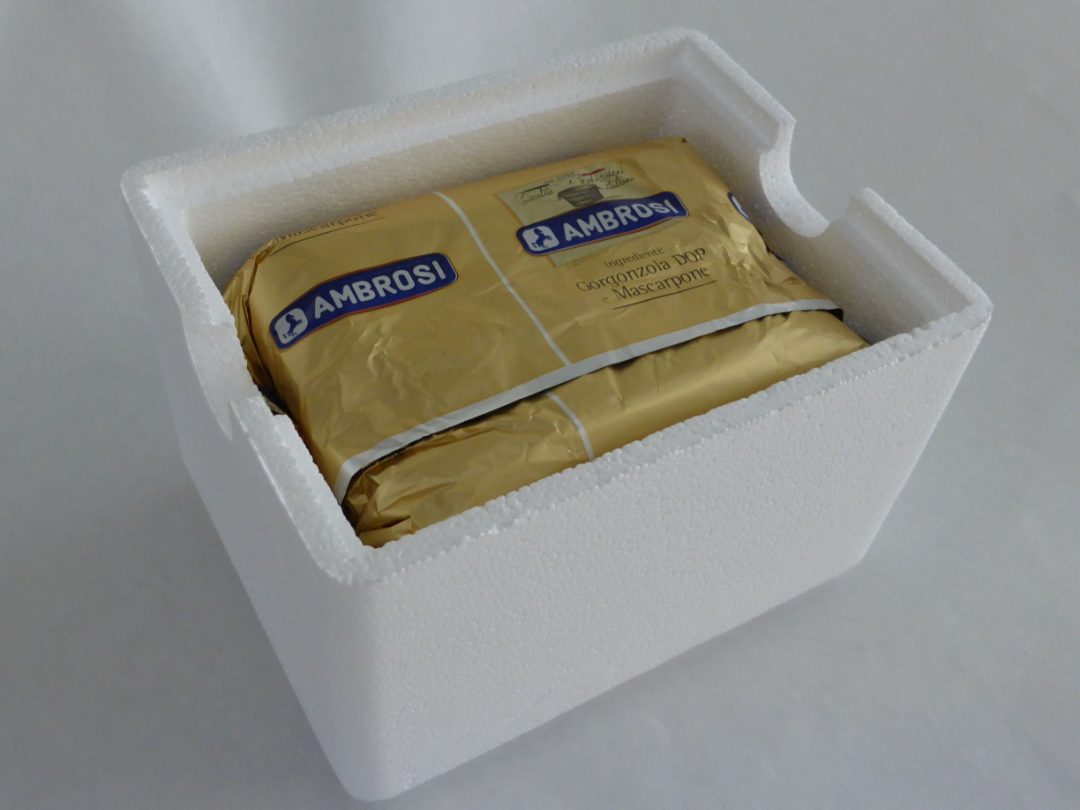
France – GORGONZOLA AND MASCARPONE – Listeria monocytogenes and E.coli

Gov france

  • Product category Food
  • Product subcategory Milk and dairy products
  • Product brand name AMBROSI SPA
  • Model names or references GORGONZOLA AND MASCARPONE AMBROSI TRAYS 1.2 KG APPROX.
  • Product identification
    Batch Date
    262 with lifespan as of 11/18/23 Use-by date between 07/10/2023 and 22/10/2023
  • Products List F613_GORGONZOLA_ET_MASCARPONE_AMBROSI_BARQUETTE_1.2_KG_ENV_X_4.pdfAttachment
  • Packaging Tray under film
  • Start/end date of marketing From 07/10/2023 to 18/10/2023
  • Storage temperature Product to keep in the refrigerator
  • Health mark IT 01 86 CE
  • Further information Product put on sale in Traditional Self-Service Cheese Shop
  • Geographical sales area Rueil-Malmaison
  • Distributors E.LECLERC
  • List of points of saleE.pdf

Australia – Update – Tempo Foods – Fresh Milk – E.coli

FSANZ

Date published: 27 October 2023

Update published: 31 October 2023

Product information

Tempo Foods is conducting a recall of Fresh Milk. The products have been available for sale at Coles, Woolworths and independent retailers in VIC and NSW​.

Problem

The recall is due to microbial (E. coli) contamination.

Food safety hazard

Food products contaminated with E. coli may cause illness if consumed.​

Country of origin

Australia

What to do​

Any consumers concerned about their health should seek medical advice. Customers should return the product to the place of purchase for a full cash refund.

For further information please contact:

Tempo Foods
+613 95880200

​​​Related links: