Category Archives: E.coli O157:H7

RASFF Alerts – STEC E.coli – Beef Burgers – Boneless Beef – Lamb Ribs – Beef – Lamb

Two week catch up due to Holidays 🙂

kswfoodworld food safety poisoning

RASFF-shigatoxin-producing Escherichia coli (O157 stx+ eae+, O157 stx- eae+, O26 stx+ eae+, O26 stx- eae+) in frozen beef burgers from France, with raw material from Poland in France

RASFF-shigatoxin-producing Escherichia coli (stx1+; stx2+; eae-) in frozen boneless beef from Brazil in Italy

RASFF-shigatoxin-producing Escherichia coli in frozen lamb ribs from the United Kingdom in Italy

RASFF-shigatoxin-producing Escherichia coli (stx1/stx2+, eae+ /25g) in chilled beef (Bos taurus) from Argentina in Spain

RASFF-shigatoxin-producing Escherichia coli (stx1+,stx2+,eae- /25g) in frozen boneless lamb from Uruguay in Germany


USA – ‘Close to 10’ children hospitalized for E. coli; ‘raw’ milk, farm animals may be sources

Knox News 

East Tennessee Children’s Hospital said Tuesday it’s treated “close to 10” children, all younger than 4, for a “serious outbreak” of E. coli-caused illness over the past 10 days.

The Knox County Health Department has confirmed two likely sources of the outbreak are unpasteurized milk and farm animals.

Most of the ill children are known to have consumed raw milk from a local cow-share dairy, French Broad Farm in Knox County, the health department said in an alert issued Tuesday evening. The health department recommends consumers dispose of all raw milk or other unpasteurized products they may have from this farm.

“People need to be aware that if they choose to drink raw milk, they’re taking a risk,” said Dr. Martha Buchanan, health department director.

Information – In the wake of E. coli outbreak linked to French Broad Farm, some ask what ‘raw milk’ is

Knox News

“Raw” milk is milk that hasn’t been pasteurized. Health officials from almost every agency and organization warn it often contains dangerous bacteria that can sicken or even kill people: E.coli, salmonella, listeria and campylobacter, to name a few.

More: ‘Close to 10’ children hospitalized for E. coli; ‘raw’ milk, farm animals may be sources

But proponents of drinking it say heating the milk during the pasteurization process kills helpful pathogens, including probiotics and enzymes.

Information – FSA – E.coli Fact Sheet

FSA 

CDC E.coli

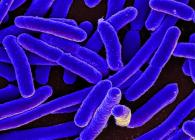
Image CDC


Escherichia Coli (known as E. coli) is a type of bacteria that can be found in the intestines of animals and humans. Many strains of E. coli are harmless to humans, but some can cause serious illness. Most cases of foodborne illness are caused by a strain known as E. coli O157.

Research – Behavior of 11 Foodborne Bacteria on Whole and Cut Mangoes var. Ataulfo and Kent and Antibacterial Activities of Hibiscus sabdariffa Extracts and Chemical Sanitizers Directly onto Mangoes Contaminated with Foodborne Bacteria

Journal of Food Protection

The behavior of foodborne bacteria on whole and cut mangoes and the antibacterial effect of Hibiscus sabdariffa calyx extracts and chemical sanitizers against foodborne bacteria on contaminated mangoes were investigated. Mangoes var. Ataulfo and Kent were used in the study. Mangoes were inoculated with Listeria monocytogenes, Shigella flexneri, Salmonella Typhimurium, Salmonella Typhi, Salmonella Montevideo, Escherichia coli strains (O157:H7, non-O157:H7 Shiga toxin–producing, enteropathogenic, enterotoxigenic, enteroinvasive, and enteroaggregative). The antibacterial effect of five roselle calyx extracts (water, ethanol, methanol, acetone, and ethyl acetate), sodium hypochlorite, colloidal silver, and acetic acid against foodborne bacteria were evaluated on contaminated mangoes. The dry extracts obtained with ethanol, methanol, acetone, and ethyl acetate were analyzed by nuclear magnetic resonance spectroscopy to determine solvent residues. Separately, contaminated whole mangoes were immersed in five hibiscus extracts and in sanitizers for 5 min. All foodborne bacteria attached to mangoes. After 20 days at 25 ± 2°C, all foodborne bacterial strains on whole Ataulfo mangoes had decreased by approximately 2.5 log, and on Kent mangoes by approximately 2 log; at 3 ± 2°C, they had decreased to approximately 1.9 and 1.5 log, respectively, on Ataulfo and Kent. All foodborne bacterial strains grew on cut mangoes at 25 ± 2°C; however, at 3 ± 2°C, bacterial growth was inhibited. Residual solvents were not detected in any of the dry extracts by nuclear magnetic resonance. Acetonic, ethanolic, and methanolic roselle calyx extracts caused a greater reduction in concentration (2 to 2.6 log CFU/g) of all foodborne bacteria on contaminated whole mangoes than the sodium hypochlorite, colloidal silver, and acetic acid. Dry roselle calyx extracts may be a potentially useful addition to disinfection procedures of mangoes.

Canada – E. coli Outbreak in Canada tied to Yuma Romaine – E.coli O157

Food Poison Journal 

As of May 9, 2018, there are six Canadian cases of E. coli O157 that are genetically similar to the U.S. outbreak linked to romaine lettuce coming from the Yuma growing region in the U.S. The six Canadian illnesses are reported in four provinces: British Columbia (1), Alberta (1), Saskatchewan (2), and Ontario (2). Individuals became sick between late March and mid-April 2018. One of the Canadian cases was hospitalized, and no deaths have been reported in Canada. Individuals who became ill were between 13 and 68 years of age. The majority of cases (67%) were female.In the Canadian investigation, among the six cases, most of the individuals who became sick reported having eaten romaine lettuce at home, or in prepared salads purchased at grocery stores, restaurants and fast food chains, before their illnesses occurred. Two Canadians did report traveling to the U.S. before getting sick and eating romaine lettuce while they were there.

USA – Why Are There So Many HUS Complications in the E. coli O157:H7 Romaine Outbreak? An Attorney Answers

Food Poisoning Bulletin 

The hospitalization rate and hemolytic uremic syndrome case count in the deadly E. coli O157:H7 HUS outbreak that is linked to romaine lettuce has been very high. Typically, in an E. coli outbreak, about 30% of patients are hospitalized, and about 5 to 10% develop hemolytic uremic syndrome (HUS).

But in this outbreak, the hospitalization rate is almost 50%, and 13% of those patients have developed HUS. Why is the hospitalization rate and the HUS rate so high in this particular outbreak?

Typically, the group most susceptible to developing HUS is children under the age of 5. The patient age range in this outbreak is from 1 to 88. There could be quite a few children sick, which may explain the high HUS rate.

Another explanation for the high HUS rate and the high hospitalization rate is the type of toxins the E. coli bacteria are producing. Shiga toxin-producing E. coli bacteria make two types of those toxins: Stx1 and Stx2. Unfortunately, the bacteria in this outbreak are making Stx2, which causes more damage to the body.

Another factor could be that the lettuce was contaminated with an unusually high number of bacteria. It takes just 10 E. coli bacteria to make someone sick. More bacteria can release more toxins and cause more damage.”

Research – Shiga toxin-producing E. coli found in food

Science Daily 


Escherichia coli (E. coli) is a germ that occurs naturally in the gut of mammals and birds, as well as in the human intestinal flora. However, certain E. coli types can cause severe diarrhea in humans. These virulent E. coli types include Shiga toxin-producing E. coli (STEC), also known as Verotoxin-producing E. coli (VTEC).

Their damaging effect is due to the fact that STEC produce toxins known as Shiga toxins (Stx), which can cause disease in the human gut. As the best known STEC representative, an enterohaemorrhagic E. coli (EHEC) strain of the serotype O104:H4 was responsible for numerous severe cases of haemolyticuremic syndrome (HUS) and bloody diarrhea in Germany in 2011, as a result of which 53 people died.

USA – North Dakota added to nationwide E. coli Outbreak linked to Romaine Lettuce from Yuma

Food Poison Journal Eurofins Food Testing UK

The North Dakota Department of Health (NDDoH) reports North Dakota’s first case of E. coli infection associated with romaine lettuce originating from the Yuma, Arizona growing region. The NDDoH has been working with the Centers for Disease Control and Prevention (CDC), the U.S. Food and Drug Administration (FDA), and other state and local health officials in this national investigation. A second case in ND possibly associated with the outbreak is still under investigation.

North Dakota Department of Health Reports Case of E. coli Linked to Romaine Lettuce

USA – Ten Minnesota illnesses linked to national E. coli outbreak associated with romaine lettuce

MN Health State Eurofins Food Testing UK

Health officials say do not eat romaine unless certain it is not from Yuma region

The Minnesota Department of Health (MDH) is working with the Minnesota Department of Agriculture (MDA), the Centers for Diseases Control and Prevention (CDC), the U.S. Food and Drug Administration (FDA), and public health agencies in other states to investigate an outbreak of E. coli O157 infections associated with eating romaine lettuce.

Information on the national outbreak can be found on CDC’s and FDA’s websites: CDC: E. coli and FDA Investigating Multistate Outbreak of E. coli O157:H7 Infections Likely Linked to Romaine Lettuce from Yuma Growing Region.

Ten cases of E. coli O157 infection in Minnesota residents have recently been identified and linked to the multi-state outbreak. Illness onset dates range from April 20 through May 2. The cases are from both metro and greater Minnesota counties; 90 percent are female. Three cases were hospitalized, and two developed hemolytic uremic syndrome (HUS), a potentially fatal complication that can include kidney failure and other severe problems.

All of the Minnesota cases interviewed by public health investigators reported exposure to romaine lettuce. Reported exposure locations include restaurants, grocery stores, and residential facilities. MDH is working with MDA to further investigate these exposures.

“Do not eat, buy, or sell romaine lettuce unless you can confirm it is not from the Yuma growing region,” said Kirk Smith, manager of the Foodborne, Waterborne, Vectorborne, and Zoonotic Diseases section. “The Yuma growing region includes part of western Arizona and extends into the Imperial Valley of southeastern California, but does not include Salinas Valley or other growing regions in California.” Product from the Yuma growing region should no longer be on sale; however, individuals should check their refrigerators for romaine lettuce that may have been grown in the Yuma region.

Symptoms of illness caused by E. coli O157 typically include stomach cramps and diarrhea, often with bloody stools, but only a low-grade or no fever. People typically become ill two to five days after exposure, but this period can range from one to eight days. Most people recover in five to 10 days. However, E. coli O157 infections sometimes lead to HUS. Those most at risk of developing complications from E. coli O157 include children younger than 10, the elderly, and those with weakened immune systems.

Diarrhea associated with E. coli O157 infections should not be treated with antibiotics, as this practice might promote the development of HUS. Anyone who believes they may have developed an E. coli O157 infection should contact their health care provider.

Approximately 135 cases of E. coli O157 are reported each year in Minnesota. More information on E. coli O157 and how to prevent it can be found on the MDH E. coli website.