Category Archives: E.coli O157

Research – MMWR Examines Trends of Foodborne Illness Outbreaks From 2006 to 2017

Food Poisoning Bulletin 


The CDC is examining trends of foodborne illness outbreaks for 2017 and describes changes in incidence since 2006 in its Morbidity and Mortality Weekly Report (MMWR) for March 23, 2018. Foodborne illness is a substantial health burden in the Untied States. In 2017, there were 24,484 infections, 5,677 hospitalizations, and 122 deaths attributed to food borne illness.

Despite ongoing food safety measures in the United States, foodborne illness continues to be a substantial health burden. The 10 U.S. sites of the Foodborne Diseases Active Surveillance Network (FoodNet)* monitor cases of laboratory-diagnosed infections caused by nine pathogens transmitted commonly through food. This report summarizes preliminary 2017 data and describes changes in incidence since 2006. In 2017, FoodNet reported 24,484 infections, 5,677 hospitalizations, and 122 deaths. Compared with 2014–2016, the 2017 incidence of infections with Campylobacter, Listeria, non-O157 Shiga toxin–producing Escherichia coli (STEC), Yersinia, Vibrio, and Cyclospora increased. The increased incidences of pathogens for which testing was previously limited might have resulted from the increased use and sensitivity of culture-independent diagnostic tests (CIDTs), which can improve incidence estimates (1). Compared with 2006–2008, the 2017 incidence of infections with Salmonella serotypes Typhimurium and Heidelberg decreased, and the incidence of serotypes Javiana, Infantis, and Thompson increased. New regulatory requirements that include enhanced testing of poultry products for Salmonella might have contributed to the decreases. The incidence of STEC O157 infections during 2017 also decreased compared with 2006–2008, which parallels reductions in isolations from ground beef.§ The declines in two Salmonella serotypes and STEC O157 infections provide supportive evidence that targeted control measures are effective. The marked increases in infections caused by some Salmonella serotypes provide an opportunity to investigate food and nonfood sources of infection and to design specific interventions.
Research – Water troughs are key to toxic E. coli spread in cattle

Cornell Chronicle 19243

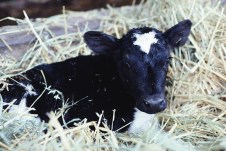
A major study led by Cornell researchers reveals for the first time that water troughs on farms are a conduit for the spread of toxic E. coli in cattle, which can then spread the pathogen to people through bacteria in feces. The study was published Feb. 7 in the journal PLOS ONE.

“Water troughs appeared in our mathematical model as a place where water can get contaminated and a potential place where we could break the cycle,” said Renata Ivanek, associate professor of epidemiology in the College of Veterinary Medicine and the paper’s senior author. The hypothesis was then tested in the field – with surprising results.

People commonly acquire infections from shiga toxin-producing E. coli through cow feces-contaminated beef and salad greens. The main shiga toxin-producing strain, E. coli 0157:H7, causes more than 63,000 illnesses per year and about 20 deaths, according to the Centers for Disease Control. Though cows carry and spread E. coli 0157:H7 when they defecate, the bacteria do not make them sick.


Information – USA – Microbiological Testing Program for Escherichia coli O157:H7 and non-O157 Shiga toxin-producing Escherichia coli (STEC)

USDA FSIS

About the Testing Program

2012, Testing for non-O157 Shiga toxin-producing E. coli 

FSIS considers raw, non-intact beef products or the components of these products found to have six Shiga toxin-producing Escherichia coli (STEC) to be adulterated, in addition to E. coli O157:H7. (Refer to the Federal Register notice Shiga Toxin-Producing Escherichia coli in Certain Raw Beef Products | PDF). These six non-O157 STECs are O26, O45, O103, O111, O121, and O145.

On June 4, 2012, FSIS began verification testing for these non-O157 STEC in domestic and imported beef manufacturing trimmings from cattle slaughtered on or after June 4, 2012. Beef manufacturing trimmings collected from cattle slaughtered before June 4, 2012, or that contain other components such as cheek meat are analyzed for E. coli O157:H7 only.

Research – Foodborne illness source attribution estimates for 2013 for Salmonella, Escherichia coli O157, Listeria monocytogenes, and Campylobacter using multi-year outbreak surveillance data, United States

CDC

Executive Summary

Each year in the United States an estimated 9 million people get sick, 56,000 are hospitalized, and 1,300 die of foodborne disease caused by known pathogens. These estimates help us understand the scope of this public health problem. However, to develop effective prevention measures, we need to understand the types of foods contributing to the problem.

The Interagency Food Safety Analytics Collaboration (IFSAC) is a tri-agency group created by the Centers for Disease Control and Prevention (CDC), the U.S. Food and Drug Administration (FDA), and the U.S. Department of Agriculture’s Food Safety and Inspection Service (USDA-FSIS). Based on a new method, IFSAC developed foodborne illness source attribution estimates for 2012 using outbreak data from 1998 through 2012 for four priority pathogens, Salmonella, Escherichia coli O157, Listeria monocytogenes, and Campylobacter. IFSAC described this method and the estimates for 2012 in a report and at a public meeting.

IFSAC derived the estimates for 2013 using the same method used for the 2012 estimates, with some modifications. The data came from 1,043 foodborne disease outbreaks that occurred from 1998 through 2013 and for which each confirmed or suspected implicated food fell into a single food category. The method relies most heavily on the most recent five years of outbreak data (2009–2013). Foods are categorized using a scheme IFSAC created to classify foods into 17 categories that closely align with the U.S. food regulatory agencies’ classification needs.


RASFF Alert – E.coli – Mussels – Clams -STEC in Beef

RASFF-Logo

RASFF -too high count of Escherichia coli (400 MPN/100g) in live mussels (Mytilus galloprovincialis) from Greece in Italy

RASFF -too high count of Escherichia coli (16.000 MPN/100g) in chilled clams (Tapes philippinarum) from Italy

RASFF – shigatoxin-producing Escherichia coli (STEC present in 12/15 samples) in frozen boneless beef meat from Argentina in Germany

Research Netherlands – Microbial Risk in Produce

Ingentaconnect

The objective of this study was to evaluate the microbial hazard associated with the consumption of mixed salads produced under standard conditions. The presence of Salmonella, Campylobacter spp., and Escherichia coli O157 in the Dutch production chain of mixed salads was determined. Microbial prevalence and concentration data from a microbiological surveillance study were used as inputs for the quantitative microbial risk assessment. Chain logistics, production figures, and consumption patterns were combined with the survey data for the risk assessment chain approach. The results of the sample analysis were used to track events from contamination through human illness. Wide 95% confidence intervals around the mean were found for estimated annual numbers of illnesses resulting from the consumption of mixed salads contaminated with Salmonella Typhimurium DT104 (0 to 10,300 cases), Campylobacter spp. (0 to 92,000 cases), or E. coli (0 to 800 cases). The main sources of uncertainty are the lack of decontamination data (i.e., produce washing during processing) and an appropriate dose-response relationship.

Ingentaconnect

Recent outbreaks with vegetable or fruits as vehicles have raised interest in the characterization of the public health risk due to microbial contamination of these commodities. Because qualitative and quantitative data regarding prevalence and concentration of various microbes are lacking, we conducted a survey to estimate the prevalence and contamination level of raw produce and the resulting minimally processed packaged salads as sold in The Netherlands. A dedicated sampling plan accounted for the amount of processed produce in relation to the amount of products, laboratory capacity, and seasonal influences. Over 1,800 samples of produce and over 1,900 samples of ready-to-eat mixed salads were investigated for Salmonella enterica serovars, Campylobacter spp., Escherichia coli O157, and Listeria monocytogenes. The overall prevalence in raw produce varied between 0.11% for E. coli O157 and L. monocytogenes and 0.38% for Salmonella. Prevalence point estimates for specific produce/pathogen combinations ranged for Salmonella from 0.53% in iceberg lettuce to 5.1% in cucumber. For Campylobacter, this ranged from 0.83% in endive to 2.7% in oak tree lettuce. These data will be used to determine the public health risk posed by the consumption of ready-to-eat mixed salads in The Netherlands.

RASFF Alerts – STEC E.coli – Beef – Roquefort Cheese – Salami – Clams

RASFF-Logo

RASFF -shigatoxin-producing Escherichia coli in frozen bovine meat from Brazil in Italy

RASFF-shigatoxin-producing Escherichia coli (presence /25g) in chilled beef (Bos taurus) from Brazil in the Netherlands

RASFF-shigatoxin-producing Escherichia coli (STEC stx+; STEC eae + /25g) in chilled beef shoulder from Belgium

RASFF-shigatoxin-producing Escherichia coli (presence /25g) in Roquefort cheese from France in Belgium

RASFF-shigatoxin-producing Escherichia coli in vacuum packed sliced salami from Italy

RASFF-high count of Escherichia coli (between 490 and 2400 MPN/100g) in frozen baby clam meat (Venus spp.) from Turkey in Greece

UK -Four more E.coli O157 Cases in Scotland Linked to Burgers

STV NewsBurger

Four more cases of E coli have been linked to the SSE Hydro in Glasgow, health bosses said.

The new cases bring the total number to 15 and are all linked to events at the venue on January 17, 18 and 19.

An investigation by NHS Greater Glasgow and Clyde (NHSGGC) alongside other public health bodies has indicated that burgers sold at the Hydro could have been the cause of the outbreak.

USA- Beef Products Recall – STEC E.coli

E.coli Blog

PFP Enterprises, a Fort Worth, Texas, establishment, is recalling approximately 15,865 pounds of beef products because they may be contaminated with E. coli O103, E. coli O111, E. coli O121, E. coli O145, E. coli O26 and E. coliO45, the U.S. Department of Agriculture’s Food Safety and Inspection Service (FSIS) announced today.

FSIS personnel became aware of the problem during a Food Safety Assessment when they discovered that beef trim tested presumptive positive for multiple non-O157 Shiga toxin-producing E. coli (STEC) strains through the company’s testing program. The company inadvertently did not carry the test out to confirmation, and not all affected product was held.


Research – Growth of Escherichia coli O157:H7 and Listeria monocytogenes in Packaged Fresh-Cut Romaine Mix at Fluctuating Temperatures during Commercial Transport, Retail Storage, and Display

Ingentaconnect

Temperature abuse during commercial transport and retail sale of leafy greens negatively impacts both microbial safety and product quality. Consequently, the effect of fluctuating temperatures on Escherichia coli O157:H7 and Listeria monocytogenes growth in commercially-bagged salad greens was assessed during transport, retail storage, and display. Over a 16-month period, a series of time-temperature profiles for bagged salads were obtained from five transportation routes covering four geographic regions (432 profiles), as well as during retail storage (4,867 profiles) and display (3,799 profiles). Five different time-temperature profiles collected during 2 to 3 days of transport, 1 and 3 days of retail storage, and 3 days of retail display were then duplicated in a programmable incubator to assess E. coli O157:H7 and L. monocytogenes growth in commercial bags of romaine lettuce mix. Microbial growth predictions using the Koseki-Isobe and McKellar-Delaquis models were validated by comparing the root mean square error (RMSE), bias, and the acceptable prediction zone between the laboratory growth data and model predictions. Monte Carlo simulations were performed to calculate the probability distribution of microbial growth from 8,122,127,472 scenarios during transport, cold room storage, and retail display. Using inoculated bags of retail salad, E. coli O157:H7 and L. monocytogenes populations increased a maximum of 3.1 and 3.0 log CFU/g at retail storage. Both models yielded acceptable RMSEs and biases within the acceptable prediction zone for E. coli O157:H7. Based on the simulation, both pathogens generally increased <2 log CFU/g during transport, storage, and display. However, retail storage duration can significantly impact pathogen growth. This large-scale U.S. study—the first using commercial time/temperature profiles to assess the microbial risk of leafy greens—should be useful in filling some of the data gaps in current risk assessments for leafy greens.