Category Archives: E.coli O157

USA – Two Children Ill with HUS – Possible E.coli Infection

Food Poisoning BulletinEcoli Istock

According to WFMY News in North Carolina, two children in Davidson County have been hospitalized with severe, bloody diarrhea and may be suffering from E. coli infections. The cases were reported on Friday, December 27, 2013. The possible cause of these illnesses is not known at this time.

USA Research – Retail Buffalo Meat – E.coli O157:H

Food Poisoning Journal

Escherichia coli O157 (E. coli O157) has been isolated from bison retail meat, a fact that is important given that bison meat has been implicated in an E. coli O157-multistate outbreak. In addition, E. coli O157 has also been isolated from bison feces at slaughter and on farms. Cattle are well documented as E. coli O157 reservoirs, and the primary site of E. coli O157 persistence in such reservoirs is the rectoanal junction (RAJ), located at the distal end of the bovine gastrointestinal tract.

RASFF Alerts – E.coli – Boneless Beef – Listeria monocytogenes – Smoked Salmon

RASFF-Logo

RASFF -shigatoxin-producing Escherichia coli in frozen boneless beef from Brazil in the Netherlands

RASFF -shigatoxin-producing Escherichia coli in chilled boneless beef from Brazil in the Netherlands

RASFF -Listeria monocytogenes (210 CFU/g) in chilled sliced smoked salmon from Denmark in Italy

Research – High-Pressure Processing and Boiling Water Treatments for Reducing Listeria monocytogenes, Escherichia coli O157:H7, Salmonella spp., and Staphylococcus aureus During Beef Jerky Processing

Science Direct

Beef jerky is a convenient, ready-to-eat meat product, but requires processing lethality steps to ensure the safety of the product. Previous outbreaks involving various jerky products have highlighted the risks associated with jerky and the importance of utilizing pathogen interventions during processing. In this study, two alternative interventions were evaluated for reducing pathogen populations during jerky processing. Results demonstrated that high pressure processing (HPP; two treatments of 550 MPa, 60 s) could produce significant (p < 0.05), but variable reductions (6.83 and 4.45 log10 CFU/strip) of Salmonella spp. and Escherichia coli O157:H7, respectively, on resulting beef jerky. HPP treatments, however, produced minor reductions (p < 0.05) of Gram-positive pathogens, resulting in reductions of 1.28 and 1.32 log10 CFU/strip of Listeria monocytogenes and Staphylococcus aureus, respectively. Alternatively, boiling water (100 ± 2 °C) treatments (20–30 s) used after marination and prior to dehydration, reduced Salmonella spp., E. coli O157:H7, L. monocytogenes, and S. aureus populations >5.0 log10 CFU/strip in resulting beef jerky. Thus, 20 or 30 s boiling water (100 ± 2 °C) treatments could be effective interventions for commercial jerky processors or home food preservers. Future validation of these processes in-plant could provide processors and regulators with alternative strategies for safe and shelf-stable jerky products.

RASFF Alerts – E.coli – Chilled Beef Carpaccio – Warty Venus – Clams

RASFF-shigatoxin-producing Escherichia coli in chilled beef carpaccio from Italy in Germany

RASFF-too high count of Escherichia coli (330 MPN/100g) in warty venus (Venus verrucosa) from Croatia in Italy

RASFF -too high count of Escherichia coli (930 MPN/100g) in chilled clams from Spain in France

Research – Listeria in Cheese sites – E.coli O157/Salmonella on Spinach

Science Direct

Inhibition of Escherichia coli O157:H7 and Salmonella enterica on spinach and identification of antimicrobial substances produced by a commercial Lactic Acid Bacteria food safety intervention
The microbiological safety of fresh produce is of concern for the U.S. food supply. Members of the Lactic Acid Bacteria (LAB) have been reported to antagonize pathogens by competing for nutrients and by secretion of substances with antimicrobial activity, including organic acids, peroxides, and antimicrobial polypeptides. The objectives of this research were to: (i) determine the capacity of a commercial LAB food antimicrobial to inhibit Escherichia coli O157:H7 and Salmonella enterica on spinach leaf surfaces, and (ii) identify antimicrobial substances produced in vitro by the LAB comprising the food antimicrobial. Pathogens were inoculated on freshly harvested spinach, followed by application of the LAB antimicrobial. Treated spinach was aerobically incubated up to 12 days at 7 °C and surviving pathogens enumerated via selective/differential plating. l-Lactic acid and a bacteriocin-like inhibitory substance (BLIS) were detected and quantified from cell-free fermentates obtained from LAB-inoculated liquid microbiological medium. Application of 8.0 log10 CFU/g LAB produced significant (p < 0.05) reductions in E. coli O157:H7 and Salmonella populations on spinach of 1.6 and 1.9 log10 CFU/g, respectively. It was concluded the LAB antimicrobial inhibited foodborne pathogens on spinach during refrigerated storage, likely the result of the production of metabolites with antimicrobial activity.

Mary Ann Leibert

Collaborative Survey on the Colonization of Different Types of Cheese-Processing Facilities with Listeria monocytogenes

Cross-contamination via equipment and the food-processing environment has been implicated as the main cause of Listeria monocytogenes transmission. The aim of this study, therefore, was to determine the occurrence and potential persistence of L. monocytogenes in 19 European cheese-processing facilities. A sampling approach in 2007–2008 included, respectively, 11 and two industrial cheese producers in Austria and the Czech Republic, as well as six Irish on-farm cheese producers. From some of the producers, isolates were available from sampling before 2007. All isolates from both periods were included in a strain collection consisting of 226 L. monocytogenes isolates, which were then typed by serotyping and pulsed-field gel electrophoresis (PFGE). In addition, metabolic fingerprints from a subset of isolates were obtained by means of Fourier-transform infrared (FTIR) spectroscopy. PFGE typing showed that six processing environments were colonized with seven persistent PFGE types of L. monocytogenes. Multilocus sequence typing undertaken on representatives of the seven persisting PFGE types grouped them into distinct clades on the basis of country and origin; however, two persistent strains from an Austrian and an Irish food processor were shown to be clonal. It was concluded that despite the fact that elaborate Hazard Analysis and Critical Control Point concepts and cleaning programs are applied, persistent occurrence of L. monocytogenes can take place during cheese making. L. monocytogenes sanitation programs could be strengthened by including rapid analytical tools, such as FTIR, which allow prescreening of potentially persistent L. monocytogenes contaminants.


Research Articles – Raw Milk – Antimicrobial Film Coatings to Control Listeria – E.col O157 and Salmonella Control by MAP and Polylysine – Gut Flora and Listeria Infection

Food Poisoning Bulletin

One of every six people who drinks raw milk gets food poisoning, according to a new study from officials at the Minnesota Department of Health.  That percentage is much higher than the number of cases reported in relation to outbreaks associated with raw milk and, researchers say, it’s increasing even as some states push to relax raw milk regulations.

Science Direct

Edible antimicrobial coating solutions incorporating chitosan, lauric arginate ester (LAE) and nisin were developed to reduce foodborne pathogen contamination on ready-to-eat (RTE) meats. RTE deli meat samples were directly coated with the solutions, or treated with solution-coated polylactic acid (PLA) films. The antimicrobial efficacy of the coatings and films against Listeria innocua inoculated onto the surface of RTE meat samples was investigated. Antimicrobial coatings with 1.94 mg/cm2 of chitosan and 0.388 mg/cm2 of LAE reduced L. innocua by ca. 4.5 log CFU/cm2. Nisin (486 IU/cm2) showed less effectiveness than LAE (0.388 mg/cm2) and addition of nisin to the antimicrobial coatings or films containing LAE (0.388 mg/cm2) did not enhance the total antimicrobial effectiveness. Combining antimicrobial coatings or films with flash pasteurization (FP), which uses short burst of steam under pressure, further reduced L. innocua, achieving over a 5 log reduction. There was no significant difference in the effectiveness of antimicrobial films versus the coatings (p > 0.05). These data show the potential use of antimicrobial packaging alone, or in combination with FP, in preventing foodborne illness due to post-processing contamination of RTE meat products.

Science Direct

Escherichia coli O157:H7 and Salmonella spp. often contaminate fresh beef. In Japan, an E coli outbreak caused by raw beef made 181 people ill and 5 individuals dead in 2011. Responding to this outbreak, an effective sterilization method for fresh beef is expected to be developed. In this study, ε-polylysine combined with CO2-packaging method was examined for controlling these pathogens in fresh beef. At an incubation temperature of 4 °C, approximately 4.3 log and 2.4 log reduction in bacterial numbers were observed after 7-day incubation for E. coli O157:H7 and Salmonella, respectively, in ε-polylysine-added beef. When effectiveness of CO2-packaging combined with ε-polylysine was investigated, CO2 did not have additional inhibiting effect on bacterial growth compared to only-ε-polylysine-treated samples when incubated at 4 °C. However, effectiveness of CO2 was observed when incubated at 10 °C where approximately 2.9 log and 4.4 log reduction in E. coli cell numbers were observed in only-ε-polylysine-treated samples and polylysine- and CO2-treated group, respectively, and approximately 1.7 log and 3.5 log reduction in Salmonella cell numbers were observed in only-ε-polylysine-treated samples and polylysine and CO2-treated group, respectively. This study confirmed that ε-polylysine or ε-polylysine combined with CO2 packaging are effective in preventing foodborne diseases caused by raw beef.

Food Poisoning Bulletin

The army of microbes that resides in the human gut may provide a powerful defense against Listeria infection, according to a study published in mBio, the online open-access journal of the American Society for Microbiology. The study, by a team of French researchers, shows that mice with germ-free intestines are more susceptible to Listeria infection than mice with the conventional intestinal microbes.


RASFF Alerts – E.coli -Clams – Mussels – Bovine Meat

RASFF -too high count of Escherichia coli (490 MPN/100g) in live clams (Venus verrucosa) from Greece in Italy

RASFF -too high count of Escherichia coli (330; 1090 MPN/100g) in live mussels from France

RASFF – shigatoxin-producing Escherichia coli (presence /25g) in frozen boneless bovine meat (Bos taurus) from Brazil in the Netherlands

Italy – E.coli STEC Outbreak 22 Children Sick

Consumer Food Safety

Twenty-two pre-school children have developed symptoms of shiga-toxin producing E. coli, with 12 confirmed and three hospitalized with hemolytic uremic syndrome.

As for the child discharged yesterday, he went back home with family in the

As yet, there is no word on the source of the outbreak.

Canada – Ground Beef Recall – E.coli O157:H7

CFIAE.coli O157:H7

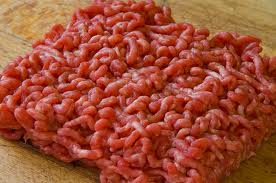
Groupe Colabor Inc. is recalling ground beef from the marketplace due to possible E. coli O157:H7 contamination. Hotels, restaurants, institutions and daycare facilities should not use, serve or distribute the recalled products described in the link above.