Category Archives: Decontamination Microbial

Research – Food safety considerations in the production of traditional fermented products: Japanese rice koji and miso

Wiley Online

Abstract

While established in Asia, rice koji and miso are fermented foods that are becoming more popular in western countries. They have been shown to contain a variety of microorganisms, consisting of bacteria, yeasts, and fungal species. Many contemporary miso varieties are not pasteurized as consumers are looking for more natural products, and/or have the desire to consume fermented foods containing live microorganisms. While correctly prepared fermented foods are rarely associated with food safety outbreaks, incidences have been recorded. On these occasions, pathogenic, or spoilage microorganisms were introduced into the products from external sources such as the raw material or the processing environment. Consequently, hygiene and fermentation conditions need to be carefully monitored to ensure food safety. Furthermore, many of the production steps during koji and miso manufacture do not fit into contemporary food safety guidelines for foods. Although pH is a required food safety hurdle for fermented foods, this does not apply to nonacidic foods such as koji or miso. This review focuses on control of microbial pathogens and discusses the processes of miso fermentation, and how fermentation of rice koji and miso fits with current food safety hurdles in western countries.

Research – A Systematic Quantitative Determination of the Antimicrobial Efficacy of Grape Seed Extract against Foodborne Bacterial Pathogens

MDPI

Abstract

Concerns regarding the role of antimicrobial resistance (AMR) in disease outbreaks are growing due to the excessive use of antibiotics. Moreover, consumers are demanding food products that are minimally processed and produced in a sustainable way, without the use of chemical preservatives or antibiotics. Grape seed extract (GSE) is isolated from wine industry waste and is an interesting source of natural antimicrobials, especially when aiming to increase sustainable processing. The aim of this study was to obtain a systematic understanding of the microbial inactivation efficacy/potential of GSE against Listeria monocytogenes (Gram-positive), Escherichia coli and Salmonella Typhimurium (Gram-negative) in an in vitro model system. More specifically, for L. monocytogenes, the effects of the initial inoculum concentration, bacterial growth phase and absence of the environmental stress response regulon (SigB) on the GSE microbial inactivation potential were investigated. In general, GSE was found to be highly effective at inactivating L. monocytogenes, with higher inactivation achieved for higher GSE concentrations and lower initial inoculum levels. Generally, stationary phase cells were more resistant/tolerant to GSE as compared to exponential phase cells (for the same inoculum level). Additionally, SigB appears to play an important role in the resistance of L. monocytogenes to GSE. The Gram-negative bacteria under study (E. coli and S. Typhimurium) were less susceptible to GSE as compared to L. monocytogenes. Our findings provide a quantitative and mechanistic understanding of the impact of GSE on the microbial dynamics of foodborne pathogens, assisting in the more systematic design of natural antimicrobial-based strategies for sustainable food safety.

Research – Microbial Biocontrol in the Agri-Food Industry

MDPI

Abstract

In recent years there has been a growing interest in the use of natural antimicrobial compounds to limit or avoid the use of chemical antimicrobials. Natural antimicrobial compounds can come from plants (essential oils) or from microorganisms (bacteriocins, mycocines, and active peptides). Despite a wide range of possible applications, their exploitation at the industrial level is still limited and needs to be investigated. The actual and possible applications of natural antimicrobial compounds in agri-food are a growing research field. In addition to the use of antimicrobial compounds, microorganisms themselves can be used in the control of spoilage microorganisms along the entire production chain of the agri-food industry. Likewise, the papers collected in this Special Issue indicate the fast development of novelties in this research field.

Research – Foodborne Pathogen Biofilms: Development, Detection, Control, and Antimicrobial Resistance

MDPI

Bacteria can grow either as planktonic cells or as communities within biofilms. The biofilm growth mode is the dominant lifestyle of most bacterial species and 40–80% of microorganisms are associated with biofilms [1]. Biofilm is a sessile community that is irreversibly attached to a substratum or interface or to other members of the community [2]. It is surrounded by extracellular polymeric substances (EPS) that include extracellular polysaccharides, extracellular DNA, lipids, proteins, and other elements [3]. Biofilm formation is a complex but well-regulated process that can be classified into five distinct stages [4]. In the first stage, planktonic bacteria attach to a surface. Salmonella species, Listeria monocytogenesCampylobacter jejuni, or Escherichia coli have specific structures on the surface of the bacteria, such as flagella, curli, fimbriae, and pili, which help the bacteria attach [5].
The second stage is the adhesion step, which includes an initial reversible adhesion resulting in loose adhesion and a subsequent irreversible adhesion resulting in more stable adhesion. The third stage is to secrete EPS and form microcolonies. This is followed by biofilm maturation, which produces large amounts of EPS to grow in size and build three-dimensional structures. The final stage is the stage in which the biofilm is dispersed, releasing the planktonic cells and initiating the formation of a new biofilm at another location.
Microbial cells living within biofilms are protected from various environmental stresses such as desiccation, osmotic changes, oxidative stress, metal toxicity, radiation, antibiotics, disinfectants, and the host immune system [6]. Biofilms are much less sensitive to antimicrobial agents than planktonic cells, and several mechanisms contribute to their resistance to antimicrobials [7]. The exopolysaccharide matrix prevents the entry of antimicrobial agents by reducing diffusion and acting as a primary barrier [8]. Most antimicrobial agents kill rapidly dividing cells more effectively, but slow growth of biofilms leads to resistance [9]. Changes in metabolic activity within biofilms, genetic changes of antimicrobial resistant determinants in target cells, extrusion of antimicrobial agents using efflux pumps, and the presence of persistent cells also contribute to antimicrobial resistance [10].

Research – Recent insights into green antimicrobial packaging towards food safety reinforcement: A review

Wiley Online

Abstract

Food packaging is widely used method of food preservation around the world. It is an element that enhances the quality and food product safety. The primary function of packaging is to protect food from contamination, undesirable chemical reactions and to provide physical protection. Food spoilage caused by food-borne pathogens and microbes is increasing tremendously posing an enormous threat. In the field of food packaging, new biodegradable and natural antimicrobial agents from plants and animals are gaining popularity. Recent foodborne outbreaks have prompted more creative and safe ways to initiate efficient packaging systems in food industries. However, as consumer demand for natural food ingredients has grown as a result of increasing safety and availability, natural substances are thought to be safer. Antimicrobial packaging that incorporates natural antimicrobials is thus a viable active packaging innovation. One possibility for increasing the safety and quality of foods while prolonging their shelf life is to employ natural antibacterial packaging. This article focuses on environmentally friendly bio-based polymers that can be utilized in food packaging to enhance mechanical strength, gas permeability, and water resistance, among other features. It also includes useful information about natural antimicrobial agents found in fruits and vegetables, as well as animal by-products, their properties, safety laws, and uses aimed at improving and increasing food quality and safety.

Research – The Anti-Listeria Activity of Pseudomonas fluorescens Isolated from the Horticultural Environment in New Zealand

MDPI

Abstract

Beneficial bacteria with antibacterial properties are attractive alternatives to chemical-based antibacterial or bactericidal agents. Our study sourced such bacteria from horticultural produce and environments to explore the mechanisms of their antimicrobial properties. Five strains of Pseudomonas fluorescens were studied that possessed antibacterial activity against the pathogen Listeria monocytogenes. The vegetative culture of these strains (Pseudomonas fluorescens-PFR46I06, Pseudomonas fluorescens-PFR46H06, Pseudomonas fluorescens-PFR46H07, Pseudomonas fluorescens-PFR46H08 and Pseudomonas fluorescens-PFR46H09) were tested against Listeria monocytogenes (n = 31), Listeria seeligeri (n = 1) and Listeria innocua (n = 1) isolated from seafood and horticultural sources and from clinical cases (n = 2) using solid media coculture and liquid media coculture. All Listeria strains were inhibited by all strains of P. fluorescens; however, P. fluorescens-PFR46H07, P. fluorescens-PFR46H08 and P. fluorescens-PFR46H09 on solid media showed good inhibition, with average zones of inhibition of 14.8 mm, 15.1 mm and 18.2 mm, respectively, and the other two strains and P. fluorescens-PFR46H09 had a significantly greater zone of inhibition than the others (p < 0.05). There was no inhibition observed in liquid media coculture or in P. fluorescens culture supernatants against Listeria spp. by any of the P. fluorescens strains. Therefore, we hypothesized that the structural apparatus that causes cell-to-cell contact may play a role in the ejection of ant-listeria molecules on solid media to inhibit Listeria isolates, and we investigated the structural protein differences using whole-cell lysate proteomics. We paid special attention to the type VI secretion system (TSS-T6SS) for the transfer of effector proteins or bacteriocins. We found significant differences in the peptide profiles and protein summaries between these isolates’ lysates, and PFR46H06 and PFR46H07 possessed the fewest secretion system structural proteins (12 and 11, respectively), while PFR46H08 and PFR46H09 had 18 each. P. fluorescens-PFR46H09, which showed the highest antimicrobial effect, had nine tss-T6SS structural proteins compared to only four in the other three strains.

Research – Outbreak of Shigella sonnei in the EU/EEA and the United Kingdom among travellers returning from Cabo Verde

ECDC

As of 16 February 2023, 10 EU/EEA countries and the UK reported and the US reported 221 confirmed Shigella sonnei infections and 37 possible cases, all with a link to Cabo Verde.

Information on possible ways of infection or common exposure have not yet been identified but investigations are ongoing in Cabo Verde. Multiple modes of transmission are plausible, and the most likely way is through food, including via infected food handlers. However, person-to-person transmission is also possible.

The S. sonnei strain in the current outbreak indicates predicted resistance to trimethoprim and streptomycin but in some cases, multidrug resistance has also been detected.

Based on the available information, many cases are reported to have stayed in all-inclusive hotels located in the region of Santa Maria on the island of Sal. The most recent cases were reported in Sweden on 19 January 2023, suggesting an ongoing moderate risk of new infections among travellers to Cabo Verde, particularly among those staying in the region of Santa Maria on the Island of Sal.

Shigellosis is a gastrointestinal infection caused by one of four species of Shigella bacteria: Shigella sonnei, S. flexneri, S. boydii and S. dysenteriae. Humans are the primary reservoirs for Shigella.

Shigellosis is caught by oral contact with material contaminated by faeces, either through direct person-to-person contact, via contaminated food or water, or via objects which have been in contact with faeces. The necessary dose for infection is small, which increases transmissibility.

Food-related outbreaks are often caused by infected food handlers, who contaminate ready-to-eat food items like salads. Waterborne infection can occur if drinking or recreational water is contaminated with faeces from an infected person.

Handwashing with soap and water is important, especially after using the toilet and before preparing or eating food. Additional care with food and drinking water when travelling abroad is also important. There is no vaccine currently available to prevent Shigella infection.

People with shigellosis should not attend school, handle food, or provide child or patient care whilst ill. Children under the age of five, food handlers, and healthcare staff should stay at home for 48 hours after their symptoms have ceased.

ECDC encourages public health authorities in the EU/EEA to increase awareness among healthcare professionals on the possibility of Shigella infections among people that recently travelled to Cabo Verde.

Together with WHO/Europe, ECDC is in regular contact with authorities in Cabo Verde to support investigations on the sources of infection and to increase awareness among healthcare professionals in the country.

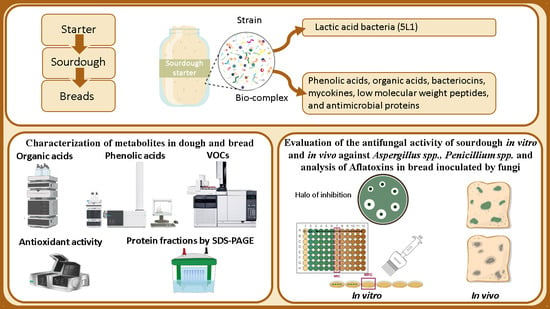
Research – Bread Biopreservation through the Addition of Lactic Acid Bacteria in Sourdough

MDPI

Abstract

Nowadays, the consumer seeks to replace synthetic preservatives with biopreservation methods, such as sourdough in bread. Lactic acid bacteria (LAB) are used as starter cultures in many food products. In this work, commercial yeast bread and sourdough breads were prepared as controls, as well as sourdough breads with L. plantarum 5L1 lyophilized. The impact of L. plantarum 5L1 on the properties of bread was studied. Antifungal compounds and the impact on the protein fraction by the different treatments in doughs and breads were also analyzed. In addition, the biopreservation capacity of the treatments in breads contaminated with fungi was studied and the mycotoxin content was analyzed. The results showed significant differences with respect to the controls in the properties of the bread and a higher total phenolic and lactic acid content in breads with higher amounts of L. plantarum 5L1. In addition, there was a higher content of alcohol and esters. Furthermore, adding this starter culture produced hydrolysis of the 50 kDa band proteins. Finally, the higher concentration of L. plantarum 5L1 delayed fungal growth and reduced the content of AFB1 and AFB2 compared to the control.

Research – Implementation of the HACCP System for Apple Juice Concentrate Based on Patulin Prevention and Control

MDPI

Abstract

Patulin (PAT) is a toxic secondary metabolite produced by Aspergillus sp. and Penicillium sp., which acts as a contaminant of most apples and their products. The internationally recognized HACCP system is selected as the theoretical basis to more effectively reduce the PAT in apple juice concentrate (AJC). Through field investigation of apple juice concentrate (AJC) production enterprises, we collected 117 samples from 13 steps of AJC production, including whole apple, apple pulp, and apple juice. PAT contents were analyzed via high-performance liquid chromatography (HPLC) and compared with samples from the different production processes. The result demonstrated that the PAT content was significantly (p < 0.05) influenced by five processes, receipt of raw apples, sorting of raw apples, adsorption step, pasteurization, and aseptic filling. These processes were determined as the CCPs. Monitoring systems for maintaining CCPs within acceptable limits were established, and corrective actions were proposed in case a CCP was surpassed. Based on the above-identified CCPs, critical limits, and control methods (corrective actions), a HACCP plan related to the production process of AJC was established. This study provided important guidance for juice manufacturers wishing to effectively control the PAT content in their products.

Research – Presence and Persistence of Listeria monocytogenes in the Danish Ready-to-Eat Food Production Environment

MDPI

Abstract

Listeria monocytogenes is an ubiquitously occurring foodborne bacterial pathogen known to contaminate foods during the production processes. To assess the presence and persistence of L. monocytogenes in Danish ready-to-eat (RTE) food production companies in response to a Listeria awareness campaign, the production environment of selected companies were sampled in 2016 and in 2020. Whole genome sequencing (WGS) was performed to characterize the isolates (n = 50, plus 35 isolates obtained from the routine surveillance during 2016–2020), including investigation of the presence of virulence, persistence and resistance genes. The number of companies that tested positive by culture was 17/39 (43.6%) in 2016 and 11/34 (32.4%) in 2020, indicating a limited effect of the campaign. WGS analyses of the 85 isolates showed that the most common sequence types (STs) were ST8 and ST121. The single nucleotide polymorphism (SNP) analysis showed that isolates coming from the same company and belonging to the same ST exhibited <10 SNP differences regardless of the sampling year and whether the samples came from the environment or products, indicating the persistence of the specific STs. Several prevalent STs were found in clinical cases concurrently, including genetically similar isolates. This highlights the issue of persistent L. monocytogenes in the food production environment and the need for improved risk communication and mitigation strategies.