Category Archives: Decontamination Microbial

UP researchers caution against parasites in raw vegetables, seafood – Toxoplasma

UPD

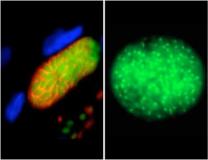
Scientists from the University of the Philippines (UP) are gently reminding the public to thoroughly wash and cook their market-bought fresh produce and seafood as a precautionary measure against parasites.

The parasite that causes toxoplasmosis, called Toxoplasma gondii (T. gondii), is one of the most infectious parasites in the world: it affects almost a third of the world’s population, most especially vulnerable groups such as the pregnant and immunocompromised. While most people infected with the disease do not present any symptoms, some may suffer flu-like symptoms, such as fever, headache, and muscle aches. But in severe cases, toxoplasmosis can cause inflammation of the brain and blurry vision. Infected parents’ newborn infants may suffer from excessive fluid in the brain and developmental issues. Fortunately, treatments are available for toxoplasmosis, hence symptomatic individuals are advised to seek timely medical attention.

Cielo Emar M. Paraoan, Ren Mark D. Villanueva, and Marie Christine M. Obusan of the UP Diliman College of Science’s Institute of Biology (UPD-CS IB) found that T. gondii is fairly common in vegetables and oysters that they sampled from local markets in Central Luzon. Among the vegetables tested were lettuce, cabbage, carrots, cauliflower, and mung bean sprouts.

USA – FDA Advises Restaurants and Retailers Not to Serve or Sell and Consumers Not to Eat Chopped Clams Illegally Harvested in Massachusetts and Distributed by Red’s Best

FDA

Audience
Restaurants and food retailers in Connecticut (CT), Massachusetts (MA), New York (NY), and Rhode Island (RI) that have recently purchased Red’s Best chopped clams, labeled as lot numbers # 331 and # 333, with shuck dates of 23/331 and 23/333. These clams were illegally harvested from prohibited waters in MA on 11/25/2023 and 11/26/2023.
Consumers in CT, MA, NY, and RI who have recently purchased or consumed Red’s Best chopped clams, labeled as lot numbers # 331 and # 333, with shuck dates of 23/331 and 23/333, that were illegally harvested from prohibited waters in MA on 11/25/2023 and 11/26/2023.
Product
Red’s Best chopped clams illegally harvested from prohibited waters in MA on 11/25/2023 and 11/26/2023 and distributed to CT, MA, NY, and RI. It is possible that chopped clams may have been distributed to other states as well. These chopped clams can be identified by lot numbers # 331 and # 333, with shuck dates of 23/331 and 23/333 and harvest area mhb4, packed by 13027 ma-sp. All chopped clams were packed in one-gallon (8 lbs) plastic containers with “Red’s Best” printed on the sidewall. Both the lot number and shuck date should be printed on a decal label adhered to either the lid or sidewall of each container.

Purpose
The US Food and Drug Administration (FDA) is advising consumers not to eat, and restaurants and food retailers not to sell, and to dispose of Red’s Best chopped clams illegally harvested from prohibited waters in MA on 11/25/2023 and 11/26/2023 with lot numbers # 331 and # 333, and shuck dates of 23/331 and 23/333, because they may be contaminated. The chopped clams were directly distributed to distributors and retailers in CT, MA, NY, and RI and may have been distributed further from these states.

Clams harvested illegally may be contaminated with human pathogens, toxic elements or poisonous or deleterious substances and can cause illness if consumed. Clams are filter feeders that remove and bioaccumulate bacteria and other pathogens from the water. It is not uncommon for shellfish to be consumed raw and whole. Contaminated clams can cause illness if eaten raw, particularly in people with compromised immune systems. Clams contaminated with pathogens may look, smell, and taste normal.

Research – New sanitiser kills Salmonella in seconds

Adelaide Edu

Food poisoning outbreaks caused by bacteria such as salmonella could be significantly reduced if a new sanitiser is proven to be successful in the next stage of trials.

University of Adelaide researchers are developing plasma-activated water as an environmentally friendly food sanitiser that can kill foodborne superbugs in seconds.

“The results of our prototype trials are really exciting and showed that our sanitiser destroyed salmonella on chicken meat and eggs in just five seconds,” said lead researcher Dr Katharina Richter, a Future Making Fellow from the University of Adelaide’s Institute for Photonics and Advanced Sensing and Adelaide Medical School.

“We envisage that this sanitiser could be used as a spray or dip for at-risk foods such as eggs, meats, poultry and plant-based products during the manufacturing process, potentially providing a chemical-free alternative to current sanitisers and preventing disease.”

More than four million cases of foodborne disease are estimated to occur in Australia each year. Symptoms can range from mild to severe and include diarrhoea, vomiting, fever, aches, and pains.

“Vulnerable people such as young children, the elderly, pregnant women and people with weakened immune systems are most at risk of severe consequences and could even die of foodborne illnesses,” said Dr Richter.

Research -Improvement of Microbial Quality, Physicochemical Properties, Fatty Acids Profile, and Shelf Life of Basa (Pangasius bocourti) Fillets during Chilling Storage Using Pepsin, Rosemary Oil, and Citric Acid

MDPI

Abstract

Meat discoloration, lipid oxidation, and undesirable texture are inevitable phenomena in basa fish fillets during storage, which in turn limits their exportation as well as decreases consumer acceptability. In addition, increasing consumers’ requirements for high-quality, minimally processed, and ready-to-cook fish fillets with an extended shelf-life is a great challenge, particularly with lifestyle changes. Accordingly, this study aimed to improve the quality, lipid stability, fatty acid profile, and lipid nutritional quality indices (LNQI) of basa fish fillets during chilling storage at 4 °C for 15 days using pepsin enzyme (E, 0.1%), rosemary oil (R, 0.5%), citric acid (CA, 0.5%), and their combination (0.1% E + 0.5% R; 0.1% E + 0.5% CA; and 0.1% E + 0.5% R + 0.5% CA). Our results revealed that all treated samples exhibited a significant increase in protein content, a significant decrease in fat content, and a marked reduction in pH, total volatile base nitrogen (TVBN), thiobarbituric acid (TBA), free fatty acids, and shear force (SF) values in comparison to control ones. Moreover, significant improvements in sensory scores, color stability, fatty acid profile, LNQI, and microbial quality of all treated samples were observed. Such findings were more pronounced in samples treated with a mixture of pepsin, rosemary, and citric acid (TVBN: 2.04 vs. 6.52 mg%; TBA: 0.40 vs. 2.68 mg malonaldehyde/Kg; and SF: 8.58 vs. 19.51 Kgf). Based on the obtained results, there was an extension for the shelf life of all treated basa fish fillet samples, especially in samples treated with a mixture of pepsin, rosemary, and citric acids when compared with the control samples (˃15 days versus 10 days). Additionally, eucalyptol, camphor, isoborneol, and α-pinene are the main components of rosemary, with great antioxidant and antimicrobial activity. In conclusion, the mixture of pepsin, rosemary, and citric acid can be applied easily in the seafood industry and at the household level to provide ready-to-cook fish fillets of high quality with great health benefits.

Research – Sage Essential Oil as an Antimicrobial Agent against Salmonella enterica during Beef Sous Vide Storage

MDPI

Abstract

Sous-vide is a process comprising vacuum-sealing food, heating it to the desired temperature, and circulating it in a water bath in a sous vide machine. This cooking technique is increasingly common in homes and catering establishments due to its simplicity and affordability. However, manufacturers and chef’s recommendations for low-temperature and long-term sous-vide cooking in media raise food safety concerns, particularly when preparing beef tenderloin. In this study, Salmonella enterica was found to be inactivated by heat and sage essential oil (EO) in beef samples from musculus psoas major that had been sous vide processed. To determine whether heat treatment was likely to increase the sous vide efficiency, Senterica and sage EO were mixed. After being vacuum-packed and injected with S. enterica, the samples were cooked at 50–65 °C through the sous vide technique for the prescribed time. On days 1, 3, and 6, the amounts of S. enterica, total bacteria, and coliform bacteria were measured in the control and treated groups of beef processed sous vide. Mass spectrometry was used to identify bacterial isolates on different days. On each day that was measured, a higher number of all the microbiota was found in the samples exposed to 50 °C for 5 min. The most frequently isolated microorganisms from both groups of samples were Pseudomonas fragi (17%), Pseudomonas cedrina (8%), and Proteus vulgaris (8%); in the treated group, also S. enterica (21%), Pseudomonas fragi (13%), and Pseudomonas veronii (6%). After the heat treatment of samples at 65 °C for 20 min, the total count of bacteria and coliform bacteria was zero. It has been shown that adding sage essential oil (EO) in combination with sous vide processing technique leads to the stabilization and safety of beef tenderloin.

Research – Prevalence of Multidrug-Resistant Pseudomonas aeruginosa Isolated from Dairy Cattle, Milk, Environment, and Workers’ Hands

MDPI

Abstract

Pseudomonas aeruginosa is an opportunistic pathogen causing severe infection in animals and humans. This study aimed to determine the ecological distribution and prevalence of multidrug-resistant (MDR) P. aeruginosa isolated from dairy cattle, the environment, and workers’ hand swabs. Samples (n = 440) were collected from farms and households (n = 3, each). Rectal swabs, udder skin swabs, milk, workers’ hand swabs, feed, water, water sources, and beddings were collected. Samples were subjected to the bacterial identification of P. aeruginosa via 16S rRNA. Antimicrobial resistance (AMR) was detected either phenotypically using an antibiotic susceptibility test or genotypically with AMR resistance genes (ARGs) such as drfA, sul1, and ermB. P. aeruginosa was detected on dairy farms and households (10.3–57.5%, respectively), with an average of 23.2%. The resistance of dairy farm strains was observed against sulfamethoxazole, imipenem, cefepime, piperacillin–tazobactam, and gentamycin (100%, 72.7%, 72.7%, 68.8%, and 63.3%, respectively). Meanwhile, the resistance of household strains was observed against sulfamethoxazole, imipenem, amoxicillin, gentamicin, cefepime, and erythromycin by 91.3%, 82.6%, 75.4%, 75.4%, 68.1%, and 63.8%, respectively. The susceptibility of farm strains was detected against norfloxacin, ciprofloxacin, and levofloxacin (90.9%, 84.8%, and 72.7%, respectively). Meanwhile, the susceptibility of household strains was detected against ciprofloxacin, amikacin, and norfloxacin (100%, 84.1%, and 72.5%, respectively). About 81.4% of P. aeruginosa strains were MDR. ARGs (drfA, sul1, and ermB) were detected in farm strains (48.5%, 72.7%, and 24.4%, respectively) and household strains (50.7%, 72.5%, and 47.8%, respectively). Almost all P. aeruginosa had MAR over 0.2, indicating repeated application of antibiotics. P. aeruginosa prevalence was fivefold higher in households than on farms. MDR strains were higher amongst household strains than farm strains.

EU – Multi-country outbreak of Salmonella Enteritidis in chicken meat and chicken meat products

EFSA

Between January and October 2023, 14 EU/EEA countries, the UK and the US reported 335 cases related to this outbreak.

Chicken meat and chicken meat products (kebab) are the likely source of a multi-country outbreak caused by three types of Salmonella Enteritidis, according to EFSA and ECDC’s latest Rapid Outbreak Assessment.

Bacteria similar to those causing the outbreak have been detected in samples of chicken meat and chicken kebab. While food traceability data points to producers located in Poland (7 producers) and Austria (1 producer), no microbiological evidence of a contamination at their facilities has been found.

Scientists expect that new cases are likely to occur in this multi-country outbreak as the source has not yet been identified. EFSA and ECDC experts recommend further investigations to identify the potential locations within the chicken meat production chain where the contamination may have occurred.

Research Dry-surface foodborne pathogens under scrutiny at Purdue

Purdue Edu

Maintaining sanitary conditions without using water presents special challenges

WEST LAFAYETTE, Ind. – During 2021 and 2022, national news reported on four infants being hospitalized and two dying after consuming infant formula tainted with Cronobacter sakazakii. The reports sparked the prolonged shutdown of a production plant that produced large quantities of the formula, leading to a monthslong nationwide shortage of infant formula.

The incident motivated Purdue University’s Haley Oliver to launch a project to improve the safety of low-moisture food-processing facilities. Oliver, a professor of food science, will collaborate with Old Dominion University’s Rishi Drolia on the project, which will target the C. sakazakii pathogen.

“It was a massive-scale food safety challenge that led to a food security challenge,” Oliver said.

USA – FDA Advises Restaurants and Retailers Not to Serve or Sell and Consumers Not to Eat Oysters from Future Seafoods, Inc., Potentially Contaminated with Salmonella and E. coli

FDA

Audience

  • Restaurants and food retailers in Florida (FL), Massachusetts (MA), Maryland (MD), Maine (ME), Pennsylvania (PA), and Virginia (VA) that have recently purchased oysters harvested from Future Seafoods, Inc. (PE 4217 SP) based in Bedeque, Prince Edward Island, Canada.
  • Consumers who have recently purchased oysters from Future Seafoods, Inc. (PE 4217 SP) in FL, MA, MD, ME, PA, or VA.

Product

  • Oysters from Future Seafoods, Inc. (PE 4217 SP), Prince Edward Island, Canada, harvested on 10/10/2023 from harvest area PE9B, and distributed to restaurants and retailers in FL, MA, MD, ME, PA, and VA.

Purpose

The FDA is advising restaurants and food retailers not to sell and to dispose of oysters and consumers not to eat oysters from Future Seafoods, Inc. (PE 4217 SP), Prince Edward Island, Canada, from harvest area PE9B on 10/10/2023, and shipped on 10/10/2023 to importers in FL, MA, MD, ME, PA, and VA, due to the possible presence of Salmonella and E. coli.

Contaminated oysters can cause illness if eaten raw, particularly in people with compromised immune systems. Food contaminated with Salmonella and E. coli may look, smell, and taste normal. Consumers of these products who are experiencing symptoms of salmonellosis or E. coli should contact their healthcare provider and report their symptoms to their local Health Department.

Symptoms of Salmonella infection

Most people infected with Salmonella will begin to develop symptoms 12 to 72 hours after infection. The illness, salmonellosis, usually lasts four to seven days and most people recover without treatment.

Most people with salmonellosis develop diarrhea, fever, and abdominal cramps. More severe cases of salmonellosis may include a high fever, aches, headaches, lethargy, a rash, blood in the urine or stool, and in some cases may become fatal.

Due to the range in severity of illness, people should consult their healthcare provider if they suspect that they have developed symptoms that resemble a Salmonella infection.

Symptoms of E. coli infection

E. coli are mostly harmless bacteria that live in the intestines of people and animals and contribute to intestinal health. However, eating or drinking food or water contaminated with certain types of E. coli can cause mild to severe gastrointestinal illness. Some types of pathogenic (illness-causing) E. coli, such as Shiga toxin-producing E. coli (STEC), can be life-threatening.

People infected with pathogenic E. coli can start to notice symptoms anywhere from a few days after consuming contaminated food or as much as nine days later. Generally, the symptoms include severe stomach cramps, diarrhea, fever, nausea, and/or vomiting.

The severity or presence of certain symptoms may depend on the type of pathogenic E. coli causing the infection. Some infections can cause severe bloody diarrhea and lead to life-threatening conditions, such as a type of kidney failure called hemolytic uremic syndrome (HUS), or the development of high blood pressure, chronic kidney disease, and neurologic problems. Other infections may have no symptoms or may resolve without medical treatment within five to seven days.

Due to the range in severity of illness, people should consult their health care provider if they suspect that they have developed symptoms that resemble an E. coli infection.

People of any age can become infected with pathogenic E. coli. Children under the age of 5 years, adults older than 65, and people with weakened immune systems are more likely to develop severe illness as a result of a pathogenic E. coli infection. However, even healthy older children and young adults can become seriously ill.

Summary of Problem and Scope

On 10/10/2023, the Canadian Food Inspection Agency (CFIA) tested oysters and discovered the presence of Salmonella and unacceptable levels of generic E. coli. On 10/18/2023, the CFIA informed the FDA of the testing results from the contaminated product. Canada is investigating the cause of the food safety problem. Future Seafoods, Inc. has not yet initiated a recall.

FDA Actions

The FDA is issuing this alert advising restaurants and food retailers not to sell and consumers not to eat oysters from Future Seafoods, Inc. (PE 4217 SP) harvested on 10/10/2023 from harvest area PE9B due to contamination from Salmonella and unacceptable levels of generic E. coli. The FDA is awaiting further information on distribution of the oysters harvested and will continue to monitor the investigation and provide assistance to state authorities as needed. As new information becomes available, the FDA will update the safety alert.

Recommendations for Consumers

Consumers who have symptoms should contact their health care provider to report their symptoms and receive care.

To report a complaint or adverse event (illness or serious allergic reaction), you can

Visit www.fda.gov/fcic  for additional consumer and industry assistance.

Research – Pathogen that plagues food processing plants eradicated by blue light – Listeria monocytogenes

News Wise

Newswise — Washington, D.C. – Blue light kills both dried cells and biofilms of the pathogen Listeria monocytogenes, a frequent contaminant of food processing facilities. Demise of L. monocytogenes occurred quickest when cells or biofilms were placed on polystyrene, a widely used, transparent form of plastic. The research is published in Applied and Environmental Microbiology, a journal of the American Society for Microbiology.

“These results contribute to advancing our understanding of the potential of blue light to treat inert surfaces contaminated with L. monocytogenes,” said corresponding author Francisco Diez-Gonzalez, Ph.D., Director and Professor, Center for Food Safety, University of Georgia. Although biofilms of pathogens are generally powerfully resistant to being exterminated, the results suggest that blue light could effectively destroy L. monocytogenes.

In the study, the investigators deposited liquid suspensions of mixtures of 5 strains of L. monocytogenes on small, sterile rectangular plates made of 6 different materials, including polystyrene, stainless steel and silicone rubber, which were then allowed to dry. The investigators also used similar plates to grow biofilms, which they also allowed to dry.

Then, they shined blue light onto the biofilms and onto the dried suspensions of cells on the plates to determine the most effective combinations of doses and wavelengths, as well as the most effective surfaces on which to extirpate the pathogens.

“The application of blue light for controlling microbial contamination has the potential to offer an additional technology that could complement existing methods for disinfecting surfaces in contact with foods,” said Diez-Gonzalez, noting that blue light has been used for disinfection in hospitals. As compared to ultraviolet light, blue light offers reduced risk for the user, he said.

A post-doc in Diez-Gonzalez’ laboratory, Fereidoun Forghani, Ph.D., kick-started the investigation when—searching for new ideas—he came across the use of blue light as a potential antimicrobial intervention to sanitize surfaces. Forghani built some blue light prototypes and produced the first preliminary results treating pure cultures of Listeria.