Category Archives: Contaminated water

Ireland – 7,000 consumers affected by Limerick water supply boil notice – Cryptosporidium

Limerick Post

A BOIL water notice affecting 7,000 consumers served by the Foynes/Shannon Estuary Public Water Supply has been issued by Uisce Éireann after cryptosporidium was found in the treatment plant.

The notice, which was issued  following consultation with the Health Service Executive (HSE), affects customers in Askeaton, Foynes, Ballyhahill, Loghill, Ballysteen, Pallaskenry, Kildimo and Shanagolden and surrounding areas.

All consumers affected by the notice must boil their water before drinking, preparing uncooked food, brushing teeth and making ice.

Operations Lead Duane O’Brien said Uisce Éireann acknowledged the impact of the notice on the communities affected and regrets the inconvenience to impacted customers.

New Research Links Foodborne E. Coli Infections to “Hundreds of Thousands” of UTIs in U.S.

Food Safety Magazine

A new study suggests that Escherichia coli infection from contaminated meat products may be responsible for hundreds of thousands of urinary tract infections in the U.S. each year.

A team of scientists led by George Washington University (GWU) Milken Institute School of Public Health researchers have developed a new genomic approach for tracking the origins of E. coli infections. Using this method, the team estimated that between 480,000 and 640,000 UTIs in the United States each year may be caused by foodborne E. coli strains.

According to GWU, E. coli is the most common cause of UTIs, causing upwards of 85 percent of cases each year. Women are at greater risk of developing UTIs, which can range from simple bladder infections to life-threatening bloodstream infections. At present, only specific types of diarrhea-causing E. coli, such as E. coli O157:H7, are rigorously monitored by the U.S. Food and Drug Administration (FDA), but the new findings from GWU suggest that other strains may also pose serious health risks.

In the study, researchers collected raw chicken, turkey, and pork from major grocery store chains in Flagstaff, Arizona, and isolated E. coli from the meat samples. Simultaneously, researchers collected urine and blood E. coli isolates from patients hospitalized at the Flagstaff Medical Center for UTIs.

Australia – Coca-Cola Europacific Partners- Barista Bros products – Bacterial Contamination – Update

FSANZ

Date published: 2/05/2023

Date updated: 5/05/2023

Product information

Coca-Cola Europacific Partners is conducting a recall of Barista Bros Products. The product has been available for sale at Woolworths, Coles, Metcash/IGA grocers, Aldi, Independent retail stores and vending machines nationwide.

Date markings

Best before dates from BB 30 SEP 23 to BB 30 DEC 23​

Barista Bros Products

Problem

The recall is due to a potential packaging failure leading to a possible contamination risk.

Food safety hazard

Food products that have been spoiled may cause illness if consumed.

Country of origin

Australia

What to do​

Any consumers concerned about their health should seek medical advice and should return the product to the place of purchase for a full refund.
For further information please contact:
Coca-Cola Europacific Partners
1800 025 123

​​​

Related links:

Canada – Critter Barn in Zeeland voluntarily closing for week after parasite outbreak

Holland Sentinel

ZEELAND — Critter Barn in Zeeland is voluntarily closing for the week in response to an outbreak of a parasite, the nonprofit announced Tuesday, May 2.

More: Parasite infects three Critter Barn volunteers

Critter Barn at 2950 80th Ave. will clean, scrub and disinfect its farm as an extra measure of precaution, it wrote, expecting to reopen Tuesday, May 9.

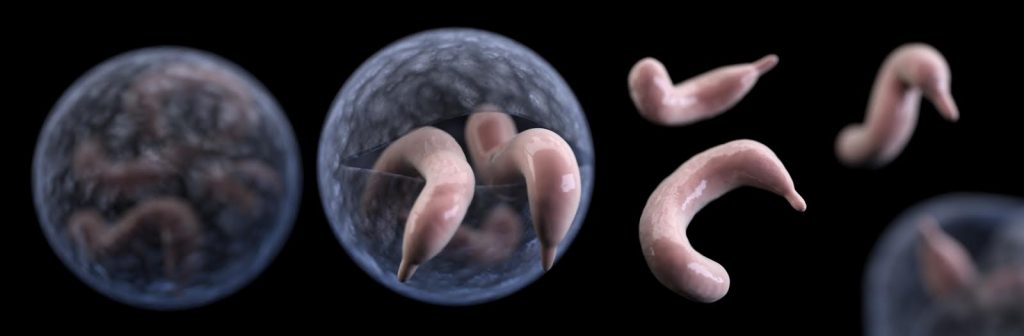
The Ottawa County Department of Public Health told WOOD TV-8 on Friday, April 28, there have been eight confirmed cases and three probable cases of Cryptosporidium, a parasite commonly found in water and near farm animals, traced back to Critter Barn. No one has been hospitalized, according to the health department.

Kenya – Mukumu girls deaths linked to E.coli, Salmonella from contaminated water

KBC

Three students and a teacher at Sacred Heart Mukumu Girls in Kakamega died as a result of contaminated water.

The Ministry of Health Friday said preliminary findings had revealed E. coli and Salmonella typhi, a bacterium that is responsible for typhoid fever as the causes of the illness initially suspected to be cholera.

“The Ministry wishes to inform the general public that this disease is likely to be a mixture of E. coli and Salmonella typhi which usually occurs if water sources are contaminated with these micro-organisms” Ag. Director General for Health Dr. Patrick Amoth said.

A comprehensive investigation is however underway even as the top health official ruled out aflatoxin.

Several learning institutions including, Mukumu Girls and Butere Boys in Kamamega and the latest being Mukuuni Boys High School in Chuka, Tharaka Nithi County have been closed after students were taken ill.

“The Ministry of Health has taken several water, food, and human tissue samples, from which preliminary laboratory investigations undertaken have revealed Enterotoxigenic E. coli and Salmonella typhi as the causes of the illness,” he said

“Further laboratory investigations carried out on the grains and pulses for aflatoxin have turned negative for aflatoxicosis- a dangerous fungal infection from poorly stored cereal grains” he added.

Nigeria – 79 died from 1,336 cases of cholera: NCDC

GAZETTENGR

The Nigeria Centre for Disease and Prevention Control (NCDC) has registered 79 deaths and a total of 1,336 suspected cases of cholera in the country so far in 2023.

The NCDC, via its official website, said this in its latest cholera situation epidemiological report.

Cholera is an acute diarrheal illness caused by infection of the intestine with Vibrio cholera bacteria.

People can get sick when they swallow food or water contaminated with cholera bacteria. The infection is often mild or without symptoms but can sometimes be severe and life-threatening.

The agency said 12 states across 43 local government areas reported the suspected cases, with a case fatality ratio of 5.9 per cent.

Research – Montana Raw Water Campylobacter Outbreak Linked to Bird’s Nest

Food Poisoning Bulletin

A Montana raw water Campylobacter outbreak in 2022 has been linked to a bird’s nest in a concrete cache from Kennedy Creek, according to ARS Technica. Nineteen people were sickened in that outbreak, and one person was hospitalized.

New Zealand – Dannevirke water supply on boil water notice due to E.coli

Stuff

Tararua District Council has issued a boil water notice for residents on the Dannevirke water supply due to a detection of E.coli.

A council spokesperson said the boil water notice would continue for three days while further testing is under way.

The council is testing in partnership with Taumata Arowai to ensure testing is accurate and done as quickly as possible.

An update would be provided on April 27, the spokesperson said.

Research – Cryptosporidiosis threat under climate change in China: prediction and validation of habitat suitability and outbreak risk for human-derived Cryptosporidium based on ecological niche models

IDP Journal

Cryptosporidiosis is a zoonotic intestinal infectious disease caused by Cryptosporidium spp., and its transmission is highly influenced by climate factors. In the present study, the potential spatial distribution of Cryptosporidium in China was predicted based on ecological niche models for cryptosporidiosis epidemic risk warning and prevention and control.

Traveling to Mexico? Here’s how to avoid food poisoning on vacation.

Food Poisoning News

The inexpensive food and delicious smells often tempt travelers to purchase food from the numerous street vendors. Before indulging, however, it is recommended to be vigilant of how ingredients are stored and how the raw meats are handled. Food that is cooked in front of the customer, rather than appearing to be pre-cooked, is a much safer option. When food, even if cooked, is left at room temperature too long, the dangers of cross-contamination and bacterial growth are much higher.

An easy rule to follow is also simply trusting your instincts and avoiding vendors whose food carts are untidy or produce rotten odors. Look for hand-sinks, access to water, or refrigeration units.

Ceviche is also a very common dish in Mexico. Raw fish is exponentially more likely to be contaminated than cooked fish, especially if it is not stored correctly. Travelers should be especially wary of eating ceviche in an area that is farther away from the coast where the fish have to be stored for longer periods of time.  In addition, all ceviche stands should have refrigeration units or copious amounts of ice.

Mexico also has a long history of unsafe drinking water – often the source of “traveler’s diarrhea.” It is generally recommended to not drink water straight from the tap or to use ice cubes made from tap water. Even if the water is purified at the source, the pipes that the water passes through may not be sanitary. Caution should also be exercised when purchasing fruit juices or horchata made with ap water.  Recommendation? Stay hydrated by drinking bottled drinks.

Travelers to Mexico will have a more enjoyable trip if they make wise and informed choices regarding the food they consume. But don’t leave home without anti-diarrheal medicine!