Category Archives: Campylobacter

Research – Chicken superbug CAN’T be treated with antibiotics: Warning as common bacteria found in half of supermarket poultry turns drug resistant

Daily Mail

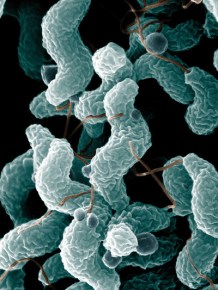
campy2

Image CDC

  • Campylobacter is found at low levels on half of chickens sold by major stores 
  • The bug is responsible for an estimated 500,000 cases of illness in the UK
  • More than nine per cent of one strain is resistant to three types of antibiotic 
  • Farmer using antibiotics to treat animals have raised levels of resistance 


Research – Prevalence, antimicrobial susceptibility, and virulence of Campylobacter jejuni isolated from chicken meat

Wiley Online

Abstract

The aim of this study was to determine the prevalence and antimicrobial resistance of Campylobacter jejuni isolated from retail chicken meat. The identification of Campylobacter isolates and the presence of virulence factor were evaluated by polymerase chain reaction (PCR). Furthermore, clove oil, cinnamon, and turmeric extracts were evaluated for the antimicrobial potential against Campylobacter isolates. Out of 200 chicken meat samples, 80 (40%) samples were found contaminated with Campylobacter jejuni. Antibacterial susceptibility testing indicated that out of 80 isolates 60 (75%) were resistant to tetracycline followed by 31 (38.75%) to ciprofloxacin, 12 (15%) to ampicillin, 8 (10%) to erythromycin, and 2 (2.5%) were resistant to chloramphenicol. Clove oil and cinnamon extract showed antibacterial potential against Campylobacter isolates. Furthermore, all the 80 isolates (100%) were found positive for virulence genes (cadF, flaA, and dnaJ). The presence of antibacterial resistance and virulence factors in C. jejunihighlighted the risk associated with retail poultry meat.

Practical applications

Campylobacter jejuni is associated with foodborne illnesses such as gastrointestinal intestinal complications. This study demonstrated that raw chicken meat should be subjected to pretreatment to avoid the foodborne illnesses associated with multidrug‐resistant (MDR) Campylobacter jejuni. Moreover, the use of antibiotics should be strictly monitored in developing countries to avoid the emergence of multidrug‐resistant pathogens.

Research -Campylobacteriosis – Annual Epidemiological Report for 2017

ECDC

Publication series: Annual Epidemiological Report on Communicable Diseases in Europe
Time period covered: 1 January – 31 December 2017

Campylobacteriosis is the most commonly reported gastrointestinal disease in the EU/EEA.  In 2017, 29 EU/EEA countries reported 250 161 confirmed cases of campylobacteriosis.


USA -Valley Milk Simply Bottled Raw Milk Recalled for Possible Campylobacter in CA

Food Poisoning Bulletin


Raw milk that was produced and packaged by Valley Milk Simply Bottled in Stanislaus County, California is being recalled for possible Campylobacter contamination. The farm’s packaged raw whole milk was sampled and tested by the California Department of Food and Agriculture and the lab confirmed detection of the pathogen.

Research – Estimate of the annual burden of foodborne illness in nondeployed active duty US Army Service Members: five major pathogens, 2010–2015

Cambridge.org

In this study, we estimate the burden of foodborne illness (FBI) caused by five major pathogens among nondeployed US Army service members. The US Army is a unique population that is globally distributed, has its own food procurement system and a food protection system dedicated to the prevention of both unintentional and intentional contamination of food. To our knowledge, the burden of FBI caused by specific pathogens among the US Army population has not been determined. We used data from a 2015 US Army population survey, a 2015 US Army laboratory survey and data from FoodNet to create inputs for two model structures. Model type 1 scaled up case counts of Campylobacter jejuniShigella spp., Salmonella enterica non-typhoidal and STEC non-O157 ascertained from the Disease Reporting System internet database from 2010 to 2015. Model type 2 scaled down cases of self-reported acute gastrointestinal illness (AGI) to estimate the annual burden of Norovirus illness. We estimate that these five pathogens caused 45 600 (5%–95% range, 30 300–64 000) annual illnesses among nondeployed active duty US Army Service members. Of these pathogens, Norovirus, Campylobacter jejuni and Salmonella enterica non-typhoidal were responsible for the most illness. There is a tremendous burden of AGI and FBI caused by five major pathogens among US Army Soldiers, which can have a tremendous impact on readiness of the force. The US Army has a robust food protection program in place, but without a specific active FBI surveillance system across the Department of Defence, we will never have the ability to measure the effectiveness of modern, targeted, interventions aimed at the reduction of specific foodborne pathogens.

Research – Seasonality and the effects of weather on Campylobacter infections

BMC

Campylobacter

Image CDC

The increase of Campylobacter infections in the late spring was significantly linked to temperature two weeks before, with an increase in conditional incidence of 0.175 cases per 100,000 per week for weeks 17 to 24; the relationship to temperature was not linear. Generalized structural time series model revealed that changes in temperature accounted for 33.3% of the expected cases of Campylobacteriosis, with an indication of the direction and relevant temperature range. Wavelet analysis showed a strong annual cycle with additional harmonics at four and six months. Cluster analysis showed three clusters of seasonality with geographic similarities representing metropolitan, rural, and other areas.

UK – Major retailers publish Campylobacter results

FSA

Major retailers publish Campylobacter results

The top 9 food retailers publish October – December 2018 campylobacter results for fresh shop-bought UK-produced chickens.

The latest figures show that on average, across the major retailers, 3.1% of chickens tested positive for the highest level of contamination. These are the chickens carrying more than 1,000 colony forming units per gram (cfu/g) of campylobacter.

Michael Wight, Director of Policy at the Food Standards Agency said:

‘It is encouraging that campylobacter levels in retail chicken are holding consistently low, however we will continue to work closely with retailers and smaller poultry businesses to bring levels down to as low as reasonably achievable.

‘We would like to thank the major retailers and poultry producers for continuing to work alongside the FSA in the publication of the results.’

Information – Occurrence of Salmonella, Campylobacter, Clostridium and Enterobacteriaceae in raw meat-based diets for dogs

Veterinary Record


The practice of feeding raw meat-based diets (RMBD) to dogs has increased in popularity in recent years. However, RMBD are based on offal that has not undergone any type of treatment to reduce the microbial content, so there is a risk of potential pathogenic microorganisms being present. Frozen samples from 60 RMBD packs produced by 10 different manufacturers were analysed for their content of bacteria belonging to the family Enterobacteriaceae, for Clostridium perfringens and for the presence of Salmonella and Campylobacter. Enterobacteriaceae were detected in all 60 samples and in 31 samples exceeded a level of 5000 bacteria/g, which is the threshold for satisfactory microbial hygiene according to EU regulations. In two samples, the amount of C. perfringens exceeded 5000 bacteria/g, which is the maximum level of anaerobic bacteria permitted by Swedish national guidelines. Salmonella species were found in four (7 per cent) and Campylobacter species in three (5 per cent) samples. These results show that it is critical to maintain good hygiene when storing, handling and feeding RMBD, in order to limit the potential health risks to animals and humans, especially young and immunocompromised individuals.

Research – Presence of genes associated with adhesion, invasion, and toxin production in Campylobacter jejuni isolates and effect of temperature on their expression

nrc research 

The aims of this study were to evaluate the presence of genes associated with adhesion (cadF), invasion (ciaB), and cytotoxin production (cdtAcdtB, and cdtC) among Campylobacter jejuniisolates from a poultry slaughterhouse and to investigate the effect of different temperatures on the expression of these virulence-associated genes. A total of 88 C. jejuni isolates from cecum, liver, chicken carcasses, chilled water, and scalding water were submitted to PCR assay for detection of virulence genes. Representative isolates were selected for gene expression evaluation at 37 and 42 °C, according to their virulence gene profile and genotypic typing. All C. jejuni isolates carried the five virulence-associated genes, which play an important role in the infectious process. Differential gene expression by RT–qPCR was observed among C. jejuni isolates at 37 and 42 °C. The expression levels at 37 °C showed upregulation of the ciaBcdtAcdtB, and cdtC genes in five isolates, with the exception of ciaB for isolate 4. At 42 °C, upregulation was observed for ciaB and cdtCcdtA and cdtB, and cadF in four, three, and two isolates, respectively. The C. jejuni isolates expressed the virulence genes evaluated, and the expression is gene- and isolate-dependent and varied according the temperature.

Research – Antimicrobial resistance in Campylobacter jejuni and Campylobacter coli from retail chilled chicken in the UK

FSA


The development and spread of antimicrobial resistance (AMR) is a public health concern worldwide. It is a complex issue driven by a variety of interconnected factors enabling microorganisms to withstand antimicrobial treatments to which they were once susceptible. The use of antibiotics is important in treating infections and preventing disease from arising in both animals and humans. However, the overuse and/or misuse of antibiotics in both animal husbandry and healthcare settings has been linked to the emergence and spread of microorganisms which are resistant to them, rendering treatment ineffective and posing a risk to public health.
The FSA is responsible for food safety. It assesses whether current agricultural practices may have an effect on public health via the food chain and works to affect change where this is considered to be the case. The transmission of AMR microorganisms through the food chain is thought to be one of the routes by which people are exposed to AMR bacteria. However, there is uncertainty around the contribution food makes to the problem of AMR in human infections. This report forms part of the project: A Microbiological Survey of Campylobacter Contamination in Fresh Whole UK Produced Chilled Chickens at Retail Sale (2015-2018) and presents AMR data for a subset of those Campylobacter isolates collected as part of this survey. There is a continued need to monitor the prevalence and types of AMR bacteria in retail chicken and other
foods to assess the risk to public health and also to inform a baseline to monitor future progress in reducing AMR in the food chain.