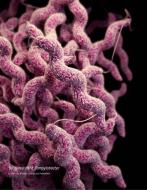
Category Archives: Campylobacter

Research – Prevalence of Campylobacter coli and Campylobacter jejuni in Retail Chicken, Beef, Lamb, and Pork Products in Three Australian States

Journal of Food Protection

ABSTRACT

The aim of this study was to investigate the prevalence and distribution of Campylobacter species in a variety of fresh and frozen meat and offal products collected from retail outlets in New South Wales (NSW), Queensland (Qld), and Victoria (Vic). A total of 1,490 chicken, beef, lamb, and pork samples were collected from Australian supermarkets and butcher shops over a 2-year sampling period (October 2016 to October 2018). Campylobacter spp. were detected in 90% of chicken meat and 73% of chicken offal products (giblet and liver), with significantly lower prevalence in lamb (38%), pork (31%), and beef (14%) offal (kidney and liver). Although retail chicken meat was frequently contaminated with Campylobacter, the level of contamination was generally low. Where quantitative analysis was conducted, 98% of chicken meat samples, on average, had <10,000 CFU Campylobacter per carcass, with 10% <21 CFU per carcass. Campylobacter coli was the most frequently recovered species in chicken meat collected in NSW (53%) and Vic (56%) and in chicken offal collected in NSW (77%), Qld (59%), and Vic (58%). In beef, lamb, and pork offal, C. jejuni was generally the most common species (50 to 86%), with the exception of pork offal collected in NSW, where C. coli was more prevalent (69%). Campylobacter prevalence was significantly higher in fresh lamb (46%) and pork (31%) offal than in frozen offal (17 and 11%, respectively). For chicken, beef, and pork offal, the prevalence of Campylobacter spp. was significantly higher on delicatessen products compared with prepackaged products. This study demonstrated that meat and offal products are frequently contaminated with Campylobacter. However, the prevalence is markedly different in different meats, and the level of chicken meat portion contamination is generally low. By identifying the types of meat and offal products types that pose the greatest risk of Campylobacter infection to consumers, targeted control strategies can be developed.

HIGHLIGHTS
  • Retail chicken meat is frequently contaminated with low levels of Campylobacter.

  • C. coli was more commonly detected in chicken meat and offal than C. jejuni.

  • C. jejuni was more commonly detected in beef, lamb, and pork offal than C. coli.

  • In nonchicken offal, prevalence of Campylobacter was highest on lamb offal.

  • Prevalence of Campylobacter was higher in fresh than in frozen offal.

New Zealand – MPI puts consumer health first – directs unregistered raw (unpasteurised) drinking milk producers to stop selling

MPI Raw Milk Food Safety KSW Foodworld

The Ministry for Primary Industries (MPI) has directed unregistered raw (unpasteurised) drinking milk suppliers across the country to stop selling their product until they comply with the legal requirements for sale.

MPI compliance staff yesterday executed search warrants at non-compliant raw drinking milk suppliers in Auckland, Hawkes Bay, Manawatu, Horowhenua, Nelson, and Southland following a year-long operation.

MPI’s manager of food compliance Melinda Sando says the purpose of the coordinated site visits was to gather evidence of the offending and to allow further investigation of non-compliant sales.

“We believe that the suppliers we visited today are operating outside of the regulatory framework. By not adhering to the rules for selling raw drinking milk, they are putting consumer health at risk.

“There have been multiple instances in the past of people getting sick after drinking raw milk from some of these suppliers. We can’t let this continue.

“Raw unpasteurised milk is a risky product as it hasn’t been heat-treated (pasteurised) to remove illness-causing bacteria including E. coli, listeria and Campylobacter.

“These types of bacteria most commonly cause severe diarrhoea and vomiting, but occasionally some have been linked with more serious complications that include miscarriage, paralysis, meningitis, and serious kidney problems in children. Raw milk may also be a source of tuberculosis (Tb).

Research – NARMS report shows rising resistance in foodborne bacteria

CIDRAP

The latest data from a national surveillance system that monitors foodborne bacteria for antibiotic resistance shows rising resistance to the drugs commonly used to treat Salmonella infections.

The findings come from the 2016-2017 National Antimicrobial Resistance Monitoring Systems (NARMS) Integrated Summary, which combines data from the Centers for Disease Control and Prevention (CDC), the Food and Drug Administration (FDA), and the US Department of Agriculture (USDA). The report provides a snapshot of antibiotic resistance patterns found in bacteria isolated from humans, raw retail meats (chicken, ground turkey, ground beef, and pork chops), and healthy animals at slaughter.

In addition to finding rising resistance to first-line antibiotics in human isolates of Salmonella, the NARMS data also show an increase in multidrug-resistant (MDR) Salmonella recovered from chickens and multidrug-resistant Campylobacter coli isolated from beef and dairy cattle.

Research -Occurrence of Campylobacter spp., Salmonella spp. and shiga toxin‐producing Escherichia coli in inline milk filters from Swedish dairy farms

Wiley Online

Abstract

This study investigated the occurrence of shiga toxin‐producing Escherichia coli (STEC), thermotolerant Campylobacter spp. and Salmonella spp. in Swedish dairy milk. A total of 302 inline milk filters were analyzed. Salmonella was not isolated from any filters. Polymerase chain reaction screening detected thermotolerant Campylobacter in 30.5% of the milk filters analyzed and it was isolated from 12.6% of filters. The stx genes (stx 1stx 2, or both) were screened from 71% of the filters and STEC was isolated from 14% of these. Of the STEC isolates, 21 contained the stx 1 gene, 19 the stx 2 gene, and five a combination of both stx 1 and stx 2 genes. Whole genome sequence typing on 34 of the 45 STEC showed that they belonged to 21 different serotypes, of which STEC O145:H28 was the most common (2%). STEC O157:H7 was only found from one (0.3%) of the filters. A combination of stx 2 and eae genes was found from 0.7% of the total number of inline milk filters analyzed, while stx 2a was found in 24% of the whole genome‐sequenced isolates. There was a significant positive correlations between number of animals per farm and presence of pathogens on milk filters.

USA – Foodborne illness source attribution estimates for 2017 for Salmonella, Escherichia coli O157, Listeria monocytogenes, and Campylobacter

CDC


Executive Summary
Each year in the United States an estimated 9 million people get sick, 56,000 are hospitalized, and 1,300 die of foodborne disease caused by known pathogens. These estimates help us understand the scope of this public health problem. However, to develop effective prevention measures, we need to understand the types of
foods contributing to the problem. The Interagency Food Safety Analytics Collaboration (IFSAC) is a tri-agency group created by the Centers for Disease Control and Prevention (CDC), the U.S. Food and Drug Administration (FDA), and the U.S. Department
of Agriculture’s Food Safety and Inspection Service (USDA-FSIS). IFSAC developed a method to estimate the sources of foodborne illness using outbreak data from 1998 through the most recent year for four priority pathogens: Salmonella, Escherichia coli O157, Listeria monocytogenes, and Campylobacter. IFSAC described this method and the estimates for 2012 in a report and at a public meeting. IFSAC derived the estimates for 2017 using the same method used for the 2012 estimates, with some modifications. The data came from 1,329 foodborne disease outbreaks that occurred from 1998 through 2017 and for which each confirmed or suspected implicated food fell into a single food category. The method relies most heavily on the most recent five years of outbreak data (2013 – 2017). Foods are categorized using a scheme IFSAC created to classify foods into 17 categories that closely align with the U.S. food regulatory agencies’ classification needs.

USA – Wild Ginger in Cortland New York link in Campylobacter Outbreak

Food Poison Journal

campy2

Image CDC

The Cortland County Health Department is alerting residents of an outbreak of Campylobacteriosis among people who ate at Wild Ginger, Main St., Cortland, between 10/18/2019 and 10/31/2019. To date, seven patrons have tested positive for this bacterial infection.

Research -A systematic review of source attribution of human Campylobacteriosis using multilocus sequence typing

ECDC

 gastroenteritis is a leading cause of acute bacterial gastroenteritis in high, low, and middle income countries. The number of confirmed cases has continued to increase across countries of the European Union (214,000 in 2013 to 246,000 in 2016 and 2017) [1], and over 800,000 cases are estimated to occur annually in the United States (data from 2000 to 2008) [2]. In low income countries  is increasingly implicated in growth faltering among children under 2 years of age [3].

Chicken products have been identified as an important risk factor for human infection by a variety of techniques including natural experiments, case–control studies, and increasingly by the application of genotypic methods [410]. Other infection sources identified by observational epidemiological studies include cattle, sheep, pigs, wild birds and the environment [10].

Alongside epidemiological studies there has been an increasing use of population genetic analyses to attribute human cases to likely sources. In these analyses, the genetic diversity of isolates from humans is compared with that of collections of  isolates obtained from possible sources of infection, allowing quantitative attribution to these sources.

Multilocus sequence type (MLST) data [8] have become the standard data used in such population genetic analyses, the results of which are generally consistent with the findings from epidemiological analyses [11,12]. Large collections of isolates have been sequenced at the MLST loci from a wide range of sources. The approaches provide a potential means of monitoring change in sources of human infection, for example those that occur as a consequence of public health and food chain interventions [13]. Insights obtained from seven-gene MLST analyses can also inform analyses using more extensive genomic data, as large well sampled datasets of whole genome sequenced (WGS) isolates accumulate from humans and putative sources. Other techniques such as multiplex PCR, PFGE, and comparative genomic fingerprinting have neither been taken up widely nor offer compatibility with whole genome based approaches.

Studies analysing MLST data vary in terms of both the analytical algorithm applied and the reference datasets used [1318] (‘reference’ data throughout this paper describe data from known reservoirs such as animal species that can act as sources of human infection). Here, our objectives on the use of MLST analysis to attribute infection in human populations to sources are to: (i) summarise the findings from these studies to date; (ii) describe the approaches used; and (iii) identify lessons to guide further genetic source attribution work using these data and more extensive genomic data as they become available.

RASFF Alert – Campylobacter – Frozen Turkey Meat

RASFF-Logo

RASFF – Campylobacter jejuni (present /10g) in frozen turkey meat from Poland in Poland

USA – Foodborne illness source attribution estimates for 2017 for Salmonella, Escherichia coli O157, Listeria monocytogenes, and Campylobacter using multi-year outbreak surveillance data, United States,

CDC

In an ongoing effort to understand sources of foodborne illness in the United States, the Interagency Food Safety Analytics Collaboration (IFSAC) collects and analyzes outbreak data to produce an annual report with estimates of foods responsible for foodborne illnesses caused by pathogens. The report estimates the degree to which four pathogens – Salmonella, E. coli O157, Listeria monocytogenes, and Campylobacter – and specific foods and food categories are responsible for foodborne illnesses. The Centers for Disease Control and Prevention (CDC) estimates that, together, these four pathogens cause 1.9 million foodborne illnesses in the United States each year. The newest report (PDF), entitled “Foodborne illness source attribution estimates for 2017 for Salmonella, Escherichia coli O157, Listeria monocytogenes, and Campylobacter using multi-year outbreak surveillance data, United States,” can be found on the IFSAC website.

The updated estimates, combined with other data, may help shape agency priorities and inform the creation of targeted interventions that can help to reduce foodborne illnesses caused by these pathogens. As more data become available and methods evolve, attribution estimates may improve. These estimates are intended to inform and engage stakeholders and to improve federal agencies’ abilities to assess whether prevention measures are working.

Research – Culture-Independent Evaluation of Bacterial Contamination Patterns on Pig Carcasses at a Commercial Slaughter Facility

Journal of Food Protection

ABSTRACT

Traditionally, the microbiological status of meat is determined by culture-based techniques, although many bacteria are not able to grow on conventional media. The aim of this study was to obtain quantitative data on total bacterial cell equivalents, as well as taxa-specific abundances, on carcass surfaces during pig slaughter using quantitative real-time PCR. We evaluated microbial contamination patterns of total bacteria, Campylobacter, Escherichia coli, Lactobacillus group, Listeria monocytogenes, Salmonella, and Pseudomonas species throughout slaughtering and on different carcass areas. In addition, we compared contamination levels of breeding sow carcasses with fattening pig carcasses, and we assessed the efficacy of carcass polishing machines under two water amount conditions. Our results demonstrate that relevant meat-spoilage organisms show similar contamination patterns to total bacteria. The highest bacterial load was detected in the stunning chute (4.08 × 10⁵ bacterial cell equivalents per cm2) but was reduced by 3 log levels after singeing and polishing (P < 0.001). It increased again significantly by a 4.73-fold change until the classification step. Levels of Campylobacter, Lactobacillus, and Pseudomonas species and of E. coli followed a similar trend but varied between 0 and 2.49 × 10⁴ bacterial cell equivalents per cm2. Microbial levels did not vary significantly between sampled carcass areas for any analyzed taxa. Running the polishing machine with a low water amount proved to be less prone to microbial recontamination compared with a high water amount (17.07-fold change, P = 0.024). In the studied slaughterhouse, slaughter of breeding sows did not produce microbiologically safe meat products (>104 cells per cm2) and the implementation of specific hazard analysis critical control point systems for the slaughter of breeding sows should be considered. A larger cohort from different abattoirs is needed to confirm our results and determine whether this is universally valid.

HIGHLIGHTS
  • Spoilage bacteria maintain consistent populations throughout slaughtering.

  • Greater water volume during polishing creates higher bacterial populations on carcasses.

  • Microbial populations on breeding sows are higher compared with fattening pigs.