Category Archives: Campylobacter

Research – Efficacy of organic acids, lactic and formic acid, and peracetic acid in decontaminating process water and carcasses in chicken slaughter

Wiley Online

Abstract

Foodborne pathogens pose a persistent threat in broiler chicken production, particularly during the slaughter process, where contamination with zoonotic pathogens remains a concern. This study focuses on the potential of organic acids, such as formic and lactic acid, and the oxidizing agent peracetic acid, to decontaminate scalding water and enhance the hygiene of chicken carcasses. We conducted suspension tests introducing various organic loads to mirror the conditions of practical scalding water. Additionally, the surface tests were performed on chicken skin. Both methods were further tested in an experimental slaughtering facility. In suspension tests, the organic acids achieved impressive decontamination, with a 5-log10 reduction of the test organisms Enterococcus hiraeSalmonella Typhimurium and Campylobacter jejuni at minimal concentrations (between 0.04% and 2% for formic acid; between 0.1% and 4.5% for lactic acid). Peracetic acid also effectively sanitized model water and chicken skin, even when used in low concentrations (between 0.001% and 0.1%), both in the laboratory-based testing and in the experimental slaughtering facility. These results suggest that the tested disinfectants can effectively sanitize process water, even under conditions mimicking practical scalding water with organic matter. Peracetic acid, in particular, proved highly effective in improving chicken skin hygiene even at low concentrations.

Research – Persistence of Salmonella and Campylobacter on Whole Chicken Carcasses under the Different Chlorine Concentrations Used in the Chill Tank of Processing Plants in Sri Lanka

MDPI

Abstract

The persistence of non-typhoidal Salmonella and Campylobacter in chicken meat is a considerable public health risk and a future challenge. This study aimed to determine the prevalence of Salmonella and Campylobacter in poultry processing lines where different chlorine concentrations were used in the chill tank. The samples were collected from four types of processing plants in Sri Lanka, considering the chlorine concentration used in the chill tank, which ranged from 2 ppm to 50 ppm. Salmonella and Campylobacter were isolated from whole carcass washings, neck skin, and cecal samples. Subsequently, an antimicrobial susceptibility test was performed for the isolates. The results revealed the overall prevalence of Salmonella and Campylobacter was 78.25% and 63.5%, respectively. Positive percentages of Salmonella and Campylobacter were high in the carcasses compared to the neck skin and ceca. The Campylobacter counts on the whole carcasses were significantly low (p < 0.001), at higher chlorine concentrations ranging from 20 to 30 ppm and 40 to 50 ppm. The pathogen prevalence in the whole carcasses was 84.7% Campylobacter coli, 39.1% Campylobacter jejuni, 71.1% Salmonella Typhimurium, and 28.8% Salmonella Infantis. The highest resistance was observed for tetracycline (63.8%) in Salmonella, while it was for gentamicin (87.8%) in Campylobacter. The prevalence percentage of multidrug-resistant Campylobacter was 51.2%, while it was 2.12% for Salmonella. The persistence of multidrug-resistant Salmonella and Campylobacter on the post-chill carcasses was highlighted in the present study as a significant public health threat that has to be addressed urgently.

RASFF Alert- Campylobacter/Staphylococcus – Grilled Chicken

RASFF

Staphylococcus spp. and Campylobacter jejuni in grilled chicken from the Netherlands in Germany

USA – Campylobacter Outbreak linked to Raw Milk in Washington

Food Poison Journal

In mid-July 2024, 2 Washington residents in different counties were infected with the same, highly related strain of Campylobacter jejuni. Both drank Jim’s Jerseys raw milk produced by Old Silvana Creamery (Arlington, WA) shortly before becoming ill.

Raw milk is a high-risk food for causing illness because it is not heat treated (pasteurized) to kill germs that can make people sick. Campylobacter jejuni and other bacteria may naturally be in cattle manure which can contaminate milk during production.

USA – Washington investigation shows people became sick after drinking unpasteurized, raw milk

Food Safety News

It has been found that two people in Washington drank raw milk from Jim’s Jerseys before becoming infected with Campylobacter jejuni.

The patients became ill in July after drinking the unpasteurized milk produced by Old Silvana Creamery located in Arlington, WA, according to the Washington State Department of Health.

“Raw milk is a high-risk food for causing illness because it is not heat treated (pasteurized) to kill germs that can make people sick. Campylobacter jejuni and other bacteria may naturally be in cattle manure which can contaminate milk during production. . . Consumers who drink milk are encouraged to drink only pasteurized milk.” according to the health department.

USA – State tests show bacteria in raw milk; consumers urged to throw out products – Campylobacter

Food Safety News

State officials in New York have issued a warning about unpasteurized, raw milk from Hu-Hill Farm in Fort Plain.

The milk has tested positive for campylobacter bacteria and could cause serious infections if consumed. Young children and the elderly are at heightened risk for serious illness.

The state Department of Agriculture and Markets issued the warning on Aug. 6. The organic dairy, on Lighthall Road in Fort Plain cannot sell any raw milk products until samples confirm it is free from bacteria.

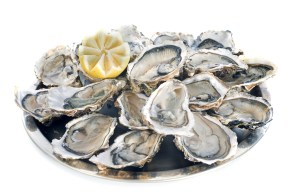
FDA Advises Restaurants and Retailers Not to Serve or Sell and Consumers Not to Eat Certain Oysters from Lewis Bay, Massachusetts Potentially Contaminated with Campylobacter jejuni

FDA

Audience

  • Restaurants and food retailers in California (CA), Connecticut (CT), Florida (FL), Illinois (IL), Massachusetts (MA), Minnesota (MN), Missouri (MO), New Jersey (NJ), New Hampshire (NH), New York (NY), and Pennsylvania (PA) that have recently purchased recalled oysters harvested between 7/1/2024 and 7/18/2024 from two lease sites in the SC28, Lewis Bay, MA harvest area.
  • Consumers in CA, CT, FL, IL, MA, MN, MO, NJ, NH, NY, and PA who have recently purchased recalled oysters harvested between 7/1/2024 and 7/18/2024 from two lease sites in the SC28, Lewis Bay, MA harvest area.

Product

  • Oysters harvested between 7/1/2024 and 7/18/2024 from two lease sites in the SC28, Lewis Bay, MA harvest area have been recalled. The oysters were distributed to restaurants and retailers in CA, CT, FL, IL, MA, MN, MO, NJ, NH, NY, and PA.

Purpose

The FDA is advising restaurants and food retailers not to serve or sell and to dispose of oysters, and consumers not to eat recalled oysters harvested between 7/1/2024 and 7/18/2024 from two lease sites in the SC28, Lewis Bay, MA harvest area and shipped to retailers in CA, CT, FL, IL, MA, MN, MO, NJ, NH, NY, and PA because they may be contaminated with Campylobacter jejuni. Oysters may have been distributed to other states, as well.

Oysters contaminated with Campylobacter jejuni can cause illness if eaten raw, and potentially life-threatening illness in people with compromised immune systems. Food containing Campylobacter jejuni may look, smell, and taste normal. Consumers of these products who are experiencing symptoms of illness should contact their healthcare provider and report their symptoms to their local Health Department.

Campylobacter (Sweden July 2024–)

Folkhalsomyndigheten

In the first weeks of July (July 1-July 14), the number of reported cases of campylobacter infected in Sweden increased to nearly 100 cases per week. In the following weeks (July 15-July 28), the number of reported cases increased further, to 160 and 210 cases per week respectively. The cases are found in several regions. The increase coincides with previously increased occurrence of campylobacter in broiler flocks.
The Campylobacter program in chicken in Sweden (sva.se)

Good handling of raw chicken reduces the risk of becoming infected.
Campylobacter (livsmedelsverket.se)

USA – FDA Advises Restaurants and Retailers Not to Serve or Sell and Consumers Not to Eat Certain Oysters from Recompense Cove, Freeport, Maine Potentially Contaminated with Campylobacter

FDA

  • American/Eastern Oysters from Recompense Cove, Freeport, ME harvested between 6/19/2024 and 7/16/2024 from harvest areas CAS RC2 and CAS RCX. The oysters were distributed to restaurants and retailers in CA, CT, DE, FL, MA, MD, ME, MI, NH, NJ, NV, NY, PA, VT, and Ontario, Canada and may have been distributed to other states as well.

The following photo is included as an example shellfish tag that would be attached to containers for reference. The Harvest Date and Harvest Area fields would include the specific dates and harvest areas identified in the recall information as mentioned above.

Maine oysters harvester tag

Purpose

The FDA is advising restaurants and food retailers not to serve or sell and to dispose of oysters and consumers not to eat recalled Recompense Cove, Freeport, ME oysters harvested between 6/19/2024 and 7/16/2024 from harvest sites CAS RC2 and CAS RCX and shipped to distributors in CA, CT, DE, FL, MA, MD, ME, MI, NH, NJ, NV, NY, PA, VT, and Ontario, Canada because they may be contaminated with Campylobacter bacteria. Oysters may have been distributed to other states, as well.

Oysters contaminated with Campylobacter bacteria can cause illness if eaten raw, and potentially life-threatening illness in people with compromised immune systems. Food containing Campylobacter bacteria may look, smell, and taste normal. Consumers of these products who are experiencing symptoms of illness should contact their healthcare provider and report their symptoms to their local Health Department.

Israel – Outbreak of Campylobacter diarrhoea bacterium: Hundreds of Israelis infected

JPOST

The bacterium usually enters the digestive system through contaminated meat and poultry, causing intestinal inflammation with characteristic symptoms.

The Campylobacter bacterium had been spreading in Israel for several years, but there was a sharp increase in the number of infections over the past year. Data from the Health Ministry, obtained by Maariv, indicated thousands of infections in recent months, a significant increase compared to previous years.