Abstract


Posted in Campylobacter, campylobacter coli, Campylobacter jejuni, Decontamination Microbial, Food Micro Blog, Food Microbiology, Food Microbiology Blog, Food Microbiology Research, Food Microbiology Testing, microbial contamination, Microbial growth, Microbiological Risk Assessment, Microbiology, Microbiology Investigations, Microbiology Risk

Executive Summary
Campylobacter is the most common cause of bacterial gastroenteritis in the UK. Every
year there are an estimated 300,000 foodborne cases in the UK, of which more than half
are related to poultry meat.
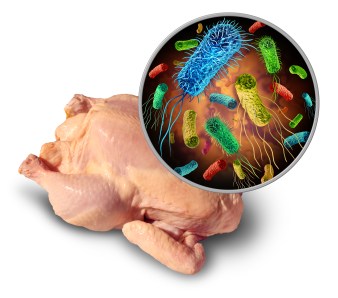
Poultry is the main reservoir for Campylobacter and undercooked poultry presents a risk
to the consumer of becoming infected with Campylobacter, while thorough cooking kills
Campylobacter. Infection may also result as a consequence of cross-contamination
during preparation or storage of chicken.
Slaughterhouses are classified as either low-throughput (≤7.5 million birds per year) or
high-throughput (>7.5 million birds per year). Campylobacter levels are routinely
monitored in chicken carcases that are processed in high-throughput slaughterhouses.
Established process hygiene criteria (PHC) state the samples submitted by
slaughterhouses currently should not exceed 1,000 CFU/g Campylobacter in more than
30% of samples submitted. The microbiological criteria regulation is the same for high-
throughput and low-throughput slaughterhouses, however, testing is not currently carried
out in all low-throughput slaughterhouses due to the financial burden of routine testing.
This work was commissioned to assist the FSA to make a risk-based decision on
whether a tailored-made sampling regime for small-throughput slaughterhouses would be
appropriate.
We considered the whole pathway of the chicken from farm to fork using scientific
literature, data from own survey of Campylobacter in slaughterhouses, in addition to
business data and information regarding UK levels of infection from Campylobacter.
Overall, there was no significant difference between the proportion of highly
contaminated samples (>1,000 CFU/g) gathered from low and high-throughput
slaughterhouses. Using the number of chickens per year that are processed by low and
high-throughput slaughterhouses, we estimated that high-throughput slaughterhouses
contribute a significantly larger number of Campylobacter cases due to their volume.
Currently, most chicken on sale in the UK is produced in high-throughput plants. All else
being equal, small improvements to large plants will have a bigger impact on the overall
risk to the UK consumer population than large changes to a far smaller plants.
A number of uncertainties and evidence gaps were identified during this risk assessment.
We had no information as to the method in which the poultry were reared prior to arriving
at the slaughterhouse and are aware that evidence suggests that this can directly affect
Campylobacter levels at slaughter. Data on low-throughput abattoirs were only available
for a limited period of three months and at the end of slaughter. There was no information
available as to the onward processing of meat handled by slaughterhouses, and we
therefore assumed that low and high-throughput slaughterhouses contribute equally to
retail and hospitality etc. In addition, we assumed that only UK slaughtered chicken is
consumed in the UK.
In conclusion, with currently available data it is not possible to identify any difference
between the current per portion risk of Campylobacteriosis to consumers for low and
high-throughput slaughterhouses. We also conclude that the frequency of occurrence
of campylobacteriosis in the total UK population from chicken produced in low-
throughput slaughterhouses is medium and for high-throughput slaughterhouses, this is
high. The uncertainty associated with this frequency is medium. The risk assessment
concludes that the severity of Campylobacter infection is low, with low uncertainty.
This assumes that the proportion of the total domestic consumption of chicken meat
originating from low-throughput slaughterhouses does not change.
The current sampling regime requires samples to be taken once a week. If more than 15
out of 50 samples have high levels of Campylobacter, this is considered a failure and
mitigations need to be put in place. We predicted that if samples are taken once every
two weeks or once every 4 weeks instead, that would still allow us to identify some
slaughterhouses failing to comply with the 15/50 exceedance rate (71% and 57%,
respectively). However, identifying issues will take longer and may not detect some
failing slaughterhouses, and may affect behaviours in the plant, i.e. less frequent
sampling may affect standards during processing.
There is a lack of consistency in the application of sampling requirements in low-
throughput slaughterhouses and a lack of information on the corrective actions taken in
the event of an exceedance. Therefore, it is not possible to differentiate the effect on per-
portion risk of changes to current sampling requirements. However, due to the small
proportion of total poultry meat consumed in the UK that is produced at low-throughput
slaughterhouses, changes to the official sampling requirements at low-throughput
slaughterhouses are unlikely to result in a large change in the total number of cases of
campylobacteriosis in the UK population.
Posted in Campylobacter, campylobacter coli, Campylobacter jejuni, Decontamination Microbial, Food Micro Blog, Food Microbiology, Food Microbiology Blog, Food Microbiology Research, Food Microbiology Testing, microbial contamination, Microbial growth, Microbiological Risk Assessment, Microbiology, Microbiology Investigations, Microbiology Risk, Retailer Campylobacter Survey

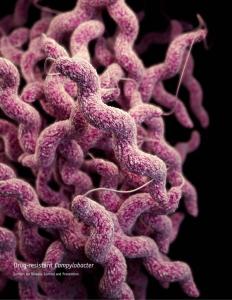
Researchers conducted a study to estimate trends in the incidence of Campylobacter infection in the United States over time. Data on laboratory-confirmed Campylobacter diagnoses at 10 sites were collected from the Foodborne Diseases Active Surveillance Network between 1996 and 2019. Data on antimicrobial susceptibility were collected from the National Antimicrobial Resistance Monitoring System from 2005 to 2018. Campylobacter jejuni and C coli isolates were tested for antimicrobial susceptibility via broth microdilution. The incidence of Campylobacter infection was estimated after adjustments for sex, age, and the use of culture-independent diagnostic testing.
The researchers used a pooled chi-squared statistic to compare changes (2005-2016 vs 2017-2018) in the percentage of ciprofloxacin-, erythromycin-, and extensively drug-resistant isolates. They also used multivariable logistic regression to assess the association between AMR and clinical outcomes.
Posted in Campylobacter, campylobacter coli, Campylobacter jejuni, Decontamination Microbial, Food Micro Blog, Food Microbiology, Food Microbiology Blog, Food Microbiology Research, Food Microbiology Testing, microbial contamination, Microbial growth, Microbiological Risk Assessment, Microbiology, Microbiology Investigations, Microbiology Risk

Posted in Campylobacter, campylobacter coli, Campylobacter jejuni, Decontamination Microbial, Food Micro Blog, Food Microbiology, Food Microbiology Blog, Food Microbiology Research, Food Microbiology Testing, microbial contamination, Microbial growth, Microbiological Risk Assessment, Microbiology, Microbiology Investigations, Microbiology Risk, Salmonella, Salmonella in Chicken

Posted in Campylobacter, campylobacter coli, Campylobacter jejuni, Decontamination Microbial, Food Micro Blog, Food Microbiology, Food Microbiology Blog, Food Microbiology Research, Food Microbiology Testing, microbial contamination, Microbial growth, Microbiological Risk Assessment, Microbiology, Microbiology Investigations, Microbiology Risk
Posted in Bacteriophage, Campylobacter, campylobacter coli, Campylobacter jejuni, Decontamination Microbial, Food Illness, Food Micro Blog, Food Microbiology, Food Microbiology Blog, Food Microbiology Research, Food Microbiology Testing, Foodborne Illness, microbial contamination, Microbial growth, Microbiological Risk Assessment, Microbiology, Microbiology Investigations, Microbiology Risk, Salmonella, STEC, STEC E.coli
The Pennsylvania Department of Agriculture warns that consumers should immediately discard raw goat milk sold from Dove Song Dairy due to possible contamination with Campylobacter. Three persons who consumed this product and became ill with campylobacteriosis were reported by the Department of Health. Raw milk samples tested by the Pennsylvania Department of Agriculture are presumptively positive for Campylobacter.
Posted in Campylobacter, campylobacter coli, Campylobacter jejuni, food contamination, food handler, Food Hazard, Food Hygiene, Food Inspections, Food Micro Blog, Food Microbiology, Food Microbiology Blog, Food Microbiology Testing, Food Pathogen, Food Quality, food recall, Food Safety, Food Safety Alert, Food Safety Management, Food Safety Regulations, Food Testing, Raw Milk
TOKYO — Japan’s health ministry is calling for caution amid an increase in food poisoning caused by Campylobacter, a form of bacteria found in raw and half-cooked chicken.
Food poisoning cases usually rise in Japan during the damp rainy season from late May to early July. This year, experts have expressed concern about a sudden rise due to the easing of coronavirus-related restrictions, which have brought more customers back to dining out.
Once infected with Campylobacter, commonly found in raw or not fully cooked meat dishes such as sashimi, Korean “yukhoe” and lightly seared “tataki,” the bacteria can cause stomach pain and diarrhea among other symptoms. Although usually not fatal, children and the elderly are at risk of developing serious illness. In addition, the bacteria can result in Guillain-Barre syndrome (GBS), which can bring about difficulty breathing and paralysis of the limbs and face.
Around 2,000 people are afflicted with food poisoning by Campylobacter annually. Some regions, such as Kagoshima Prefecture, where chicken sashimi is part of the local cuisine, have established strict hygiene standards for the consumption of raw chicken meat, but caution is needed as about 70% of cases occur at restaurants.
Posted in Campylobacter, campylobacter coli, Campylobacter jejuni, Food Illness, Food Micro Blog, Food Microbiology, Food Microbiology Blog, Food Microbiology Research, Food Microbiology Testing, Food Poisoning, Foodborne Illness, Illness, microbial contamination, Microbial growth, Microbiological Risk Assessment, Microbiology, Microbiology Investigations, Microbiology Risk, Poisoning
Campylobacter spp. cannot grow in raw milk, but it is able to transform into a viable but non-culturable (VBNC) state enabling the survival in such harsh conditions. In this study, Campylobacter jejuni survival in raw milk was investigated taken into consideration colony-forming units (CFUs) and VBNC cells. CFU from two different strains of C. jejuni (DSM 4688 and BfR-CA-18043) were enumerated at three temperatures (5°C, 8°C, and 12°C). In parallel, a viability real-time PCR was conducted to quantify intact and putatively infectious units (IPIUs) (comprising CFU and VBNC bacteria). The data generated were used to model the viability of C. jejuni during raw milk storage. Here, a one-step fitting approach was performed using parameter estimates from an intermediate two-step fit as starting values to generate tertiary models. Different primary model equations (Trilinear and Weibull) were required to fit the CFU and the IPIU data. Strain-specific linear secondary models were generated to analyze the effect of storage temperature on the maximum specific inactivation rate of the CFU data. The time of the first decimal reduction parameter of the IPIU models could be modeled by a strain-independent linear secondary model. The developed tertiary models for CFU and IPIU differ significantly in their predictions, for example, for the time required for a one log10 reduction. Taken into consideration that VBNC could revert to a culturable state during the raw milk storage, our results underline the importance of considering IPIU and not only CFU to avoid underestimation of the survival of C. jejuni in raw milk.
Posted in Campylobacter, campylobacter coli, Campylobacter jejuni, Decontamination Microbial, Food Micro Blog, Food Microbiology, Food Microbiology Blog, Food Microbiology Research, Food Microbiology Testing, microbial contamination, Microbial growth, Microbiological Risk Assessment, Microbiology, Microbiology Investigations, Microbiology Risk, Raw Milk, raw milk cheese, Raw Milk Cream, Retailer Campylobacter Survey
Posted in Campylobacter, campylobacter coli, Campylobacter jejuni, Decontamination Microbial, Food Micro Blog, Food Microbiology, Food Microbiology Blog, Food Microbiology Research, Food Microbiology Testing, microbial contamination, Microbial growth, Microbiological Risk Assessment, Microbiology, Microbiology Investigations, Microbiology Risk