Category Archives: bacterial contamination

Australia – Freedom Foods Pty Ltd — Milk Lab Almond Milk 1L and Blue Diamond Almond Breeze Chocolate Almond Milk 1L

Product Safety Australia

Photograph of Milk Lab Almond Milk and Blue Diamond Almond Breeze Chocolate Almond Milk

What are the defects?

The recall is due to potential microbial contamination (Pseudomonas).

What are the hazards?

Food products with microbial contamination may cause illness if consumed.

What should consumers do?

Any consumers concerned about their health should seek medical advice and should return the products to the place of purchase for a full refund.

For further information, please contact Freedom Foods by phone on 1800 646 231 or visit www.freedomfoods.com.au

Traders who sold this product

Milk Lab Almond Milk sold nationally in coffee shops, food service outlets and distributors

Blue Diamond Almond Breeze Chocolate Almond Milk sold in Coles and Woolworths in NSW, QLD, Vic and WA and Coles in SA and Tas and distributors

Where the product was sold
Nationally
International
Dates available for sale
  • 29 June 2020 – 1 September 2020
  • 10 August 2020 – 1 September 2020

Recall advertisements and supporting documentation

Coordinating agency

Food Standards Australia New Zealand is the coordinating agency for this recall.

Research – A critical literature review to assess the significance of intervention methods to reduce the microbiological load on beef through primary production

FSA

Background

The sale and consumption of burgers served less than thoroughly cooked (LTTC) and pink in the middle is a steadily increasing trend and several catering chains and outlets now offer this option to customers. This prompted concerns that there may be an increased risk of exposure to E. coli O157 for consumers who prefer this type of food. Our Board concluded that burgers served LTTC should be delivered to the same level of protection as thorough cooking provides the consumer. The safe production of this product at catering establishments is likely to be significantly reliant on controls and/or interventions applied at the beef processing facilities previously in the chain, particularly slaughterhouses and cutting plants.

Research Approach

The main aim of this study is to perform a broad critical review of available literature on the scientific research in intervention measures for beef, to obtain quantitative information on the reduction of bacterial load in the minced beef production chain. The review covers a range of GHP-based and hazard-based interventions at the abattoir stage (from receive and unload of animals to chilled carcasses) and post-abattoir stage (further processing of raw beef and packaging). It looks at the outcome of interventions on a range of bacterial indicators and foodborne pathogens.

Relevant outcome measures for interventions where the effectiveness of each intervention in reducing log levels of indicator bacteria (aerobic colony counts (ACC), Enterobacteriaceae counts (EBC), total coliform counts and generic E. coli counts and log levels of foodborne pathogens (primarily E. coli O157 and other VTEC and Salmonella, but also other foodborne pathogens).

Results

The main relevant outcome measures are:

  • Pre-slaughter beef interventions: Several interventions were identified at the lairage stage, from cattle received to the stunning and bleeding steps. Good hygiene practices such as lairage cleaning, proper cattle handling to prevent hide cross-contamination and hide cleanliness assessment, are recommended for use
  • Beef interventions at slaughter: Cattle hide interventions, such as chemical hide washes and microbial immobilisation treatment with shellac, are recommended for consideration as potential hazard-based interventions when applied post-exsanguination and before dehiding for reducing microbial contamination of resulting beef carcasses

Multiple use of carcass interventions was shown to have the biggest impact on microbial reduction on beef carcasses, more than any of these interventions applied alone

  • Post-slaughter beef interventions: Good hygiene practices during carcass fabrication are necessary to prevent and minimise carcass cross-contamination post-chill. Various interventions for beef primals, subprimals and trim with physical (hot water) or chemical substances have shown good reduction effects on microbiota, often statistically significant. However, these treatments can only be used if properly optimised so to retain acceptable sensory quality of the final products

Packaging-based interventions for beef cuts and minced beef had very variable effects in reduction of microbiota. Modified atmosphere packaging (MAP) and vacuum packaging are considered useful to extend the shelf life of beef trim and minced beef, but they had very limited and not statistically significant reduction effect on E. coli O157:H7


USA – 1,469 with Salmonella in the United States and Canada linked to Onions

1,469 with Salmonella in the United States  and Canada linked to Onions

Belgium – Salade & Compagnie “Antibes” from the Sodebo brand. – Salmonella

AFSCA

The AFSCA is withdrawing from sale and recalling from consumers the prepared salad Salade & Compagnie “Antibes” of the Sodebo brand, following the possible presence of Salmonella.

The AFSCA asks not to consume this product and to bring it back to the point of sale where it was purchased.

Product description Product

name: Salade & Compagnie “Antibes”
Brand: Sodebo Use-by
date (DLC): 06/09/2020
EAN code: 3242274002053
Packaging: tray
Weight: 320 g

The product has been sold through several points of sale in Belgium.

For further information, you can contact the AFSCA contact point for consumers: 0800 / 13.550 or pointdecontact@afsca.be .

Belgium – Pasta Mici, chopped prepared (1kg) of Georges mark – Salmonella

AFSCA

In agreement with the AFSCA, the company LMCHOP is withdrawing from sale the product “Pasta de Mici” 1kg (prepared chopped) and is recalling it to consumers because of a possible presence of Salmonella.

LMCHOP asks its customers not to consume this product and to bring it back to the point of sale where it was purchased: Georges, Rue Ropsy Chaudron 24, 1070 Anderlecht.

Product description

– Product name: Pasta de Mici 1kg
– Brand: Georges
– Use by date (DLC) (“To be consumed until”): 01/09/2020
– Lot number: PDM280820
– Sale period: from 08/28/2020 to 08/30/2020
– Type of packaging: plastic container
– Weight: 1kg

The product was sold via Georges (rue Ropsy Chaudron 24, 1070 Anderlecht).

For any further information , please contact:
Mr. Lucas Hudders
Tel. : 052306421

France – Salade & Compagnie Antibes Recipe SODEBO brand – Salmonella

ENCOUNTERED PROBLEM

Presence of salmonella

PROPOSED SOLUTION

People who hold this product are asked not to consume it and to return it to the point of sale where it was purchased for reimbursement.

https://www.oulah.fr/rappel-produit-salade-compagnie-recette-antibes-de-marque-sodebo/

France – Cavet brand organic white goat cheese – Salmonella

ENCOUNTERED PROBLEM

Presence of salmonella

PROPOSED SOLUTION

People who hold this product are asked not to consume it and to return it to the point of sale where it was purchased for reimbursement.

Foodborne illness caused by Salmonella results in gastrointestinal disturbances, diarrhea, vomiting and abdominal pain, often accompanied by fever; these symptoms may be more severe in young children, immunocompromised individuals and the elderly. The incubation period can range from 6 to 72 hours.
People who have consumed the products mentioned below and who have these symptoms are invited to consult their doctor, notifying him of this consumption.

https://www.oulah.fr/rappel-produit-chevre-blanc-bio-x2-de-marque-cavet/


Ukraine – Ukraine reports 16 salmonella outbreaks so far this year

Outbreak News today

Ukraine health officials reported recently that during the first eight months of 2020, the country has seen 16 salmonella outbreaks, including four in Zaporizhia oblast, two in Ivano-Frankivsk oblast and one each in Vinnytsia, Dnipropetrovsk, Zakarpattia, Kirovohrad, Odesa, Poltava, Rivne, Sumy, Cherkasy oblasts and Kyiv.

In total, 2402 salmonella cases have been reported, Officials say the incidence rate per 100,000 population is 5.7, which is 41% lower than in the same period last year.


Australia – MILKLAB and Blue Diamond almond milk – Pseudomonas spp

FSANZ

Freedom Foods is recalling their MILKLAB Almond Milk and Blue Diamond Almond Breeze Chocolate Almond Milk due to a potential microbial contamination.

This recall includes an earlier recall by RIO Coffee of MILKLAB Almond Milk with a Best Before date of 6 AUG 2021 in SA – this recall has been removed from the website.

MILKLAB Almond Milk has been available for sale nationally in various coffee shops and food service outlets.

Blue Diamond Almond Breeze Chocolate Almond Milk has been available for sale in NSW (Coles and Woolworths), QLD (Coles and Woolworths), SA (Coles), TAS (Coles), VIC (Coles and Woolworths) and WA (Coles and Woolworths).

Date markings:

MILKLAB
Almond Milk 1L
Best Before dates: 18/06/21, 01/07/21, 20/07/21, 29/07/21, 06/08/21

Blue Diamond
Almond Breeze
Chocolate Almond Milk 1L
Best Before date: 27/04/21

UHT almond milk brand milk lab and blue diamond almond breeze

Problem

The recall is due to potential microbial contamination (bacteria pseudomonas).

Food safety hazard

Food products with microbial contamination may cause illness if consumed.

Country of origin

Australia

What to do​

Any consumers concerned about their health should seek medical advice and should return the products to the place of purchase for a full refund.

For further information please contact:

Freedom Foods
1800 646 231
www.freedomfoods.com.au

​​

Related links:

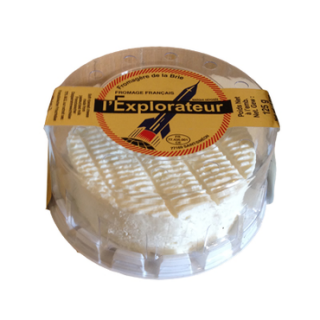
Luxembourg – SEVERAL STE FROMAGERE DE LA BRIE BRAND CHEESES RECALLED DUE TO THE SUSPECTED PRESENCE OF LISTERIA MONOCYTOGENES

SAP

Delhaize supermarkets have just informed the Luxembourg food authorities of the recall of several STE FROMAGERE DE LA BRIE brand cheeses due to the presence of Listeria monocytogenes.

Foodborne illnesses caused by Listeria monocytogenes result in fever, isolated or accompanied by headaches following the consumption of contaminated products. Pregnant women, immunocompromised people and the elderly should pay special attention to these symptoms. They can, in fact, cause listeriosis, a disease which can be serious and the incubation period of which can be up to eight weeks.

The products were withdrawn from the commercialization, but a part was marketed to the final consumer.

This is why the Luxembourg authorities recommend that you no longer consume the products in the link above.