Category Archives: bacterial contamination

Lithuanian – Lithuanian officials seize poultry meat due to Salmonella

Lithuanian authorities have seized more than 40 tons of imported poultry meat due to potential Salmonella contamination in the space of three months.

From June to August of this year, the State Food and Veterinary Service (VMVT) banned the placing on the market of 10 batches of poultry meat imported to Lithuania from Poland, Hungary, and Romania.

More than half of the non-compliant meat (25 tons or seven batches) was imported from Poland. A total of 12 tons, or two lots, originated in Hungary and three tons, or one lot, came from Romania.

Lithuanian officials seize poultry meat due to Salmonella

Iceland – Suspicion of Salmonella in Chicken

MAST

Matvælastofnun warns against consuming fresh chickens from Reykjagarður due to suspicion of salmonella. The company is recalling the chicken.

The recall only covers the following traceability numbers:

  • 001-20-31-3-07 & 001-20-31-1-13 (Holta-, Kjörfugl and Króna-chicken)
  • 001-20-31-3-07 & 001-20-31-1-13 (Whole bird, breast, puffins, bits)

Distribution: Icelandverslanir, Hagkaupsverslanir, Krónan, KR Vík, Kjarval, Nettó, Costco, Extra24, Heimkaup, Kf. Skagfirðingar, Bjarnabúð, Kjörbúðin, Kaupfélag Vestur-Húnvetningar, Olís Verslun Varmahlíð, Basko / 10-11.

Consumers who have purchased chickens with this traceability number are asked to return them to the relevant store or directly to Reykjagarður hf. at Fossháls 1, 110 Reykjavík.


Research – A new method may make tomatoes safer to eat

Science Daily

When vegetable farmers harvest crops, they often rely on postharvest washing to reduce any foodborne pathogens, but a new University of Georgia study shows promise in reducing these pathogens — as well as lowering labor costs — by applying sanitizers to produce while it is still in the fields.

Salmonella, Shiga toxin-producing E. coli and Listeria monocytogenes are major causes of foodborne diseases and of public health concern in the U.S. Tomato-associated Salmonella outbreaks reported to the Centers for Disease Control and Prevention have increased in frequency and magnitude in recent years, and fresh produce accounted for 21% of E. coli outbreaks reported to the CDC over a 20-year span.

Initially researchers were going to study the use of a nonchlorine-based sanitizer made of two food additives approved by the U.S. Food and Drug Administration — levulinic acid and sodium dodecyl sulfate — as a postharvest wash solution. However, at the suggestion of a producer involved in the study — Bill Brim of Lewis Taylor Farms in Tifton, Georgia — they designed the study using the solution in a preharvest spray, said Tong Zhao, associate research scientist with the Center for Food Safety on the UGA Griffin campus.

Netherlands – AH Gouda cheese young matured 48+ cubes Recall- Samonella

NVWA

Albert Heijn has decided to bring back AH Gouda cheese aged 48+ cubes from the shops. Salmonella has been found in this product. It only concerns cheese cubes with an expiration date 2-11-2020.

Consuming the cheese cubes with this expiration date can potentially pose a health hazard, especially for young children, the elderly, people with a weakened immune system and pregnant women. Consult your doctor or general practitioner if you have any questions about health problems.

Customers are requested not to eat the cheese cubes and to return them to an Albert Heijn store, where they will be reimbursed the purchase price upon return of the product.

See also the Albert Heijn website

Research – Microbiological profile, incidence and behavior of Salmonella on seeds traded in Mexican markets.

JFP

Seed consumption has increased in recent years because the high nutrient content of seeds. However, the number of outbreaks caused by Salmonella associated with the consumption of low water activity food items has also increased, although these food items do not support microbial growth. The main goal of this study was to quantify microbial indicators and to determine the prevalence and content of Salmonella spp. in chia, amaranth and sesame seeds obtained from Mexican retail outlets. In addition, the behavior of this pathogen on seeds was also evaluated. One hundred samples of each product (chia, amaranth and sesame seeds) were collected from Queretaro City markets. Aerobic plate count (APC), coliforms and Escherichia coli were quantified, and the presence and number of Salmonella were also determined. Chia, amaranth and sesame seeds (1 kg each) were inoculated with a cocktail containing five Salmonella strains (~6 log CFU mL -1 ) and were stored at ambient temperature and populations of Salmonella were quantified. The median APC contents in chia, amaranth, and sesame seeds were 2.1, 2.4, and 3.8 log CFU g -1 , respectively, and the content of coliforms on the seeds ranged from 0.48 to 0.56 log MPN g -1 . E. coli was present at low concentrations in the three types of seeds. Salmonella was detected in chia (31%), amaranth (15%), and sesame (12%) seeds, and the population ranged from 0.48 to 0.56 Log MPN g -1 . Salmonella spp. decreased through 240 days of storage, showing inactivation rates of 0.017, 0.011 and 0.016 log CFU h -1 in chia, amaranth, and sesame seeds, respectively. The high prevalence of Salmonella in the seeds highlights potential risks for consumers, particularly giving that seeds are generally consumed without treatments guaranteeing pathogen inactivation.

Netherlands – Important safety warning whole chicken Lidl – Salmonella

NVWA

Salmonella was found in the Lidl product ‘Whole free-range chicken natural, from the PiqueBroche brand’, with the best before dates 08-09-2020 and 11-09-2020.

Customers are urged not to consume the product. Eating a product with the salmonella bacteria, if not heated enough, can cause fever, stomach pain and diarrhea within 6-48 hours of consumption. In young children, the elderly, people with low immunity and pregnant women, a salmonella infection can lead to dehydration or hospitalization. Consult your doctor for more information if you have any health problems after eating the said product.

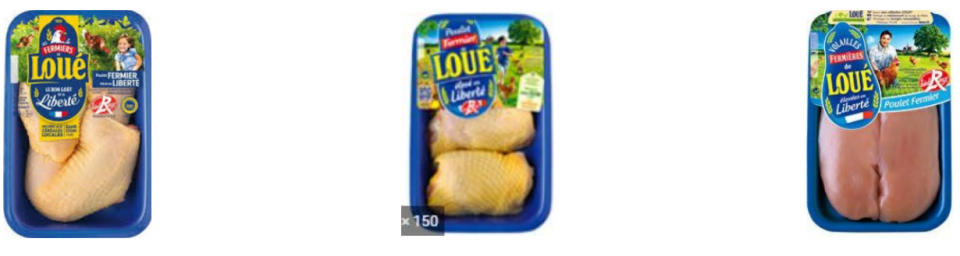
Luxembourg – TRAY OF 2 YELLOW CHICKEN THIGHS, TRAY OF 2 WHITE CHICKEN FILLETS, TRAY OF 3 HIGH CHICKEN THIGHS FROM THE LDC BRAND – PRESENCE OF SALMONELLA

SAP

Last name Tray of 2 yellow chicken thighs
Mark LDC
Bar code 0217823000000
Best before date (DLC) 09/09/2020
Lot 2020037392
Last name Tray of 2 white chicken fillets
Mark LDC
Bar code 3266980282882
Best before date (DLC) 09/08/2020 & 09/09/2020
Lot 2020037371
Last name Tray of 3 tall chicken thighs
Mark LDC
Bar code 3266980006969
Best before date (DLC) 09/11/2020
Lot 2020037371

Danger: Presence of salmonella


Salmonella can cause symptoms such as nausea, vomiting, abdominal cramps, diarrhea, fever and headache within 6 to 72 hours after consumption. These symptoms may be aggravated in young children, immunocompromised individuals and the elderly. People who have consumed these products and who present these symptoms are advised to consult a doctor, notifying him of this consumption.


Sale in Luxembourg by: Auchan

A sale by other operators cannot be excluded.

Source of information: Auchan recall notification.


Communicated by: Government Commission for Quality, Fraud and Food Safety .


USA – Giant Food recalls squash noodle medley due to Listeria concerns

Giant Food is recalling Giant Food brand squash noodle medley because of possible Listeria contamination.

The product was sold in stores from Aug. 8 – 19. Giant Food officials encourage customers who may have purchased the product not to consume it.

The recalled product is:

UPC #68826718585 with an Aug. 19 “best enjoyed by” date.

Giant removed the product from stores after being notified by the supplier that a regulatory sample of the product tested positive for Listeria. Giant did not report what supplier or ingredient is involved.

Again, customers who purchased the affected product should not consume it and may return it to their local Giant Food store for a full refund. Customers may also contact Giant Food’s Customer Support Center at 888-469-4426.

Possible Listeria contamination prompts recall of squash noodle medley


South Korea – Increase in Vibrio vulnificus Cases

Outbreak News today

KSWFOODWORLD

The Korea Centers for Disease Control and Prevention (KCDC) has reported an increase in Vibrio vulnificus infections in the first eight months of 2020.

Epidemiological investigations of five patients who died from Vibrio vulnificus infection found that all of them were at high risk for the illness, with underlying conditions such as alcoholism, diabetes and liver disease, The Korea Times reports.

Vibrio vulnificus can cause disease in those who eat contaminated seafood or have an open wound that is exposed to warm seawater containing the bacteria. Ingestion of Vibrio vulnificus can cause vomiting, diarrhea and abdominal pain. Vibrio vulnificus can also cause an infection of the skin when open wounds are exposed to warm seawater; these infections may lead to skin breakdown and ulcers.

Research – Campylobacter infections expected to increase due to climate change in Northern Europe

Nature.com

Campylobacter kswfoodworld

Global climate change is predicted to alter precipitation and temperature patterns across the world, affecting a range of infectious diseases and particularly foodborne infections such as Campylobacter. In this study, we used national surveillance data to analyse the relationship between climate and campylobacteriosis in Denmark, Finland, Norway and Sweden and estimate the impact of climate changes on future disease patterns. We show that Campylobacter incidences are linked to increases in temperature and especially precipitation in the week before illness, suggesting a non-food transmission route. These four countries may experience a doubling of Campylobacter cases by the end of the 2080s, corresponding to around 6,000 excess cases per year caused only by climate changes. Considering the strong worldwide burden of campylobacteriosis, it is important to assess local and regional impacts of climate change in order to initiate timely public health management and adaptation strategies.