Category Archives: bacterial contamination

New Zealand – Pestell’s brand ham products – Listeria monocytogenes

MPI

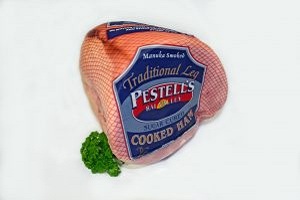
Pestell’s Rai Bacon Company Ltd is recalling specific batches of its Pestell’s Champagne Ham, Pestell’s Cooked Ham on the Bone, Pestell’s Boneless Ham, Pestell’s Boneless Ham pieces, and Pestell’s Sliced Ham Off the Bone due to the presence of Listeria monocytogenes.
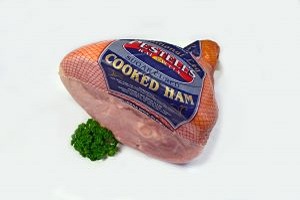
Pestell’s Ham on the Bone (various weights).
Pestell’s Boneless Rolled Ham (various weights).
Pestell’s Sliced Ham (various weights).
Product identification
Product type Ham
Name of product (size) Whole ham

  • Pestell’s Champagne Ham (various weights)
  • Pestell’s Cooked Ham on the Bone (various weights)
  • Pestell’s Boneless Ham (various weights)
  • Pestell’s Boneless Ham pieces (various weights)

Sliced ham

  • Pestell’s Sliced Ham Off the Bone (various weights, 300g and 1kg)
Date and batch marking Pestell’s whole Ham products all batches with a use by date up to and including 15.01.21.

Pestell’s Sliced Ham Off the Bone vacuum packs with a use by date up to and including 29.12.20, this appears on the product as 29/DEC/20.

Pestell’s Sliced Ham served over the counter at delicatessens in Pak’n Save, New World and Four Square supermarkets in the South Island with a best before date up to and including 7.12.20.

Package size and description Pestell’s Ham on the Bone, Pestell’s Boneless Rolled Ham, and Pestell’s Sliced Ham Off the Bone are sold in vacuum packs of various weights.

Pestell’s Sliced Ham is sold in various weights over the counter at instore delicatessens in Pak’n Save, New World and Four Square supermarkets in the South Island.

Distribution The packaged ham products are sold in selected supermarkets and other retailers nationwide, except Countdown stores.

Pestell’s Sliced Ham is sold at the serve-over delicatessen counter at the following supermarkets in the South Island:

  • Pak’n Save,
  • New World and
  • Four Square.

The products have not been exported.

Notes This recall does not affect any other Pestell’s brand products.

Further distribution of the products is under assessment and will be updated when available.

No Countdown stores have received these products.

Consumer advice

Customers are asked to check the date and batch marking on the products.

Affected products should not be consumed unless the products are cooked thoroughly (piping hot all the way through). There have been reports of illness, if you have consumed any of these products and have any concerns about your health, seek medical advice.

Customers should return the products to their retailer for a full refund or cook thoroughly (piping hot all the way through).

Information on Listeria and food safety is available from the Ministry for Primary Industries:

Who to contact

If you have questions, contact Pestell’s Rai Bacon Company Ltd:

  • Phone: 03 547 0116
  • Address: 22 McMahon Street, Stoke, Nelson.

Belgium – Hare pate in red wine (150g). – Listeria monocytogenes

AFSCA

Recall of De Beauvoorder
Product: Hare pate in red wine (150g).
Problem: Possible presence of Listeria monocytogenes.
In agreement with the AFSCA, De Beauvoorder is withdrawing the hare pâté (in red wine) 150g from sale and is recalling it to consumers because of the possible presence of Listeria monocytogenes.

De Beauvoorder asks its customers not to consume this product and to bring it back to the point of sale where it was purchased.
It will be refunded even without a receipt.

Product description
– Product name: Hare pate (with red wine)
– Batch number & expiration dates (
        BBD ): o 4315/680146 – DLC 04/12/2020
        o 4330/680146 – DLC 19/12/2020
– Sale period: from 11/12/2020 to 12/04/2020
– Type of packaging: tray in protective atmosphere
– Weight: 150g

The product was distributed via Carrefour Belgium stores (Hyper / Super / Express)

For any further information , contact:
De Beauvoorder paté NV
Albert I Laan 54 8630 Veurne
quality@debeauvoorder.be
058 31 03 08

Austria – NAUTICA ASC SMOKED TROUT FILLETS, 125g: Listeria monocytogenes

AGES

Food recall


© Lidl

zoom
NAUTICA ASC SMOKED TROUT FILLETS, 125g
Recall reason Listeria
Marketed by Lidl Austria
Manufacturer Agustson a / s
Batch number DK 4566 EG

Product recall: “NAUTICA ASC SMOKED TROUT FILLETS, 125g” from the manufacturer Agustson a / s

Salzburg (OTS) – Lidl Austria informs about a product recall of the product “NAUTICA ASC SMOKED TROUT FILLETS, 125g” from the manufacturer Agustson a / s.

Lidl Austria recalls the product “NAUTICA ASC SMOKED TROUT FILLETS, 125g” in the grades natural and pepper from the manufacturer Agustson a / s with the identity code DK 4566 EG regardless of the use-by date. Listeria monocytogenes was detected in the affected product. Listeria monocytogenes can cause severe gastrointestinal diseases and symptoms similar to flu-like infections. In certain groups of people (infants, toddlers, senior citizens, pregnant women and people with a weakened immune system) serious disease courses can occur. Because of this health risk, customers should pay attention to the recall and not consume the product.

The affected product “NAUTICA ASC SMOKED TROUT FILLETS, 125g” from the manufacturer Agustson a / s was sold at Lidl Austria. For reasons of consistent consumer protection, Lidl Austria reacted immediately and removed the affected product from sale. The product can be returned in all Lidl branches. The purchase price will of course be reimbursed, even without presenting the receipt.

Only the product “NAUTICA ASC SMOKED TROUT FILLETS, 125g” in the grades natural and pepper with the identity code DK 4566 EG from the manufacturer Agustson a / s with all consumption data is affected by the recall. Other products sold at Lidl Austria are not affected by the recall.

Lidl Austria apologizes to all concerned for the inconvenience. This warning does not mean that the endangerment was caused by Lidl Austria.

Customer service
If you have any questions on the subject, Lidl Austria customer service is available on the toll-free number 0800/500 810 from Monday to Friday from 8:00 a.m. to 6:00 p.m. and on Saturday from 8:00 a.m. to 5:00 p.m.

Original recall

Germany – Nautica rainbow trout fillets, 125 g “in the assortments natural and pepper

LMW

Warning type: Food
Date of first publication: December 4th, 2020
Product name: Nautica rainbow trout fillets, 125 g “in the assortments natural and pepper
Product pictures:

Image.PNG

Branch poster

Manufacturer (distributor):  Agustson a / s from Denmark (identity code DK 4566 EG) Distributed by Lidl
Reason for warning: Detection of Listeria monocytogenes
Packaging Unit: 125 g
Durability: regardless of the use-by date
Further information:

Reference is made to the company’s customer information sheet attached.

Click to access Filialplakat_Ger%E4ucherte+Forellenfilets_Lidl+DE+R%FCckruf.pdf

Contact to the responsible authorities:

Baden-Württemberg: poststelle@mlr.bwl.de

Bavaria: poststelle@lgl.bayern.de
Hesse: Schnellwarnung@rpda.hessen.de
North Rhine-Westphalia: poststelle@mulnv.nrw.de
Rhineland-Palatinate: Poststelle.Referat22@lua.rlp.de
Saarland: poststelle-luv@lav.saarland.de

Research – Consumer knowledge and behaviors regarding food safety risks associated with wheat flour

Journal of Food Protection

Consumers do not consider flour, a low-moisture food product, a high-risk for microbial contamination. In the past ten years, however, flour has been identified as a source of pathogenic bacteria, including Salmonella and E. coli . Online surveys were conducted to study consumers’ flour-handling practices and their knowledge about food safety risks related to flour. The survey also evaluated message impact on three food safety messages in communicating information and convincing consumers to adopt safe flour handling practices. Flour-using consumers (n = 1,045) from the United States reported they used flour to make cakes, cookies, and bread. Most consumers stored flour in sealed containers. Less than 1% kept a record of product identification numbers, like lot numbers, and less than 11% kept brand and use-by-date information. Many consumers (85%) were unaware of flour recalls, or outbreaks, and few (17%) believed they would be affected by flour recalls or outbreaks. If the recall affected the flour they bought, nearly half of the consumers (47%) would buy the same product from a different brand for a few months before they returned to the recalled brand. Among consumers who use flour to bake, 66% said they ate raw cookie dough or batter. Raw dough “eaters” were more difficult to convince to avoid eating and playing raw flour than “non-eaters.” Food safety messages were less impactful on those raw dough “eaters” than “non-eaters.” Compared with the food safety message with only recommendations, those messages with recommendations and an explanation as to the benefits of the practice were more effective in convincing consumers to change their practices. These findings provide insight into effective consumer education about safe flour-handling practices and could assist in the accurate development of risk assessment models related to flour handling.

Research – Occurrence of Listeria monocytogenes in Counter-Sliced Turkey Meat Samples from Independent Delis in New York City

Journal of Food Protection

Research suggests that small and independent delis are less likely to follow proper sanitation procedures, including slicer inspection, which could lead to a higher likelihood of these delis being a reservoir for Listeria monocytogenes growth and cross-contamination.    This study was undertaken to determine the incidence of L. monocytogenes in counter-sliced turkey deli meat obtained from independent delis in an urban city. Turkey deli meat, counter-sliced on site, was collected from 118 independent delis in New York City. The samples were analyzed for L. monocytogenes using USDA MLG methodology for isolation and confirmation.   The selection criteria for delis included using the city’s restaurant inspection and grading system. Two samples, from separate delis, were confirmed positive for L. monocytogenes (1.69%). Analysis of the genomic sequences of one of the samples revealed a close match to a cluster of 6 clinical isolates, which were part of an ongoing multi-state listeriosis outbreak spanning 4 different states.   The sequence of the second isolate matched a clinical isolate in a neighboring state. Both isolates were obtained from delis that did not have the top inspection grade. Although a snapshot of one urban area, this study is the first report on the current incidence of L. monocytogenes on counter-sliced deli meat from independent deli establishments. This study suggests that these delis can potentially serve as sources of L. monocytogenes contamination or contribute to downstream foodborne listeriosis. Information provided by city inspection and grading systems, in addition to the letter grade, may serve as a tool to identify delis with potential L. monocytogenes contamination issues and serve as a basis for product and environmental sampling by public health authorities.

Ireland – Three Salmonella outbreaks revealed in Ireland

Food Safety News

Irish public health officials have reported three Salmonella outbreaks that have affected at least 34 people.

Two of the three outbreaks were caused by Salmonella Enteritidis and one by Salmonella Mikawasima. Two of the incidents remain unsolved while the third has been linked to chicken products.

Twenty three of the infections have been laboratory confirmed, according to the Health Protection Surveillance Centre (HPSC), Ireland’s agency for surveillance of communicable diseases and part of the Health Service Executive (HSE).

Six people were sickened in the first Salmonella Enteritidis outbreak. Four women and two men had illness onset dates ranging from early June to Oct. 21. Two patients were aged 1 to 2 years old, one was 15-19 years old and three were over the age of 25.

HSE officials told Food Safety News that an investigation has not identified any potential method of transmission including foodborne or source including food.

USA – Colorado: Botulism cases prompt health warning on food safety

Outbreak News Today

Several foodborne botulism cases reported in Colorado since September 2020 has prompted a health warning from the Colorado Department of Public Health and Environment.

Testing from the Centers for Disease Control and Prevention confirmed four of the cases, one is still under investigation and test results are pending. All five cases occurred along the Front Range. The individuals are either hospitalized or recovering.

Three of the cases appear to be unrelated as no common food item was identified. The last two confirmed cases were likely the result of an improperly canned shared food made in the same household.

Portugal – Legionnaires’ disease update: Additional cases/death recorded

Outbreak News Today

CDC legionella

In a follow-up on the Legionnaires’ disease outbreak in northern Portugal region of Greater Porto, officials report from October 29 through November 29, 88 registered cases, including 10 deaths.

The outbreak, which has affected the cities of Matosinhos, Vila do Conde and Póvoa de Varzim, has decreased after the cooling towers of an industry in Matosinhos were disconnected where the bacteria was detected.

“Since the operation of the aforementioned cooling towers was suspended, there has been a marked decrease in the number of cases of Legionnaires’ disease in the aforementioned geographical area,” ARS / Norte said in a statement this Sunday.

RASFF Alerts – Listeria monocytogenes – Chilled Pate – Chilled Smoked Trout Fillet

European Food Alerts

RASFF

Listeria monocytogenes (presence /25g) in chilled paté from Belgium in Belgium

RASFF

Listeria monocytogenes (68000 CFU/g) in chilled smoked trout fillet from Denmark in Germany