Category Archives: Bacteria

USA – Maison Terre Issues Voluntary Nationwide Recall of Organic Goldenseal Root Powder Due to Microbial Contamination

FDA

North Little Rock, AR, Maison Terre is voluntarily recalling all lots of its Goldenseal Root Powder, purchased from Starwest Botanicals, Sacramento, CA, and repackaged to the consumer level due to microbial contamination. FDA laboratory analysis of product samples found these products to be contaminated with various microorganisms including: Enterobacter cloacae, Cronobacter sakazakii, Cronobacter dublinensis, among others.

Risk Statement: The use of contaminated product in otherwise healthy patients can result in infections necessitating antimicrobial and potentially surgical treatment. In individuals with weak immune systems and infants, the use of the product can result in death. Maison Terre has received a report of one infant death associated with use of this product on the umbilical cord stump.

The product is a yellow colored powder that comes in a clear plastic bag, net weight of 1 oz.

The recalled Goldenseal Root Powder was distributed nationwide in the USA to customers who ordered through Amazon.com and purchased between the dates of 01/25/2015 to 08/04/2020.

Maison Terre is notifying its customers by email through Amazon.com. Customers who have purchased the Goldenseal Root Powder are urged not to consume or apply it. Customers are urged to dispose of any unused portion. For those customers wanting to return the product for a refund, please contact Maison Terre for a return shipping label.

Customers with questions regarding this recall may contact Maison Terre at 501-888-9438, Mon-Fri, 10 am – 4 pm CST or at info@maisonterre.net. Consumers should contact their physician or healthcare provider if they have experienced any problems that may be related to taking or using this drug product.

Adverse reactions or quality problems experienced with the use of this product may be reported to the FDA’s MedWatch Adverse Event Reporting program either online, by regular mail or by fax.

  • Complete and submit the report Online
  • Regular Mail or Fax: Download form or call 1- 800-332-1088 to request a reporting form, then complete and return to the address on the pre-addressed form, or submit by fax to 1-800-FDA-0178

Maison Terre is conducting this recall with the knowledge of the U.S. Food and Drug Administration.


Company Contact Information

Consumers:
Maison Terre
 501-888-9438
 info@maisonterre.net

Product Photos

Israel – Sliced Smoked Sea Trout Fish – Listeria monocytogenes

Food Safety Recall (Israel): The S.H. Two Fishermen Company Ltd.

Notice to Our Customer Public:
The S.H. Two Fishermen Company Ltd. is notifying the consumer public and its customers that the Listeria monocytogenes bacteria was found during a
test conducted by the Food Service at the Haifa Health Office in the product
Sliced Smoked Sea Trout Fish 100 grams date of manufacture 26/07/20 for consumption until 25/08/20.
The Two Fishermen Company, in conjunction with the Ministry of Health, is collecting the products from the shelves.
If there is a customer who is in possession of the products of the type mentioned above and dates, he is requested not to consume them and to return the
products to the company and receive an alternative product.
The Listeria Monocytogenes bacteria are bacteria that are liable to cause disease in a high risk population, such as those with a weakened immune system,
the elderly, or cause miscarriages in pregnant women.
For all questions and clarifications, please contact the Company’s representative by telephone 0526944561or by email at y.hadayagim@gmail.com.
The S.H. Two Fishermen Company Ltd. is doing the best it can in order to avoid malfunctions of this kind, and it apologizes to its customers.

Research – New technology creates hard metal surfaces that kill bacteria

Food Safety News

A treatment to infuse hardened metal surfaces with naturally occurring antimicrobial peptides has been developed by researchers at Purdue University.

In other words, the Purdue research team’s technology can create hard metal surfaces that kill bacteria trying to attach to it.

David Bahr, team leader and professor of materials engineering at Purdue, said this technology applies primarily to food processing and cutting surfaces, which can be especially vulnerable to bacteria growth because of the materials and surface designs.

This technology can reduce the risk of cross-contamination. Cross-contamination is the transfer of harmful bacteria to food from other foods, cutting boards, utensils, etc. This is especially true when handling raw meat, poultry, and seafood, as placing them on the same hard surface as already cooked or ready-to-eat foods and fresh produce can spread harmful bacteria.

Jordan – Second mass food poisoning cases up to 118, intensive inspection campaign continues

Roya News

All patients are in a stable condition, most of whom have been discharged except for a few who remain under observation.

The General Director of the Jordan Food and Drug Administration (JFDA), Nizar Mhaidat, said three types of dangerous bacteria have been found in the samples of shawarma.

The samples were taken from the chicken in the meat supplier’s warehouses, which results showed was not suitable for human consumption.

Approximately 90 field visits were conducted over the past 24 hours as part of the government’s intensive inspection campaign, said Mhaidat.

Six facilities were shut down, 33 warnings were issued and 12 food establishments were banned from operating, he added.

More than 247kg of food was disposed of during inspection visits.

The JFDA inspected all facilities that prepare and shred chicken meat for shawarma restaurants — 11 facilities in Amman, 10 in Zarqa, and one in Irbid.

Shawarma restaurants were also inspected — 27 restaurants in Amman, four in Zarqa, 22 in Irbid, and 14 in Karak.

Inspection teams are still conducting field visits — four in Amman, two teams in Irbid, one in Karak, and two in Zarqa.

Violations include apparent signs of rotten raw chicken and non-compliance with freshness requirements, according to JFDA guidelines.

Other violations involve worker health measures, including personal hygiene and wrong practices, food handling and preserving requirements, health practices regarding insect and pest control, and public hygiene measures in facilities.

Research -Carbon dioxide as a novel indicator for bacterial growth in milk

Wiley Online

Human milk spoils due to bacterial, yeast, or mold contamination. Current domestic methods of assessing milk spoilage are subjective or rely on time and temperature‐based guidelines. A key unmet food safety need remains the objective assessment of human milk spoilage. Experiments were conducted using a simplified human milk spoilage model based on goat’s milk as a human milk surrogate, spiked with a single bacterial strain (Staphylococcus epidermidis ), in which pH and carbon dioxide (CO2) concentration were measured along with bacteria count over 160 hr. Bacteria count correlated highly with CO2 but not with pH. A 0.21% CO2 concentration threshold could be defined for milk spoilage (correlating to a bacteria count threshold of 105 CFU/ml), with sensitivity and specificity above 84%. These findings suggest that CO2 measurement is a promising method to detect S. epidermidis growth in milk which merits further investigation for the objective and quantitative assessment of milk spoilage.


Research -Fate of Listeria on various food contact and noncontact surfaces when treated with bacteriophage

Wiley Online

Listeria kswfoodworld food safety food poisoning

Image CDC


Study objective was to determine efficacy of a bacteriophage suspension against Listeria spp. when applied to three common types of materials used in food manufacturing facilities. Materials included two food contact materials (stainless steel and polyurethane thermoplastic belting) and one noncontact material (epoxy flooring). Coupons of each material were inoculated with a cocktail containing L. monocytogenes and L. innocua (4 to 5‐log10 CFU/cm2). Two phage concentrations and a control, 0, 2 × 107 and 1 × 108 PFU/cm2 were evaluated. Treated samples were held at 4 or 20°C for 1 and 3 hr to determine the effect of temperature and treatment time. Reductions in Listeria populations ranged from 1.27 to 3.33 log10 CFU/cm2 on stainless steel, from 1.17 to 2.76 log10 CFU/cm2 on polyurethane thermoplastic belting, and from 1.19 to 1.76 log10 CFU/cm2 on epoxy resin flooring. Higher phage concentration (1 × 108 PFU/cm2), longer treatment time (3 hr), and processing area temperature of 20°C showed a greater ( ≤ .05) reduction of Listeria on the stainless‐steel and polyurethane thermoplastic belting coupons. Overall, Listeria reduction by phage treatment occurred on all three materials tested, under all conditions.


Korea – ‘Special bank will manage, distribute food poisoning bacteria’

Korea Biomed

The Ministry of Food and Drug Safety said that its food poisoning bacteria resource center has been designated as a bank specializing in managing the pathogen.

It is the first food poisoning bacteria bank. The nation has six specialized banks dealing with pathogen resources in the areas of viruses and zoonotic diseases.

With the latest designation, the new bank will preserve, manage, and distribute the food poisoning bacteria that are separated from food as a national resource.


Research -Reducing contamination of carcasses during de-feathering

Watt Poultry USA Campylobacter kswfoodworld

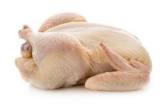
Broiler carcasses are often contaminated with bacteria during feather plucking. Applying an acidic solution could prevent this.


RASFF Alert- High Bacterial and Enterobacteriaceae – Short Pig Intestines

RASFF-Logo

RASFF – high bacterial count (8.3x10E8 CFU/g) and high count of Enterobacteriaceae (4.9x10E6 CFU/g) in frozen short pig intestines from Poland unfit for human consumption (untreated) in Germany

Infographics -Did you know that superbugs can be found in food?

WHO