Monthly Archives: May 2023

France – Sausage – Salmonella

Gov france

Identification information of the recalled product

  • Product category Feed
  • Product subcategory Meats
  • Product brand name Unbranded
  • Model names or references Plain Chipolota sausage meat
  • Identification of products
    Batch Date
    04/26/2023 Use-by date 30/04/2023
  • Packaging Sold in the traditional department of the E.LECLERC Thiverny-Montataire store
  • Marketing start/end date From 04/26/2023 to 04/30/2023
  • Storage temperature Product to be stored in the refrigerator
  • Geographic area of ​​sale Whole France
  • Distributors E.LECLERC Thiverny-Montataire

Practical information regarding the recall

  • Reason for recall Demonstration of the presence of salmonella

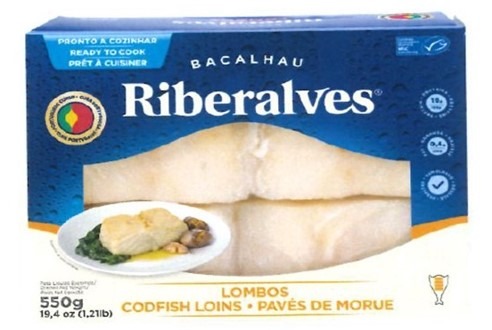
France – DESALTED COD LOAF – Listeria monocytogenes

Gov france

Identification information of the recalled product

  • Product category Feed
  • Product subcategory Fishery and aquaculture products
  • Product brand name RIBERALVES
  • Model names or references LOMBOS – CODFISH LOINS – COD LOAF 550G
  • Identification of products
    GTIN Batch Date
    5601809011539 Batches 23044469 and 23044569 Best before date 07/12/2024
  • Packaging 550g frozen cartons
  • Marketing start/end date From 03/29/2023 to 04/21/2023
  • Storage temperature Product to keep in the freezer
  • Health mark PT B003101 P CE
  • Geographic area of ​​sale Departments: REUNION (974)
  • Distributors CARREFOUR CARREFOUR MARKET CARREFOUR CITY

Practical information regarding the recall

  • Reason for recall Non-compliant analyzes
  • Risks incurred by the consume Listeria monocytogenes (causative agent of listeriosis)

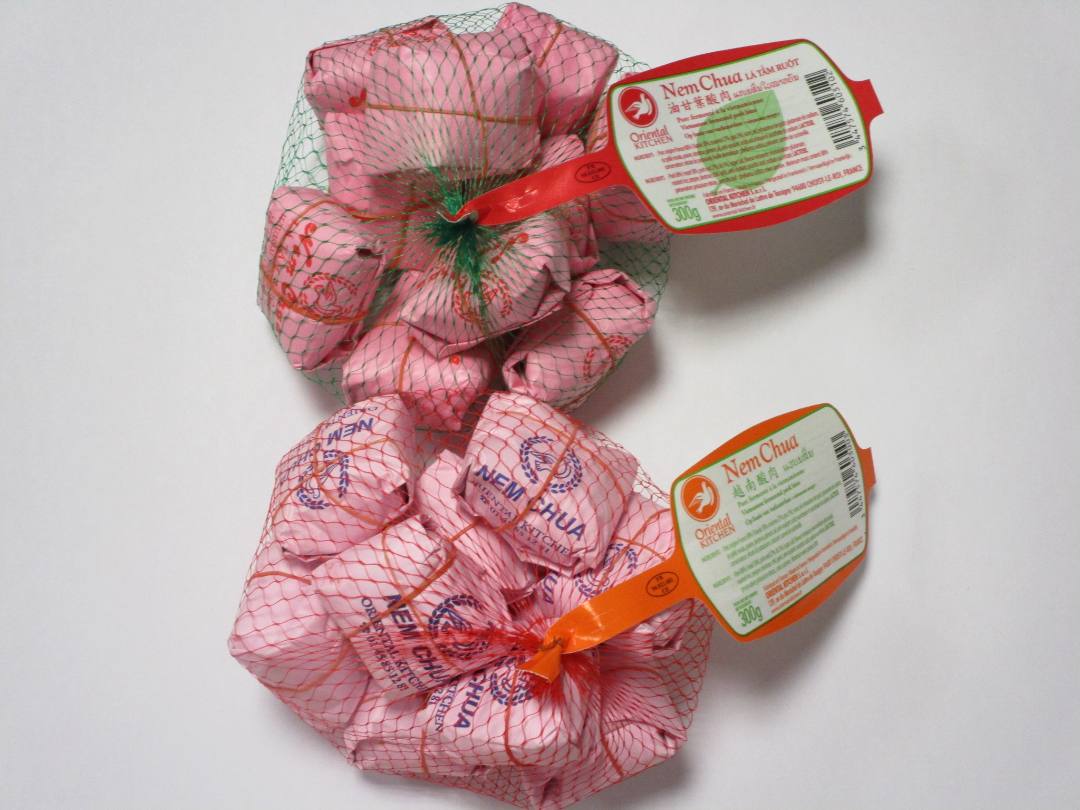
France – NEM CHUA and NEM CHUA La Tam Ruot – Listeria monocytogenes

Gov france

Identification information of the recalled product

  • Product category Feed
  • Product subcategory Meats
  • Product brand name ORIENTAL KITCHEN
  • Model names or references NEM CHUA and NEM CHUA La Tam Ruot
  • Identification of products
    GTIN Batch Date
    3447574603003 Filet of 300g with expiry date: 13/05/2023 Use-by date 05/13/2023
    3447574603003 Filet of 300g with expiry date: 14/05/2023 Use-by date 05/14/2023
    3447574603003 Filet of 300g with Expiry Date: 05/15/2023 Use-by date 05/15/2023
    3447574603003 Filet of 300g with Expiry Date: 05/16/2023 Use-by date 05/16/2023
    3447574603102 Filet of 300g with expiry date: 13/05/2023 Use-by date 05/13/2023
    3447574603102 Filet of 300g with expiry date: 14/05/2023 Use-by date 05/14/2023
    3447574603102 Filet of 300g with Expiry Date: 05/15/2023 Use-by date 05/15/2023
    3447574603102 Filet of 300g with Expiry Date: 05/16/2023 Use-by date 05/16/2023
  • Packaging Net of 10 units (300g)
  • Marketing start/end date From 20/04/2023 to 02/05/2023
  • Storage temperature Product to be stored at room temperature
  • Health mark EN 94.022.001 EC
  • Geographic area of ​​sale Whole France
  • Distributors Asian supermarkets and grocery stores

Practical information regarding the recall

  • Reason for recall Presence of Listeria monocytogenes
  • Risks incurred by the consumer Listeria monocytogenes (causative agent of listeriosis)

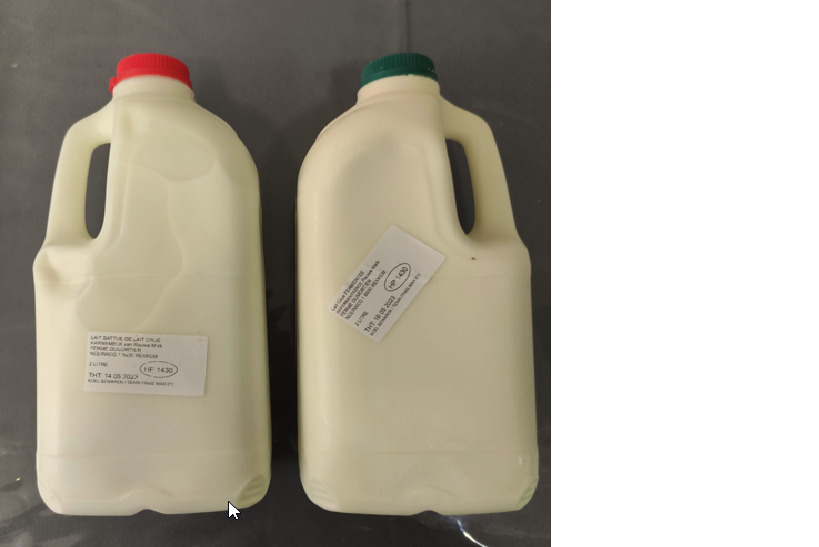
France – Dairy products: (Milk – Raw milk – Buttered milk – FERMENTED RAW MILK) – STEC E.coli O26:H11

Gov france

Identification information of the recalled product

  • Product category Feed
  • Product subcategory Milk and dairy products
  • Product brand name DUMORTIER FARM 8930 REKKEM Belgium
  • Model names or references Dairy products: (Milk – Raw milk – Buttered milk – FERMENTED RAW MILK) from FERME DUMORTIER 8930 REKKEM Belgium.
  • Identification of products
    Batch
    All batches marketed from mid-March
  • Packaging In 2 liter bottle (red or green cap)
  • Marketing start/end date From 03/15/2023 to 05/06/2023
  • Storage temperature Product to be stored in the refrigerator
  • Health mark HP 1430
  • Geographic area of ​​sale Departments: NORTH (59)
  • Distributors“The Oasis” 11 rue Jules Guesde 59000 Lille

Practical information regarding the recall

  • Reason for recall Detection of e.coli O26H11 producing shigatoxins on fermented raw milk.
  • Risks incurred by the consumer Toxigenic Shiga Escherichia coli (STEC)

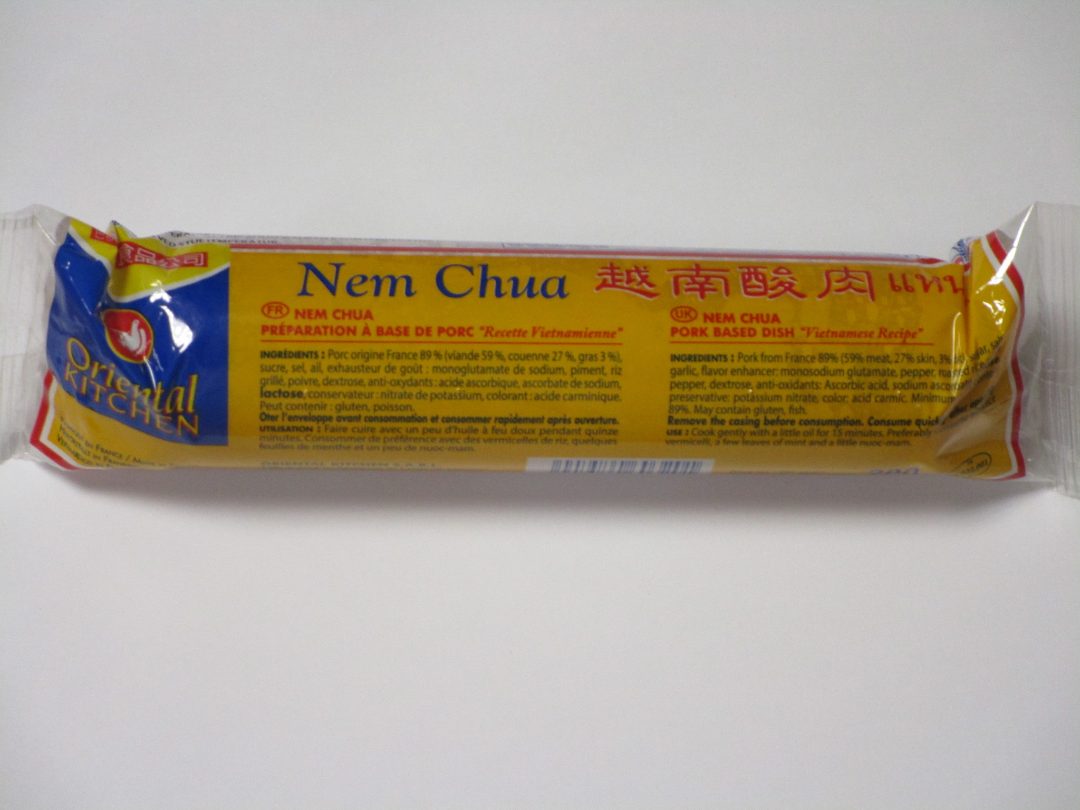
France – NEM CHUA (GUT) – Listeria monocytogenes

Gov france

Identification information of the recalled product

  • Product category Feed
  • Product subcategory Meats
  • Product brand name ORIENTAL KITCHEN
  • Model names or references NEM CHUA Long Stick (gut)
  • Identification of products
    GTIN Batch Date
    3447574603201 Produced in a 200g casing. Use-by date 05/13/2023 Use-by date 05/13/2023
  • Packaging Casing in 200g packaging
  • Marketing start/end date From 20/04/2023 to 02/05/2023
  • Storage temperature Product to be stored at room temperature
  • Health mark EN 94.022.001 EC
  • Geographic area of ​​sale Whole France
  • Distributors Asian supermarkets and grocery stores, restaurants

Practical information regarding the recall

  • Reason for recall Possible presence of listeria monocytogenes (precautionary principle)

Research – Fate of Listeria monocytogenes, Salmonella spp., and Shiga Toxin-Producing Escherichia coli on Slices of an All-Beef Soppressata during Storage

MDPI

Abstract

Cells of Listeria monocytogenesSalmonella spp., or Shiga toxin-producing Escherichia coli (STEC) were inoculated (ca. 4.0 log CFU/slice) onto slices (ca. 4 g each slice) of an all-beef soppressata (ca. pH 5.05 and aw 0.85). The storage of vacuum-sealed slices of inoculated soppressata at 4 °C or 20 °C for 90 days resulted in reductions of all three pathogens by ca. 2.2 to 3.1 or ca. ≥3.3 log CFU/slice, respectively. When pathogen levels decreased to below detection (≤1.18 log CFU/slice) by direct plating, it was possible to recover each of the target pathogens by enrichment, albeit more frequently from slices stored at 4 °C (p < 0.05) compared to 20 °C. In summary, the slices of the commercially produced beef soppressata selected for this study did not provide a favorable environment for either survival or outgrowth of surface-inoculated cells of L. monocytogenesSalmonella spp., or STEC during storage.

New Research Links Foodborne E. Coli Infections to “Hundreds of Thousands” of UTIs in U.S.

Food Safety Magazine

A new study suggests that Escherichia coli infection from contaminated meat products may be responsible for hundreds of thousands of urinary tract infections in the U.S. each year.

A team of scientists led by George Washington University (GWU) Milken Institute School of Public Health researchers have developed a new genomic approach for tracking the origins of E. coli infections. Using this method, the team estimated that between 480,000 and 640,000 UTIs in the United States each year may be caused by foodborne E. coli strains.

According to GWU, E. coli is the most common cause of UTIs, causing upwards of 85 percent of cases each year. Women are at greater risk of developing UTIs, which can range from simple bladder infections to life-threatening bloodstream infections. At present, only specific types of diarrhea-causing E. coli, such as E. coli O157:H7, are rigorously monitored by the U.S. Food and Drug Administration (FDA), but the new findings from GWU suggest that other strains may also pose serious health risks.

In the study, researchers collected raw chicken, turkey, and pork from major grocery store chains in Flagstaff, Arizona, and isolated E. coli from the meat samples. Simultaneously, researchers collected urine and blood E. coli isolates from patients hospitalized at the Flagstaff Medical Center for UTIs.

Research – Salmonella Biofilm Formation under Fluidic Shear Stress on Different Surface Materials

MDPI

Abstract

This study characterized biofilm formation of various Salmonella strains on common processing plant surface materials (stainless steel, concrete, rubber, polyethylene) under static and fluidic shear stress conditions. Surface-coupons were immersed in well-plates containing 1 mL of Salmonella (6 log CFU/mL) and incubated aerobically for 48 h at 37 °C in static or shear stress conditions. Biofilm density was determined using crystal violet assay, and biofilm cells were enumerated by plating on tryptic soy agar plates. Biofilms were visualized using scanning electron microscopy. Data were analyzed by SAS 9.4 at a significance level of 0.05. A surface–incubation condition interaction was observed for biofilm density (p < 0.001). On stainless steel, the OD600 was higher under shear stress than static incubation; whereas, on polyethylene, the OD600 was higher under static condition. Enumeration revealed surface–incubation condition (p = 0.024) and surface–strain (p < 0.001) interactions. Among all surface–incubation condition combinations, the biofilm cells were highest on polyethylene under fluidic shear stress (6.4 log/coupon; p < 0.001). Biofilms of S. Kentucky on polyethylene had the highest number of cells (7.80 log/coupon) compared to all other strain–surface combinations (p < 0.001). Electron microscopy revealed morphological and extracellular matrix differences between surfaces. Results indicate that Salmonella biofilm formation is influenced by serotype, surface, and fluidic shear stress.

Research – Effects of Selected Essential Oils on Listeria monocytogenes in Biofilms and in a Model Food System

MDPI

Abstract

The composition of 18 essential oils was determined using gas chromatography–mass spectrometry, and their antilisterial activity was evaluated by the disk diffusion method, followed by the determination of the minimum inhibitory and minimum bactericidal concentrations. The most active essential oils were oregano, thyme, cinnamon, winter savory, and clove, with MIC values ranging from 0.09 to 1.78 µL/mL. We investigated the biofilm-forming potential of Listeria monocytogenes on polystyrene at 5 °C, 15 °C, and 37 °C in three different media. The formation of biofilm was found to be dependent on the temperature and the availability of nutrients. After treatment with selected essential oils, the reduction in biofilm biomass was in the range of 32.61% and 78.62%. Micromorphological changes in the L. monocytogenes treated by oregano and thyme essential oils were observed in the form of impaired cell integrity and cell lyses by using scanning electron microscope. Oregano and thyme essential oils (MIC and 2MIC) significantly (p < 0.05) reduced the population of L. monocytogenes in minced pork meat during storage at 4 °C. In conclusion, the obtained results indicated the good activity of some selected essential oils on L. monocytogenes, with bacteriostatic, bactericidal, and antibiofilm effects at very low concentrations.

Research -Climate change and food safety: Temperature impact on the attachment of Escherichia coli pathogroups on cress leaf

Wiley Online

Abstract

Climate change and its worldwide effects are undeniable. Temperature increase due to climate change may affect foodborne pathogen survival on fresh produce. This study aimed to present an evaluation of climate change impact regarding temperature rise situations, on attachment of different pathogenic Escherichia coli strains on cress grown under controlled conditions. EHEC O157:H7, EAEC O104:H4 and EPEC O26 were inoculated with initial inoculum concentration of 8 log MPN/mL at different stages during growth to observe how inoculation time (7, 14, 21 and 28 days post sowing; dps) and route (seed and leaves) affect pathogen load on fresh produce. This study revealed that temperature increase designed according to mitigation scenarios for climate change (+2, +4 and +6 °C) did not cause any considerable change in pathogen persistence on leaf at 30 dps (~4.5 to 7 log MPN/g). In plants contaminated at later stage (21 and 28 dps), higher bacterial populations were obtained for all temperatures studied. Our results show that E. coli translocated towards leaf portions from seed and established significant amount of pathogen load on leaf (~4 to 5.3 log MPN/g). Also, inoculated bacteria have tightly bound to leaf (~3.5 to 7 log MPN/g) and cannot be eliminated by washing. Although persistence of E. coli O157:H7, O104:H4 and O26 did not differ significantly according to temperature, the bacterial load on the leaves was above infectious dose for humans.