Monthly Archives: March 2022

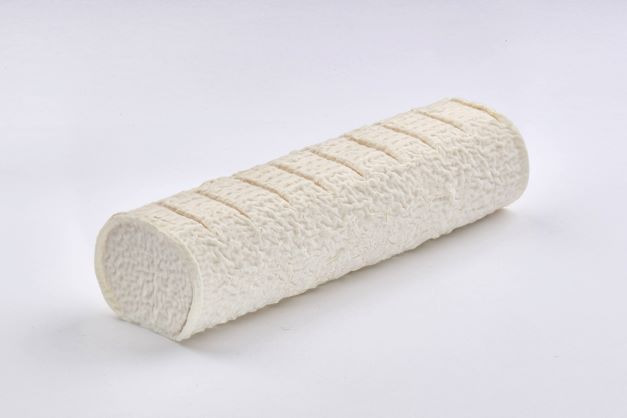
France – ASHED LOG Cheese – Listeria monocytogenes

Gov france

Identification information of the recalled product

  • Product category Food
  • Product subcategory Milk and dairy products
  • Product brand name Peak
  • Model names or references ASHED LOG
  • Identification of products
    Lot Dated
    1801224 Date of minimum durability 03/16/2022
  • Marketing start/end date From 02/15/2022 to 03/01/2022
  • Storage temperature Product to be stored in the refrigerator
  • Health mark81.206.009
  • Further information section cut or fresh packed
  • Geographic area of ​​sale Departments: TARN (81)
  • Distributors GMS

Practical information regarding the recall

  • Reason for recall Suspicion of the presence of Listeria Monocytogenes
  • Risks incurred by the consumer Listeria monocytogenes (causative agent of listeriosis)

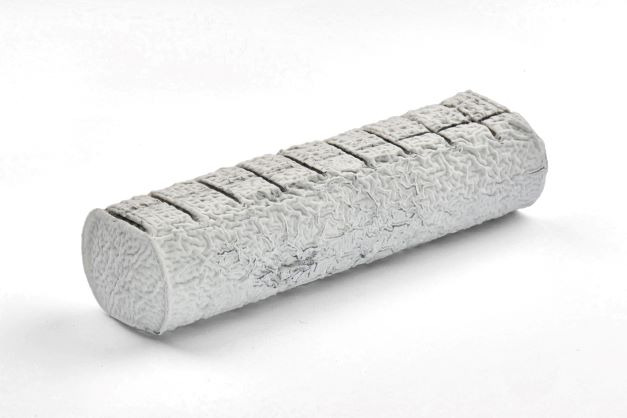
France – WHITE LOG Cheese – Listeria monocytogenes

Gov france

Identification information of the recalled product

  • Product category Food
  • Product subcategory Milk and dairy products
  • Product brand name Peak
  • Model names or references WHITE LOG
  • Identification of products
    Lot Dated
    18012224 Date of minimum durability between 03/23/2022 and 03/27/2022
  • Marketing start/end date From 01/24/2022 to 03/01/2022
  • Storage temperature Product to be stored in the refrigerator
  • Health mark81.206.009
  • Further information section cut or fresh packed
  • Geographic area of ​​sale Whole France
  • Distributors WHOLESALE GMS

Practical information regarding the recall

  • Reason for recall Suspicion of the presence of Listeria Monocytogenes
  • Risks incurred by the consumer Listeria monocytogenes (causative agent of listeriosis)

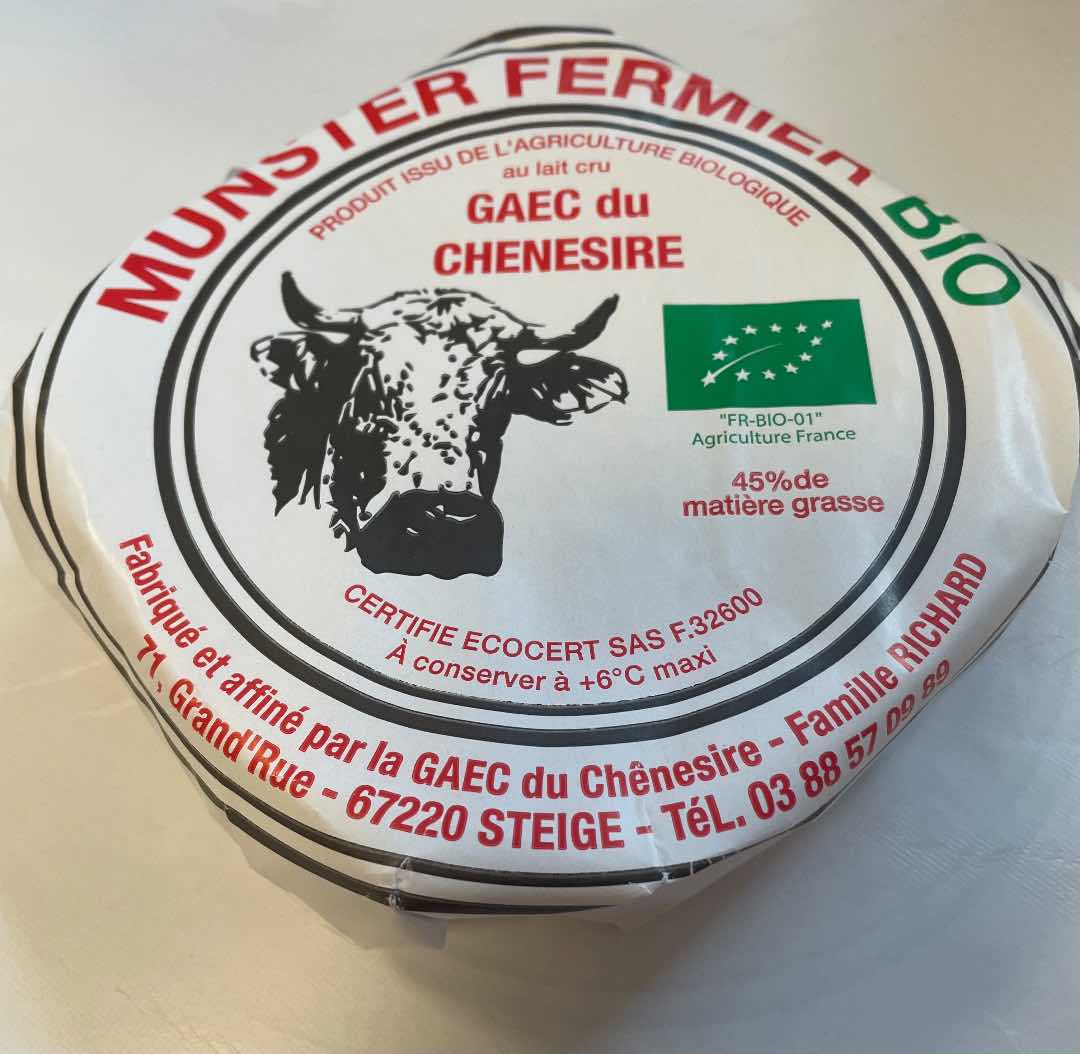
France – Munster farmer AOP labeled Organic White Cheese – Listeria monocytogenes

Gov france

Identification information of the recalled product

  • Product category Food
  • Product subcategory Milk and dairy products
  • Product brand name no brand
  • Model names or references Batch 21
  • Identification of products
    Lot Dated
    21 Use-by date 02/17/2022
  • Packaging3 packed sizes 250g, 320g, 500g.
  • Marketing start/end date From 01/27/2022 to 02/17/2022
  • Storage temperature Product to be stored in the refrigerator
  • Further information Self-service
  • Geographic area of ​​sale weevil valley
  • Distributors Drive farmer schirmeck Meadow Farmers Store from here in Wisches

Practical information regarding the recall

  • Reason for recall Detection of listeria monocytogenes
  • Risks incurred by the consumer Listeria monocytogenes (causative agent of listeriosis)

Nigeria – Public Alert No. 007/2022 – Public Alert On Alasko Brand IQF (Individually Quick Frozen) Whole Kernel Corn Recalled Due To Salmonella

NAFDAC

NAFDAC

The National Agency for Food and Drug Administration and Control (NAFDAC) has been informed by the Canadian Food Inspection Agency (CFIA), that New Alasko Limited Patnership Canada has recalled Alasko Brand IQF Whole Kernel corn due to possible Salmonella contamination.
Salmonella is a group of bacteria that can cause gastrointestinal illness and fever called salmonellosis.

Symptoms are Nausea, vomiting, diarrhea, abdominal cramps, loss of appetite, mild fever, weakness, headache. Symptoms usually begin 6 hours to 6 days after infection and last 4days to 7days

Possible Risk

Food contaminated with Salmonella may not look or smell spoiled but can still make you sick. Young children, pregnant women, the elderly and people with weakened immune systems may contract serious and sometimes deadly infections. Healthy people may experience short-term symptoms such as fever, headache, vomiting, nausea, abdominal cramps and diarrhea. Long-term complications may include severe arthritis.

Product Details

The details of the affected product are as follows;

BRAND PRODUCT SIZES UPC LOT NUMBER
Alasko IQF whole kernel corn 12 kg (6×2 kg) 1069505 8160034 Lot: GT21117

P.O: 112954

Lot: GT21123
P.O: 112944
Lot: GT21143
P.O: 112955

 RECOMMENDATIONS

NAFDAC implores importers, distributors, retailers, healthcare providers and consumers to exercise caution in the importation, distribution, sale and use of the recalled lots of Alasko Brand IQF Whole Kernel corn.

Members of the public in possession of the recalled lots of the product are implored to discontinue sale or use and handover stock to the nearest NAFDAC office.

NAFDAC encourages healthcare professionals, consumers and patients to report adverse events related to the use of this product to the nearest NAFDAC office, NAFDAC PRASCOR (20543 TOLLS FREE from all networks) or via pharmacovigilance@nafdac.gov.ng or via the NAFDAC ADR e-Reporting platform available at www.nafdac.gov.ng

NAFDAC……..Customer-focused, Agency-minded!!!

Spain – Alert for the possible presence of Cronobacter sakazakii and Salmonella Newport in special infant milk from the United States

ACSA

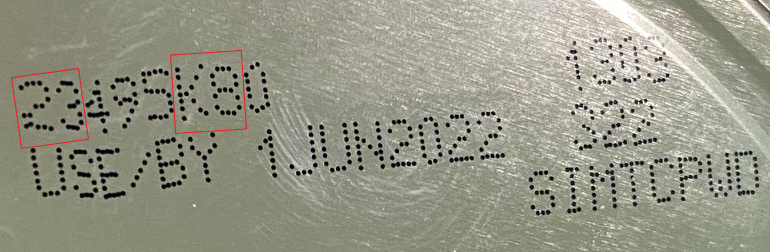
lot identification on can and box

On February 22, the Spanish Agency for Food Safety and Nutrition informed the Autonomous Communities throughthe Coordinated System for the Rapid Exchange of Information (SCIRI) of an alert notification sent by the health authorities of the Autonomous Community of Madrid regarding the possible presence of  Cronobacter sakazakii  and  Salmonella  Newport in two special infant formulas.

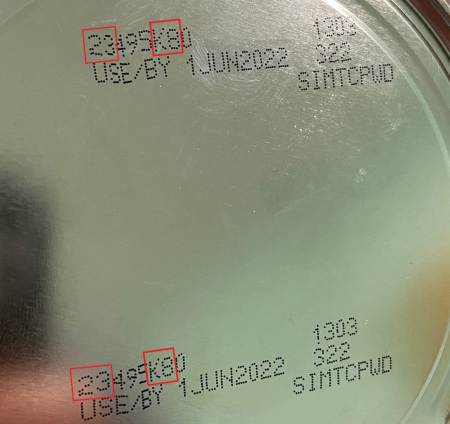
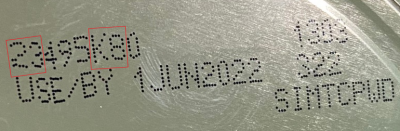
The ABBOTT company has clarified that the batch numbers indicated in the initial notification appear on the boxes of 6 cans. On the other hand, the last digit does not appear on the cans. A photograph of how the lot appears in both cases is attached.

The updated data of the product involved are:

SIMILAC FOOD 400g. Lots:

  • BOXLOTS 25659Z261 (expiry 01 2023); lots IN CAN 25659Z26 (expiry 01 2023)
  • BOXLOTS 28123Z261 (expiry 04 2023); lots IN CAN 28123Z26 (expiry 04 2023)
  • BOXLOTS 30283Z262 (expiry 06 2023); lots IN CAN 30283Z26 (expiry 06 2023)
  • BOXLOTS 31410Z204 (expiry 07 2023); lots IN CAN 31410Z20 (expiry 07 2023)
  • BOX-LOTS 33688Z201 (expiry 09 2023); lots IN CAN 33688Z20 (expiry 09 2023)

SIMILAC ELECARE 400g. Lots:

  • BOXED lots: 25557Z203 (expiry 07 2022); lots IN CAN: 25557Z20 (expiry 07 2022)
  • BOXED lots: 30374Z202 (expiry 12 2022); lots IN CAN: 30374Z20 (expiry 12 2022)

With the information available there is NO record in Spain of any reported case associated with this alert.

People who have products affected by this alert at home are recommended to refrain from consuming them and return them to the point of purchase.

USA – Senators Ask Abbott Nutrition to Explain Cronobacter Infant Illnesses

Food Poisoning Bulletin

Senators ask Abbott Nutrition to explain the Cronobacter and Salmonella illnesses associated with certain types of their Similac, EleCare, and Alimentum powdered infant formulas. A letter was sent to the chairman of the board by two Senators: Patty Murray (D-WA) and Robert Casey Jr. (D-PA). Senator Casey is the Chairman of the Subcommittee on Children and Families in the Senate, and both Senators are members of the U.S. Senate Commitee on Health, Education, Labor and Pensions.

USA – FDA Investigation of Cronobacter and Salmonella Complaints: Powdered Infant Formula (February 2022)

FDA

If you want to check if your powdered formula is part of the recall, you can enter the product lot code on the bottom of your package on the company’s websiteExternal Link Disclaimer.

If you have questions or need information about the recall, you can Submit Questions/Get Assistance.

If your infant is experiencing symptoms related to Cronobacter or Salmonella infection, such as poor feeding, irritability, temperature changes, jaundice, grunting breaths, abnormal movements, lethargy, rash, or blood in the urine or stool; contact your health care provider to report their symptoms and receive immediate care.

To report an illness or adverse event, you can

The FDA, along with CDC and state and local partners are investigating consumer complaints and/or reports of infant illness related to products from Abbott Nutrition’s Sturgis, MI facility. All of the ill patients are reported to have consumed powdered infant formula produced from Abbott Nutrition’s Sturgis, MI facility.

As of February 28, CDC has announced one additional illness of Cronobacter sakazakii with exposure to powdered infant formula produced at Abbott Nutrition’s Sturgis, MI facility. Cronobacter infection may have been a contributing cause of death for this patient. In total, this investigation includes four reports of Cronobacter sakazakii infections in infants (three from FDA complaints and one from a CDC case finding) and one complaint of a Salmonella Newport infection in an infant. All five (four Cronobacter infections and one Salmonella Newport infection) illnesses resulted in hospitalization and Cronobacter may have contributed to death in two patients.

The most recent patient was reported to have consumed Abbott Nutrition’s Similac PM 60/40 product with the lot code 27032K800 prior to Cronobacter sakazakii infection. FDA and CDC informed the firm of these findings and on February 28, 2022, Abbott Nutrition voluntarily recalled Similac PM 60/40 powdered infant formula with the lot code 27032K800. This is a specialty formula for certain infants who would benefit from lowered mineral intake and was not included in the previous recall. At this time, Similac PM 60/40 with lot code 27032K80 (can) / 27032K800 (case) are the only type and lots of this specialty formula being recalled.

This particular lot of Similac PM 60/40 was distributed to the U.S. and Israel. If your regular formula is not available, contact your child’s healthcare provider for recommendations on changing feeding practices.

We understand that infant formula is the sole source of nutrition for many infants and is an essential product. FDA is working with Abbott Nutrition to better assess the impacts of the recall and understand production capacity at other Abbott facilities that produce some of the impacted brands. We are also working with Abbott Nutrition on safe resumption of production at the Sturgis, MI facility. FDA is continuing to investigate and will update this advisory should additional consumer safety information become available.

Recommendation

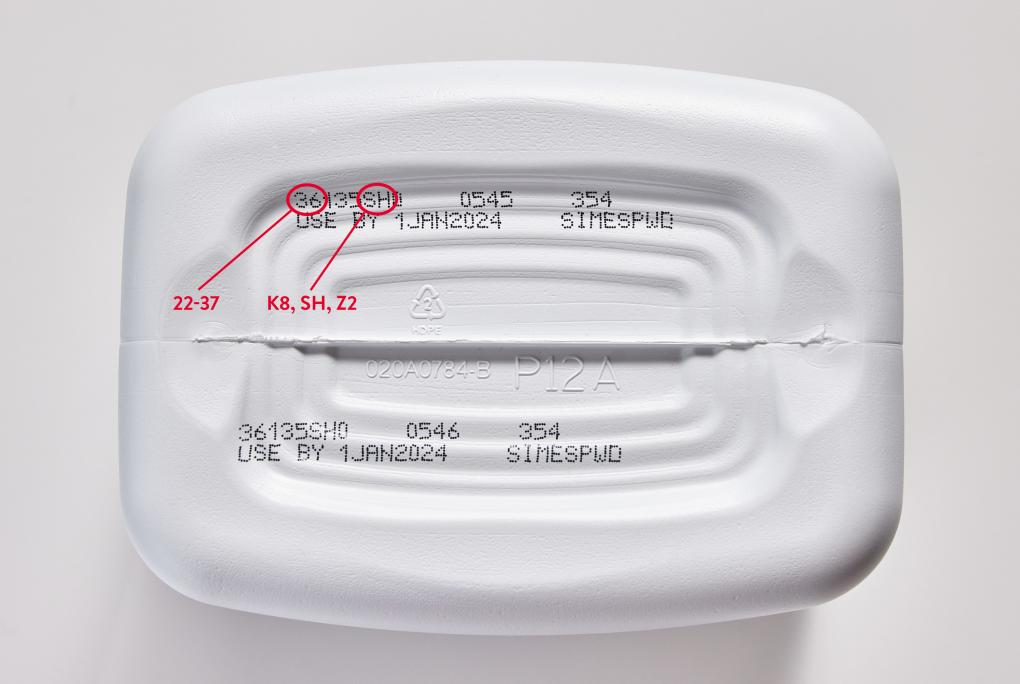
The FDA is advising consumers not to use recalled Similac, Alimentum, or EleCare powdered infant formulas. Recalled products can be identified by the 7 to 9 digit code and expiration date on the bottom of the package (see image below). Products are included in the recall if they have all three items below:

  • the first two digits of the code are 22 through 37 and
  • the code on the container contains K8, SH, or Z2, and
  • the expiration date is 4-1-2022 (APR 2022) or later.

In addition to products described above, Abbott Nutrition has recalled Similac PM 60/40 with a lot code 27032K80 (can) / 27032K800 (case). At this time, Similac PM 60/40 with lot code 27032K80 (can) / 27032K800 (case) are the only type and lots of this specialty formula being recalled.

Additional recall information for the initial recall is available on the FDA website. Parents can also enter their product lot code on the company’s websiteExternal Link Disclaimer to check if it is part of the recall.

Additional Information for Parents and Caregivers:

The recalls do not include liquid formula products. Consumers should continue to use all product not included in the recalls.

Parents and caregivers should never dilute infant formula and should not make or feed homemade infant formula to infants. Consumers should also avoid purchasing imported formula through online sales, as it has the potential to be counterfeit.

If your regular formula is not available, contact your child’s healthcare provider for recommendations on changing feeding practices.

If you get infant formula through WIC, do not throw the formula out. Instead, you should take it to the store for a refund and exchange or call the company at 1-800-986-8540 to help you. WIC recipients should be able to obtain a different brand of similar formula. Call your local WIC clinic for more guidance. Also see:

More information on Cronobacter and infant formula is available on CDC’s website.

Recalled powdered infant formulas have the potential to be contaminated with Cronobacter, a bacterium that can cause severe foodborne illness primarily in infants. Cronobacter infections are rare but are especially high risk for newborn infants (see symptoms below).

Cronobacter bacteria can cause severe, life-threatening infections (sepsis) or meningitis (an inflammation of the membranes that protect the brain and spine). Symptoms of sepsis and meningitis may include poor feeding, irritability, temperature changes, jaundice (yellow skin and whites of the eyes), grunting breaths, and abnormal movements. Cronobacter infection may also cause bowel damage and may spread through the blood to other parts of the body.

If your child is experiencing any of these symptoms, you should notify your child’s healthcare provider and seek medical care for your child immediately. Healthcare providers and health departments are encouraged to report any confirmed cases of Cronobacter sakazakii to CDC.


Product Images

Sample Product Image from the FDA Investigation of Cronobacter and Salmonella Complaints about Powdered Infant Formula (February 2022)
Powdered Infant Formation Container with Product Coding

Case Counts

Total Adverse Events: 5 (4 Cronobacter, 1 Salmonella)
Hospitalizations: 5
Reported Deaths: 2*
Adverse Event Dates: 9/16/2021 – 1/4/2022
States with Adverse Events: MN (1), OH (2), TX (2)
Product Distribution: Nationwide and International
* Two deaths have been reported. Cronobacter infection may have contributed to the cause of death for both ill patients.


International Product Distribution

The recall impacts Alimentum, EleCare, and Human Milk Fortifier for markets outside the U.S. No other Abbott Nutrition products distributed outside of the U.S. are affected by this recall. According to the firm, recalled products were distributed to the following countries/locations: Australia, Bahrain, Barbados, Bermuda, Canada, Chile, China, Colombia, Costa Rica, Dominican Republic, Ecuador, Egypt, Guam, Guatemala, Hong Kong, India, Indonesia, Israel, Jordan, Kuwait, Lebanon, Malaysia, Mexico, New Zealand, Oman, Peru, Puerto Rico, Qatar, Saudi Arabia, Singapore, South Africa, Sudan, Taiwan, Thailand, United Arab Emirates, United Kingdom, and Vietnam ANI South.

For additional information, international officials and customers can visit the company’s recall page for contact informationExternal Link Disclaimer.

Cronobacter Surveillance

Cronobacter infection surveillance is not handled the same way as infection with more common foodborne pathogens, such as Salmonella or E. coli O157:H7. Cronobacter is not nationally notifiable and not reportable except in one state, which means doctors and labs are not required to report cases to their health department. Because Cronobacter is not a nationally notifiable pathogen, FDA relies on consumer complaints of illness sent to the Agency and on health care providers informing FDA directly about infants with Cronobacter infections. In addition, because Cronobacter is not nationally notifiable, whole genome sequencing (WGS) is rarely performed on these isolates. To date, no outbreaks of Cronobacter have been detected using WGS.

When single cases of Cronobacter are reported, the FDA conducts a thorough review of each complaint, conducts sampling of products, and initiates inspections as appropriate. FDA collaborates with CDC, which has developed a detailed questionnaire specifically for Cronobacter infections that is often used by state health departments in instances of Cronobacter sakazakii infection.

France – Child in France dies of E.coli infection as outbreak monitored

Connexion France

Health authorities have not released more information about the child that has died, but 13 other cases in children have prompted a nationwide investigation into the possible source.

Health authorities in France are monitoring an outbreak of E.coli following the death of a child and the detection of 13 cases across the country.

Santé publique France (SPF) issued the alert after the contaminations were first noticed at the beginning of February. The authority has confirmed that one child has died, but has not released information of the date of the death, location, or the age of the child.

Among children aged 1-15, there have been:

  • 5 cases reported in Nouvelle-Aquitaine
  • 3 cases in Hauts-de-France
  • 3 cases in Ile-de-France
  • 1 case in Brittany
  • 1 case in Pays de la Loire.

All of the children were affected by haemolytic uraemic syndrome (HUS), a potentially serious disease in young children, most often caused by food.

It is usually characterised by severe diarrhoea, which can lead to acute renal failure, and usually caused by bacteria belonging to the Escherichia coli (E.coli) family.

The SPF inquiry is looking into every report of similar cases as they are reported to paediatric units, and is aiming to “identify a common source of contamination and put appropriate measures in place”.

It has “not excluded any possibility at this stage”, it said.

USA – Baby formula recall expands to include Similac PM after another baby dies of Cronobacter

USA Today

Abbott Nutrition’s baby formula recall has been expanded to include one lot of Similac PM 60/40.

The Food and Drug Administration said in an update Monday that health officials were investigating an additional illness of Cronobacter sakazakii with exposure to powdered infant formula produced at the company’s Sturgis, Michigan facility. That baby also died of Cronobacter.

“The most recent patient was reported to have consumed Abbott Nutrition’s Similac PM 60/40 product with the lot code 27032K800 prior to Cronobacter sakazakii infection,” the FDA said.

Similac PM is considered “a specialty formula for certain infants who would benefit from lowered mineral intake.” It was not included in the previous recall for select lots of Similac, Alimentum and EleCare formulas announced Feb. 17.

RECALL DATABASE:  Check USA TODAY’s recall resource for the latest updates

USA – FDA – Infant Formula Recall: What to Know

FDA

If you use powdered infant formula, be aware certain Similac, Alimentum and EleCare products have been recalled and should not be used.

The U.S. Food and Drug Administration (FDA) is investigating consumer complaints of bacterial infections in five infants who consumed powdered infant formula produced in Abbott Nutrition’s facility in Sturgis, Michigan. All five infants had to be hospitalized and the bacterial infection may have contributed to death in two patients.

Because infant formula is the only source of nutrition for many newborns and infants, the FDA understands and shares the concerns parents and caregivers may have.

Here’s information to help you as we continue our investigation.

What powdered infant formula products have been recalled?

Abbott Nutrition has recalled certain powdered infant formula products produced at its Sturgis, Michigan facility. Products from that facility can be found across the U.S. and some were exported to other countries. Here’s how you can tell if you have any of those products.

The FDA recommends consumers look at the lot code, a multidigit number on the bottom of a container of Similac, Alimentum and EleCare powdered infant formula and do not use if:

  • the first two digits of the code are 22 through 37; and
  • the code on the container contains K8, SH or Z2; and
  • the expiration date is 4-1-2022 (APR 2022) or later.

In addition to products described above, Abbott Nutrition has recalled Similac PM 60/40 with a lot code of 27032K80 (can) / 27032K800 (case).

You can also enter your product lot code on the company’s websiteExternal Link Disclaimer to check if it is part of the recall. Please see the images below for a closer look at the identifying information.

Powdered Abbott products that don’t have the code and expiration noted above are not included in the recall. Liquid formula products are not subject to the recall. At this time, Similac PM 60/40 with lot code 27032K80 (can) / 27032K800 (case) are the only type and lots of this specialty formula being recalled.

Top of Infant Formula can displaying number coding.
Top of Powdered Infant Formula can, displaying dates and number coding.
Bottom of Powdered Infant formula container

What infections have been reported and what symptoms should I look for?

Four cases involve Cronobacter sakazakii, and one involves Salmonella Newport infection.

  • Cronobacter bacteria can cause severe, life-threatening infections (sepsis) or meningitis (an inflammation of the membranes that protect the brain and spine). Cronobacter infections are rare but are especially high risk for newborns.
  • Salmonella are a group of bacteria that can cause gastrointestinal illness and fever called salmonellosis.
  • Symptoms related to Cronobacter and Salmonella infection include: poor feeding, irritability, temperature changes, jaundice, grunting breaths, abnormal body movements, lethargy, rash or blood in the urine or stool.
  • If your infant is experiencing symptoms related to Cronobacter or Salmonella infection, contact your child’s health care provider to report his or her symptoms and receive immediate care.

When and where were the illnesses?

Illnesses occurred in Minnesota, Ohio, and Texas between September 16, 2021 and January 4, 2022.

I’m having a hard time finding formula. What is the FDA doing to help?

We are aware the recall has created new concerns about the availability of certain types of infant formula, particularly given the overall strains on supply chains experienced during the COVID-19 pandemic.

The FDA is working with Abbott Nutrition to better assess the impacts of the recall and understand the production capacity at other Abbott facilities that produce some of the impacted brands. We are also working with Abbott on safe resumption of production at the Sturgis, Michigan facility. As Abbott Nutrition was initiating its recall, the FDA intensified outreach to other infant formula manufacturers to inquire about their capacity and potential impacts. We will continue discussion with Abbott Nutrition and other infant formula manufacturers and consider all tools available to support the supply of infant formula products.

Are homemade formulas an alternative?

No. The FDA advises parents and caregivers not to make or feed homemade formula to infants. Homemade infant formula recipes have not been evaluated by the FDA and may lack nutrients vital to an infant’s growth.

What else should I know?

Parents and caregivers also should never dilute infant formula. Consumers also should avoid buying formula online that comes from outside the U.S., as it has the potential to be counterfeit.

If your regular formula is not available, contact your child’s health care provider for recommendations on changing feeding practices.

If you get infant formula through WIC, do not throw the formula out. Instead, you should take it to the store for a refund and exchange or call the company at 1-800-986-8540 to help you. WIC recipients should be able to obtain a different brand of similar formula. Call your local WIC clinic for more guidance.

Additional Resources: