Monthly Archives: November 2021

Canada – Going Nuts brand Organic white sesame seeds recalled due to Salmonella

CFIA

Summary

Product
Organic white sesame seeds
Issue
Food » Microbial Contamination » Salmonella
What to do

Do not consume the recalled product

Affected products

Issue

Going Nuts Inc. is recalling Going Nuts brand Organic white sesame seeds from the marketplace due to possible Salmonella contamination.

The recalled product has been sold in Alberta and online.

What you should do

  • If you think you became sick from consuming a recalled product, call your doctor
  • Check to see if you have the recalled product in your home.
  • Do not consume the recalled product
  • Recalled products should be thrown out or returned to the location where they were purchased
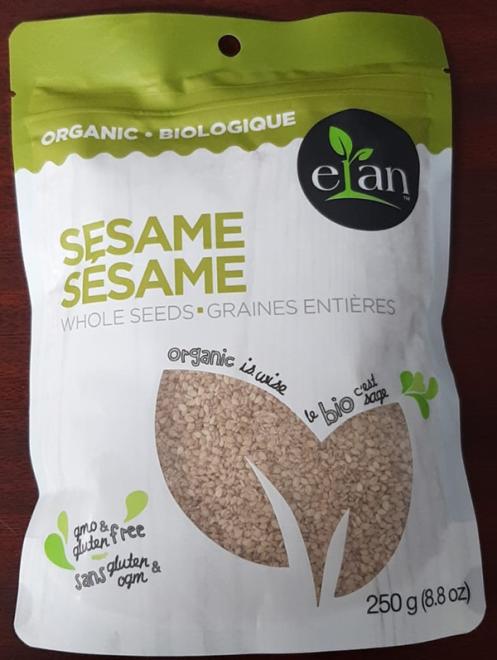
Canada- Elan brand Organic sesame whole seeds recalled due to Salmonella

CFIA

Summary

Product
Organic sesame whole seeds
Issue
Food » Microbial Contamination » Salmonella
What to do

Do not consume the recalled product

Affected products

Issue

Tootsi Impex Inc is recalling Elan brand Organic sesame whole seeds from the marketplace due to possible Salmonella contamination.

The recalled product has been sold in Alberta, British Columbia, New Brunswick, Newfoundland and Labrador, Nova Scotia, Ontario, and Quebec.

What you should do

  • If you think you became sick from consuming a recalled product, call your doctor
  • Check to see if you have the recalled product in your home.
  • Do not consume the recalled product
  • Recalled products should be thrown out or returned to the location where they were purchased
Research – Diversity of Listeria monocytogenes Strains Isolated from Food Products in the Central European Part of Russia in 2000–2005 and 2019–2020

MDPI

Totally, 45 L. monocytogenes strains isolated from meat, poultry, dairy, and fish products in the Central European part of Russia in 2001–2005 and 2019–2020 were typed using a combined MLST and internalin profile (IP) scheme. Strains belonged to 14 clonal complexes (CCs) of the phylogenetic lineages I and II. Almost half of the strains (20 of 45) belonged to six CCs previously recognized as epidemic clones (ECs). ECI and ECV strains were isolated during both studied periods, and ECII, ECIV, ECVI, and ECVII strains were isolated in 2001–2005, but not in 2019–2020. ECI, ECIV, ECV, and ECVII strains were isolated from products of animal origin. ECII and ECVI were isolated from fish. Testing of invasion efficiencies of 10 strains isolated in different years and from different sources and belonging to distinct CCs revealed a statistically significant difference between phylogenetic lineage I and II strains but not between ECs and non-EC CCs or strains differing by year and source of isolation. Strains isolated in 2001–2005 were characterized by higher phylogenetic diversity and greater presentation of ECs and CCs non-typical for natural and anthropogenic environments of the European part of Russia comparatively to isolates obtained in 2019–2020.Closing of the Russian market in 2019–2020 for imported food might be responsible for these differences. View Full-Text

Research – Peanut Skins as a Natural Antimicrobial Feed Additive to Reduce the Transmission of Salmonella in Poultry Meat Produced for Human Consumption

Journal of Food Protection

Salmonella is the leading cause of bacterial foodborne zoonoses in humans. Thus, the development of strategies to control bacterial pathogens in poultry is essential. Peanut skins, a considerable waste by-product of the peanut industry is discarded and of little economic value. However, peanut skins contain polyphenolic compounds identified that have antimicrobial properties. Hence, we aim to investigate the use of peanut skins as an antibacterial feed additive in the diets of broilers to prevent the proliferation of Salmonella Enteritidis (SE). One hundred sixty male hatchlings (Ross 308) were randomly assigned to, (1) PS: peanut skin diet without SE inoculation (2) PSSE: peanut skin diet and SE inoculation 3) CON: control diet without SE inoculation (4) CONSE: control diet with SE inoculation. Feed intake and body weights were determined at week 0 and 5. On days 10 and 24 post hatch, 3 birds/pen (24 total) from each treatment group were euthanized and the liver, spleen, small intestine, and ceca were collected. The weights of the liver, spleen and ceca were recorded. Organ invasion was determined by counting SE colonies. Each pen served as an experimental unit and was analyzed using a t-test. Performance data was analyzed in a completely randomized design using a general linear mixed model to evaluate differences. There were no significant differences ( P > 0.05) in weekly average pen body weight, total feed consumption, bird weight gain and feed conversion ratio between the treatment groups. There were no significant differences in SE CFU/g for fecal, litter or feed between treatment groups CONSE and PSSE. However, for both fecal and litter, the PSSE treatment group tended (P ≤0.1) to have a lower Salmonella CFU/g compared to the CONSE treatment group. The results indicate that peanut skins may have potential application as an antimicrobial feed additive to reduce the transmission or proliferation of SE in poultry environments or flocks.

Research – How Safe to Eat Are Raw Bivalves? Host Pathogenic and Public Health Concern Microbes within Mussels, Oysters, and Clams in Greek Markets

MDPI

Raw-bivalves consumption is a wide trend in Mediterranean countries. Despite the unambiguous nutritional value of seafood, raw consumption of bivalves may involve risks that could pose a significant threat to consumers’ health. Their filter-feeding behavior is responsible for the potential hosting of a wide variety of microorganisms, either pathogenic for the bivalves or public health threats. Under this prism, the current study was conducted in an effort to evaluate the risk of eating raw bivalves originating from the two biggest seafood markets in Thessaloniki, the largest production area of bivalves in Greece. Both microbiological and molecular methodologies were applied in order to assess the presence of various harmful microbes, including noroviruses, BonamiaMarteiliaEsherichia coliSalmonella, and Vibrio. Results indicated the presence of several Vibrio strains in the analyzed samples, of which the halophilic Vibrio harveyi was verified by 16S rRNA sequencing; other than this, no enteropathogenic Vibrio spp. was detected. Furthermore, although Esherichia coli was detected in several samples, it was mostly below the European Union (EU) legislation thresholds. Interestingly, the non-target Photobacterium damselae was also detected, which is associated with both wound infections in human and aquatic animals. Regarding host pathogenic microorganisms, apart from Vibrio harveyi, the protozoan parasite Marteilia refrigens was identified in oysters, highlighting the continuous infection of this bivalve in Greece. In conclusion, bivalves can be generally characterized as a safe-to-eat raw food, hosting more bivalve pathogenic microbes than those of public health concern.

Spain – Legionellosis outbreak reported in Montmeló and Montornès del Vallès

Outbreak News Today

Legionella_Plate_01

Health officials in Spain are reporting a legionellosis outbreak in the municipalities of Montmeló and Montornès del Vallès in the Vallès Oriental region.

To date, 26 cases have been detected. The cases have started symptoms between November 5 and 15. And, of the 26 cases, 10 did not require hospital admission, 2 cases required admission but have already been discharged and 14 cases are still hospitalized.

Those affected are 19 men and 7 women between 37 and 92 years old. And all the cases have had exposure in the municipalities of Montmeló or Montornès del Vallès.

USA – Salmonella Onion Outbreak continues to expand after 900 sickened

Food Poison Journal

Potandon Produce L.L.C. of Idaho Falls, Idaho is updating its October 26 voluntary recall of onions supplied from Keeler Family Farms and sold as Green Giant Fresh to include 3lb. and 5lb. bags of whole yellow onions and 2 lb. bags of whole white onions shipped between July 15 and August 22, 2021 to a UNFI retail distribution center in Champaign, Illinois. This recall does not affect any other Green Giant Fresh products or include any Green Giant canned or frozen vegetable products.

The recalled onions are being recalled because they have the potential to be contaminated with Salmonella.

Israel – Tahina Zahav brand Sesame tahini – Salmonella

Manufacture and Marketing of Tahina and Halva Gold Ltd. (dba Tahina Zahav) recalls Tahina Zahav brand Sesame tahini (500g & 3 kg; Use by 06/09/22 and 14/10/22) due to Salmonella contamination.

Click to access rcl_17112021.pdf

Germany – Pepper Salami Sausages – Listeria monocytogenes

LMW

Warning type: Food
Date of first publication: 11/19/2021
Product name:

“pepper salami sausages” (loose goods), sold in the period 06.11. until November 15, 2021 via sales vehicles at weekly markets

Manufacturer (distributor):

Lothar Mei Herrenzimmerner Str. 14 78662 Bösingen Sales only in BW

Reason for warning: Listeria monocytogenes was detected in one sample.
Packaging Unit: loose ware
Additional Information:

“Pfefferbeißer” from Lothar Mei, Herrenzimmener Str. 14, in 78662 Bösingen – sold from November 6th, 2021 to November 15th, 2021 at weekly markets in the districts of Ludwigsburg, Esslingen, Böblingen, Rems-Murr-Kreis, Göppingen, Stuttgart, Zollernalbkreis , Tübingen, Konstanz, Schwarzwald-Baar-Kreis, -, can be contaminated with Listeria monocytogenes . These germs can lead to listeriosis, which usually manifests itself within 14 days of infection with diarrhea and fever; Especially pregnant women, the elderly and people with a weakened immune system can develop more severe disease processes.
To avert danger and for reasons of consumer protection, we ask you not to consume any remaining quantities, but to destroy them or return them to Mei. In the latter case, you will receive the amount paid back from Mei

Contact to the responsible authorities:

Baden-Württemberg:

poststelle@mlr.bwl.de

Belgium – AH brand “Hummus Trio” aperitif tapas – Salmonella

AFSCA

Albert Heijn
recalled Product: AH brand “Hummus Trio” aperitif tapas.
Problem: possible presence of Salmonella.

In agreement with the AFSCA, Albert Heijn is withdrawing from sale the “Hummus Trio” of the AH brand and is recalling it to consumers following the possible presence of Salmonella. Consumption of this product has the potential to cause food poisoning and therefore pose a health risk – especially in young children, the elderly, people with weakened immune systems and pregnant women.
Albert Heijn asks his customers not to consume this product and to bring it back to the point of sale where it was purchased. The product will be refunded or exchanged there. Please contact a doctor if you have any health problem.

Product description

• Product category: aperitif tapas
• Product name: Hummus Trio
• Brand: AH
• Date of minimum durability (DDM): 06/12/2021
• Sales period: until 18/11/2021 inclusive
• Type of packaging: plastic tray and lid
• Weight: 210 g

For any further information , please contact Albert Heijn on 0800 777 05.