Monthly Archives: August 2021

Australia – Koo canned mixed vegetable varieties – Microbial Contamination

FSANZ

Product information

Sapro Australia is conducting a recall of a variety of Koo brand vegetable products:

Baked Beans in Tomato Sauce; Butter Beans in Flavoured Brine; Butter Beans in Tomato Sauce; Corn Creamstyle Sweetcorn; Whole Kernel Sweetcorn in Brine; Mixed Vegetables in Hot Curry Sauce; Mixed Vegetables in Curry Sauce; Mixed Vegetables in Brine; Baked Beans in Chilli Sauce.

The products have been available for sale at independent food retailers nationwide.

Date markings

Date of Manufacture from 1/5/2019 up to and including 5/5/2021.

Koo canned vegetables

Problem

The recall is due to potential microbial contamination as a result of a canning failure.

Food safety hazard

Food products with potential microbial contamination may cause illness if consumed.

Country of origin

South Africa

What to do​

Consumers should not eat this product and should return the products to the place of purchase for a full refund. Any consumers concerned about their health should seek medical advice.

For further information please contact:

Sapro Australia
0414070564
www.saproaustralia.com.au

Related links:
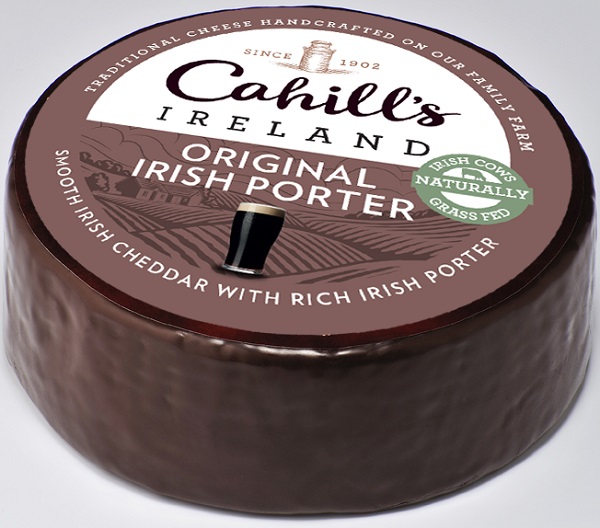
Canada – Updated Food Recall Warning – Cahill’s brand Original Irish Porter Cheese recalled due to Listeria monocytogenes

CFIA

Recall details

Ottawa, August 3, 2021 – The food recall warning issued on July 23, 2021 has been updated to include additional distribution information. This additional information was identified during the Canadian Food Inspection Agency’s (CFIA) food safety investigation.

Tree of Life Canada ULC is recalling Cahill’s brand Original Irish Porter Cheese from the marketplace due to possible Listeria monocytogenes contamination. Consumers should not consume the recalled products described below.

Recalled product

Brand Product Size UPC Codes
Cahill’s Original Irish Porter Cheese 2.27 kg 00034463010160 22-JA-13
21125
Cahill’s Original Irish Porter Cheese 200 g 00034463016056 21-DE-13
21126

What you should do

If you think you became sick from consuming a recalled product, call your doctor.

Check to see if you have the recalled products in your home. Recalled products should be thrown out or returned to the store where they were purchased.

Food contaminated with Listeria monocytogenes may not look or smell spoiled but can still make you sick. Symptoms can include vomiting, nausea, persistent fever, muscle aches, severe headache and neck stiffness. Pregnant women, the elderly and people with weakened immune systems are particularly at risk. Although infected pregnant women may experience only mild, flu-like symptoms, the infection can lead to premature delivery, infection of the newborn or even stillbirth. In severe cases of illness, people may die.

Background

This recall was triggered by the company. The CFIA is conducting a food safety investigation, which may lead to the recall of other products. If other high-risk products are recalled, the CFIA will notify the public through updated Food Recall Warnings.

The CFIA is verifying that industry is removing the recalled products from the marketplace.

Illnesses

There have been no reported illnesses associated with the consumption of these products.

Product photos

Printer ready version of photos

  • Cahill's – Original Irish Porter Cheese – 2.27 kilograms
  • Cahill's – Original Irish Porter Cheese – 200 grams

Public enquiries and media

Public enquiries
Toll-free: 1-800-442-2342 (Canada and U.S.)
Telephone: 1-613-773-2342 (local or international)
Email: information@inspection.gc.ca
Media relations
Telephone: 613-773-6600
Email: cfia.media.acia@inspection.gc.ca

Research – Formation of multi-species biofilms and their resistance to disinfectants in food processing environments: A review

Journal of Food Protection

In food processing environments, various microorganisms can adhere and aggregate on the surface of equipment, resulting in the formation of multi-species biofilms. Complex interactions among microorganisms may affect the formation of multi-species biofilms and their resistance to disinfectants, which are food safety and quality concerns. This paper reviews the various interactions among microorganisms in multi-species biofilms, including competitive, cooperative and neutral interactions. Then, the preliminary mechanisms underlying the formation of multi-species biofilms are discussed in relation to factors, such as quorum sensing (QS) signal molecules, extracellular polymeric substances (EPS) and biofilm-regulated genes. Finally, the resistance mechanisms of common contaminating microorganisms to disinfectants in food processing environments are also summarized. This review is expected to facilitate a better understanding of inter-species interactions, and provide some implications for the control of multi-species biofilms in food processing.

Research – Characterisation of multidrug resistant Escherichia coli isolated from two commercial lettuce and spinach supply chains

Journal of Food Protection

ABSTRACT Leafy green vegetables have increasingly been reported as a reservoir of multidrug-resistant pathogenic Enterobacteriaceae; with Shiga toxin- producing Escherichia coli frequently implicated in disease outbreaks worldwide.  This study aimed to determine the presence and characteristics of antibiotic resistance, diarrheagenic virulence genes and phylogenetic groupings of E. coli isolates (n=51) from commercially produced lettuce and spinach from the farm, through processing and at the point of sale.  Multidrug resistance was observed in 33 of the 51 E. coli isolates (64.7%); with 35.7% (n=10/28) being generic and 100% (n=23/23) Extended Spectrum β-lactamase/AmpC- producing.  Resistance of E. coli isolates was observed against neomycin (100%; n=51/51), ampicillin (70.6%; n=36/51), amoxycilin (68.6%; n=35/51), tetracycline (45%; n=23/51), trimethoprim/ sulfamethoxazole (43%; n=22/51), chloramphenicol (25.5%; n=13/51), augmentin (11.8%; n=6/51) and gentamicin (7.8%; n=4/51); with 100% (n=51/51) susceptibility to imipenem. Virulence gene eae was detected in two E. coli isolates from irrigation water sources only, while none of the other virulence genes tested for were detected.   Most of the E. coli strains belonged to phylogenetic group B2 (25.5%; n=13), B1 (19.6%; n=10) and A (17.6%; n=9); with D (5.9%; n=3) less distributed. Although diarrheagenic E. coli were not detected, antibiotic resistance in E. coli prevalent in the supply chain was evident. Additionally, a clear link between E. coli isolates from irrigation water sources and leafy green vegetables through DNA fingerprinting was established which indicates the potential transfer of E. coli from irrigation water to minimally processed leafy green vegetables.

USA – Pure Eire Dairy closes in wake of E. coli outbreak

Food Safety News

Pure Eire Dairy in Washington state has closed down for good. State officials linked the dairy to an outbreak of E. Coli infections beginning in May.

As of June 24 there were 17 confirmed patients in the outbreak. Ten of the patients are younger than 10 years old. Ten of the 17 patients have had such severe symptoms they had to be admitted to hospitals. The Washington health department has not released the ages of those who have hospitalized.

Of the 17 outbreak patients, four have developed hemolytic uremic syndrome (HUS), a type of kidney failure that can be fatal. Three of the patients live in Arizona and are thought to have become infected through person-to-person contact by visitors from Washington.

Most of the sick people reported eating organic yogurt made by the Pure Eire Dairy in Othello, WA. Both PCC brand and Pure Eire brand yogurt have been recalled.

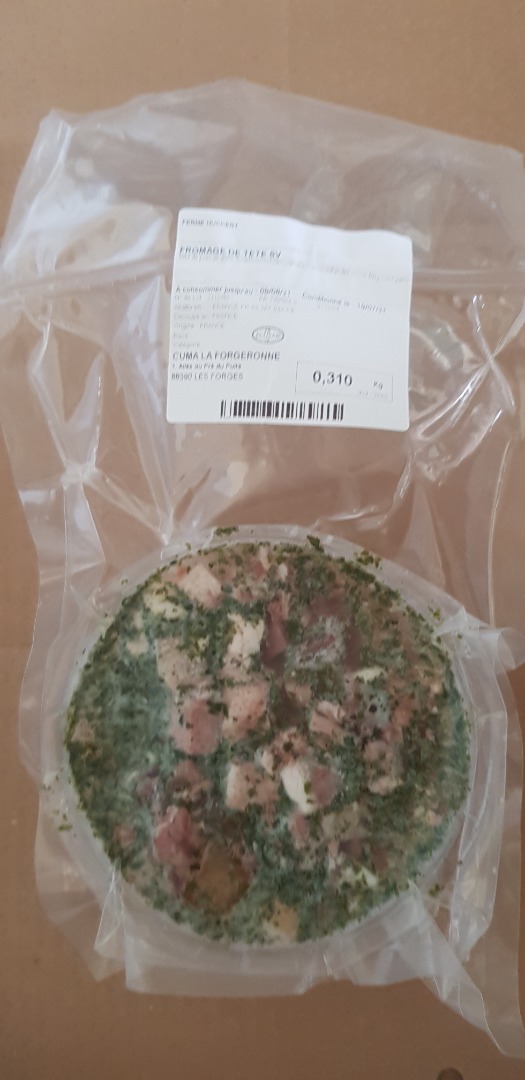
France – HEADCHEESE – Listeria monocytogenes

Gov france

Identifying information for the recalled product

  • Product category Food
  • Product sub-category Meats
  • Product brand name HUCKERT FARM
  • Names of models or references head cheese sv
  • Product identification
    Lot Dated
    21128H – FR 100663.5 – 21128H Use-by date 08/09/2021
  • Packaging thermoformable vacuum-packed plastic bowl
  • Start date / End of marketing From 07/19/2021 to 07/24/2021
  • Storage temperature Product to be stored in the refrigerator
  • Health mark FR 88.178.020 CE
  • Geographical sales area valley of the bruche
  • Distributors drive farmer schirmeck meadow from here (wisches)

Practical information regarding the recall

  • Reason for recall Presence of Listeria monocytogeneS
  • Risks incurred by the consumer Listeria monocytogenes (causative agent of listeriosis)
  • Consumer behavior Stop consuming
    Return the product to the point of sale
  • Sanitary recommendation People who have consumed the “products” mentioned above and who have fever, isolated or accompanied by headaches, and muscle aches, are invited to consult their doctor, notifying him of this consumption. Serious forms with neurological complications and maternal or fetal damage in pregnant women can also sometimes occur. Pregnant women as well as immunocompromised people and the elderly should pay special attention to these symptoms. Listeriosis is a disease that can be serious and can take up to eight weeks to incubate.
  • Contact number0674779014
  • Compensation modalities Repayment
  • End date of the recall procedure Sunday 15 August 2021

Research – Multidrug resistant and ESBL producing Salmonella enterica serotype Heidelberg is widespread in a poultry processing facility from Southern Brazil

Journal of Food Protection

This study aimed to characterize the Salmonella spp. distribution in a poultry processing facility, and to identify their antibiotic resistance profiles. S. enterica was detected in 146 samples (66.7%), and 125 isolates were identified as S. Heidelberg (n = 123), S. Abony (n = 1) and S. O:4,5 (n = 1). S. Heidelberg isolates were subjected to XbaI macrorestriction and PFGE, resulting in 66 pulsotypes grouped in 4 major clusters and demonstrating the cross contamination and persistence of this serotype in the processing facility. Also, S. enterica selected isolates were subjected to antibiotic resistance characterization, with most being categorized as multidrug resistant (n = 122, 97.6%). The resistance to third generation cephalosporins was particularly high: ceftazidime (n = 84, 67.2%) and cefotaxime and ceftriaxone (n = 91, 72.8%). Production of extended-spectrum beta-lactamases (ESBL) was identified in 24 isolates (19.2%) and ESBL-producing isolates were resistant to at least eight different antibiotics. The study highlighted the occurrence and the distribution of S. Heidelberg in the poultry chain, allowing proper understanding of the ecology of this pathogen in the studied facility. Also, the presence of multidrug resistant S. enterica at high frequencies is a concern due to the potential consequences for public health.

Canada – Cyclospora investigation overview

PHAC

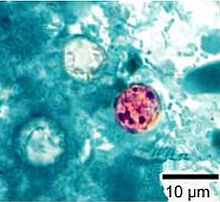
220px-Cyclospora_cayetanensis_stained

Cyclospora investigation overview (as of July 30, 2021)

Each spring and summer, Canada sees an increase in non-travel related Cyclospora illnesses reported to the Public Health Agency of Canada (PHAC). PHAC is working with its public health and food safety partners to identify possible ways infections are occurring in Canada. Previous Cyclospora illnesses have been linked to various types of imported fresh produce, including pre-packaged salad mix, basil, cilantro, berries, lettuce, and snow and snap peas. Learn more about the causessymptoms and risks of infection, as well as how to prevent and treat an illness.

At a glance
Investigation status Ongoing
Case count 48
Provinces/Territories
  • British Columbia (2)
  • Ontario (37)
  • Quebec (9)
Hospitalizations 1
Deaths 0
Gender 22 males
26 females
Age range in years 13 – 91
Recall NO
Public Health Notice NO

Romania – Botulism cases reported in Romania; homemade ham implicated

Food Safety News

CDC Clost Spore

Two people in Romania have been diagnosed with botulism, according to Agerpres, the country’s news agency.

This past weekend, a man went to hospital in the city of Arad and his wife was later diagnosed as being infected. They are believed to have eaten homemade ham.

The news agency reported that there was no antitoxin available so health officials had to get some from Moldova. Both patients remain under observation in hospital.

Botulism poisoning is a rare illness caused by toxins produced by Clostridium botulinum bacteria.

A recent study analyzed the clinical and epidemiological data of patients diagnosed with botulism and hospitalized at one facility in Romania. Findings were published in the journal Environmental Science and Pollution Research.

USA – Apparent Food Poisoning Sends Milwaukee Police Officers To Hospital

Seehafer News

Milwaukee police confirm that “several” officers had to seek hospital treatment after they were sickened in an apparent case of food poisoning.

Multiple sources indicate the number of sick officers was 11.

The food was apparently prepared privately and didn’t come from a restaurant.

The officers involved work at Police District 5, just north of the downtown Milwaukee area.

They were celebrating the retirement of a supervisor and the promotion for another person.