Monthly Archives: June 2021

France – Product recall: LE PERE CHAMPAIN brand traditional ham with rind

Oulah

ENCOUNTERED PROBLEM

Presence of Listeria monocytogenes

PROPOSED SOLUTION

People who may have this product are asked not to consume it and to return it to the point of sale where it was purchased.

People who have consumed this product and who present with fever, isolated or accompanied by headaches, are invited to consult their attending physician, notifying him of this consumption.
Pregnant women should pay special attention to these symptoms, as well as immunocompromised people and the elderly. These symptoms may suggest listeriosis, a disease that can be serious and can take up to eight weeks to incubate.

FURTHER INFORMATION

▸ Model names or references
Traditional ham with LE PERE CHAMPAIN brand rind cut in the charcuterie department


▸ Barcode
2135821088055


▸ Lot
21122


▸ DLC – DDM
07/15/2021


▸ Packaging
WHOLE HAM – 8.8 KG


▸ Start date / End of marketing
From 06/05/2021 to 06/10/2021


▸ Health mark
FR 37.276.031.CE


Château Renault geographic sales area , 37110


Intermarché Château-Renault distributors


▸ Consumer service contact
0247568718


▸ Source
SOCOCHARE INTERMARCHE

USA – Florida reports four Vibrio deaths year-to-date

Outbreak News Today

Food Illness

Through June 18, Florida state health officials have reported ten Vibrio vulnificus infections, including four deaths, according to the latest data update.

Cases were reported in Escambia (2), Lee (2), Santa Rosa (2), Hernando, Hillsborough, Manatee and Polk counties and death were recorded in Escambia, Lee, Manatee and Polk counties.

Last year, the Florida Department of Health recorded 36 Vibrio vulnificus cases and seven deaths.

Vibrio vulnificus can cause disease in those who eat contaminated seafood or have an open wound that is exposed to warm seawater containing the bacteria. Ingestion of Vibrio vulnificus can cause vomiting, diarrhea and abdominal pain. Vibrio vulnificus can also cause an infection of the skin when open wounds are exposed to warm seawater; these infections may lead to skin breakdown and ulcers.

Germany – Schärdinger roast and grill cheese, natural – Listeria monocytogenes

LMW

Warning type: Food
Date of first publication: 06/18/2021
Product name:

Schärdinger roast and grill cheese, natural,

Product pictures:

 Berglandmilch eGen
Manufacturer (distributor):

Berglandmilch eGen

Reason for warning: Listeria
Packaging Unit: 150g
Durability: 08/02/2021
Lot identification: 115890
Additional Information:

Reference is made to the following link from the  Austrian Agency for Health and Food Safety (AGES).

https://www.ages.at/produktwarnung/produktwarnung/schaerdinger-brat-und-grillkaese-natur-150g/

Contact to the responsible authorities:

Bavaria: poststelle@lgl.bayern.de

Research – Wet vs. dry inoculation methods have a significant effect of Listeria monocytogenes growth on many types of whole intact fresh produce

Journal of Food Protection

L. monocytogenes causes relatively few outbreaks linked to whole fresh produce but triggers recalls each year in the US. There are limited data on the influence of wet vs. dry methods on pathogen growth on whole produce. A cocktail of five L. monocytogenes strains that included clinical, food, or environmental isolates associated with foodborne outbreaks and recalls was used. Cultures were combined to target a final wet inoculum concentration of 4-5 log CFU/mL. The dry inoculum was prepared by mixing wet inoculum with 100 g of sterile sand and drying for 24 h. Produce investigated belonged to major commodity families: Ericaceae (blackberry, raspberry, and blueberry), Rutaceae (lemon and mandarin orange), Roseaceae (sweet cherry), Solanaceae (tomato), Brassaceae (cauliflower and broccoli) and Apiaceae (carrot). Intact, whole inoculated fruit and vegetable commodities were incubated at 2, 12, 22 and 35±2°C. Commodities were sampled for up to 28 days, and the experiment was replicated 6 times. The average maximum growth increase was obtained by measuring the maximum absolute increase for each replicate within a specific commodity, temperature, and inoculation method. Data for each commodity, replicate and temperature was used to create primary growth or survival models, describing the lag phase and growth or shoulder and decline as a function of time. Use of a liquid inoculum (vs. dry inoculum) resulted in markedly increased L. monocytogenes growth rate and growth magnitude on whole produce surfaces. This difference was highly influenced by temperature with a greater effect seen with more commodities at higher temperatures (22 and 35°C), versus lower temperatures (2 and 12 °C). These findings need to be explored for other commodities and pathogens. The degree to which wet or dry inoculation techniques more realistically mimic contamination conditions throughout the supply chain (e.g., production, harvest, post-harvest, transportation, or retail) should be investigated.

Norway – Handling of Salmonella in EU-EEA beef and pork (traded)

Mattilsynet

In the winter and spring of 2021, several Salmonella finds were made in meat from Germany. On the basis of this, in 2021 the Norwegian Food Safety Authority will prioritize inspections of establishments that handle meat from EU / EEA countries (traded meat). The Norwegian Food Safety Authority will require the company to be able to verify that consignments of traded meat meet the conditions in the salmonella guarantee.

Companies in Norway must be able to verify that consignments of traded meat from EU / EEA countries meet the conditions in the Animal Hygiene Regulations (salmonella guarantee). This can be done by either referring to good enough historical documentation about the shipping business abroad, or increasing the sampling of traded meat in Norway.

Read more about Salmonella, what requirements the Norwegian Food Safety Authority places on companies that use processed meat, and how the Norwegian Food Safety Authority will follow this up, here: Handling of Salmonella in beef and pork from the EU / EEA (traded)

The Norwegian Food Safety Authority has, among other things, accelerated an already planned inspection of companies that import meat from EU / EEA countries.

Research- Antimicrobial effects of plant extracts against Clostridium perfringens with respect to food-relevant influencing factors

Journal of Food Protection

The application of plant extracts (PEs) could be a promising option to satisfy consumers’ demand for natural additives to inhibit growth of variable pathogenic bacteria. Thus, the aim of this study was to develop a standardized microdilution method to examine the antimicrobial effects of ten hydrophilic plant extracts against two strains of C. perfringens facing various food-relevant influencing factors. Due to the high opacity of PEs, resazurin was used as an indicator for bacterial growth instead of pellet formation. The highest value of the minimum inhibitory concentration (MIC) of the replications of each PE was defined as effective plant extract concentration (EPC), whereas the next concentration beneath the lowest MIC value was defined as the ineffective plant extract concentration (IEPC). The EPC of seven PEs: allspice, cardamom, cinnamon, clove, coriander, ginger and mace were between 0.625 – 10 g/kg, whereas extracts of caravey, nutmeg and thyme showed no antimicrobial activity up to the maximum concentration tested (10 g/kg) against C. perfringens in vitro. Two intrinsic factors, sodium chloride and sodium nitrite, displayed either synergistic/additive effects or no interaction with most PEs. By combination with PEs at its ineffective plant concentration (IEPC, 0.08 – 1.25 g/kg), MIC of NaCl and NaNO2 decreased from 25 – 50 g/kg to 6 – 25 g/kg and > 200 mg/kg to 0.2 – 100 mg/kg respectively. On the contrary, lipid (sun flower oil) at a low concentration inhibited the antimicrobial effects of all tested PEs. For extrinsic factors, only allspice, ginger and coriander could maintain their antimicrobial effects after being heated to 78 °C for 30 min. The synergistic effect between PEs and pH values (5.0 and 5.5) was also found for all PEs. The established screening method with resazurin and defining EPC and IEPC values allows the verification of antimicrobial effects of PEs under various food-relevant influencing factors in a fast and reproducible way.

Research – Novel Sequence Types of Listeria monocytogenes of Different Origin Obtained in the Republic of Serbia

MDPI

Listeria monocytogenes, the causative agent of listeriosis, is amongst the major food-borne pathogens in the world that affect mammal species, including humans. This microorganism has been associated with both sporadic episodes and large outbreaks of human listeriosis worldwide, with high mortality rates. In this study, the main sequence types (STs) and clonal complexes (CCs) were investigated in all of the 13 L. monocytogenes strains originating from different sources in the Republic of Serbia in 2004–2019 and that were available in the BIGSdb-Lm database. We found at least 13 STs belonging to the phylogenetic lineages I and II. These strains were represented by ST1/ST3/ST9 of CC1/CC3/CC9, which were common in the majority of the European countries and worldwide, as well as by eight novel STs (ST1232/ST1233/ST1234/ST1235/ST1238/ST1236/ST1237/ST1242) of CC19/CC155/CC5/CC21/CC3/CC315/CC37, and the rare ST32 (clonal complex ST32) and ST734 (CC1), reported in the Republic of Serbia, the EU, for the first time. Our study confirmed the association of CC1 with cases of neuroinfection and abortions among small ruminants, and of CC3 and CC9 with food products of animal origin. The strains isolated in 2019 carried alleles of the internalin genes (inlA/inlB/inlC/inlE) characteristic of the most virulent strains from the hypervirulent CC1. These findings demonstrated the genetic relatedness between L. monocytogenes strains isolated in the Republic of Serbia and worldwide. Our study adds further information about the diversity of the L. monocytogenes genotypes of small ruminants and food products, as the strain distribution in these sources in Serbia had not previously been evaluated.

Research – “Aquaponics offers solutions to foodborne illness outbreaks”

Horti Daily

Soilless growing offers a viable alternative to growing crops in a low-risk environment for many microbial sources. Aquaponics, which is often greenhouse-grown, is an innovative way of growing fish and plants in rural or urban settings. For years, commercial aquaponic farms have obtained food safety certifications from Global GAP, USDA Harmonized GAP, Primus GFS, and the SWF Food Safety Program, in addition to being certified USDA organic (Aquaponic Association, 2019) and sold commercially across North America.

In an aquaponic system, the healthy microbes actually serve as biological control agents against pathogenic bacteria making their survival minimal (Fox, 2012). While aquaponics produce is not immune to all pathogenic contamination, it is one of the safest agriculture methods against pathogenic risk.

Italy – Salame Campagnolo 150g – Salmonella

Salute

Brand : Produced for Penny Market

Name : Salame Campagnolo 150g

Reason for reporting : Recall due to microbiological risk

Publication date : 18 June 2021

Documentation

Documentation

Czech Republic – Tourist durable salami – Mould

Potravinynapranyri

Illustration photo no. 1

Place of inspection:
Prerov ( Kojetinska 3133/10, 750 02 Prerov )
Company ID: 07329709
Food group: Meat and meat products Durable meat products

Tourist durable salami
Category: Dangerous food
Unsatisfactory parameter:

mold visible to the eye

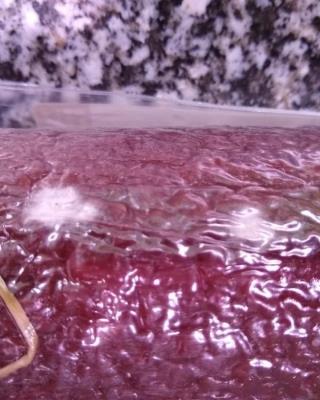
Mold colonies visible to the naked eye were visible on the surface of the food. Food is not considered safe if it shows signs of spoilage.

The food had a broken package.

Lots: L: 54
Date of minimum durability: 06/14/2021
Packaging: Original (PE cover)
Quantity of product in package: 0.954 kg
Date of sampling: May 20, 2021
Reference number: 21-000164-CAFIA-CZ
The sample was found by an official inspection of the State Agricultural and Food Inspection Authority.