Tag Archives: environment

Research – Online Dairy Herd Salmonella Risk Assessment

Dairy Herd Network19243

Salmonellosis  is a pervasive disease that is hard to keep out of a dairy operation.  With help from a new online tool from Pfizer Animal Health, dairy  producers can assess their risk of a Salmonella outbreak. The short self-assessment — found at www.SalmonellaRisk.com/Assessment — helps producers find proactive measures to help lessen the risk of a disastrous outbreak.

Salmonella is on the rise and is a risk to every dairy operation,” says Dr. Gary  Neubauer, senior manager, Dairy  Technical Services, Pfizer Animal Health. “Dairies are operating at a  faster pace than ever before with cattle, feed and people going on and  off the farm every day. It’s important for producers to consider how  much risk they are willing to take on.”

While taking the assessment, producers answer questions about on-farm hygiene, accessibility and animal health practices.  Once completed, the tool provides a personalized Salmonella reduction plan that can be printed or emailed to the herd veterinarian.  Together, producers and veterinarians can use this plan to review  current protocols and management practices, and establish  ways to help reduce risk and build immunity to Salm

Research New Bacterial Identification Technology

Food Poisoning Bulletin

xTAG Gastrointestinal Pathogen Panel (GPP), which recently received approval from US Food and Drug Administration (FDA), is one lab test that can do the job of many,  expertly scanning a solitary stool sample for 11 different illness-inducing organisms.

To many, that sounds an impressive feat in an of itself. But considering that 179 million Americans are stricken with gastroenteritis every year, according to the Centers for Disease Control and Prevention (CDC), it’s also one that can come in handy. Infectious gastroenteritis is caused by certain viruses, bacteria, or parasites and can be spread easily through person-to-person contact or from contaminated food, water, and surfaces. Symptoms include vomiting and diarrhea.

The  xTAG can scan for  bacteria including Campylobacter, Clostridium difficile (C. difficile) toxin A/B, Escherichia coli (E. coli) O157, Enterotoxigenic Escherichia coli (ETEC) LT/ST, Salmonella, Shigella and Shiga‐like Toxin producing E. coli (STEC) stx 1/stx 2. It can scan for viruses including Norovirus and Rotavirus A. And it can scan for parasites such as Cryptosporidium and Giardia.

Research – Norovirus and Hand Sanitisers

Food Poisoning Bulletinnorovirus-2(1)

In 2011, the Centers for Disease Control and Prevention conducted a study that looked at a substantial increase in novovirus illnesses in northern New England. Researchers looked at long-term care facilities in that area, trying to identify institutional risk factors for norovirus outbreaks. State health departments in Maine, New Hampshire, and Vermont used surveys, collecting information about facility attribvutes, routine staff use of alcohol-based hand sanitizer versus soap and water, facility cleaning practices, and occurrence of acute gastroenteritis outbreaks from December 2006 to Amarcy 2007.

Norovirus outbreaks peak in the winter months, when people are forced to spend more time together. Cruise ships, hospitals, and nursing homes usually suffer outbreaks because of the proximity of patients. The virus is extremely contagious and people can become infected through food and drink, person-to-person, and by touching contaminated surfaces.

The surveys found that of the 91 facilities that responded, 61 reported 73 outbreaks in that time frame. Of those outbreaks, 29 were confirmed norovirus. And facilities where staff were “equally or more likely to use alcohol-based hand sanitizer (ABHS) than soap and water for routine hand hygiene had higher odds of an outbreak than facilities with staff less like to use ABHS.”

UK – Takeaway Owner Jailed for E.coli Outbreak

BBC NewsEcoli Istock

The owner of a Cardiff takeaway has been jailed for eight months following an outbreak of E. coli.

Diar Wali Ali admitted at Cardiff magistrates’ court to 23 food hygiene offences and was jailed on Monday.

In August 2011, nine customers fell ill with food poisoning after visiting the Adonis Kebab House in City Road, Roath.

The takeaway was closed for two weeks while inspections were carried out and the council was satisfied the risks had been removed.

Councillor Derek Morgan, chair of Cardiff council’s public protection committee, said people had a right to eat safe food and certain levels of hygiene.

“However, where poor hygiene practices and substandard conditions are found, we take immediate action to safeguard public health,” he said.

“I hope this case helps to show how seriously we take this commitment and demonstrate that, where appropriate, we will use the full force of the law to ensure food safety regulations are met.”

Research – Campylobacter in Chicken Factory Workers

Food Safety NewsimagesCAYZ5I84

New analysis of Campylobacter infections among workers at a Virginia poultry plant offers hints about which employees more likely to fall ill from the bacteria.

Government researchers examined health data for plant employees from January 2008 through May 2011 and found that 29 Campylobacter cases had been confirmed during that time period.

Their findings reveal three characteristics of workers who were more likely to be sickened:

  • Recently employed: A full 83 percent of these patients had worked at the plant less than a month before falling ill, suggesting that illness is more common among new employees.
  • Worked in the live-hang area: Those whose job involved hanging live chickens were far more likely to be infected than those working in other parts of the facility. Of those sickened, 62 percent worked in a live-hang area.
  • Resided in diversion centers: Almost all the employees who contracted Campylobacter infections (26 out of 29) lived in state-operated diversion centers. The authors say the high illness rate among this group may be due to the fact that diversion center residents are disproportionately assigned to live-hang areas, where they are more likely to be exposed to the bacteria.

The fact that new employees fell ill more frequently than those who had been there more than a month is consistent with findings from other studies, which have suggested that workers develop immunity to the bacteria during the first few weeks of work.

CDC – Report

Research Papers – Pathogens – Celery – Irradiation – Spinach – Boiling Shrimp – Low Water Activity and Pathogens

Science Direct

Illnesses from Escherichia coli O157:H7, Listeria monocytogenes, and Salmonella have been associated with the consumption of numerous produce items. Little is known about the effect of consumer handling practices on the fate of these pathogens on celery. The objective of this study was to determine pathogen behavior at different temperatures under different storage conditions. Commercial fresh-cut celery was inoculated at ca. 3 log CFU/g onto either freshly cut or outer uncut surfaces and stored in either sealed polyethylene bags or closed containers. Samples were enumerated following storage for 0, 1, 3, 5, and 7 days when held at 4 °C or 12 °C, and after 0, 8, and 17 h, and 1, and 2 days when held at 22 °C. At 4 °C, all populations declined by 0.5–1.0 log CFU/g over 7 days. At 12 °C, E. coli O157:H7 and Salmonella populations did not change, while L. monocytogenes populations increased by ca. 0.5 log CFU/g over 7 days. At 22 °C, E. coli O157:H7, Salmonella, and L. monocytogenes populations increased by ca. 1, 2, or 0.3 log CFU/g, respectively, with the majority of growth occurring during the first 17 h. On occasion, populations on cut surfaces were significantly higher than those on uncut surfaces. Results indicate that populations are reduced under refrigeration, but survive and may grow at elevated temperatures.

The Packer

Researchers say common packinghouse practices for fresh spinach are not sufficient to avoid outbreaks of salmonella-related illnesses and recently showed that irradiation eliminated almost all cross contamination from field and packing operations.

Scientists at Texas A&M University and Pusan National University in South Korea set out to develop a quantitative risk assessment model to evaluate microbial hazards during the processing of baby spinach leaves, according to their abstract recently published with their results in the journal “ScienceDirect.”

IngentaConnect

The purpose of this study was to determine whether the current consumer method of boiling shrimp until floating and pink in color is adequate for destroying Listeria and Salmonella. Shrimp samples were submerged in bacterial suspensions of Listeria and Salmonella for 30 min and allowed to air dry for 1 h under a biosafety cabinet. Color parameters were then measured with a spectrophotometer programmed with the CIELAB system. Twenty-four shrimp samples were divided into groups (days 0, 1, or 2) and stored at 4°C. The samples were treated by placing them in boiling water (100°C) on days 0, 1, and 2. The shrimp were immediately removed from the boiling water once they floated to the surface, and color parameters were measured. Bacterial counts were determined, and the log CFU per gram was calculated. The effect of sodium tripolyphosphate on the color change of cooked shrimp also was determined. Initial bacterial counts on shrimp after air drying were 5.31 ± 0.14 log CFU/g for Salmonella Enteritidis, 5.24 ± 0.31 log CFU/g for Salmonella Infantis, 5.40 ± 0.16 log CFU/g for Salmonella Typhimurium, 3.91z 0.11 log CFU/g for Listeria innocua, 4.45 ± 0.11 log CFU/g for Listeria monocytogenes (1/2a), and 3.70 ± 0.22 log CFU/g for Listeria welshimeri. On days 0, 1, and 2, all bacterial counts were reduced to nondetectable levels for shrimp samples that floated. The average time for shrimp to float was 96 ± 8 s. The bacterial counts remained at nondetectable levels (<10 log CFU/g) during refrigerated (4°C) storage of cooked shrimp for 2 days. The redness, yellowness, and lightness were significantly higher (P < 0.0001) for the cooked shrimp than for the uncooked shrimp on all days tested. The standard deviation for redness in the cooked shrimp was large, indicating a wide range of pink coloration on all days tested. The results suggest that boiling shrimp until they float will significantly reduce Listeria and Salmonella contamination, but color change is not a good indication of reduction of these pathogens because of the wide natural color variation.

IngentaConnect

Foods and food ingredients with low water activity (aw) have been implicated with increased frequency in recent years as vehicles for pathogens that have caused outbreaks of illnesses. Some of these foodborne pathogens can survive for several months, even years, in low-aw foods and in dry food processing and preparation environments. Foodborne pathogens in low-aw foods often exhibit an increased tolerance to heat and other treatments that are lethal to cells in high-aw environments. It is virtually impossible to eliminate these pathogens in many dry foods or dry food ingredients without impairing organoleptic quality. Control measures should therefore focus on preventing contamination, which is often a much greater challenge than designing efficient control measures for high-aw foods. The most efficient approaches to prevent contamination are based on hygienic design, zoning, and implementation of efficient cleaning and sanitation procedures in the food processing environment. Methodologies to improve the sensitivity and speed of assays to resuscitate desiccated cells of foodborne pathogens and to detect them when present in dry foods in very low numbers should be developed. The goal should be to advance our knowledge of the behavior of foodborne pathogens in low-aw foods and food ingredients, with the ultimate aim of developing and implementing interventions that will reduce foodborne illness associated with this food category. Presented here are some observations on survival and persistence of foodborne pathogens in low-aw foods, selected outbreaks of illnesses associated with consumption of these foods, and approaches to minimize safety risks.

UK – HPA Norovirus Update

HPAnorovirus-2(1)

Latest figures from the Health Protection Agency (HPA) show there have been 3,877 laboratory confirmed cases of norovirus this season (from week 27 to week 51 2012). The latest figures are 72 per cent higher than the number of cases reported at this point last year, when there were 2,255 cases.

During the Christmas period there is typically a drop in the number of laboratory reports. In previous norovirus seasons the general trend is that cases increase in the New Year and we expect to see cases rise again over the next few weeks.

During the two weeks up to 30 December there were 29 hospital outbreaks reported, compared to 70 in the previous fortnight, bringing the total of outbreaks for the season to 590.

Cases of norovirus have risen earlier than expected this winter season and this is a trend that has been seen across Europe and other parts of the world. It has not yet been determined why this has been the case and activity varies significantly from year to year.

UK Research – MRSA in British Cattle

Global Meat News

Food and farming charity The Soil Association has called on the British government to investigate the bacteria MRSA in UK farm animals, as well as the claimed overuse of antibiotics in farming.


USA – 10 Largest Food Poisoning Outbreaks 2012

Food Poisoning BulletinEcoli Istock

The 10 largest multi-state food poisoning outbreaks of 2012 poisoned 1,071 people in 45 states. Various strains of just three pathogens- Salmonella, E.coli and  Listeria were the cause of the 10 largest multi-state foodborne illness outbreaks, based on the total number of people sickened.  Six of them were caused by Salmonella, three by E.coli and one by Listeria. These dangerous bacteria  made their way into unsuspecting consumers through a variety of food sources including  meat, cheese, fish, peanut butter, fruit and vegetables.

Research- New Listeria Strains Discovered from the US Canteloupe Outrbreak 2011

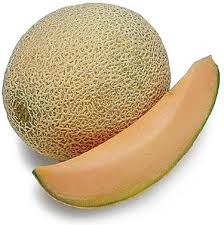
Food Safety Newscatalopue

After analyzing four of the five types of Listeria implicated in last year’s deadly cantaloupe outbreak, scientists have discovered that a new outbreak strain was among those that contributed to the nearly 150 illnesses and 33 deaths caused by contaminated melons.

The researchers, an international team of government and university scientists, also compared the strains involved in the 2011 outbreak to those that had caused other outbreaks or been collected from other food facilities. By doing this, they identified two new sets of “epidemic clones” –  strains isolated in different times and places that appear to have common ancestors.

Only five epidemic clones, or ECs, of Listeria had been identified prior to this study, which raises that number to seven.