USA – Drug Emporium Yogurt Flavored Pretzels recalled over potential Salmonella contamination

Food Safety News

GNS Foods, Inc. of Arlington, TX, is recalling certain Drug Emporium Yogurt Flavored Pretzels because a recall of lactose or lactose powder from Grande Ingredients in Wisconsin used in the product has the potential to be contaminated with Salmonella.

According to the details posted online by the Food and Drugs Administration (FDA), the recall was initiated on May 6, 2024, and is ongoing.

The recalled products were distributed in Texas and Louisiana.

USA – FDA – Investigations of Foodborne Illness Outbreaks

FDA

What’s New

  • For the outbreak of Salmonella Typhimurium illnesses (ref #1234) linked to a not yet identified product, the case count has increased from 53 to 80.
  • For the investigation of illnesses (ref #1233) linked to Diamond Shruumz-brand Chocolate Bars, Cones, and Gummies, the advisory has been updated to include additional illnesses. On June 27, 2024, Prophet Premium Blends, LLC of Santa Ana, CA, initiated a recall of all flavors of Diamond Shruumz-brand products.
  • For the outbreak of Salmonella Africana and Salmonella Braenderup illnesses (ref #1227), FDA has updated the advisory. While originally reported as two separate outbreaks, CDC and FDA combined these two outbreak investigations. Laboratory, epidemiological, and traceback data have determined that cucumbers from Bedner Growers, Inc., of Boynton Beach, Florida, are a likely source of illnesses in this outbreak; however, this single grower does not account for all the illnesses in this outbreak. Additional information is available in the advisory.

USA – FDA – Outbreak Investigation of Salmonella: Cucumbers (June 2024)

FDA

July 2, 2024

The FDA and CDC, in collaboration with state and local partners, are investigating a multistate outbreak of Salmonella Africana and Salmonella Braenderup infections with 449 illnesses in 31 states and the District of Columbia. While originally reported as two separate outbreaks, CDC and FDA combined these two outbreak investigations as they shared several similarities, including when and where illnesses occurred, the demographics of ill people, and the foods they reported eating before they became sick. Laboratory, epidemiological, and traceback data have determined that cucumbers from Bedner Growers, Inc., of Boynton Beach, Florida, are a likely source of illnesses in this outbreak; however, this grower does not account for all the illnesses in this outbreak.

As part of the investigation, FDA conducted an onsite inspection at Bedner Growers, Inc., a grower that supplies Fresh Start Produce Sales, Inc. FDA collected samples as part of this inspection and Salmonella Braenderup was detected in samples of untreated canal water used by Bedner Growers, Inc. Whole Genome Sequencing analysis determined that the Salmonella found in the water used by Bedner Growers, Inc. is a match to a strain of Salmonella Braenderup that is causing some of the illnesses in this outbreak. Additional types of Salmonella were detected in both soil and water samples collected at Bedner Growers, Inc. CDC and FDA are looking to see if these strains have caused illness in people.

Additionally, based on traceback information collected, Bedner Growers, Inc. supplied cucumbers to multiple points of service where ill people reported purchasing or eating cucumbers. FDA is continuing to conduct traceback to identify other possible points of contamination.

As of July 1, 2024, a total of 449 people infected with the outbreak strains of Salmonella Africana and Salmonella Braenderup have been reported from 31 states and the District of Columbia. Of these illnesses, 215 people were infected with the newly added Salmonella Braenderup. Of the 188 people interviewed, 129 (69%) reported eating cucumbers.

Bedner Growers, Inc.’s cucumber growing and harvesting season is over. There is no product from this farm on the market and likely no ongoing risk to the public. Additionally, this grower does not account for all the illnesses in the outbreak.

FDA’s investigation is ongoing. This advisory will be updated as additional information becomes available.

France – Fresh goat cheese – Salmonella

Gov France

Product Category
Food
Product subcategory
Milk and dairy products
Product brand name
TEXERAULT
Model names or references
salty fresh cheese
Product identification
Batch Date
25.06 Expiry date 07/25/2024
Start/End of marketing date
From 06/27/2024 to 06/27/2024
Storage temperature
Product to be kept in the refrigerator
Geographic area of ​​sale
LEVROUX
Distributors
EIRL TEXERAULT THIERRY

France – Aramits goat cheese 4kg – Listeria monocytogenes

Gov France

Product Category
Food
Product subcategory
Milk and dairy products
Product brand name
Aramits
Model names or references
Goat cheese 4Kg
Product identification
Batch Date
312202 Use-by date between 05/10/2024 and 19/10/2024
Products List
Customer_list_PDF_.pdfAttachment
Packaging
Whole cheese
Start/End of marketing date
From 05/28/2024 to 06/11/2024
Storage temperature
Product to be kept in the refrigerator
Health mark
FR64-029-106-CE
Further information
Thermized milk
Geographic area of ​​sale
Whole France
Distributors
Intermarché, Leclerc, Super U, Auchan, wholesalers, dairy shops

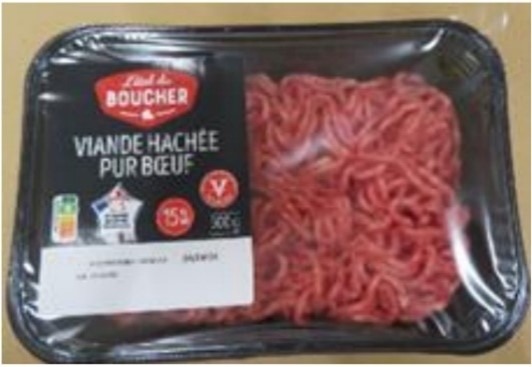
France – Bulk ground beef steaks from de-veined and defatted cuts – Listeria monocytogenes

Gov France

Product Category
Food
Product subcategory
Meats
Product brand name
Unbranded
Model names or references
Bulk ground beef steaks from de-veined and defatted cuts
Product identification
Batch
see list of products in attachment
Products List
Trace_bifteck.pdfAttachment
Packaging
Bulk
Start/End of marketing date
From 06/25/2024 to 06/28/2024
Storage temperature
Product to be kept in the refrigerator
Further information
Bulk ground beef steaks from de-nerved and defatted pieces made in store, on demand and sold in the traditional section from 06/25/2024 to 06/28/2024
Geographic area of ​​sale
Gueugnon
Distributors
Auchan Gueugnon

France – CREAMY GOAT CHEESE – Staphylococcus aureus

Gov France

Product Category
Food
Product subcategory
Milk and dairy products
Product brand name
THE CABRIOLE
Model names or references
CREAMY CHEESE
Product identification
Batch
LOT SOLD BETWEEN 06/19/24 AND 06/22/24
Start/End of marketing date
From 06/24/2024 to 06/29/2024
Storage temperature
Product to be kept in the refrigerator
Geographic area of ​​sale
Departments: ARDECHE (07)
Distributors
THE HIGHLANDS LANARCE (07660) OLD LANAS INN (07200)

Norway – Increase in cases of Salmonellosis

FHI

The Norwegian Institute of Public Health has seen an increase in the number of people infected with the gastrointestinal bacterium Salmonella typhimurium in recent months. So far this year, infection has been detected in 33 people living all over Norway. Domestic infection is suspected, but the cause is currently unknown.

The Norwegian Institute of Public Health receives continuous notifications of all confirmed S salmonella cases.  

– Especially since the month of April, we have seen an increase in cases of Salmonella Typhimurium that have been infected in Norway compared to the last three years, says doctor Hilde Marie Lund.

The infected live all over the country and are distributed across all age groups. The reason for the increase is currently unknown. 

– We have therefore, in collaboration with the Norwegian Food Safety Authority and the Veterinary Institute, initiated enhanced monitoring of all confirmed cases of S. Typhimurium in Norway. A selection of the people who are infected are followed up with an interview so that we can find out if they have a common source of infection, explains Lund.

UK – FSA – Protecting consumers from infection with Shiga toxin-producing E.coli (STEC)

FSA

This statement explains the UK’s policy on the appropriate risk management when Shiga toxin-producing E. coli (STEC) is detected in food. It includes the UK regulatory approach to STEC and the effective food safety controls to maintain the supply of safe food.

This clarifies the UK policy for food businesses as they meet their responsibility to ensure the food they supply is safe and for enforcement authorities as they carry out official checks to ensure that businesses are applying appropriate controls.

This statement:

  • will provide the foundation for a consistent response to STEC testing results so that public health is protected
  • will clarify requirements for food businesses as they provide safe food and develop Food Safety Management System (FSMS) and Hazard Analysis and Critical Control Point (HACCP) control plans in relation to STEC

UK – Shiga toxin-producing Escherichia coli: guidance, data and analysis

Gov UK

Shiga toxin-producing Escherichia coli (STEC), previously known as Vero cytotoxin-producing Escherichia coli (VTEC), are a group of bacteria that cause infectious gastroenteritis. Historically the most frequently reported STEC strain to cause illness in England was STEC O157; however, in recent years reports of non-O157 STEC infections have increased. In England around 1,500 cases of STEC (O157 and non-O157) are reported each year.

Symptoms can range from mild gastroenteritis through to severe bloody diarrhoea.

Sometimes people with STEC infection can develop haemolytic uraemic syndrome (HUS), a serious condition affecting the blood, kidneys, and the central nervous system, which can also result in death.

The main reservoir for STEC is cattle and other ruminants. Transmission to humans occurs through:

  • consumption of contaminated food or water
  • contact with animals or their faeces
  • contact with a contaminated environment
  • person-to-person spread, often resulting in multiple people in one household becoming infected

Outbreaks of STEC occur every year. UKHSA uses whole genome sequencing to identify groups of people with the same strain of STEC and then investigates these outbreaks at the national level with partner agencies. This enables controls to be implemented and stops more people becoming unwell. Most large outbreaks of STEC are foodborne, commonly identified food vehicles include meat (for example, under-cooked burgers), salad vegetables or dairy products.

For guidance on other non-STEC E. coli infections, see Escherichia coli (E. coli): guidance, data and analysis.