Germany – Natsu “Quinoa Nuts” salad, vegan – Salmonella

LMW

Recall Natsu Quinoa Nuts vegan 14.01.jpg

Manufacturer (distributor):

Natsu Foods GmbH & Co. KG Jagenbergstrasse 4b 41468 Neuss

Reason for warning:

Our own tests have shown that the product may contain salmonella. This germ can cause gastrointestinal diseases and, under certain circumstances, a serious illness (salmonellosis) in sensitive groups of people.

Packaging Unit: 200 g
Durability: Use by date: 01/16/22
Lot identification:

All products of the “Natsu Quinoa Nuts vegan” variety from Natsu Foods GmbH & Co with the use-by date of January 16, 2022

Further information:
Reference is made to the attached consumer information below.

Canada – Various Food Products recalled due to possible Salmonella contamination from rodent infestation

CFIA

Summary

Product
Various
Issue
Food » Microbial Contamination » Salmonella
What to do

Do not consume, use, sell, serve, or distribute the recalled products.

Issue

Bistak Enterprises Inc. and Bistak Groceries Inc. are recalling various products from the marketplace due to possible Salmonella contamination from rodent infestation.

The recalled products have been sold in Alberta and Ontario, and may have been distributed in other provinces and territories.

Consumers who are unsure if they have purchased the affected products are advised to contact their retailer.

What you should do

  • If you think you became sick from consuming a recalled product, call your doctor
  • Check to see if you have the recalled products in your home or establishment
  • Do not consume the recalled products
  • Do not serve, use, sell, or distribute the recalled products
  • Recalled products should be thrown out or returned to the location where they were purchased

Food contaminated with Salmonella may not look or smell spoiled but can still make you sick. Young children, pregnant women, the elderly and people with weakened immune systems may contract serious and sometimes deadly infections. Healthy people may experience short-term symptoms such as fever, headache, vomiting, nausea, abdominal cramps and diarrhea. Long-term complications may include severe arthritis.

Research – UC-Santa Cruz undergraduates win award for system that fights E. coli

Food Safety News

A team of undergraduates at the University of California-Santa Cruz has developed a system called Progenie that’s designed to target and eliminate a toxic gene found in Shiga toxin-producing E. coli.

The team’s method provides an alternative to antibiotics commonly used in agriculture. This new method is designed in part to stop the rise of drug-resistant bacteria.

The team’s project won a gold medal at the International Genetically Engineered Machine (iGEM) Jamboree, an annual competition that brings together student teams from around the world to present synthetic biology projects that aim to address pressing global issues.

At the jamboree, teams are judged on their virtual project posters, wiki pages, and video presentations. Teams are awarded gold medals if they demonstrate excellence across multiple categories.

Research – Consumption of Raw Flour in the United States: Results from the 2019 U.S. Food and Drug Administration Food Safety and Nutrition Survey

Journal of Food Protection

ABSTRACT

Several outbreaks of Shiga toxin–producing Escherichia coli infections in the past decade have been linked to flour and flour-associated products and have raised concerns that the consumption of raw flour represents a public health risk as a vehicle for foodborne pathogens. The extent to which consumers know and understand that they should not consume raw flour is unclear. In fall 2019, the U.S. Food and Drug Administration collected data on perceptions regarding uncooked flour and on self-reported consumption behaviors via the Food Safety and Nutrition Survey, a national probability survey of U.S. adults (≥18 years of age). Cross-tabulations and regressions were used to analyze the data (n = 2,171). Thirty-five percent of consumers reported having tasted or eaten something with uncooked flour in it in the previous 12 months. Responses differed significantly by sex, race, education, and age. On average, respondents indicated that uncooked flour is not likely to contain germs that can make people sick, with significant differences noted by demographic categories. Respondents rated raw homemade cookie dough as moderately likely to have germs that can make people sick, with significant demographic differences. These findings indicate that U.S. consumers are largely unaware that raw flour is risky to consume, and many people are consuming products that contain raw flour.

HIGHLIGHTS
  • About one-third of consumers reported having consumed uncooked flour in the previous year.
  • Large demographic differences were found in reported consumption of uncooked flour.
  • Most U.S. consumers do not consider uncooked flour as risky to consume.

Research – Effects of sodium alginate edible coating with cinnamon essential oil nanocapsules and Nisin on quality and shelf life of beef slices during refrigeration

Journal of Food Protection

The effects of the sodium alginate (SA) coating incorporated with cinnamon essential oil nanocapsules (CEO-NPs) and Nisin, as a new edible coating, were investigated on the preservation of beef slices in the refrigerated storage for 15 days. All beef samples were analyzed for physicochemical properties (pH value, weight loss, the total volatile base nitrogen (TVB-N)) and antimicrobial activity against total bacterial count (TBC). Besides, the changes in color parameters and sensory attributes of all beef samples were evaluated. The results revealed that the incorporation of the complex of CEO-NPs and Nisin retarded the growth of the microorganism and reduced lipid oxidation, as determined by pH, TVB-N, and TBC. This can extend the shelf life of beef slices to 15 days. Moreover, the treatment with the SA coating, incorporating CEO-NPs and Nisin, significantly improved the weight loss, color, odor, textural, and broth attributes of the beef samples. The results suggest that the coating treatment enriched with CEO-NPs and Nisin could significantly inhibit quality deterioration of beef slices, and the complex of CEO-NPs and Nisin can improve antioxidant, antibacterial and sensory properties of the SA coating. Thus, the new edible coating could be regarded as a potential material to preserve beef slices.

Research – Genetic profiles and invasion ability of Listeria monocytogenes isolated from bovine carcasses in Southern Brazil

Journal of Food Protection

The goals of this study were to evaluate the persistence and the virulence potential of Listeria monocytogenes isolated from beef carcasses obtained in processing facilities in the Southern region of Rio Grande do Sul, Brazil, based on pulsed field gel electrophoresis (PFGE), invasion ability in human colorectal carcinoma cells (HCT-116), InlA expression by western blot (WB) and identification of mutation points in the inlA . PFGE profiles demonstrated that L. monocytogenes isolates were grouped based on their previously identified lineages and serogroups (lineage I: serogroups IIb, n = 2, and IVb, n = 5; lineage II, serogroup IIc, n = 5), isolates with indistinguishable genetic profiles by this method were obtained from different slaughterhouses and sampling steps, with up to 3-year interval. Seven isolates showed high invasion ability (2.4 to 7.4%, lineage I, n = 6, lineage II, n = 1) in HCT and expressed InlA. Five isolates showed low cell invasion ability (0.6 to 1.4%, lineage I, n = 1, lineage II, n = 4) and did not express InlA, and two of them (lineage II, serogroup IIc) presented mutations in inlA leading to a premature stop codon (PMSC) type 19, at position 326 (GAA → TAA). The results demonstrated that most of L. monocytogenes isolates from Lineage I expressed InlA and were the most invasive in HCT indicating their high virulence potential, while most isolates from Lineage II showed attenuated invasion due to non-expression of InlA and the presence of PMSC type 19 in inlA . The obtained results demonstrated that L. monocytogenes with indistinguishable PFGE profiles can be persisting or being reintroduced in beef processing facilities in the studied region and differences on their virulence potential based on their lineages and serogroups.

Research – Improving ready-to-eat apple cubes’ safety using chitosan-based active coatings

Wiley Online

The use of active coatings is shown as an option to offer safe ready-to-eat fruits and respond the growing demand of consumers for fresh, environmentally friendly and products free from chemical preservatives. In this work, chitosan (Ch), chitosan + vanillin (Ch-V), and chitosan + geraniol (Ch-G) coatings were applied on apple cubes to evaluate their microbiological quality for 12 days of refrigerated storage. All combinations applied demonstrated significant bactericidal effects on native microbiota, resulting in number of mesophilics, psychrotrophics, and yeasts and molds under the detection limit (<2.00 log) immediately after coating and during 12 days for most of them. Moreover, Escherichia coli O157:H7 and Listeria innocua artificially inoculated on apple cubes showed great reductions after coating treatments, exerting vanillin or geraniol enriched coatings outstanding antimicrobial activity. In fact, after 12 days of refrigerated storage, apple cubes treated with vanillin and geraniol (>2.00 log CFU/g) showed reductions in E. coli O157:H7 counts greater than 2.00 log in comparison with the control (4.68 log CFU/g). The preliminary results of this study demonstrated that Ch, Ch-Va, and Ch-Ge could be an interesting alternative to improve the safety of apple cubes and, therefore, a novel option to offer safe, ready-to-eat apple to consumers.

Belgium – Recall of Kivo Petfood BV – Salmonella

AFSCA

Recall of Kivo Petfood BV
Product: “Kivo Kip Compleet”, “Kivo Kip-Vis Compleet” & “Kivo Pens-Kip mix” (frozen products) pet food of the Kivo Petfood BV brand.
Problem: possible presence of Salmonella Typhimurium in raw animal feed.


In agreement with the AFSCA, Kivo Petfood BV is withdrawing the products “kip compleet”, “kip-vis compleet” & “pens-kip mix” from sale and is recalling them to consumers due to the possible presence of salmonella.

Kivo Petfood BV asks its customers not to use these products and to return it to the point of sale where they were purchased for reimbursement.

Product description:

– Product names: kip compleet, kip-vis compleet & pens-kip mix (frozen products)
– Brand: Kivo Petfood BV
– Kivo Kip Compleet Batch number 210917, “darmcode” 250624
– Kivo Kip- Vis Compleet Lot number 210917, ”darmcode” 20210101002
– Kivo Pens-Kip mix Lot number 210917, “darmcode” 260721
– Date of minimum durability (DDM): 03-2023
– Sale period: from 17-09-2021 to 01- 10-2021
– Weight: 500g & 1000g

The products were distributed by 4dogs and cats (Genkersteenweg 80B, 3500 Hasselt).

For any further information , contact:

Customer Service Kivo Petfood BV on +31 (0) 40 – 253 03 66

France – STEAK AX BULK – Listeria monocytogenes

Gov france

Identifying information for the recalled product

  • Product category Food
  • Product sub-category Meats
  • Product brand name MEAT
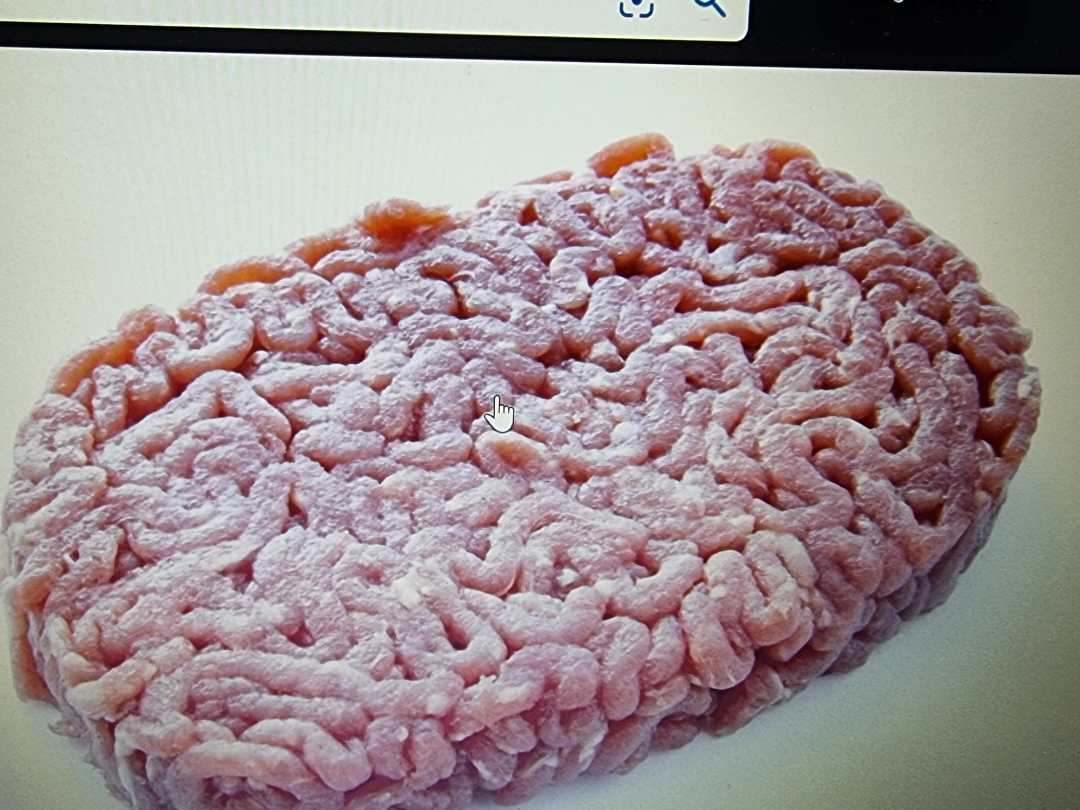
  • Names of models or references STEACK HACHE ON DEMAND
  • Product identification
    GTIN Lot Dated
    02887988000000 STEAK HACHE ON DEMAND 02887988000000 Use-by date 08/01/2022
  • Packaging  BULK RAYON TRADITIONAL BUTCHERY
  • Start date / End of marketing From 01/07/2022 to 01/07/2022
  • Storage temperature Product to be stored in the refrigerator
  • Geographical sales area INTERMARCHE LE MAGNY
  • Distributors INTERMARCHE LA CHATRE

Practical information regarding the recall

  • Reason for recallNon-compliant analyzes on hamburger on demand
  • Risks incurred by the consumerListeria monocytogenes (causative agent of listeriosis)

Canada – Various Food Products recalled due to possible Salmonella contamination from rodent infestation

CFIA

Summary

Product
Various
Issue
Food » Microbial Contamination » Salmonella
What to do

Do not consume, use, sell, serve, or distribute the recalled products.

Bistak Enterprises Inc. and Bistak Groceries Inc. are recalling various products from the marketplace due to possible Salmonella contamination from rodent infestation.

The recalled products have been sold in Alberta, British Columbia, Manitoba, Ontario, Saskatchewan and may have been distributed in other provinces and territories.

Consumers who are unsure if they have purchased the affected products are advised to contact their retailer.

What you should do

  • If you think you became sick from consuming a recalled product, call your doctor
  • Check to see if you have the recalled products in your home or establishment
  • Do not consume the recalled products
  • Do not serve, use, sell, or distribute the recalled products
  • Recalled products should be thrown out or returned to the location where they were purchased

Food contaminated with Salmonella may not look or smell spoiled but can still make you sick. Young children, pregnant women, the elderly and people with weakened immune systems may contract serious and sometimes deadly infections. Healthy people may experience short-term symptoms such as fever, headache, vomiting, nausea, abdominal cramps and diarrhea. Long-term complications may include severe arthritis.