Confirmation of the Vibrio cholera 01 Ogawa serotype in an individual in Kathmandu raises the risk of an outbreak during the monsoon season.
KSWFoodWorld

Confirmation of the Vibrio cholera 01 Ogawa serotype in an individual in Kathmandu raises the risk of an outbreak during the monsoon season.
Coliforms in natural mineral water from Serbia in Slovenia
Natural Waters of Viti Limited is recalling Fiji Natural Artesian Water 500 mL (24 pack) Case because the firm testing revealed manganese in addition to three bacterial genera.
The number of confirmed cases of a waterborne disease caused by a microscopic parasite has more than doubled, while more than 100 further people have reported similar symptoms. Around 16,000 households and businesses in the Brixham area of Devon have been told not to use their tap water for drinking without boiling and cooling it first.
The UK Health Security Agency (UKHSA) said on Friday that 46 cases of cryptosporidium had now been confirmed in the fishing town, up from 22 cases on Thursday, and that more cases were anticipated. It added other reported cases of diarrhoea and vomiting in residents and visitors to Brixham were also under investigation.
Dr Bayad Nozad, consultant in health protection at UKHSA, said the Government agency was aware of further reports of illness above their confirmed numbers.
During July–September 2023, an outbreak of Shiga toxin–producing Escherichia coli O157:H7 illness among children in city A, Utah, caused 13 confirmed illnesses; seven patients were hospitalized, including two with hemolytic uremic syndrome. Local, state, and federal public health partners investigating the outbreak linked the illnesses to untreated, pressurized, municipal irrigation water (UPMIW) exposure in city A; 12 of 13 ill children reported playing in or drinking UPMIW. Clinical isolates were genetically highly related to one another and to environmental isolates from multiple locations within city A’s UPMIW system. Microbial source tracking, a method to indicate possible contamination sources, identified birds and ruminants as potential sources of fecal contamination of UPMIW. Public health and city A officials issued multiple press releases regarding the outbreak reminding residents that UPMIW is not intended for drinking or recreation. Public education and UPMIW management and operations interventions, including assessing and mitigating potential contamination sources, covering UPMIW sources and reservoirs, indicating UPMIW lines and spigots with a designated color, and providing conspicuous signage to communicate risk and intended use might help prevent future UPMIW-associated illnesses.
South West Water (SWW) has confirmed that further testing has found the presence of cryptosporidium in two areas of Brixham. Yesterday, May 14, the UK Health Security Agency confirmed 16 cases of the infection and around 70 reported cases of diarrhoea and vomiting in Brixham, with more cases reported by victims on social media.
Yesterday SWW stated that all its current water supply tests had come back clear and that customers should continue to use their water as normal. Today, May 15, it has announced it has detected ‘small traces’ of the organism in Alston and the Hillhead area of Brixham.
Today, the U.S. Food and Drug Administration (FDA) published a final rule on agricultural water that represents an important step toward enhancing the safety of produce. The revised requirements are intended to enhance public health by improving the safety of water used in produce cultivation. The revisions are also designed to be practical across various agricultural water systems, uses, and practices, while remaining adaptable to future advancements in agricultural water quality science.
The final rule replaces certain pre-harvest agricultural water requirements for covered produce (other than sprouts) in the 2015 produce safety rule with requirements for systems-based agricultural water assessments to determine and guide appropriate measures to minimize potential risks associated with pre-harvest agricultural water. Specifically, this rule:
Farms are required to conduct assessments of their pre-harvest agricultural water annually, and whenever a significant change occurs, to identify any conditions likely to introduce known or reasonably foreseeable hazards into or onto covered produce or food contact surfaces.
These revised requirements reflect recent science, findings from investigations of several produce-related outbreaks, and feedback from a variety of stakeholders on the agricultural water requirements in the Produce Safety Rule, which were previously published in 2015. These revisions will more comprehensively address a known route of microbial contamination that can lead to preventable foodborne illness.
Since 15 December 2023, 68 people from 14 regions have been reported infected with Cryptosporidium in Sweden. Most of the disease cases are from Halland and Jönköping. Of the disease cases, 72 percent are women, the average age is 41 years and 79 percent are in the age group 21-60 years. Based on the available data, the latest case of the disease contracted on January 3 (see figure). Typing of a selection of samples shows that 13 out of 18 belong to the same type of Cryptosporidium, which indicates that the disease cases have a common source of infection.
Affected infection control units, the Swedish Food Agency and the Public Health Agency are investigating the outbreak to identify the source of infection, which is suspected to be fresh food. Information about what the outbreak cases have eaten before becoming ill is done via interviews and the collection of questionnaires. The answers are then compared to what people in a healthy comparison group indicate that they have eaten to assess whether there are foods that the outbreak cases have eaten to a greater extent than the comparison group.
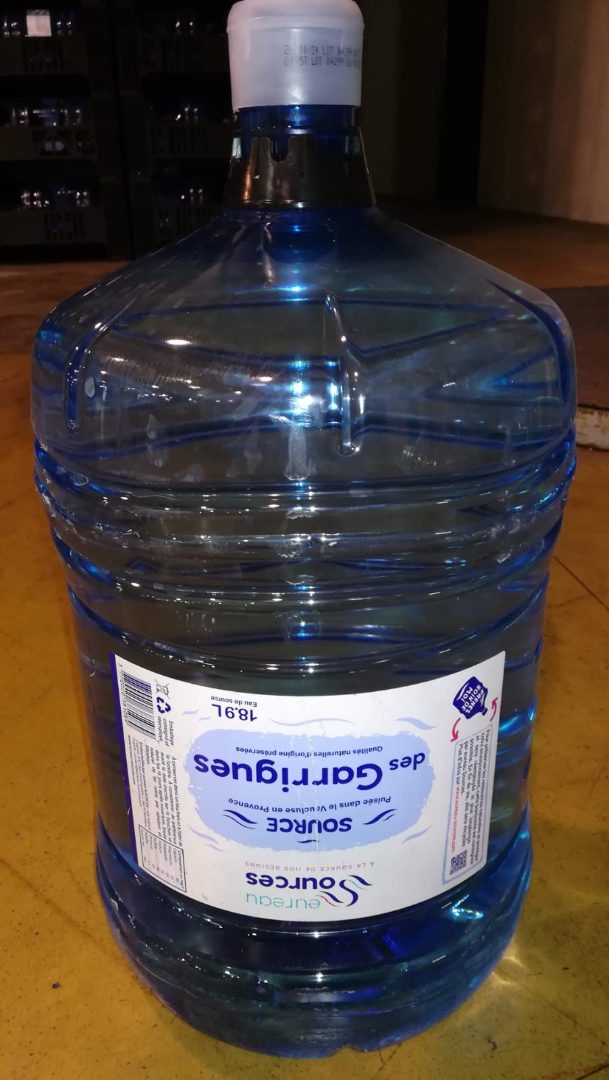
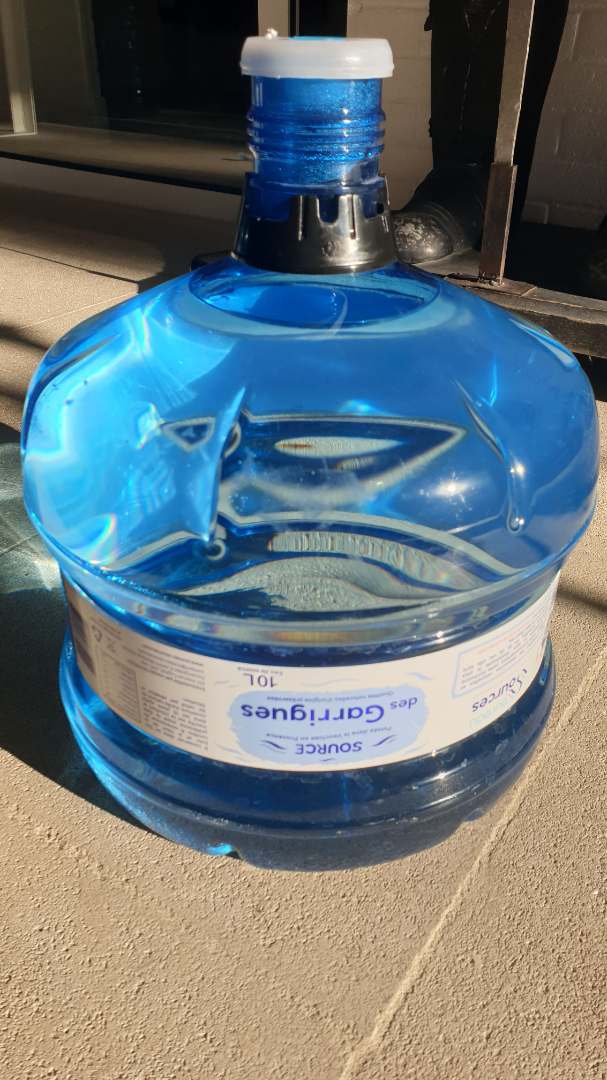
Product category
Food
Product subcategory
Waters
Product brand name
Source of the Garrigues
Model names or references
spring water carboys – Garrigues sources – 10 liters spring water carboys – Garrigues sources – 5 Gallons
Product identification
GTIN Batch
3770020381041 Marking on cap Lot 84042 + date 02/10/2023 or total absence of marking on cap
3770020381089 Marking on cap Lot 84042 + date 02/10/2023 or total absence of marking on cap
Products List
Certificate_lot_concerned_by_the_recall.pdfAttachment
Packaging
10 liter and 5 gallon (18.9 liter) bottles (carboys)
Start/end date of marketing
Since 02/17/2022
Storage temperature
Product to be stored at room temperature
Further information
Carboys (bottles) delivered by the distributor Mont Ventoux Distribution, on which the expiration date may have been removed from its normal location on the cap.
Geographical sales area
Regions: Auvergne-Rhône-Alpes, , , , , , , , , , , , , , , , Provence-Alpes-Côte d’Azur
Distributors
Mont Ventoux Distribution (591, avenue Joseph Vernet 84810 AUBIGNAN)
List of points of sale
List_points_of_sale.pdf

 FoodWorld