Category Archives: Vibrio cholera

Tanzania – Rukwa Controls Cholera ‘Fully’

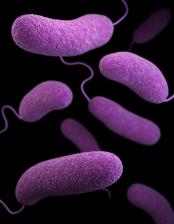
All Africa Vibrio_vulnificus_01

Sumbawanga — RUKWA region has officially declared that cholera has been fully controlled and that the lives of citizens in the Lake Rukwa Basin in Sumbawanga District are safe. Latest reports had it that the deadly disease that started on November 15 , last year and lasted for 108 days killed nine people.

A total of 403 victims were diagnosed with the disease. The Sumbawanga District Medical Officer (DMO) , Dr Fani Mussa, told the “Daily News” at the weekend that the most affected wards include Mfinga, Kalumbaleza, Muze, Mwadui and Mtowisa along the Lake Rukwa Basin in Sumbawanga District.

Dr Mussa said measures taken to address the outbreak of the disease worked well and subsequently the disease has been controlled. “Efforts taken to address the outbreak of the disease included enlightening people on proper hygiene.

Canada – Herring eggs, water samples collected from French Creek to Qualicum Bay test positive for Cholera

Chek News

Island Health and the First Nations Health Authority have confirmed that the herring eggs and water samples collected from the French Creek and Qualicum Bay areas have tested positive for Vibrio cholerae bacteria.

In March, there was a small outbreak of cholera in the area with four cases of Vibrio cholere infection associated with eating herring eggs. The public was warned not to consume herring eggs that were harvested from French Creek to Qualicum Bay.

Since that time, there have been no further confirmed cases of Vibrio cholerae infection and no changes to the current fishery harvest area closures. Fisheries and Oceans Canada had closed Pacific Fishery Management Areas 14-1, 14-4, and 14-5 to fishing for herring eggs by handpicking at the end of March after the outbreak.

Canada – Vancouver Island cholera warning: Cases linked to eating herring eggs

Outbeak News Today 


The First Nations Health Authority and Island Health are warning the public following confirmed cases of Vibrio cholerae infection associated with eating herring eggs. The bacteria can be found in the aquatic environment and can cause intestinal illness after eating contaminated foods. Illness may include mild to severe nausea, vomiting, and very severe watery diarrhea. Some people don’t become ill and don’t know they have been infected. Health authorities are asking you to take the following precautions and actions:

  • Do not consume herring eggs harvested from French Creek to Qualicum Bay area from kelp, seaweed or other surfaces.
  • If you are ill, ensure you are drinking small amounts of fluid frequently to keep hydrated. Visit your physician or health center to ensure treatment and confirmation of the cause of illness. Letyour health care provider know if you have eaten raw or lightly-cooked herring eggs within 5
    days of onset of illness or caring for someone who became ill after eating herring eggs.
  • The bacteria can be passed from person to person, even if you don’t have symptoms. Always wash your hands well after going to the bathroom or caring for someone who has been ill.
  • If you have stored herring eggs, please call First Nations Health Authority Environmental Public Health Services at 250-924- 6125. Samples are being requested for testing (keep cold and in original packaging).
  • Discard any extra stored herring eggs to avoid further illness. Freezing does not kill the bacteria.
  • When handling herring eggs, practice proper handwashing and sanitize dishes and equipment to avoid cross contamination.
  • Ensure other community members who may have received herring eggs are aware of these precautions and actions. If they are ill, we request that they be in contact with their physician or Health Center.
  • A sanitary shellfish closure exists for bivalves in the French Creek/Qualicum Bay area. Harvesters are reminded to check area closures prior to harvesting bivalves to prevent illness.

Research – Increasing Vibrio Prevalence

Food Safety NewsVibrio

With a nearly 50-percent mortality rate, Vibrio vulnificus is the most deadly foodborne pathogen in the world, according to University of North Carolina at Charlotte Biology Professor Jim Oliver. And instances of infection in the U.S., however rare, are rapidly rising.

Fifteen years ago, there were 21 confirmed cases of Vibrio vulnificus and parahaemolyticus infections in the U.S. Last year, there were 193.

While infections from either of the pathogens are still rare compared with, say, Salmonella and Campylobacter, the incidence rate grew faster than any of the other five microbes tracked in the Centers for Disease Control’s 2012 Food Safety Progress Report. The vulnificus strain is responsible for 95 percent of seafood-related illness fatalities in the U.S., according to a 2013 study by Oliver and Joanna Nowakowska. Another Vibrio strain, parahaemolyticus, is milder, causing diarrhea, nausea, fever and chills, according to CDC.

Research- Rsing Sea Temperatures Increased Vibrio?

Huffington PostVibrio

In December, Darrell Dishon became one of the approximately 15 people each year who succumb to vibriosis after eating raw oysters. Vibriosis is an incredibly rare disease — but Centers for Disease Control and Prevention data show that it’s getting more common.

“While all the other pathogens have shown a nice decline, the vibrios are about twice what it was since 1998. In a little over a decade, incidence has doubled. They’re still relatively small numbers — but it’s a very striking increase,” leading vibrio researcher Glenn Morris of the University of Florida’s Emerging Pathogens Institute told The Huffington Post.

Vibrio thrive in warm water. (That’s why the majority of cases happen in the summer, and why vibriosis is more closely associated with oysters from the Gulf of Mexico than from, say, the Pacific Northwest.) One widely publicized study published in July 2012 indicated that a 1-degree increase in the temperature of a body of water triples its vibrio population. For that reason, many scientists believe that climate change has contributed to the recent rise in vibriosis, and that it could make vibrio bacteria much more prevalent in coming years.

“Vibrios are in many ways the poster children for global warming, because they are so temperature sensitive and the temperature breakpoint for them is right around the point that we’re seeing temperature increases,” Morris explained.

The disease has already cropped up in places it had never been seen before: Israel, the Baltic Sea, even Alaska. Yet vibrio vulnificus, the form of vibrio bacteria that’s considered the most dangerous and the one that killed Dishon, remains most closely associated with oysters from the Gulf of Mexico. With only about 30 total cases in the United States a year, it’s exceptionally rare. Your chances of finding a valuable pearl in one of the 2.5 billion oysters Americans eat a year are about 100 times greater than your chances of contracting vibrio vulnificus.

Yet when it strikes, it strikes hard. It kills about half the people who get it, a rate comparable, among foodborne illnesses, only to the dreaded listeria monocytogenes. And many of these deaths are unusually painful.

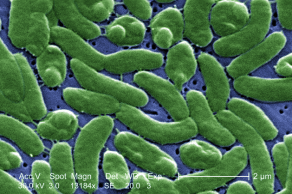
USA – Shellfish Vibrio Poisoning

Food Poisoning Bulletin Vibrio

The Cape Cod Times is reporting that eight cases of Vibrio food poisoning were reported in Massachusetts this year from oysters. Last summer the state designed new regulations to keep consumers safe from this bacteria, but they failed.  The eight cases were linked to oysters harvested from Wellfleet, Orleans, Edgartown, Duxbury, Kingston, Barnstable, and Dennis.

Vibrio populations double every 15 minutes, so keeping shellfish cool is critical to controlling bacterial growth.  

Vibrio was not seen in Massachusetts oysters until 2011 because the state’s colder water temperatures discouraged the growth of the bacteria. In every month in 2012, the mean air temperatures were higher than average, including the third-warmest April and the warmest August on record. Sea surface temperatures this year were the highest ever in the Northest.

European Alerts – Recalls – Salmonella, Listeria, Vibrio, E.coli

RASFF – E.coli O103 in Bovine Lungs in Belgium

RASFF – Listeria monocytogenes in Ham from Belgium

RASFF – Salmonella in Crushed Spearmint in Denmark sourced in Egypt

RASFF – Listeria monocytogenes in Smoked Trout in France sourced in Spain

RASFF – Listeria monocytognes in Cheese from Belgium

RASFF – Vibrio cholerae in Black Tiger Prawns in Denmark sourced in Bangladesh

RASFF – Salmonella in Veal in the Netherlands sourced in Sweden

RASFF – Salmonella in Dog Chees in Belgium sourced from Thailand

RASFF – Salmonella in Chilled Mixed Salad in Sweden sourced in Denmark

Denmark  – Listeria monocytogenes in Ham Salad 

France – Listeria monocytogenes in Soft Cheese

Risk reduction assessment of waterborne Salmonella and Vibrio by a chlorine contact disinfectant point-of-use device

PubMed

Unsafe drinking water continues to burden developing countries despite improvements in clean water delivery and sanitation, in response to Millennium Development Goal 7. Salmonella serotype Typhi and Vibrio cholerae bacteria can contaminate drinking water, causing waterborne typhoid fever and cholera, respectively. Household water treatment (HWT) systems are widely promoted to consumers in developing countries but it is difficult to establish their benefits to the population for specific disease reduction. This research uses a laboratory assessment of halogenated chlorine beads treating contaminated water to inform a quantitative microbial risk assessment (QMRA) of S. Typhi and V. cholerae disease in a developing country community of 1000 people. Laboratory challenges using seeded well water resulted in log(10) reductions of 5.44 (±0.98 standard error (SE)) and 6.07 (±0.09 SE) for Salmonella serotype Typhimurium and V. cholerae, respectively. In well water with 10% sewage and seeded bacteria, the log(10) reductions were 6.06 (±0.62 SE) and 7.78 (±0.11 SE) for S. Typhimurium and V. cholerae, respectively. When one infected individual was contributing to the water contamination through fecal material leaking into the water source, the risk of disease associated with drinking untreated water was high according to a Monte Carlo analysis: a median of 0.20 (interquartile range [IQR] 0.017-0.54) for typhoid fever and a median of 0.11 (IQR 0.039-0.20) for cholera. If water was treated, risk greatly decreased, to a median of 4.1×10(-7) (IQR 1.6×10(-8) to 1.1×10(-5)) for typhoid fever and a median of 3.5×10(-9) (IQR 8.0×10(-10) to 1.3×10(-8)) for cholera. Insights on risk management policies and strategies for public health workers were gained using a simple QMRA scenario informed by laboratory assessment of HWT.

ECDC -Vibrio cholerae Outbreak Cuba

ECDC

On 3 July the Cuban Ministry of Health confirmed an outbreak of cholera in the south-western city of Manzanillo. It is the first time in almost 150 years that an outbreak of cholera is reported in the island. The heavy rains and the high temperatures during the previous weeks have likely influenced the occurrence of the disease. As of 3 July, 53 cases of Vibrio cholerae, including three deaths, have been officially confirmed.  

Since 7 July, several media sources report a higher number of cases and the disease has spread to other cities including the capital, Havana.

At this stage there is no information available about the outbreak strain, nor of the origin of the outbreak.