Category Archives: Uncategorized

Research – MMWR Examines Trends of Foodborne Illness Outbreaks From 2006 to 2017

Food Poisoning Bulletin 


The CDC is examining trends of foodborne illness outbreaks for 2017 and describes changes in incidence since 2006 in its Morbidity and Mortality Weekly Report (MMWR) for March 23, 2018. Foodborne illness is a substantial health burden in the Untied States. In 2017, there were 24,484 infections, 5,677 hospitalizations, and 122 deaths attributed to food borne illness.

Despite ongoing food safety measures in the United States, foodborne illness continues to be a substantial health burden. The 10 U.S. sites of the Foodborne Diseases Active Surveillance Network (FoodNet)* monitor cases of laboratory-diagnosed infections caused by nine pathogens transmitted commonly through food. This report summarizes preliminary 2017 data and describes changes in incidence since 2006. In 2017, FoodNet reported 24,484 infections, 5,677 hospitalizations, and 122 deaths. Compared with 2014–2016, the 2017 incidence of infections with Campylobacter, Listeria, non-O157 Shiga toxin–producing Escherichia coli (STEC), Yersinia, Vibrio, and Cyclospora increased. The increased incidences of pathogens for which testing was previously limited might have resulted from the increased use and sensitivity of culture-independent diagnostic tests (CIDTs), which can improve incidence estimates (1). Compared with 2006–2008, the 2017 incidence of infections with Salmonella serotypes Typhimurium and Heidelberg decreased, and the incidence of serotypes Javiana, Infantis, and Thompson increased. New regulatory requirements that include enhanced testing of poultry products for Salmonella† might have contributed to the decreases. The incidence of STEC O157 infections during 2017 also decreased compared with 2006–2008, which parallels reductions in isolations from ground beef.§ The declines in two Salmonella serotypes and STEC O157 infections provide supportive evidence that targeted control measures are effective. The marked increases in infections caused by some Salmonella serotypes provide an opportunity to investigate food and nonfood sources of infection and to design specific interventions.

RASFF Alerts – Aflatoxin – Chopped Hazelnuts – Groundnut Kernels – Ground Nutmeg – Pistachios – Hazlenuts

kswfoodworld food safety poisoning

RASFF-aflatoxins (B1 = 60.09; Tot. = 71.48 µg/kg – ppb) in roasted and chopped hazelnuts from Turkey in Germany

RASFF-aflatoxins (B1 = 132 µg/kg – ppb) in groundnut kernels from China in Spain

RASFF-aflatoxins (B1 = 62; Tot. = 68 µg/kg – ppb) and ochratoxin A (230 µg/kg – ppb) in ground nutmeg from Lebanon

RASFF-aflatoxins (B1 = 12.8; Tot. = 13.6 µg/kg – ppb) in salted pistachios in shell from Turkey in Germany

RASFF-aflatoxins (B1 = 12.2 ± 3.6; Tot. = 13.5 ± 4.1 µg/kg – ppb) in hazelnuts shelled from Azerbaijan, via Georgia in Germany

RASFF-aflatoxins (B1 = >24; Tot. = >24 µg/kg – ppb) in pistachio nuts from the United States in Spain

RASFF-aflatoxins (B1 = 14.9; Tot. = 16.2 µg/kg – ppb) in hazelnut kernels from Azerbaijan, via Georgia in Germany

RASFF-aflatoxins (B1 = 11; Tot. = 61.1 µg/kg – ppb) in hazelnuts from Azerbaijan, via Georgia in Germany

Research – Staphylococcus aureus: A new mechanism involved in virulence and antibiotic resistance

Science Daily 


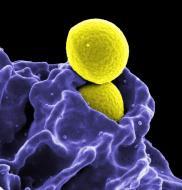
An Institut Pasteur-CNRS research team has characterized a Staphylococcus aureus gene involved in virulence, biofilm formation and resistance to certain antibiotics. These results open up new avenues for understanding the control of S. aureus virulence mechanisms. This work was recently published in the journal PLoS Pathogens.

Staphylococcus aureus is part of the natural skin flora, preferentially colonizing external mucosa in 30 to 50% of the population, healthy carriers who develop no symptoms. But it is also a major human pathogen, causing diseases ranging from skin lesions (boils, impetigo, etc.) to endocarditis, acute pneumonia, osteomyelitis or sepsis. It is the leading Gram-positive bacterium responsible for nosocomial infections (hospital acquired infections). The most dangerous strains are those that display resistance to multiple antibiotics. This is the case of MRSA[1], resistant to Meticillin, widespread in hospitals and posing a major public health concern.

RASFF Alert -STEC E.Coli – Soft Cheese

kswfoodworld food safety poisoning

RASFF-shigatoxin-producing Escherichia coli (130 CFU/g) in soft cheese from France in Norway

RASFF Alert- Ochratoxin – Ground Nutmeg

kswfoodworld food safety poisoning

RASFF-aflatoxins (B1 = 62; Tot. = 68 µg/kg – ppb) and ochratoxin A (230 µg/kg – ppb) in ground nutmeg from Lebanon in the Netherlands

RASFF Alerts – Norovirus – Live Oysters

kswfoodworld food safety poisoning

RASFF-norovirus in live oysters (Crassostrea gigas) from France, packaged in Italy  in Italy

RASFF-norovirus (GI and GII /2g) in live oysters from France in Denmark

RASFF-norovirus (GI /2g) in live oysters from France in Italy

RASFF Alert – Campylobacter – Chicken Breast Supreme

kswfoodworld food safety poisoning

RASFF-Campylobacter coli (between 1500 and 10000 CFU/g) in chilled chicken breasts supreme from France in Denmark

RASFF Alert – Food Poisoning – Live Oysters

kswfoodworld food safety poisoning

RASFF-food poisoning suspected to be caused by live oysters from France in Denmark

RASFF Alert – Foodborne Outbreak – Listeria monocytogenes- Soft Cheese

kswfoodworld food safety poisoning

RASFF-foodborne outbreak caused by Listeria monocytogenes in soft cheese from France in Norway

RASFF Alerts – Listeria monocytogenes – Pulled Chicken – Chorizo – Soft Goats Cheese

kswfoodworld food safety poisoning

RASFF-Listeria monocytogenes (presence) in chilled pulled chicken from the Netherlands in the Netherlands

RASFF-Listeria monocytogenes (170 CFU/100g) in chorizo from Spain, via Belgium in Austria

RASFF-Listeria monocytogenes (presence) in soft goat cheese from France in Germany