Category Archives: Uncategorized

USA – Jennie-O Turkey is Link in Salmonella Reading 164 Person Outbreak

Food Poison Journal

As of November 5, 2018, 164 people infected with the outbreak strain of Salmonella Reading have been reported from 35 states.

Tonight Jennie-O Turkey Store Sales, LLC, a Barron, Wis. establishment, is recalling approximately 91,388 pounds of raw ground turkey products that may be associated with an illness outbreak of Salmonella Reading, the U.S. Department of Agriculture’s Food Safety and Inspection Service (FSIS) announced.

RASFF Alert – Campylobacter -Chilled Chicken Breast

RASFF-Logo

RASFF-Campylobacter jejuni (up to 12000 CFU/g) in chilled chicken breasts and fillets from France in Denmark

RASFF Alerts – Aflatoxin – Groundnuts – Pistachios – Walnuts – Watermelon Seeds –

RASFF-Logo

RASFF-aflatoxins (B1 = 11; Tot. = 13 µg/kg – ppb) in groundnuts from Argentina in the Netherlands

RASFF-aflatoxins (B1 = 7.7; Tot. = 9.0 µg/kg – ppb) in groundnuts from the United States in Spain

RASFF-aflatoxins (B1 = 44.8; Tot. = 48.2 µg/kg – ppb) in pistachios from Turkey in Greece

RASFF-aflatoxins (B1 = 56; Tot. = 63) in walnuts in shell from Ukraine in Portugal

RASFF-aflatoxins (B1 = 12.7; Tot. = 13.9 µg/kg – ppb) in roasted and salted watermelon seeds (egusi) – from Turkey in Germany

RASFF-aflatoxins (B1 = 7.54; Tot. = 8.09 µg/kg – ppb) in groundnuts in shell from the United States in Poland


RASFF Alerts – Animal Feed – Salmonella – Dog Chews – Ground Chicken Carcase – Frozen Dog Food

RASFF-Logo

RASFF-Salmonella enterica ser. Derby (present /25g) and Salmonella enterica ser. Typhimurium monophasic (1 ,4, [5], 12:i:-) (present /25g) in dog chews from Poland in Austria

RASFF-Salmonella enterica ser. Typhimurium (present /25g) in frozen ground chicken carcasses from the Netherlands in Belgium

RASFF-Salmonella enterica ser. Indiana (in 2 out of 5 samples /25g) and high count of Enterobacteriaceae (up to 70 CFU/g) in frozen dog food from the Netherlands in Belgium


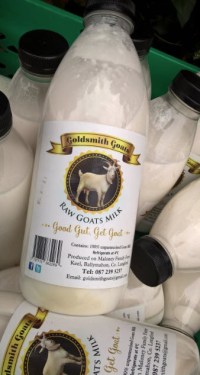
Ireland – Recall of Goldsmith Goats Raw Goats Milk Due to Contamination with Shiga-toxigenic E. coli O157

FSAI GoldsmithGoatsmilk

Summary
Category 2: For Information
Alert Notification: 2018.47
Product: Goldsmith Goats Raw Goats Milk
Batch Code: All batch codes, all use-by dates.
Country Of Origin: Ireland

Message:

Following detection of Escherichia coli O157 vt1 in a batch (use-by 18 Nov 2018) of the above raw goats’ milk, all batches are being recalled.  Point-of-sale notices will be displayed in premises which sold the implicated raw goats’ milk advising customers to return or dispose of all bottles. Anyone that has consumed the product and feels unwell should contact their doctor.

USA – The Pictsweet Company Recalls 8-ounce Steam’ables Asparagus Spears due to Potential for Listeria Monocytogenes

FDA

Listeria kswfoodworld food safety food poisoning

Image CDC


The Pictsweet Company has recalled 1,872 cases of Pictsweet Farms 8-ounce Steam’ables Asparagus Spears because they have the potential to be contaminated with Listeria monocytogenes. Listeria monocytogenes is an organism which can cause serious and sometimes fatal infections in young children, frail or elderly people, and others with weakened immune systems. Healthy individuals may suffer only short-term symptoms such as high fever, severe headache, stiffness, nausea, abdominal pain and diarrhea. Listeria infection can cause miscarriages and stillbirths among pregnant women.

The recall affects only Pictsweet Farms 8-ounce Steam’ables Asparagus Spears identified by UPC code 0 70560 97799 9 with production codes beginning with the following six digits: 2138XD and a “BEST BY AUG 1, 2020.” A photo of the package is included with this release. The following information is printed on the back panel of each package (bag) as shown below.

2138XD PROD OF USA
BEST BY AUG 01 2020

No illnesses have been reported to date and no other Pictsweet Farms products are impacted by this recall.

USA – Ron’s Home Style Foods Recalls Ready to Eat Chicken Salad Products due to Possible Listeria Contamination

FSIS USDA kswfoodworld Listeria monocytogenes

WASHINGTON, Nov. 14, 2018 – Ron’s Home Style Foods, a Houston, Texas establishment, is recalling approximately 6,912 pounds of ready-to-eat (RTE) chicken salad products that may be adulterated with Listeria monocytogenes, the U.S. Department of Agriculture’s Food Safety and Inspection Service (FSIS) announced today.

The RTE chicken salad items were produced and packaged on October 22, 2018. The following products are subject to recall: [View Labels (PDF only)]

  • 5-lb. bulk packages of “Ron’s Home Style Foods CRANBERRY PECAN WHITE MEAT CHICKEN SALAD” with a “Use by” date of 11/25/2018.
  • 5-lb. bulk packages of “Ron’s Home Style Foods CHICKEN SALAD SUPREME” with a “Use by” date of 11/25/2018.
  • 32-lb. bulk packages of “Ron’s Home Style Foods THE SANDWICH FACTORY CHICKEN SALAD” with a “Use by” date of 11/16/2018.
  • 32-lb. bulk packages of “Ron’s Home Style Foods HONEY PECAN WHITE MEAT CHICKEN SALAD” with a “Use by” date of 11/21/2018.
  • 12-oz. plastic container of “Texas Kitchen Salads Cranberry Pecan White Chicken Salad” with a “Use by” date of 11/25/2018.
  • 12-oz. plastic container of “Texas Kitchen Salads Chicken Salad Supreme” with a “Use by” date of 11/25/2018.

 The products subject to recall bear establishment number “P-32049” inside the USDA mark of inspection. These items were shipped to institutional and retail locations in Texas.

The problem was discovered on November 13, 2018 during routine record review by FSIS inspection program personnel.

There have been no confirmed reports of adverse reactions due to consumption of these products. Anyone concerned about an injury or illness should contact a healthcare provider.

Canada – Unpasteurized cheese made on Vancouver Island recalled for E. coli concerns

CTV News ecoli

A voluntary recall has been issued for a Vancouver Island-produced cheese linked to an E. coli outbreak that infected five people.Little Qualicum Cheeseworks’ Qualicum Spice cheese should be discarded or returned to the place of purchase, according to the BC Centre for Disease Control.

The E. coli outbreak occurred between August and October and was traced back to the unpasteurized product, which has a best before date up to and including April 24, 2019.

An investigation is ongoing “to determine the source and extent of contamination,” the BCCDC said.

Qualicum Spice cheese is sold throughout B.C. in grocery stores, farmers’ markets, wineries, restaurants and Little Qualicum Cheeseworks’ farmgate store.

While the company produces other types of cheeses, only Qualicum Spice is affected and others do not need to be discarded, according to the BCCDC.

Singapore – 1 dead, 72 sick from Spize restaurant – Salmonella

Barfblog

The Sats officer who fell sick after consuming food from popular restaurant Spize has died on Wednesday (Nov 14).

Mr Fadli Salleh, who was married with two young children, had been in critical condition in the intensive care unit (ICU) of Sengkang General Hospital (SKH) after he was one of 72 people who suffered gastroenteritis, allegedly after eating bento boxes prepared by Spize’s River Valley outlet for an event last Tuesday. (the raw egg looks like a Salmonella factory).

The party was for a Deepavali celebration organised by security company Brink’s Singapore and held on its premises at Kaki Bukit.

Mr Fadli attended the gathering as he was deployed to Brink’s Singapore, though the event itself did not involve Sats.

A Sats spokesman said: “We are providing support to the family during this sad and difficult time. Please approach Brinks if you have further questions.”


Research – A herbal remedy to fight botulinum, the most poisonous bacterial toxin

Research Matters

Bringing a great relief to food lovers, particularly fans of processed foods, scientists from the USA and India have reported having found a herbal compound to fight botulinum, the most poisonous bacterial toxin that causes food poisoning. The study was published in the journal Applied and Environmental Microbiology.

The lethal botulinum toxins are produced by the bacteria Clostridium botulinum. The bacterium grows in an oxygen-free environment and can form spores—a dormant form of the bacteria that are difficult to kill. Botulinum enters our body when we consume improperly processed food that contains the bacterium or its spores. Although mainly a foodborne infection, botulism or poisoning by botulinum, can also be caused by wound infections and by inhalation.