Category Archives: Uncategorized

UK -Yorkshire Fine Cheese recalls Barncliffe Brie because of the possible presence of Listeria monocytogenes

FSA

Yorkshire Fine Cheese is recalling Barncliffe Brie because Listeria monocytogenes has been found in one batch. The business has taken the precautionary step of recalling a further two batches that may contain Listeria monocytogenes.

Product details

Barncliffe Brie

Pack size 200g and 1kg
Batch code 098, 099, 002
Best before 4 March 2019, 6 March 2019, 25 March 2019

No other Yorkshire Fine Cheese products are known to be affected.

Risk statement

The possible presence of Listeria monocytogenes in the product. Symptoms caused by this organism can be similar to flu and include high temperature, muscle ache or pain, chills, feeling or being sick and diarrhoea. However, in rare cases, the infection can be more severe, causing serious complications, such as meningitis.

Some people are more vulnerable to listeria infections, including those over 65 years of age, pregnant women and their unborn babies, babies less than one month old and people with weakened immune systems.

Action taken by the company

Yorkshire Fine Cheese is recalling the above product. Point of sale notices will be displayed in all retail stores that are selling this product. These notices explain to customers why the product is being recalled and tell them what to do if they have bought the product. Please see the attached notice.

Our advice to consumers

If you have bought any of the above product do not eat it. Instead, return it to the store from where it was bought for a full refund.

Research – Understanding the Relation between Establishment Food Safety Management and Salmonella Risk Factor Violations Cited during Routine Inspections

Journal of Food Protection

Restaurants are a frequent setting for outbreaks and sporadic cases of Salmonella. The relationship among food safety management characteristics, compliance with procedures to reduce Salmonella-associated risk factors (as found during routine inspections), and the likelihood that an establishment has experienced a sporadic Salmonella case was assessed. Individual risk factor violations associated with Salmonella transmission pathways were identified by a literature review. Data from 546 routine inspection reports collected from July 2016 to June 2017, including 25 from restaurants that had experienced a sporadic case of Salmonella, were evaluated. In restaurants with certified food managers, there were fewer observations of Salmonella risk factor reduction procedures that were not in compliance. For establishments that had experienced sporadic cases of Salmonella, the person in charge at the time of an inspection was less likely to have been the establishment’s official certified food manager of record (rate ratio = 0.4, 95% confidence interval = 0.2 to 0.8; P = 0.01), and there was increased likelihood of being found out of compliance for prevention of contamination by hands (rate ratio = 3.7, 95% confidence interval = 1.4 to 8.1; P = 0.001). The results of this study warrant future research on the dynamics of food safety management systems, the effect they have on risk factor violations cited on routine inspection results, and the risk for transmission of Salmonella. Analyzing routine inspection data as hazard surveillance may be useful to identify food establishments at a greater risk for transmitting Salmonella infections.

Research – Predicting the Growth of Listeria monocytogenes and Salmonella Typhimurium in Diced Celery, Onions, and Tomatoes during Simulated Commercial Transport, Retail Storage, and Display

Journal of Food Protection cherry-tomato-pristine-variety

Temperature is arguably the most important factor affecting microbial proliferation in fresh-cut produce. In this study, growth of Listeria monocytogenes in diced onions and celery and Salmonella Typhimurium in diced tomatoes was determined in modified atmosphere packages and snap-fit containers using three fluctuating temperature scenarios for transport, retail storage, and display. As expected, L. monocytogenes growth in diced onions and celery varied depending on the extent of temperature abuse, with exposure to high and intermediate temperature-abuse scenarios generally being growth supportive. A Baranyi primary model with a square-root secondary model for maximum growth rate, and a linear model for maximum population density, were used to estimate Listeria growth under fluctuating temperature. Accuracy and acceptability of the model prediction were evaluated in terms of root mean square error (RMSE) and acceptable prediction zone (APZ), respectively. Overall, growth predictions for L. monocytogenes were more accurate for celery (RMSE, 0.28 to 0.47) than onions (RMSE, 0.42 to 1.53) under the fluctuating temperature scenarios tested. However, both predictions yielded APZ values that ranged from 82 to 100% for celery and 36 to 78% for onions. In contrast, Salmonella Typhimurium populations increased more than 1 log CFU/g in diced tomatoes under the three fluctuating temperature scenarios studied. Overall, these diced products packaged under a high-oxygen atmosphere showed decreased pathogen growth compared with product stored in a passive modified atmosphere. Findings from this study will be particularly useful in assessing the risk associated with consumption of diced celery, tomatoes, and onions and in designing effective packaging strategies to minimize pathogen growth in fresh-cut produce.

Research – Season and Species: Two Possible Hurdles for Reducing the Food Safety Risk of Escherichia coli O157 Contamination of Leafy Vegetables

Food Protection Eurofins Food Testing UK

The food safety risk of Shiga toxin–producing Escherichia coli (STEC) infection per serving of leafy vegetables was investigated using a quantitative microbial risk assessment (QMRA) approach. The estimated level of E. coli O157 contamination was based on observed numbers of Enterobacteriaceae and E. coli on leafy vegetables grown and processed in southern Sweden from 2014 to 2016. Samples were collected before harvest, after washing, and at the end of shelf life. The observed counts were combined with data on the ratio of E. coli to E. coli O157 taken from earlier studies to estimate the probability of illness. The risks of STEC infection associated with species, either spinach (Spinacia oleracea) or rocket (Diplotaxis tenuifolia), growing season (spring or autumn), and washing (washed or not washed) were then evaluated. The results indicated that leafy vegetable species and growing season could be possible hurdles for reducing the food safety risk of STEC infection. At harvest, the probability of infection was 87% lower when consuming rocket compared with spinach and 90% lower when consuming leafy vegetables grown in spring compared with autumn. These relative risk reductions remained consistent even with other serving sizes and dose-response models. The lowest risk of STEC infection was associated with leafy vegetables early in the production chain, i.e., before harvest, while the risk increased during storage and processing. Consequently, the highest risk was observed when leafy vegetables were consumed at the end of shelf life. Washing had no effect on the food safety risk of STEC infection in this study. To improve the quality of QMRA, there is a need for additional data on the relationship between indicator organisms that can be easily enumerated (e.g., E. coli and Enterobacteriaceae) and E. coli strains that can cause STEC infection (e.g., E. coli O157) but are difficult to identify in food samples such as leafy vegetables.

USA – Outbreak of Listeria Infections Linked to Pork Products Final Update

CDC

This outbreak appears to be over. In general, people who are at higher risk for Listeria infection should avoid eating hot dogs, lunch meats, cold cuts, other deli meats (such as bologna), or fermented or dry sausages unless they are heated to an internal temperature of 165°F or until steaming hot just before serving. Learn more about how you can take steps to prevent Listeria infection.

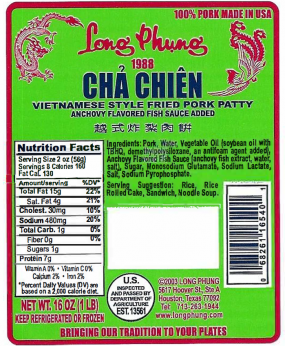
Label of packaging

CDC, public health and regulatory officials in several states, and the U.S. Department of Agriculture’s Food Safety and Inspection Service (USDA-FSIS) investigated a multistate outbreak of Listeria monocytogenes infections linked to pork products produced by Long Phung Food Products. As of January 29, 2019, this outbreak appears to be over.

USA – Minnesota Salmonella Patient Prompts Warning About Woody’s Pet Food Deli

Food Poisoning Bulletin

A case of Salmonella food poisoning in Minnesota has prompted the state to issue a consumer advisory for Woody’s Pet Food Deli Raw Free Range Turkey Pet food. The case is part of the multistate Salmonella Reading outbreak that is linked to raw turkey that has sickened at least 216 people. That outbreak is ongoing.

Woody's Pet Food Deli Salmonella

USA – Oskri Organics Corporation Recalls All Nut Butters because of Possible Health Risk – Listeria monocytogenes

FDA

Oskri Organics Corporation of Lake Mills, WI is recalling ALL Oskri Corporation manufactured nut butters.

This recall has been initiated due to positive test results for Listeria monocytogenes found in multiple Oskri Corporation manufactured nut butters. Consumption of this product may cause potential health risk.

No illnesses have been reported.

We began production of the recalled Oskri Corporation manufactured nut butters the beginning of January 2018. This recall pertains to ALL Oskri Corporation manufactured nut butters with Best By dates of June 2020 (6/20) and earlier.

Oskri Corporation has distributed Nut Butters to the following states: NY, MI, CA, PA, OH, WI, NH, IL, FL, MA, TX, AZ, IN, ID, OR, SC, and RI.

Nut butters subject to recall include: Almond, Cashew, Coconut, Peanut (all flavor varieties), Pumpkin, Sunflower, and Tahini. Nut butters are sold in 16 oz plastic jars with the Lot Number either on the top or bottom of the jar near the Expiration Date, in Pouches with the Lot Number and Expiration Date located on either the top or bottom of the back of the pouch. On bulk packaging, which would be Oskri Corporation boxes, the label should be located on the box in the upper right-hand corner of one of the four sides. This label will list the lot number, production date, as well as the expiration date.

Norway – Whole genome sequencing of Salmonella Chester reveals geographically distinct clusters, Norway, 2000 to 2016

Eurosurveillance

IntroductionDuring summer 2016, Norway observed an increase in  subsp.  serovar Chester cases among travellers to Greece.

AimOur aim was to investigate genetic relatedness of  Chester for surveillance and outbreak detection by core genome multilocus sequence typing (cgMLST) and compare the results to genome mapping.

MethodsWe included  Chester isolates from 51 cases of salmonellosis between 2000 and 2016. Paired-end sequencing (2 × 250 bp) was performed on Illumina MiSeq. Genetic relatedness by cgMLST for  subsp. including 3,002 genes and seven housekeeping genes, was compared by reference genome mapping with CSI Phylogeny version 1.4 and conventional MLST.

ResultsConfirmed travel history was available for 80% of included cases, to Europe (n = 13), Asia (n = 12) and Africa (n = 16). Isolates were distributed into four phylogenetic clusters corresponding to geographical regions. Sequence type (ST) ST411 and a single-locus variant ST5260 (n = 17) were primarily acquired in southern Europe, ST1954 (n = 15) in Africa, ST343 (n = 11) and ST2063 (n = 8) primarily in Asia. Part of the European cluster was further divided into a Greek (n = 10) and a Cypriot (n = 4) cluster. All isolates in the African cluster displayed resistance to ≥ 1 class of antimicrobials, while resistance was rare in the other clusters.

ConclusionWhole genome sequencing of  Chester in Norway showed four geographically distinct clusters, with a possible outbreak occurring during summer 2016 related to Greece. We recommend public health institutes to implement cgMLST-based real-time  surveillance for early and accurate detection of future outbreaks and further development of cluster cut-offs.


USA – Jac. Vandenberg, Inc. Recalls Fresh Peaches, Fresh Nectarines and Fresh Plums Because They May Be Contaminted with Listeria Monocytogenes

FDA

Jac. Vandenberg, Inc. of Yonkers, New York is recalling 1,727 cartons of Fresh Peaches, 1,207 cartons of Fresh Nectarines and 365 cartons of Fresh Plums because they have the potential to be contaminated with Listeria monocytogenes, an organism which can cause serious and sometimes fatal infections in young children, frail or elderly people, and others with weakened immune systems. Although healthy individuals may suffer only short-term symptoms such as high fever, severe headache, stiffness, nausea, abdominal pain and diarrhea, Listeria infection can cause miscarriages and stillbirths among pregnant women.

The Fresh Peaches, Fresh Nectarines and Fresh Plums were distributed in Alabama, California, Georgia, Illinois, Kentucky, Maine, Massachusetts, Michigan, Mississippi, New Jersey, New York, North Carolina, Ohio, Pennsylvania, South Carolina, Tennessee, West Virginia and Virginia through small retail establishments and the following select retail stores:

Retail Stores States Product
ALDI Alabama, Georgia, Kentucky, Mississippi, North Carolina, South Carolina, Tennessee, Virginia Nectarines, Peaches, Plums
Costco California Nectarines
Fairway Market New York Nectarines, Peaches
Hannaford Maine Peaches
Market Basket Massachusetts Nectarines, Peaches
Walmart Kentucky, Maryland, New Jersey, New York, Ohio, Pennsylvania, Virginia, West Virginia Nectarines (MD, NJ, NY, PA, VA, WV), Peaches (KY, NJ, NY, OH, PA, WV)

The peaches and nectarines are sold as a bulk retail produce item with PLU sticker (PLU# 4044, 3035, 4378) showing the country of origin of Chile. The peaches, nectarines and plums sold at ALDI are packaged in a 2-pound bag with the brand Rio Duero, EAN# 7804650090281, 7804650090298, 7804650090304. The nectarines sold at Costco are packaged in a 4-pound plastic clamshell with the brand Rio Duero, EAN# 7804650090212.

No illnesses have been reported to date in connection with this problem to date.

The recall was the result of a routine sampling program by the packing house which revealed that the finished products contained the bacteria. The company has ceased the distribution of the product as FDA and the company continue their investigation as to what caused the problem.

Consumers who have purchased Fresh Peaches, Fresh Nectarines and Fresh Plums are urged to return it to the place of purchase for a full refund. Consumers with questions may contact the company at compliance@jacvandenberg.com.

UK – Scotland – Microbiological survey of minced beef on sale in Scotland

HPS

Scotland’s Rural College (SRUC) and partners, in collaboration with public analysis laboratories, will conduct a comprehensive survey of the microbiological pathogens STEC (Shiga toxin-producing E. coli), Campylobacter, Salmonella and hygiene indicator organisms (generic E. coli and aerobic colony counts) in minced beef across Scotland. All of the pathogens detected and a subset of 100 isolates of generic E. coli will be tested for antimicrobial resistance (AMR).

The primary objective of the survey is to generate baseline data on the prevalence of pathogens and hygiene indicator organisms in minced beef on retail sale. A secondary objective is to see if there are any patterns in variation, such as seasonal changes, in order to identify any risk factors associated with microbiological contamination.

The survey will be carried out between January and December 2019 and the results and analysis are due to be published by summer 2020.

Source: Food Standards Scotland, 23 January 2019

Vol: 53 No: 04 Year: 2019 Type: Current Note