Category Archives: Uncategorized

Research – New Study Finds Canadian Cookbooks Don’t Provide Food Safety Info

Food Poisoning Bulletin

A new study, published in Food Control for June 2019, finds that meat and seafood recipes in some popular Canadian cookbooks do not provide adequate food safety information. The authors included 19 cookbooks that focused on meat and seafood.  The study was conducted at the Canadian Research Institute for Food Safety in the Department of Food Science at the University of Guelph in Ontario. The evaluated cookbooks were published from 2015 to 2017.

Research – PopPUNK advances speed of bacterial pathogen surveillance

Science Daily

In a study published today in Genome Research, researchers developed PopPUNK (Population Partitioning Using Nucleotide K-mers), a computational tool for analyzing tens of thousands of bacterial genomes in a single run, up to 200-fold faster than previous methods. Researchers envision PopPUNK will expedite the identification of bacterial strains as the scale of bacterial genomes being sequenced increases and, importantly, allow public health agencies to quickly identify outbreak strains that pose a public health risk.

Research – Salmonella Contamination in Ready-to-Eat Tilapia Sashimi Processing Plants

Journal of Food Protection

In this study, we investigated contamination rates and possible contamination routes of Salmonella in two typical tilapia sashimi processing plants in Taiwan. We found that the overall isolation rate was 5.0% (n = 61), from a total of 1,218 samples collected in a year from different processing sections (freezing, scaling and bleeding, visceral removal, washing and disinfection, and packaging) and from different operating times (before processing and 3 and 6 h after processing began). In plant A, which is a relatively well-operated plant compared with plant B, Salmonella was only found in the freezing, scaling and bleeding, and visceral removal sections, with isolation rates ranging from 0 to 9.3%. No Salmonella was identified in the final ready-to-eat products at plant A. In plant B, Salmonella was found in all sections and in the final products, with isolation rates ranging from 4.6 to 36.1%. Regarding the processing times, the contamination rates increased significantly (P < 0.05) 3 h after processing began in plant B. Among the isolates, 10 serotypes were detected, some of which are commonly observed in human salmonellosis cases in Taiwan, indicating a risk of zoonoses. However, only four isolates showed antimicrobial resistance in the current study. With molecular subtyping, we observed accumulated and persistent Salmonellaecontamination patterns in plant B. These results suggest that inadequate sanitation impairs the foodborne pathogen control program in tilapia sashimi plants.

Research – Survival and Thermal Resistance of Salmonella Enteritidis PT 30 on Almonds after Long-Term Storage

Journal of Food Protection Almonds

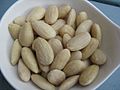
Salmonella survival and thermal resistance on the surface of almond kernels were evaluated after periods of storage. Almond kernels were inoculated with Salmonella Enteritidis PT 30 and equilibrated to 0.45 water activity. Samples were separated into two groups (I and II) and stored in sealed metal cans at room temperature. Group I samples (stored 7, 15, 27, and 68 weeks) were re-equilibrated in controlled humidity chambers to 0.45 water activity before performing the thermal treatments after each storage period, but group II samples (stored 70 and 103 weeks) were thermally treated immediately after the cans were opened. For thermal treatments, individual almond kernels were vacuum sealed in thin plastic bags, heated isothermally in a water bath (80°C) for nine intervals, immediately cooled in an ice bath, and assayed for surviving Salmonella. Log-linear and Weibull models were fit to the inactivation data. Salmonella population decreased (P < 0.05) more than 2 log CFU/g during the long-term storage. Salmonella survival in group II at 70 weeks (7.3 log CFU/g) was higher (P < 0.05) than in group I (which had been re-equilibrated multiple times) at 68 weeks (6.2 log CFU/g). However, the thermal resistance of SalmonellaEnteritidis PT 30 did not decrease (P > 0.05) for up to 68 weeks of storage, and the log-linear model best described the thermal inactivation data. Overall, the results suggest that re-equilibrating almonds (group I) multiple times may have increased the rate of reduction of Salmonella populations during long-term storage. However, Salmonella thermal resistance on almonds appears to be essentially unaffected by long-term storage, which is important information for designing and conducting validation studies for pathogen control processes.


Research – Assessing the airborne survival of bacteria in aerosol droplets from coughs and sneezes

Science Daily qwf

The airborne transmission of diseases including the common cold, influenza and tuberculosis is something that affects everyone with an average sneeze or cough sending around 100,000 contagious germs into the air at speeds of up to 100 miles per hour.

New research led by scientists from the University of Bristol and published today in the Journal of the Royal Society Interface, outlines a new technique that, for the first time, examines directly the environmental factors that control the transmission of disease to the level of a single aerosol particle and a single bacterium.

Aerosol droplets are a typical route for the transport of pathogens, such as bacteria and viruses, and the airborne transmission of disease.

The impact of environmental factors (such as relative humidity, temperature, atmospheric oxidants and the presence of light) on the viability and infectivity of pathogens in aerosol droplets remains poorly understood.

For example, although the seasonal variation in influenza cases is known, the environmental factors determining the differences in airborne transmission of the virus is not well understood.

To help understand this process better, scientists have established a novel approach for forming aerosol droplets containing a specific number of bacteria, trapping a cloud of these droplets of exact known population and simulating their environmental exposure over a time from five seconds to several days.

The aerosol droplets are then gently sampled onto a surface to determine how many bacteria have survived their time in the aerosol phase.

The study reports on the benchmarking of this new approach, demonstrating the many advantages over conventional techniques, which include introducing large populations of droplets to large rotating drums or capturing droplets on spiders’ webs.

Not only can measurements be made down to the single bacterium/single droplet level requiring very little quantity of aerosol (picolitres), but high time resolution (one second) measurements of viability can be made, allowing the first quantitative studies of the influence of dynamic factors transforming the aerosol (for example evaporation, condensation) on viability.

For example, the study shows that during evaporation of droplets, the concentration of typical salts can rise way beyond their solubility limit, placing considerable osmotic stress on the bacteria and reducing viability.

Lead author, Professor Jonathan Reid from the University of Bristol’s School of Chemistry, said: “This new technique offers the eventual prospect of allowing refined measurements to improve our understanding of the transmission of many airborne diseases including tuberculosis, the influenza virus, and foot and mouth disease.”

Another Cruise Ship – Norovirus??

Outbreak News Today

Thirty-one passengers onboard Viking Ocean Cruises, Viking Sea January 18–28, 2019 voyage, according to federal health officials.

31 of 925 passengers (3.35%) presented with diarrhea and vomiting, To date, no etiology has been identified.

Officials will board the ship in San Juan, Puerto Rico, on January 28 to conduct an epidemiologic investigation and environmental health assessment and evaluate the outbreak and response activities.

Egypt – 100,000 Mulard ducks infected with Salmonella killed

Egypt Today

CAIRO – 27 January 2019: One hundred thousand imported Mulard ducks were killed in Menoufia and Sharkeya governorates for being infected with Salmonella to inhibit food poisoning and protect poultry, Deputy Agriculture Minister for Livestock Mona Mehrez announced on Sunday.

Mehrez told Egypt Today that the measure was carried out in collaboration with the General Authority for Veterinary Services. The number of ducks killed in Sharkeya and Menoufia are respectively 76,000 and 24,000.

The decision was made after the analysis results had come out while the cargo was quarantined. The dead ducks were buried, and covered with calcite to inhibit pollution.

USA – Thrive Market expands recall to include all unexpired lots of nut butters – Listeria monocytogenes

Food Safety News recalled Thrive nut seed butters

All unexpired  lots of the Thrive Market-branded nut butters were recalled on Jan. 24 because of the potential for contamination with Listeria monocytogenes.

On Jan. 21 a supplier informed Thrive Market that it was issuing a recall of all nut butters it has manufactured since January 2018 because of a positive test for Listeria monocytogenes in recent lots.

Because the safety of its member customers is Thrive’s “absolute priority,” the company expanded the  supplier’s recall by voluntarily recalling all unexpired lots of all Thrive Market-branded nut butters manufactured by this supplier.

According to Thrive,  it is “very unlikely” that the recalled products are contaminated. However, out of an “abundance of caution,” it urges consumers to  promptly discard  recalled products in their possession.

Lactalis recalls more than 16,000 boxes of baby formula for Salmonella

Food Safety News

Lactalis has recalled a brand of infant formula made at the same Spanish factory linked to a Salmonella outbreak in France. The withdrawal and recall measure concerns 16,300 boxes of Picot AR milk sold exclusively in pharmacies since Nov. 29, 2018.

Four babies have been sickened by Salmonella Poona with findings pointing to Modilac branded products, marketed by Sodilac, a subsidiary of Savencia SA, as the source. Three other cases are under investigation.

Lactalis Nutrition Santé (LNS) said the Picot AR infant formula is manufactured by an external supplier on the same Spanish production site. Other Picot references manufactured at different production sites are not affected.

The recall is precautionary and no health alert has been reported with all controls being compliant. LNS said it acted without waiting for results of the investigations conducted at the supplier.

USA – Products containing baby spinach with possible Salmonella contamination recalled in 8 states

Food Safety News

During the weekend, Whole Foods Market announced an eight-state recall of various prepared foods that contain baby spinach because of potential contamination with Salmonella. Whole Foods acted in response to an earlier recallof baby spinach and mesclun by Satur Farms of Cutchogue, NY.

The Satur Farms initiated its recall Jan. 23 following routine sampling by the Florida Department of Agriculture and New York State Department of Agriculture and markets. As of last night, it was not known if Satur Farms had supplied the implicated baby spinach and mesclun to other companies.

The affected Whole Foods products, including salads, pizza, sandwiches and wraps listed below, were sold at stores in Connecticut, Florida, Maine, Massachusetts, New Hampshire, New Jersey, New York, and Rhode Island. No illnesses had been reported as of the posting of the recall.