The Good Food Chain, a UK manufacturer of products for the foodservice channel, confirmed it has gone into liquidation despite being cleared by an investigation into a recent Listeria outbreak at a number of local hospitals.
Some 125 full-time employees have lost their jobs as a result.
The company, based in Stone, Staffordshire, in the English Midlands, has ceased trading, it confirmed in a statement on its website.
This is despite the UK regulator, The Food Standards Agency, stating that the company was not the source of the outbreak and could now resume production. It said that “the business has been verified as meeting food safety legislation and as following best practice for manufacturing, cleaning and environmental standards”.
More than 300 people have been hospitalized due to suspected food poisoning during the 90th birthday celebration of Imelda R. Marcos, the former first lady of the Philippines, according to Philippines news sources.
According to Health Secretary Francisco Duque III, 306 are still admitted in the hospital. He went on to say that 149 have been discharged while the rest are still under observation or admitted in the hospital.
The patients “suffered from vomiting and dizziness,” said Richard Gordon, the chairman of the Philippine National Red Cross, which deployed emergency teams to the Ynares Sports Complex east of Manila where the party was held.
Mr. Gordon, who is also a Philippine senator, said hundreds of the estimated 2,000 people at the event apparently became ill after eating chicken adobo, rice and eggs.
The Brazilian government confirmed that Britain has sent back to Brazil 16 containers of poultry due to the presence of salmonella in the shipments. According to Agriculture Minister Tereza Cristina Dias, the shipments totaled 1,400 tons of poultry, which were returned over a 15-month period. The confirmation was made after a local website Reporter Brasil ran a story on the incident. According to the site, some of the shipments belonged to the leading meatpackers in the country, JBS and BRF Foods. In addition, the site reported that, after being refused by Britain, the poultry was sold in the Brazilian market. Brazil has a higher maximum limit for traces of salmonella than the European Union nations. Dias did not deny the information.
A Salmonella enterica serotype I 4,[5],12:i:- linked to pig ear dog treats has sickened at least 45 people in 13 states, according to the Centers for Disease Control and Prevention (CDC). Twelve people have been hospitalized because they are so sick.
Cryptosporidium is the leading cause of outbreaks of diarrhea linked to water and the third leading cause of diarrhea associated with animal contact in the United States.
What is added by this report?
During 2009–2017, 444 cryptosporidiosis outbreaks, resulting in 7,465 cases were reported by 40 states and Puerto Rico. The number of reported outbreaks has increased an average of approximately 13% per year. Leading causes include swallowing contaminated water in pools or water playgrounds, contact with infected cattle, and contact with infected persons in child care settings.
What are the implications for public health practice?
To prevent cryptosporidiosis outbreaks, CDC recommends not swimming or attending child care if ill with diarrhea and recommends hand washing after contact with animals.
Millions of people take capsules of probiotics with the goal of improving their digestion, but what if those bacteria were also able to detect diseases in the gut and indicate when something is awry? New research from the Wyss Institute at Harvard University and Harvard Medical School (HMS) has created an effective, non-invasive way to quickly identify new bacterial biosensors that can recognize and report the presence of various disease triggers in the gut, helping set the stage for a new frontier of digestive health monitoring and treatment. The paper is published in mSystems.
“Our understanding of how the human gut microbiome behaves is still in its early stages, which has hindered large-scale research into creating biosensors out of living bacteria,” said David Riglar, Ph.D., a former postdoc at the Wyss Institute and HMS who now leads a research group as a Sir Henry Dale Fellow at Imperial College London. “This work provides a high-throughput platform for identifying genetic elements in bacteria that respond to different signals in the gut, putting us one step closer to engineering complex signaling pathways in bacteria that allow them to detect and even treat diseases long-term.”
Possible hepatitis A exposure has occurred at the Genghis Grill restaurant in Tempe Marketplace at 2000 East Rio Salado Parkway in Tempe, Arizona, according to the Maricopa County Health Department. Anyone who ate there on May 30, June 1, June 5, June 6, June 7, June 8, June 13, June 14, June 15, and June 18, 2019 may have been exposed to the virus. If you ate there on any day not listed, you were not exposed.
Possible hepatitis A exposure has occurred at the Huddle House at 1029 West Dekalb Street in Camden, South Carolina, according to the South Carolina Department of Health and Environmental Control. Anyone who ate there between June 14 and June 28, 2019 may have been exposed to the virus.
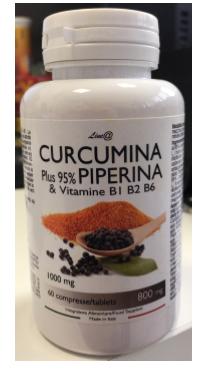
Belgian officials have issued a warning because of incidents of hepatitis infections being linked to dietary supplements containing curcumin.
The Federal Agency for the Safety of the Food Chain (FASFC) cited a notification in the Rapid Alert System for Food and Feed (RASFF) detailing cases of acute cholestatic hepatitis following consumption of various dietary supplements containing curcumin.
This alert is not public and the agency has not yet responded to a request for more information from Food Safety News.
Food supplement recalled in Italy
FASFC reported the exact source of contamination was not yet clearly established but was probably due to the presence of curcumin. Curcumin is a substance in turmeric.
The curcumin was used in lot 1810224 of the food supplement “Curcuma Liposomal and poivre noir.” The company Plastimea SA decided to withdraw the product branded Nutrimea from sale. It has an expiration date of October 2021 and was sold between Oct. 23, 2018, and May 24 this year on Amazon France.
Italian authorities first raised the alert in May with two reports of hepatitis. The National Institute of Health (Istituto Superiore di Sanità) in the country reported 21 cases as of June 20.
The number of products affected has grown from two to more than 20 involving firms such as Frama SRL, Scharper S.p.A, Vanatari International GmbH, Ekappa Laboratori S.r.l., and Fidia Farmaceutici S.p.A.
Meanwhile, the number of people with hepatitis A connected with a school in Ripon, a city in North Yorkshire County in England, has increased by two to 19. Reports of new infections connected to Outwood Academy have slowed down during the past week.
Public Health England (PHE) is reviewing data on food eaten in the school canteen to find the source of the outbreak.
Ottawa, July 2, 2019 – Les Dépendances is recalling Dongé brand Coulommiers raw milk cheese from the marketplace due to possible Listeria monocytogenes contamination. Consumers should not consume the recalled product described below.
This product may have been sold cut in half or in quarters. Consumers who are unsure if they have purchased the affected product are advised to contact their retailer.