Category Archives: Uncategorized

UK – P & B Foods extends its recall of Heera Chilli Powder Extra Hot because of the presence of Salmonella

FSA

P & B Foods Ltd is extending its recall of Heera Chilli Powder Extra Hot to include an additional pack size, because salmonella has been found in the product.

Product details

Heera Chilli Powder Extra Hot

Pack size 6 x 1kg
Batch code PB9446M/4
Best before end: April 2021
Heera Chilli Powder Extra Hot

Pack size 10 x 400g
Batch code PB9446M/4
Best before end: April 2021

No other P & B Foods Ltd products are known to be affected.

Risk statement

The presence of salmonella in the product listed above. Symptoms caused by salmonella usually include fever, diarrhoea and abdominal cramps.

Action taken by the company

P & B Foods Ltd is recalling the above products. Point-of-sale notices will be displayed in all retail stores that are selling these products. These notices explain to customers why the products are being recalled and tell them what to do if they have bought the product. Please see the attached notice.

Our advice to consumers

If you have bought any of the above products, do not eat them. Instead, return the product to the store from where it was bought for a full refund.

USA – 2-year-old boy dies from E Coli infection linked to San Diego County Fair

Outbreak News Today

Petting zoo animals may be the source of an E. coli outbreak linked to the San Diego County Fair.

The County of San Diego Health and Human Services (HHSA) is urging anyone who visited the San Diego County Fair and then began experiencing symptoms of E. coli infection on or after June 8 to contact their healthcare provider⎯“especially if you have diarrhea that lasts for more than 3 days or diarrhea that is accompanied by a fever higher than 102°F, or blood in the stool, or so much vomiting that you cannot keep liquids down and you pass very little urine.”

Four children were infected with E. coli after coming into contact with animals at the San Diego County Fair.  One child died after developing E. coli complications.

The affected children ranged in age from 2 years to 13 years-old.  They each came into contact with animals at the San Diego County Fair between June 8 and June 15.  Their symptoms began between June 10 and June 16. The youngest child, a 2-year-old boy, was hospitalized with E coli complications.  He succumbed to E. coli complications and died on June 24.

Hemolytic Uremic Syndrome (HUS) is a serious complication of E coli infections.  5-10% of people diagnosed with Shiga-toxin-producing E. coli (STEC) develop HUS.  Children are particularly vulnerable to developing HUS.

USA – Growers Express Issues Voluntary Recall of Multiple Fresh Vegetable Products Due to Potential Contamination of Listeria monocytogenes

FDA

Summary

Company Announcement Date:
June 30, 2019
FDA Publish Date:
July 01, 2019
Product Type:
Food & Beverages
Produce
Reason for Announcement:
Listeria monocytogenes
Company Name:
Growers Express
Brand Name:
Green Giant Fresh, Growers Express, Signature Farms, Trader Joe’s
Product Description:
Butternut squash, cauliflower, zucchini, and butternut squash based veggie bowl products

Company Announcement

Growers Express takes issues of food safety seriously and is issuing a voluntary recall of select fresh vegetable products in an abundance of caution and in the interest of protecting its customers and end consumers. The fresh vegetable products include packaged varieties of butternut squash, cauliflower, zucchini and a butternut squashed based veggie bowl. Please refer to the detailed chart below for specific product names and retailers.

The products originate from a Growers Express production facility in Biddeford, Maine and were distributed to the states referenced in the chart below. The voluntary recall was issued due to the potential for contamination with Listeria monocytogenes. There are no reported illnesses.

Listeria is an organism that can cause serious and sometimes fatal infections in young children, frail or elderly people, and others with weakened immune systems. Although healthy individuals may suffer short-term symptoms such as high fever, severe headaches, stiffness, nausea, abdominal pain and diarrhea. Listeria infection can cause miscarriages and stillbirths among pregnant women.

Most of the affected products are labeled with a “Best If Used By” Date of June 26 – June 29, 2019. No other Growers Express products are impacted or part of this recall. This recall does not affect or include any Green Giant® canned or frozen vegetable products.

“The safety of our consumers is our first priority,” said Tom Byrne, President of Growers Express. “We selfreported the need for this recall to the U.S. Food and Drug Administration (FDA) and stopped production immediately after being notified of a single positive sample by the Massachusetts Department of Health. We are deep sanitizing the entire facility and our line equipment, as well as conducting continued testing on top of our usual battery of sanitation and quality and safety tests before resuming production.”

Consumers who purchased any of the products listed below from the affected sell by dates or with an unreadable date code are urged not to consume them and to throw the products away.

Malaysia – Bottled water contaminated with Pseudomonas aeruginosa

Outbreak News Today 

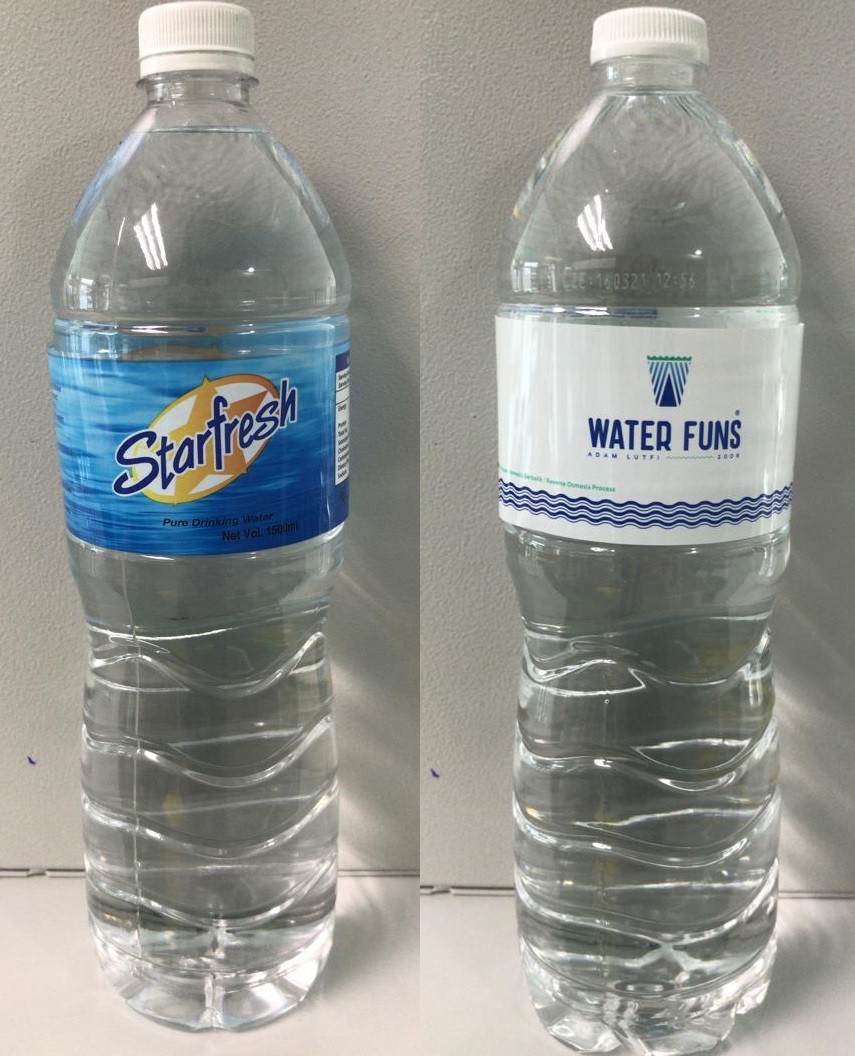
Malaysia health officials reported on the recall of Malaysian Starfresh packaged beverage (AMB) water products from the Singapore market because they are tainted with Pseudomonas aeruginosa bacteria.

AMB products involved in 500ml and 1500ml with the final date on May 11, 2021 and May 13, 2021, respectively.

The Ministry of Health of Malaysia (KKM) through the Food Safety and Quality Division (BKKM) has carried out verification on the refinery and a food safety guarantee program has been found that is not implemented effectively . In addition, the results of an analysis of Starfresh names exported to Singapore and the Waterfuns brand sold on the local market did not comply with the Food Deed 1983 and Food Regulations 1985 because they were found to be contaminated with Pseudomonas aeruginosa bacteria . This product may be identified by the final date on the label. KKM has also directed the refineries to withdraw AMB products involved in the local market.

Information – Lawyer Warns of E. coli Danger at Petting Zoos

Food Poisoning Bulletin 19243

Attorneys Fred Pritzker and Ryan Osterholm are warning about the dangers of E. coli infections from petting zoos. As the weather warms and summer starts, petting zoos are popular attractions for families with young children. Unfortunately, those venues can be and have been the source of serious and even deadly E. coli outbreaks.

Research – Consequences of Using Two Types of Skin Samples from Chilled Chicken Broiler Carcasses To Measure the Degree of Contamination by Campylobacter spp.

Journal of Food Protection

ABSTRACT

Because of concerns regarding the prevalence of Campylobacter in chicken meat, member countries in the European Union (EU) undertook a surveillance program to determine Campylobacter levels on chicken carcasses. A sample mass of 25 g principally composed of neck skin was used, although breast skin could also be used if there were insufficient neck skin to meet the required sample mass. The aim was to establish a baseline for Campylobacter contamination of carcasses against which future interventions could be assessed. However, in the United Kingdom researchers wanted to explore whether different ratios of neck to breast skin in samples could affect the results obtained. A comparison of the Campylobacter levels on neck and breast skin samples obtained from the same chilled chicken carcasses was undertaken at four chicken slaughterhouses. The neck skins were significantly more heavily contaminated (P < 0.05) with Campylobacter than was breast skin. Statistical analyses revealed no relationship that would allow a conversion between levels obtained on the two skin types. Ongoing surveillance of Campylobacter for 6 years was funded by United Kingdom poultry processors using samples consisting solely of neck skin, and the results of this surveillance (2011 to 2016) are reported here. Given the higher Campylobacter levels on a sample exclusively consisting of neck skin, this protocol could yield results with which the poultry industry would find it more difficult to achieve the contamination reduction target. The contamination reduction target for the United Kingdom (≤10% of chicken carcasses exceeding neck skin Campylobacter levels of 1,000 CFU/g) was not met by the end of 2015, the date stipulated by the United Kingdom government.

HIGHLIGHTS
  • Campylobacter levels on chicken neck and breast skin were compared.

  • Neck skin was significantly more contaminated (P < 0.05) than breast skin.

  • No relationship between the two skin types was found for Campylobacter levels.

  • A UK government reduction target for highly contaminated chicken was not achieved.

USA – Outbreak Investigation of Salmonella Uganda Potentially Linked to Whole, Fresh Papayas, June 2019

FDA

June 28, 2019

The U.S. Food and Drug Administration (FDA), along with the Centers for Disease Control and Prevention (CDC), and state and local partners, are investigating a multistate outbreak of 62 Salmonella Uganda illnesses potentially linked to whole, fresh papayas imported from Mexico.  These illnesses have been reported in eight states: Connecticut, Massachusetts, New York, New Jersey, Pennsylvania, Rhode Island, Florida, and Texas.

The FDA is increasing import screening for whole, fresh papayas and will continue to investigate the cause and source of the outbreak as well as the distribution of products. Preliminary analysis of product import records indicates that the whole, fresh papayas that made people sick in this outbreak were from Mexico. As this outbreak investigation continues, the FDA will work with our Mexican food safety regulatory counterparts to better define this outbreak. Additionally, the FDA will update this advisory as more information becomes available.

Recommendations

For Consumers, Restaurants, and Retailers in Specific States:

CDC is advising that consumers in Connecticut, Massachusetts, New Jersey, New York, Pennsylvania, and Rhode Island not eat any whole, fresh papayas from Mexico, and should throw them away. Retailers, restaurants, and other food service providers in those states should not serve or sell whole, fresh papayas imported from Mexico, until more is known about this outbreak. Of the 62 illnesses, 60 have been reported in six states in the Northeast. One patient from Florida who was reported ill had traveled to Connecticut before becoming ill. Another patient from Texas was also reported ill, and at this time additional information about this patient is being collected. More information will be provided as it becomes available.

For Restaurants, Retailers, Importers, Suppliers, and Distributors in All States:

The FDA strongly advises importers, suppliers, and distributors, as well as restaurants, retailers, and other food service providers from all states to hold whole, fresh papayas imported from Mexico. This hold is intended to prevent or limit further distribution of potentially contaminated papayas that may already be in the supply chain until more information on the potential source of papayas linked to the outbreak becomes available. Any product that is held beyond expiration date should be discarded.

Research – Modeling for Survival of Clostridium perfringens in Saeng-sik, a Powdered Ready-to-Eat Food with Low Water Activity

Journal of Food Protection

ABSTRACT

Saeng-sik is a powdered ready-to-eat food with very low moisture that contains dried raw materials such as grains, fruits, mushrooms, and seaweeds. This product is consumed as a convenient and nutritious meal replacement. The objective of this study was to develop a mathematical model for predicting the survival of Clostridium perfringens vegetative cells and spores in saeng-sik as a function of temperature and to validate the model using saeng-sik samples with different microbial communities analyzed by matrix-assisted laser desorption–ionization time-of-flight mass spectrometry. Kinetic data for C. perfringenssurvival in saeng-sik fit well to the Weibull model with high goodness of fit (R2 = 0.92 to 0.98). The obtained δ values (required time for first decimal reduction) for each temperature were 19.62 to 864.86 h, and concave curves (p < 1) were observed under all experimental conditions (5 to 40°C). Kinetic parameters were further described in a secondary model as a function of temperature using a Davey model (R2 = 0.99). The developed model was validated by the bias factor, accuracy factor, and root mean square error, and the values were within acceptable ranges for predictive models, even for saeng-sik samples with different microbial communities. When saeng-sik was rehydrated according to the manufacturer’s recommendations, germination and outgrowth of C. perfringens was observed when the sample was subjected to unusual temperatures during storage, such as at 30°C for 15 h. C. perfringens spores survived in saeng-sik with very low water activity. Because C. perfringens could germinate and grow under such conditions, care must be taken to avoid initial contamination of C. perfringens during the manufacturing process. Our model developed with samples with different microbial communities provides useful information for next-generation microbiological risk assessment taking into consideration the ecology of the food-associated microbial community.

HIGHLIGHTS
  • We developed a mathematical model to predict the survival of C. perfringens in food.

  • C. perfringens vegetative cells and spores were inoculated into dried powder food.

  • The aw of saeng-sik was below 0.1.

  • Weibull and Davey models can successfully describe the survival of C. perfringens.

  • The developed model can be applied to samples with different microbial communities.

Research – Use of Cold Atmospheric Plasma To Preserve the Quality of White Shrimp (Litopenaeus vannamei)

Journal of Food Protection

ABSTRACT

The enzymatic oxidation process that causes black spots on shrimp, named melanosis, leads to spoilage and economic losses. Therefore, there is an urgent need for strategies to reduce melanosis in the food industry. Cold plasma is an emerging nonthermal food processing technology. This work explores a novel application of cold plasma for the preservation of shrimp quality. This study aimed to evaluate the effects of cold plasma on the quality attributes of Pacific white shrimp (Litopenaeus vannamei). The shrimp samples were divided in two groups: the control group and the plasma group. Samples were exposed to nonthermal plasma for 10 min at a frequency of 500 Hz. Microbiological assays, including total counts of mesophilic and psychrotrophic bacteria, Staphylococcus spp., and Salmonella sp., were performed along with investigations of physicochemical parameters, such as pH, color, water-holding capacity, cooking loss, and shear force. In addition, sensory (quality index method) tests were conducted. The plasma group exhibited a shelf life of 14.07 days, while the control group exhibited a shelf life of 9.78 days. The experimental protocol used in this study was not enough to obtain significant reduction in the bacterial load. However, treatment with the cold plasma contributed to improving the physicochemical properties during storage.

HIGHLIGHTS
  • Discharge of dielectric barriers significantly reduced microbial populations.

  • Treatments resulted in improvement in physical characteristics during storage.

  • Nonthermal plasma provided a 43% (4-day) increase in sample lifetime.

Research – Salmonellosis Outbreaks by Food Vehicle, Serotype, Season, and Geographical Location, United States, 1998 to 2015

Journal of Food Protection

ABSTRACT

Salmonella is a major cause of foodborne illness in the United States. Although salmonellosis outbreaks are relatively common, food vehicles and other characteristics are not well understood. We obtained data for salmonellosis outbreaks from 1998 to 2015 that were submitted by public health jurisdictions to the Centers for Disease Control and Prevention’s Foodborne Disease Outbreak Surveillance System. In total, 2,447 outbreaks (yearly average, 136) with a confirmed or suspected etiology of nontyphoidal Salmonella were identified. The outbreaks included 65,916 individual cases (mean, 27 cases per outbreak). Food vehicles were identified in 49% of the outbreaks. Frequently implicated foods included eggs (12.5%), chicken (12.4%), and pork (6.5%). Fifty-five (2.2%) outbreaks had fatalities; 87 (0.1%) individuals died. Of those outbreaks with a reported serotype, the most commonly identified were Enteritidis (29.1%), Typhimurium (12.6%), and Newport (7.6%). Serotypes with a statistically significant increase over time included Braenderup and I 4,[5],12:i:−. Some serotypes were commonly associated with outbreaks due to certain food vehicles; 81% of outbreaks due to eggs were associated with serotype Enteritidis. Food commodities that were most commonly associated with multistate outbreaks were nuts and seeds, sprouts, and fruits. Outbreaks occurred most frequently in summer. States with the highest number of salmonellosis outbreaks per 100,000 population were Alaska (0.137) and Minnesota (0.121); states with the lowest were Delaware (<0.001) and Wyoming (<0.001). The highest number of salmonellosis cases per 100,000 population were in Washington, DC (4.786) and Arkansas (3.857). Geographic variations in outbreaks may reflect differences in outbreak detection, investigation, reporting, or risk. In addition to collaboration, data-driven public health interventions are needed to decrease infection rates and to prevent complications related to salmonellosis.

HIGHLIGHTS
  • Outbreaks due to S. enterica serotypes Braenderup and I 4,[5],12:i:− have increased.

  • Deaths were most often due to seeded vegetables, nuts and seeds, and fruits.

  • Multistate salmonellosis outbreaks were often due to nuts and seeds, sprouts, and fruits.

  • Alaska, Minnesota, and Hawaii had the highest number of outbreaks per 100,000 people.

  • Delaware and Wyoming had the lowest number of outbreaks per 100,000 people.