Category Archives: scombroid poisoning

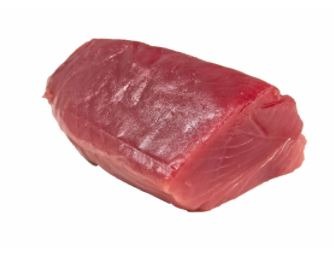
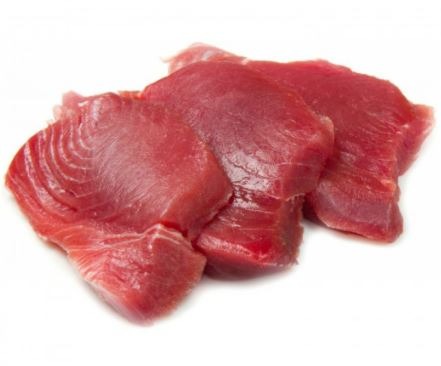
RASFF Alerts – Histamine – Tonijnfilet A-Sashimi

RASFF

Histamine in Tonijnfilet A-Sashimi from Sri Lanka in Hong Kong – Belgium, Germany and Netherlands

USA – How to Report Seafood-Related Toxin and Scombrotoxin Fish Poisoning Illnesses

FDA

To help FDA effectively investigate, remove unsafe seafood products from the market, and develop new prevention strategies, the FDA relies on illness reporting from public health officials and healthcare providers. While most foodborne outbreaks are tracked through the FDA’s Coordinated Outbreak Response and Evaluation (CORE) network, seafood-related illnesses caused by natural toxins have a unique reporting mechanism. This web page provides information on commonly occurring seafood-related illnesses and how to report them to the FDA.  To report an illness from raw bivalve molluscan shellfish, email the FDA at shellfishepi@fda.hhs.gov.

The FDA receives reports of illnesses associated with the consumption of specific types of fish. These illnesses may originate from the activity of certain bacteria, toxins produced by marine algae, or hazards inherent in the fish.

Commonly occurring illness:

Illness and reporting information for the commonly occurring illnesses are provided in each section. Contact the FDA with any questions or need for clarification of the illness or reporting.

In addition to the illnesses listed above, reporting of other less frequently occurring illnesses from natural toxins may be accomplished by emailing the FDA at Seafood.Illness@fda.hhs.gov.  Refer to Chapter 6 of the “Fish and Fishery Products Hazards and Controls Guidance” for a comprehensive list of natural toxin illnesses. To report illnesses related to miscellaneous natural toxin illnesses, please email FDA at Seafood.Illness@fda.hhs.gov.

The FDA works with first responders, physicians, and state and local health departments to investigate illnesses and outbreaks, manage them, and learn how to lessen future occurrences.

Research – Two Case Reports of Scombroid in Singapore: A Literature Review

Cureus

Abstract

Scombroid is a foodborne illness that results from eating improperly handled fish. Due to a disruption in the cold chain, these fish have high histamine levels. As a result, scombroid presents with allergy-like symptoms but is not really an allergy per se. Cases have been reported in many countries.

Here, we report two cases of a 48 and 17-year-old father and son in Singapore who developed symptoms suggestive of scombroid after eating tuna imported from Vietnam delivered by an internationally known supply company. The diagnosis was confirmed by elevated histamine levels measured in the culprit fish product. We discuss the pathophysiology, signs, symptoms, and management of scombroid.

Introduction

Scombrotoxin fish poisoning (SFP) also known as scombroid poisoning, scombrotoxicosis, or histamine fish poisoning is a foodborne illness that results from the consumption of fish that has been improperly handled between the time it is caught and the time it is cooked [1]. The word “scombroid” is derived from Scombridae which is a family of dark-fleshed fish consisting of species such as mackerel and tuna. However, non-scombroid fishes such as mahi-mahi, salmon, and sardine have also been implicated in scombroid poisoning [2].

Scombroid poisoning is very common. A 2013 report from the United States estimated over 35,000 cases resulting in 162 hospital admissions between 2000 and 2009 [3]. Scombroid cases have also been reported from countries such as Australia [4], the Netherlands [5], Israel [6], Colombia [7], and many others.

Inappropriate storage, resulting in disruption of the cold chain, of the fish leads to bacterial enzymatic conversion of free histidine into histamine. This is due to the action of bacterial histamine decarboxylase (HDC), usually by mesophilic bacteria such as Clostridium perfringensMorganella morganii, etc. As a result, high levels of histamine are usually found in the culprit seafood item [8]. Whether histamine is the only constituent of “scombrotoxin” is unclear. Nevertheless, the symptomatology is essentially that of histamine toxicity. It is considered an atypical foodborne illness as the main symptoms are not gastrointestinal and also because it is not due to contamination of the product.

While mostly self-limiting and mild, there have been reports of life-threatening scombroid poisoning. A previously healthy young woman developed hypotension needing vasopressors with ST depressions [9] while another scombroid poisoning was complicated by acute pancreatitis [10]. Some cases were severe enough to need ICU admissions. A recent narrative discussed acute coronary syndromes (ACS) associated with scombroid. Of note, there is a potential of hemodynamic failure in the acute stage, even in apparently healthy people [11].

Closer to home, in September 2016, the Agri-Food and Veterinary Authority (AVA) of Singapore issued a recall order on a batch of canned tuna imported from Thailand under a common food brand. This was reported in various newspapers such as The Straits Times and The Independent. In one issue of the Singapore Food Agency’s Food Safety Bulletin in 2018, there was a segment on scombroid. Interestingly, however, a PubMed search was conducted and while we found a case of pufferfish poisoning reported in 2013 [12] and a report of stonefish poisoning in 2009 [13], we found no reports of scombroid poisoning in Singapore. We report two confirmed cases of scombroid poisoning who are from the same household who presented to our hospital after consuming tuna for dinner.

USA – DRAFT: Scombrotoxin (Histamine)-forming Fish and Fishery Products – Decomposition and Histamine (CPG 7108.24)

FDA

Submit Comments by 

Although you can comment on any guidance at any time (see 21 CFR 10.115(g)(5)), to ensure that the FDA considers your comment on a draft guidance before it begins work on the final version of the guidance, submit either online or written comments on the draft guidance before the close date.

If unable to submit comments online, please mail written comments to:

Dockets Management
Food and Drug Administration
5630 Fishers Lane, Rm 1061
Rockville, MD 20852

All written comments should be identified with this document’s docket number: FDA-2021-D-0367


Docket Number:
FDA-2021-D-0367
Issued by:
Office of Regulatory Affairs
Center for Food Safety and Applied Nutrition

The purpose of this compliance policy guide (CPG) is to provide guidance for FDA staff on adulteration associated with decomposition and/or histamine identified during surveillance sampling and testing of fish and fishery products susceptible to histamine formation.

The current CPG Sec. 540.525 is being revised to update FDA regulatory action guidance for sensory analysis and histamine levels in scombrotoxin-forming fish and fishery products.

The  contents of this document do not have the force and effect of law and are not meant to bind the public in any way, unless specifically incorporated into a contract.  This document is intended only to provide clarity to the public regarding existing requirements under the law.  FDA guidance documents, including this CPG, should be viewed only as recommendations, unless specific regulatory or statutory requirements are cited.  The use of the word should in FDA guidances means that something is suggested or recommended, but not required.

Information – How to Report Seafood-Related Toxin and Scombrotoxin Fish Poisoning Illnesses

FDA

To help FDA effectively investigate, remove unsafe seafood products from the market, and develop new prevention strategies, the FDA relies on illness reporting from public health officials and healthcare providers. While most foodborne outbreaks are tracked through the FDA’s Coordinated Outbreak Response and Evaluation (CORE) network, seafood-related illnesses caused by natural toxins have a unique reporting mechanism. This web page provides information on commonly occurring seafood-related illnesses and how to report them to the FDA.  To report an illness from raw bivalve molluscan shellfish, email the FDA at shellfishepi@fda.hhs.gov.

The FDA receives reports of illnesses associated with the consumption of specific types of fish. These illnesses may originate from the activity of certain bacteria, toxins produced by marine algae, or hazards inherent in the fish.

Commonly occurring illness:

Illness and reporting information for the commonly occurring illnesses are provided in each section. Contact the FDA with any questions or need for clarification of the illness or reporting.

In addition to the illnesses listed above, reporting of other less frequently occurring illnesses from natural toxins may be accomplished by emailing the FDA at Seafood.Illness@fda.hhs.gov.  Refer to Chapter 6 of the “Fish and Fishery Products Hazards and Controls Guidance” for a comprehensive list of natural toxin illnesses. To report illnesses related to miscellaneous natural toxin illnesses, please email FDA at Seafood.Illness@fda.hhs.gov.

The FDA works with first responders, physicians, and state and local health departments to investigate illnesses and outbreaks, manage them, and learn how to lessen future occurrences.

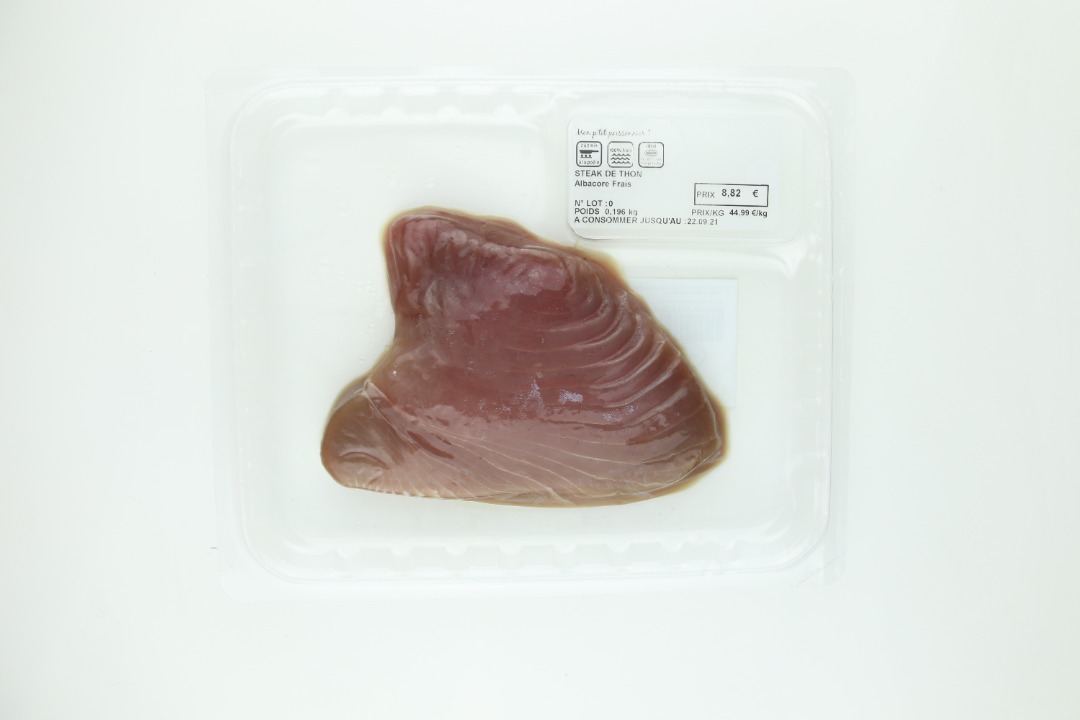
France – Fresh Tuna Steak 200g – Histamine

Gov france

Identifying information for the recalled product

  • Product category Food
  • Product sub-category Fishery and aquaculture products
  • Product brand name My little fishmonger
  • Names of models or references Fresh Tuna Steak 200g
  • Product identification
    GTIN Lot Dated
    Fresh yellowfin tuna loin
    2278352000000 1730031 Use-by date 12/08/2021
  • Packaging Product sold under vacuum, self-service tray
  • Start date / End of marketing From 04/12/2021 to 08/12/2021
  • Storage temperature Product to be stored in the refrigerator
  • Health mark FR 47.091.046 CE
  • Geographical sales area Regions: Auvergne-Rhône-Alpes,,,,,,,,, Bourgogne-Franche-Comté,,,,,,,, Brittany,,,,,,,,, Center-Val de Loire,,,,, ,,,, Île-de-France,,,,,,,,, Nouvelle-Aquitaine,,,,,,,,, Occitanie,,,,,,,,,, Pays-de-la-Loire,,, , , , , , , Provence-Alpes-Côte d’Azur
  • Distributors Géant Casino and the Casino brands
  • List of points of saleTraceability.pdf

Practical information regarding the recall

  • Reason for recall Risk of histamine presence.
  • Risks incurred by the consumer Other biological contaminants

RASFF Alerts – Histamine – Tuna – Frozen Sardines

RASFF

Histamine in tuna from Sri Lanka in Sweden

RASFF

Histamine in Frozen Sardines (Sardina pilchardus) from The United Kingdom in France

France – Sliced ​​Tuna Loin – Histamine

Gov france

Identifying information for the recalled product

  • Product category Food
  • Product sub-category Fishery and aquaculture products
  • Product brand name unbranded
  • Names of models or references Sliced ​​tuna loin sold at the traditional stand of the CARREFOUR IVRY SUR SEINE store between 02/10/2021 and 06/10/2021
  • Product identification
    GTIN Lot
    1111111111116 sold between 02/10/2021 and 06/10/2021
  • Packaging by weight, presented sliced
  • Start date / End of marketing From 02/10/2021 to 06/10/2021
  • Storage temperature Product to be stored in the refrigerator
  • Further information Sliced ​​tuna loin sold at the traditional stand of the CARREFOUR IVRY SUR SEINE store between 02/10/2021 and 06/10/2021
  • Geographical sales area CARREFOUR IVRY SUR SEINE ONLY
  • Distributors ONLY CARREFOUR IVRY SUR SEINE

Practical information regarding the recall

  • Reason for recall presence of histamine
  • Risks incurred by the consumer Endogenous toxins: histamine (fish, cheese, alcoholic drinks, cold meats)

France – LONG TUNA – Histamine

Gov france

Identifying information for the recalled product

  • Product category Food
  • Product sub-category Fishery and aquaculture products
  • Product brand name WITHOUT BRAND
  • Names of models or references Loin tuna sold in the Traditional seafood department of CARREFOUR FOURMIES ONLY
  • Product identification
    GTIN Lot
    1111111111111 Product sold in the traditional tide department of CARREFOUR FOURMIES ONLY from July 31 to August 2, 2021
  • Packaging Product sold in the traditional department from July 31 to August 2, 2021
  • Start date / End of marketing From 07/31/2021 to 08/02/2021
  • Storage temperature Product to be stored in the refrigerator
  • Geographical sales area Ants
  • Distributors Carrefour Fourmies ONLY

Practical information regarding the recall

  • Reason for recall Histamine level not in compliance with regulations
  • Risks incurred by the consumer Endogenous toxins: histamine (fish, cheese, alcoholic drinks, cold meats)
  • Consumer behaviour Stop consuming
    Return the product to the point of sale
    Contact the consumer service
  • Sanitary recommendation Foodborne histamine infections appear within ½ hour to a few hours after consuming the responsible dish and consist of an acute allergy. The symptoms observed are classically redness and “swelling” of the face, headaches, a feeling of heat and discomfort, associated with digestive signs (nausea, vomiting, diarrhoea). People with allergies are particularly concerned because they may also have acute respiratory problems: they must absolutely refrain from consuming the foodstuffs mentioned and, in the event of such symptoms appearing, consult the emergency department without delay. Remission is usually spontaneous and accelerated by administration of an antihistamine.
  • Contact number0969397000
  • Compensation modalities Repayment
  • End date of the recall procedure Friday, August 20, 2021

RASFF Alert – Histamine – Tuna Pieces in Olive Oil

RASFF

Sindrome sgombroide in Trancetti di tonno all’olio di oliva //Scombroid syndrome in Tuna pieces in olive oil from Cote D’Ivory in Italy