Category Archives: Salmonella

RASFF Alert -Foodborne Outbreak suspected Salmonella – Infant Formula

kswfoodworld food safety poisoning

RASFF-foodborne outbreak suspected (salmonellosis) to be caused by infant formula from Ireland in France

RASFF Alerts – Animal Feed – Salmonella – Toasted Soyabeans – Fishmeal – Dog Food

kswfoodworld food safety poisoning

RASFF-Salmonella enterica ser. Agona (presence /25g) in toasted soybeans from Belgium in Belgium

RASFF-Salmonella (presence /25g) in fishmeal from Panama in the UK

RASFF-Salmonella enterica ser. Derby (present /25g) and Salmonella enterica ser. Mbandaka (present /25g) and high count of Enterobacteriaceae (> 15000 CFU/g) in dog food from the Netherlands in Belgium

Ireland -Recall of Sausages from Newbridge Meats Due to the Presence of Salmonella

FSAI

Summary
Category 2: For Information
Alert Notification: 2018.29
Product: Newbridge Meats- Fresh Sausage Meat (1LB PKTS), Fresh Sausage Size 16, Fresh Pork & Leek Sausage, Fresh Cocktail Sausage, Fresh Cumberland Sausage, Fresh Sausage Size 12, Fresh Sausage Loose, Fresh Sausage Size 8
Batch Code: S033018
Country Of Origin: Ireland

Message:

As a precautionary measure, Newbridge Meats is initiating a recall of a batch of sausage products with batch code S033018 due to the presence of Salmonella. This may make the implicated batches unsafe to handle and consume. Consumers who have bought the implicated batches should dispose of the product or return to the place of purchase.

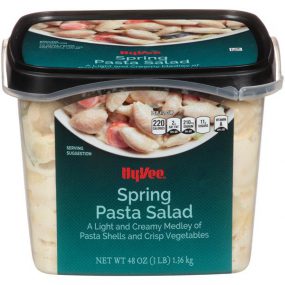
USA – Outbreak of Salmonella Infections Linked to Hy-Vee Spring Pasta Salad – Update

CDC   salad-with-label-small

  • Fifty-eight more ill people from nine states were added to this outbreak since the last update on July 18, 2018. Four more states reported ill people: Illinois, Kansas, North Dakota, and Tennessee.
  • Salmonella enterica subspecies IIIb has been added to this investigation because two people were infected with this strain of Salmonella and with the outbreak strain of Salmonella Sandiego at the same time. A search of the CDC PulseNet database found six additional people infected with the strain of Salmonella enterica subspecies IIIb and these cases have also been added to the outbreak.
  • A total of 79 people infected with the outbreak strains of Salmonella have been reported from nine states.
  • Illnesses started on dates ranging from June 21, 2018, to July 15, 2018.
  • Epidemiologic evidence(https://www.cdc.gov/foodsafety/outbreaks/investigating-outbreaks/index.html) indicates that Spring Pasta Salad purchased at Hy-Vee grocery stores is a likely source of the outbreak.
  • This investigation is ongoing, and CDC will provide updates when more information is available.


Rsearch – Food residuals on the food‐contacting surfaces of stainless steel and polypropylene influence the efficacy of ultraviolet light in killing foodborne pathogens

Wiley Online

Abstract

This study was conducted to examine effects of food residues on the survivals of pathogens on stainless steel (SSS) and polypropylene (PPP) after ultraviolet‐radiation (UVR) surface decontamination. Cultures of Escherichia coli O157:H7, Salmonella enterica serovar Typhimurium, Staphylococcus aureus, and Listeria monocytogenes were inoculated on coupons containing deionized water, tryptic soy broth, pork, chicken, cabbage, and milk, respectively. The surface coupons were incubated at 100% relative humidity (RH) and 25°C for 24 hr to produce their own biofilms. UVR (=254 nm) surface decontamination for 120 min resulted in bacterial reductions in the levels of ≥2.5 log10 cfu/coupon. Populations of S. Typhimurium and L. monocytogenes within biofilms declined on SSS harboring chicken juice after UVR for 120 min, showing by <1.5 log10‐reductions. The presence of food residues on the food‐contacting surfaces would facilitate the strong adhesion of these organisms, indicating that bacteria enclosed in biofilms were more resistant to UVR sanitization.

Practical applications

In this study, it seemed to indicate that the incidence of varying food residues such as deionized water, tryptic soy broth, pork, chicken, cabbage, and milk could affect bacterial adhesion–attachment to the food‐contacting surfaces significantly. At least, some food residues such as pork, chicken, and milk would be supposed to provide a favorable environment where major foodborne pathogens are able to grow and produce their biofilms strongly. Especially, it was determined that the gram‐negative bacteria such as Escherichia coli O157:H7 and Salmonella typhimurium showed the higher sensitivity on coupons against ultraviolet‐radiation surface decontamination.

Europe – Multi-country outbreak of Salmonella Agona infections possibly linked to ready-to-eat food

ECDC 


A multi-country outbreak of Salmonella enterica subspecies enterica serovar Agona (S. Agona) is under investigation in the European Union (EU), with cases retrospectively identified back to 2014. Overall, 147 outbreak cases have been reported by five EU countries: 122 cases since 1 January 2017, and 25 historical cases between 2014 and 2016. The United Kingdom is reporting most outbreak cases (129), with Finland (15), Denmark, Germany and Ireland (one case each) reporting the other cases. The Irish case was probably infected while visiting the United Kingdom.

The outbreak was first detected in the United Kingdom using whole genome sequencing (WGS). All S. Agona isolates from the five countries are genetically close with a maximum difference of 2 alleles from any other single isolate by core genome multilocus sequence typing scheme (cgMLST) using the ECDC Enterobase pipeline. The cases peaked in April 2017 and 2018. The close genomic relationship and the distinct seasonal spring peaks suggest that cases are part of an intermittent common source outbreak.

Seventeen S. Agona food isolates from 2018, detected in the United Kingdom, were found to be closely genetically related to the human strains. The food isolates were from cucumbers sampled during processing before and after washing (11 isolates) and ready to eat (RTE) food products containing cucumbers (six isolates). The contaminated food isolates were sampled in the United Kingdom at four plants owned by Company A and a Company C plant.

At present, there is insufficient epidemiological information available on the consumption of contaminated products by humans to support the microbiological evidence provided by the isolation of the outbreak strain in food. The epidemiological investigations in the other affected countries did not generate any strong hypothesis about the vehicle or source of infection.

Although the cucumbers used in all final contaminated products originated from Spain for a limited period (from November 2017 to April 2018), no connection between supply chains was identified: primary producers of cucumbers were different (producers A and B), and cucumbers were delivered to different processing companies through different distributors in the United Kingdom. The laboratory results for Salmonella in all cucumber samples, taken either at primary production level in Spain or during distribution to/within UK, were negative.

Based on the information available, the microbiological evidence suggests RTE products containing cucumbers as a possible vehicle of infection but so far it has not been possible to identify the specific point in the production chain where the contamination occurred.

Further investigations along the food chain are needed to identify the source of contamination. These should include collection of information about various production and processing stages for the RTE products implicated in this event, as well as thorough sampling and testing.

ECDC Link


USA -Loblaw recalls chicken nuggets due to Salmonella risk

Poultry Med

Loblaw Companies Limited is recalling certain No Name brand Chicken Nuggets from the marketplace due to possible Salmonella contamination. This recall was triggered by findings by the Canadian Food Inspection Agency (CFIA) during its investigation into a foodborne illness outbreak. The CFIA is conducting a food safety investigation, which may lead to the recall of other products.There has been one reported illness associated with the consumption of this product. In addition, there has been one reported illness that may be associated with the consumption of this product.
According to an outbreak notice posted July 21 by the Public Health Agency of Canada. The implicated products are No Name brand “Chicken Nuggets” and unbranded “$10 Chicken Fries.”

USA -Salmonella Tainted Whey Prompts More Food Recalls

Food Poisoning Journal kswfoodworld salmonella

The U.S. Department of Agriculture’s Food Safety and Inspection Service (FSIS) is issuing a public health alert due to concerns that products may be contaminated with Salmonella from whey powder that has been recalled by the producer of the ingredient. FSIS is issuing this public health alert out of the utmost of caution to ensure that consumers are aware that these products, which bear the USDA mark of inspection, should not be consumed.

The whey powder is an FDA-regulated product that is being voluntarily recalled by the producer, Associated Milk Producers, Inc. (AMPI). Additional FSIS-regulated products containing the recalled whey powder may be added to this public health alert as more information becomes available.

The product currently subject to the public health alert is produced by Pinnacle Foods, Inc., a Fayetteville, Ark. establishment and is listed below:

  • 15.25-oz. individual frozen microwavable dinners with “HUNGRY MAN CHIPOTLE BBQ SAUCED BONELESS CHICKEN WYNGZ” printed on the label and bearing a best buy date of 9/6/19.

The product bears establishment number “EST. P138” or “P-138” on the side of the carton. These products were shipped to retail locations in Massachusetts, Pennsylvania, and Virginia.

The problem was discovered on July 17, 2018, when Pinnacle Foods, Inc. was notified by their supplier that the recalled whey powder ingredient was used in the ranch dressing seasoning supplied to the firm. The ranch dressing seasoning was incorporated into mashed potatoes and packaged as a component with a boneless chicken dinner.

Research -Biocontrol of Salmonella Typhimurium in Raw Salmon Fillets and Scallop Adductors by Using Bacteriophage SLMP1

Journal of Food Protection 

Salmonella

Image CDC Enter a caption

The aim of this study was to evaluate the effectiveness of bacteriophage (phage) SLMP1 to reduce Salmonella Typhimurium on contaminated raw salmon fillets and scallop adductors as a function of Salmonella inoculum level, phage dose, storage temperature, and storage time. Samples were inoculated with 102 and 104 CFU/g Salmonella and then treated with different concentrations of phage SLMP1, followed by incubation at 4, 15, and 25°C, respectively. The results showed that 108 PFU/g was the optimal concentration of phage for the control of Salmonella, which was applied in the following storage experiments over a 7-day period at 4°C, a 4-day period at 15°C, and a 2-day period at 25°C. For the salmon fillets samples, 102 CFU/g Salmonella could be reduced below the detection limit at all three temperatures, whereas 104 CFU/g Salmonella was first decreased and then increased at 15 and 25°C. For the scallop adductors samples, 102 CFU/g Salmonella could be reduced below the detection limit first and then increased after a certain period at 15 and 25°C. The variation trends of 104 CFU/g Salmonella in scallop adductors were similar to those in salmon fillets. The results also showed that the Salmonella counts of both inoculum levels on samples could be reduced below the detection limit or maintained at a low level by phage SLMP1 during storage at 4°C. Phage SLMP1 remained stable on raw salmon fillets and scallop adductors. This study indicated that phage SLMP1 has potential effectiveness as a biocontrol agent of Salmonella in seafood.

RASFF Alerts – Salmonella – Raw Sheeps Milk Cheese – Whitish Sesame Seeds – Sesame Seeds -Chicken Fillets – Catfish -Turkey Drumsticks – Mechanically Separated Chicken Meat

kswfoodworld food safety poisoning

RASFF-Salmonella (present /25g) in raw sheep’s milk cheeses from France in France

RASFF-Salmonella enterica ser. Dessau (presence in 1 out of 5 samples /25g) in whitish sesame seeds from Sudan in Greece

RASFF-Salmonella enterica ser. Kentucky (presence in 1 out of 5 samples /25g) in hulled sesame seeds from India in Germany

RASFF -Salmonella enterica ser. Orion (presence /25g) in sesame seeds from India in Germany

RASFF-Salmonella enterica ser. Enteritidis (presence /25g) in frozen chicken fillets from Poland, via Germany in France

RASFF-Salmonella (presence /25g) in frozen catfish (Clarias spp) from Vietnam in the Netherlands

RASFF-Salmonella enterica ser. Infantis (presence /25g) in frozen turkey drumsticks from Germany in France

RASFF-Salmonella (presence /10g) in chilled mechanically separated chicken meat from Belgium in Belgium