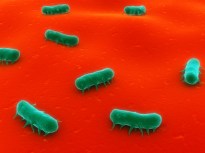
Category Archives: Salmonella

UK – Duck egg warning after Doncaster man dies of Salmonella

BBC News

The family of a man who died of salmonella has warned about eating duck eggs.

Niptoon Tavakoli’s family said he fell ill after consuming duck eggs bought at a village fair.

There has been a second case of salmonella involving someone who also said they ate duck eggs from the same farm – although this has not been confirmed as the source of infection.

The supplier of the eggs believes the salmonella came from elsewhere.

Mr Tavakoli’s sister-in-law Donna Martin said: “We just want to try and make people aware, if you buy duck eggs, please cook them thoroughly.

“We would never want another family to go through what we have.”

She “strongly believes” Mr Tavakoli, of Lindholme, Doncaster, contracted salmonella from duck eggs he bought at the Messingham Show in North Lincolnshire on Sunday 2 June.

USA – Mountain Mel’s Essential Goods, LLC Recalls The Milk Lady’s Herbal Tea Blend, Peaceful Baby Herbal Tea Blend, and Diges-teas Herbal Tea Blend, Because of Possible Health Risk – Salmonella

FDA

Mountain Mel’s Essential Goods, LLC of Welches, OR is recalling The Milk Lady’s Tea with LOT # ML6271950, Peaceful Baby Herbal Tea with LOT # PB781950, and Diges-Teas Herbal Tea with LOT # DT7619100, because it has the potential to be contaminated with Salmonella, an organism which can cause serious and sometimes fatal infections in young children, frail or elderly people, and others with weakened immune systems. Healthy persons infected with Salmonella often experience fever, diarrhea (which may be bloody), nausea, vomiting and abdominal pain. In rare circumstances, infection with Salmonellacan result in the organism getting into the bloodstream and producing more severe illnesses such as arterial infections (i.e., infected aneurysms), endocarditis and arthritis.

The Milk Lady’s, Peaceful Baby, and Diges-Teas were distributed in Oregon and Washington through New Seasons Market, and nationwide through Azure Standard, Mountainmels.com and Amazon.com. The affected tea products were distributed by Mountain Mel’s Essential Goods June 27, 2019 and July 20, 2019.

The Milk Lady’s Herbal Tea Blend, UPC 7 99632 05658 4, is packaged in a tall thin tin container with 2 oz of tea per tin, with a purple label. The LOT# of the recalled batch is # ML6271950. The LOT# can be located on the bottom of the tin package. The Best By Date of the Milk Lady’s Tea is listed as 7/2021.

Peaceful Baby Herbal Tea Blend, UPC 7 99632 05656 0, is packaged in a tall thin tin container with 2 oz of tea per tin, with a blue label. The LOT# of the recalled batch is #PB781950. The LOT# can be located on the bottom of the tin package. The Best By Date of the Peaceful Baby Tea is listed as 7/2021.

Diges-Teas Herbal Tea Blend, UPC 7 99632 05665 2, is packaged in a tall thin tin container with 2 oz of tea per tin, with a brown label. The LOT# of the recalled batch is #DT7619100. The LOT# can be located on the bottom of the tin package. The Best By Date of the Diges-Teas Herbal Tea is listed as 7/2021.

No illnesses have been reported to date.

This recall was initiated because the herbal teas were made with the recalled fennel seed whole that was supplied and recalled by Mountain Rose Herbs in Oregon. Mountain Mel’s Essential Goods has ceased production and distribution of this product as of July 20, 2019.

This recall is being made with the knowledge of the U.S. Food and Drug Administration.

Consumers who have purchased Mountain Mel’s The Milk Lady’s Tea with LOT # ML6271950, Peaceful Baby Herbal Tea with LOT # PB781950, and/or Diges-Teas Herbal Tea with LOT # DT7619100 are urged to take a photo of the product and lot label, email that to info@mountainmels.com for a full refund.

Consumers with further questions may contact Mountain Mel’s via email at info@mountainmels.com.

Research – Changes detected in the genome sequences of Escherichia coli, Listeria monocytogenes, Vibrio parahaemolyticus, and Salmonella enterica after serial subculturing

Canadian Science Publishing

Whole genome sequencing (WGS) is rapidly replacing other molecular techniques for identifying and subtyping bacterial isolates. The resolution or discrimination offered by WGS is significantly higher than that offered by other molecular techniques, and WGS readily allows infrequent differences that occur between 2 closely related strains to be found. In this investigation, WGS was used to identify the changes that occurred in the genomes of 13 strains of bacterial foodborne pathogens after 100 serial subcultures. Pure cultures of Shiga-toxin-producing Escherichia coliSalmonella entericaListeria monocytogenes, and Vibrio parahaemolyticus were subcultured daily for 100 successive days. The 1st and 100th subcultures were whole-genome sequenced using short-read sequencing. Single nucleotide polymorphisms (SNPs) were identified between the 1st and final culture using 2 different approaches, and multilocus sequence typing of the whole genome was also performed to detect any changes at the allelic level. The number of observed genomic changes varied by strain, species, and the SNP caller used. This study provides insight into the genomic variation that can be detected using next-generation sequencing and analysis methods after repeated subculturing of 4 important bacterial pathogens.

USA – Human Salmonella Illnesses linked to Pig Ears hits 143 in 25 States

Food Poison Journal kswfoodworld salmonella

As of August 26, 2019, a total of 143 people infected with the outbreak strains of Salmonella have been reported from 35 states. A list of the states and the number of cases in each can be found on the Map of Reported Cases page.

Illnesses started on dates ranging from June 10, 2015 to July 30, 2019. Ill people range in age from less than 1 year to 90 years, with a median age of 39 years. Sixty (46%) ill people are female. Of 110 ill people with information available, 33 (30%) have been hospitalized. No deaths have been reported.

RASFF Alert – Foodborne Outbreak suspected (Salmonella)

RASFF-Logo

RASFF –   to be caused by and Salmonella (present /25g) in eggs from Spain in the Netherlands

RASFF Alerts – Salmonella – Sesame Seeds – Chilled Chicken Fillets – Broccoli – Chilled Pork Collar – Frozen Ducks with Offal – Chicken Breast – Chicken Meat

RASFF-Logo

RASFF – Salmonella (presence /25g) in sesame seeds from Uganda in the Netherlands

RASFF – Salmonella (presence /25g) in sesame seeds from Nigeria in Poland

RASFF – Salmonella (present /25g) in chilled chicken fillet preparation from Belgium, with raw material from the Netherlands in Belgium

RASFF – Salmonella (presence /25g) in broccoli from the Netherlands in the Netherlands

RASFF – Salmonella enterica ser. Typhimurium (presence /25g) in chilled pork collar from Poland in Estonia

RASFF – Salmonella enterica ser. Typhimurium (presence /25g) in frozen ducks with offal from Hungary in Italy

RASFF – Salmonella enterica ser. Enteritidis (presence /25g) in chilled chicken breast fillets from Poland in Crotia

RASFF – Salmonella enterica ser. Enteritidis (presence /25g) in chilled chicken meat from Poland in Poland

RASFF Alerts – Animal Feed – Salmonella – Foal Feed – Chewing Sticks – Fish Meal – Rapeseed Meal

RASFF-Logo

RASFF – Salmonella (present /25g) in feed for foals from Germany in Germany

RASFF – Salmonella enterica ser. Brandenburg (in 2 out of 5 samples /25g), Salmonella enterica ser. London (in 1 out of 5 samples /25g), Salmonella enterica ser. Rissen (in 1 out of 5 samples /25g) and Salmonella enterica ser. Typhimurium monophasic (1 ,4, [5], 12:i:-) (in 1 out of 5 samples /25g) in chewing sticks from Germany in Austria

RASFF  – Salmonella enterica ser. Amsterdam (presence /25g) in fish meal from Mauritania in Greece

RASFF – Salmonella group E4 (presence /25g) in post-extraction rapeseed meal from Ukraine in Poland

USA – Brutus & Barnaby LLC recalls all size bags of “Pig Ears Natural Treats for Dogs” because of a possible Salmonella health risk

FDA

Company Announcement

Brutus & Barnaby of Clearwater, Florida is recalling all size variations of our Pig Ears for Dogs because it has the potential to be contaminated with SalmonellaSalmonella can affect animals eating the products and there is risk to humans from handling contaminated pet products, especially if they have not thoroughly washed their hands after having contact with the products or any surfaces exposed to these products.

Healthy people infected with Salmonella should monitor themselves for some or all of the following symptoms: nausea, vomiting, diarrhea or bloody diarrhea, abdominal cramping and fever. Rarely, Salmonella can result in more serious ailments, including arterial infections, endocarditis, arthritis, muscle pain, eye irritation, and urinary tract symptoms. Consumers exhibiting these signs after having contact with this product should contact their healthcare providers.

Pets with Salmonella infections may be lethargic and have diarrhea or bloody diarrhea, fever, and vomiting. Some pets will have only decreased appetite, fever and abdominal pain. Infected but otherwise healthy pets can be carriers and infect other animals or humans. If your pet has consumed the recalled product and has these symptoms, please contact your veterinarian.

Bags of our Pig Ears were distributed throughout all states via Amazon.com, Chewy.com, Brutusandbarnaby.com and the brick and mortar Natures Food Patch in Clearwater, Florida.

The product is identified by our trademarked logo  and says “Pig Ears 100% Natural Treats for Dogs”.  These were available in 4 different sizes:

  • 8 Count
  • 12 Count
  • 25 Count
  • 100 Count

Brutus & Barnaby has ceased the production and distribution of the product as FDA and the company continue their investigation as to what caused the problem.

Consumers who have purchased Brutus & Barnaby pig ears are urged to destroy any remaining product not yet consumed and to contact the place of purchase for a full refund. Consumers with questions may contact the company at 1-800-489-0970   Monday-Friday 9am-5 PM EST.

Research – Ozone-based treatments for inactivation of Salmonella enterica in tree nuts: Inoculation protocol and surrogate suitability considerations

Science Direct

Abstract

The feasibility of using gaseous ozone, alone or in combination with other treatments, to decontaminate in-shell almonds and pistachios, prepared under different pathogen-inoculation conditions, was explored. Nuts were inoculated with either Salmonella enterica serovar Enteritidis or a potential Salmonella surrogate, Enterococcus faecium OSY 31284. The effect of inoculation method (with or without vacuum application), and of drying inoculated nuts (up to three days) on treatment efficacy was investigated. Inoculated nuts were subjected to gaseous ozone alone (almonds, pistachios) or ozone in combination with heating in brine solution (pistachios). Ozone treatment included application of vacuum (10 in Hg), followed by vessel pressurization to 12.5 psig with ozone‑oxygen mixture (160 g ozone/m3 gas mixture) and holding for 30 min. Heating was conducted in a brine solution (5% NaCl) at 70 °C, for 10 min. Ozone-based treatments were significantly more effective (P < 0.05) on almonds than pistachios, with maximum S. Enteritidis reduction of 2.9 vs. 0.8 log CFU/g, regardless of inoculation method or the drying time. Treatment of inoculated pistachios with heated brine and gaseous ozone reduced S. Enteritidis population by 5.0 to 7.0 log CFU/g and was not significantly more effective than treatment with heated brine alone (reduction of 4.8 to 7.1 log CFU/g). Application of vacuum during inoculation increased bacterial population on nut kernels by approximately 1.2 log CFU/g, but the increase in inoculum population had no effect on inactivation of either species of inoculated bacteria. Decontamination treatments were less effective against both bacteria by up to 2 log CFU/g when drying time of inoculated nuts increased. Efaecium was significantly more resistant to heat and ozone treatment (P < 0.05) than was S. Enteritidis on pistachios, but not on almonds. Results of this study show that laboratory methodology affects observed treatment effectiveness. Considering its high resistance to the heat-ozone combination, Efaecium may not be a suitable surrogate for S. Enteritidis during processing of pistachios by this treatment. Efficacy of ozone gas to decontaminate S. Enteritidisinoculated nuts depends heavily on the type of nut. Although reductions of S. Enteritidis populations on in-shell pistachios are low, treatment of in-shell almonds resulted in greater reductions, indicating the promise of this technology to enhance the safety of specific nut products.

USA – Papaya importer fires back at FDA; says it isn’t linked to outbreaks – FDA Statement Letter

Food Safety News kswfoodworld

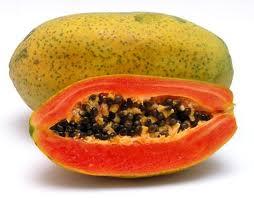
A firm that the government says has been importing contaminated papayas since at least 2011 is vehemently denying statements made in an FDA warning, despite evidence that Cavi brand papayas have been linked to several Salmonella outbreaks, including a current one.

The warning letter, sent yesterday by the Food and Drug Administration and posted for the public today, cites numerous times from 2011 through this year when papayas imported by Agroson’s LLC in the Bronx, NY, were linked to outbreaks that sickened hundreds of people.

FDA

Statement calling on all sectors of the papaya industry to improve practices to better protect consumers.

Every day Americans enjoy an abundant food supply that is among the safest in the world. The U.S. Food and Drug Administration works tirelessly to ensure that foods available to consumers, whether they are produced domestically or abroad, meet the FDA’s food safety requirements and that we are using all available tools to ensure compliance.

As demand and tastes continue to drive change in the market, consumers’ desire for a variety of products available year-round have increased the number of imported foods offered for sale in the U.S. To keep up with this trend, we have doubled down on our efforts to ensure the safety of imported food. This includes issuing a new Strategy for the Safety of Imported Food and requesting new funding from Congress to support our efforts.

While we continue to focus on shifting our work upholding food safety from response to prevention, we know that there are times where we will still need to respond to problems when they arise, including outbreaks of foodborne illness. This is especially important when we see recurrent patterns of illness associated with particular commodities. For example, fresh papayas. This commodity is most often eaten raw, without cooking or processing to eliminate microbial hazards; and therefore, the way they are grown, harvested, packed, held, processed and distributed is crucial to minimizing the risk of contamination with human pathogens.

Unfortunately, since 2011, American consumers have been exposed to eight outbreaks caused by Salmonella serotypes linked to imported, fresh papaya. And, just this June we started an investigation into an outbreak of Salmonella Uganda illnesses tied to the consumption of whole, fresh papaya imported from Mexico. While the 2019 outbreak is ongoing, the first seven outbreaks accounted for almost 500 reported cases of illness, more than 100 hospitalizations, and two deaths.

This trend has to stop. The pattern of recurrent outbreaks we have observed since 2011, including the 2019 illnesses, have involved Salmonella infections traced back to, or are suspected of being associated with, papaya grown in Mexico. The recurring nature of these outbreaks is a clear indication that more must be done within all sectors of the papaya industry to protect its customers and to meet its legal obligations. This includes growers, importers and even retailers that can and must do more.

This is why today we have issued a letter calling on all sectors of the papaya industry to take actions to prevent these outbreaks in the future. We are urging growers, packers, shippers and retailers in the papaya industry to review their operations and make all necessary changes to strengthen public health safeguards.

Our letter calls on the papaya industry to assess the factors that make their crops vulnerable to contamination. If a foodborne pathogen is identified in the crop or growing environment, a root cause analysis should be performed to determine the likely source of contamination. Procedures and practices that minimize that contamination must be implemented.

We are strongly encouraging the papaya industry to examine the use and monitoring of water used to grow, spray (pesticides, fungicides), move, rinse or wax crops to identify and minimize risks from potential hazards. All sectors of the industry should adopt tools and practices needed to enhance traceability since papayas are a perishable commodity, to more rapidly facilitate the tracking of involved product to expedite its removal from commerce, prevent additional consumer exposures, and properly focus any recall actions.

And finally, they should fund and actively engage in food safety research to identify the potential sources and routes of contamination by microbial pathogens and develop data-driven and risk-based preventive controls.

In response to this most recent Salmonella Uganda outbreak, the FDA deployed an inspection team to the packing house and farm that was linked to the contaminated papayas via traceback and epidemiological evidence. The findings of those visits will be made public when their investigation is complete. We have also increased sampling and screening of papayas at the border. In addition, the FDA is actively collaborating with our counterparts in the Mexican government regarding this current outbreak through the agency’s Latin America Office to determine ways to further our collaborative prevention efforts.

The U.S. Federal Food, Drug, and Cosmetic Act prohibits food producers from introducing, or delivering for introduction, into interstate commerce adulterated foods (meaning foods that are potentially harmful to consumers). Additionally, there are new requirements under the FDA Food Safety Modernization Act (FSMA). The Produce Safety Rule under FSMA sets science- and risk-based minimum standards for domestic and foreign farms for the safe growing, harvesting, packing and holding of covered produce, which includes papayas. Another FSMA rule, the Foreign Supplier Verification Program(FSVP) makes importers responsible for verifying that the foods they bring into the U.S., including papayas, have been produced in a manner that meets applicable U.S. safety standards.

We take our responsibility to protect public health very seriously and will continue to use all of our regulatory authorities and enforcement tools available to do so. So, today we issued a warning letter to a papaya importer, Agroson’s LLC, following an FDA investigation at the facility in conjunction with the current outbreak. This investigation uncovered significant violations of the Federal Food, Drug, and Cosmetic Act. Rest assured that the FDA will continue to strengthen safeguards and prevent contaminated papayas from being imported into the U.S. Our efforts also include education, outreach, training and research activities designed to support farmers’ efforts to keep their crops safe for consumers.

Although today’s actions focus on the papaya industry, recurring outbreaks taking place with any commodity are unacceptable from a public health perspective. We know that more must be done by industry as repeated illness outbreaks are a threat to public health. In such situations, it is incumbent upon all sectors of the industry to work together to investigate the cause, review food safety procedures and practices, and take action to prevent further outbreaks.

We must take collective steps to eliminate the threat that recurring outbreaks pose to consumers and look forward to working with the papaya industry as well as all food producers to ensure that America’s food supply remains among the safest in the world.

The FDA, an agency within the U.S. Department of Health and Human Services, protects the public health by assuring the safety, effectiveness, and security of human and veterinary drugs, vaccines and other biological products for human use, and medical devices. The agency also is responsible for the safety and security of our nation’s food supply, cosmetics, dietary supplements, products that give off electronic radiation, and for regulating tobacco products.