Category Archives: Salmonella

Ukraine – Ukraine reports 50 gastrointestinal infection outbreaks in first seven months

Outbreak News Today

Ukraine health officials report since the beginning of this year and as of August 1, 604 people, including 447 children, have been affected by outbreaks of intestinal infections. A total of 50 outbreaks were registered.

In July 2021 alone, 137 people fell ill, including 98 children. A total of 12 outbreaks of infectious diseases were recorded :

  • 6 outbreaks of acute intestinal infections of unknown etiology, during which 71 people were sickened, including 54 children;
  • 3 outbreaks of salmonellosis , 34 people were sickened, including 15 children;
  • 2 outbreaks of rotavirus enteritis , 29 people were sickened, including 28 children;
  • one outbreak of viral hepatitis A , 3 people were sickened, including 1 child;
  • Epidemiological investigation and anti-epidemic measures are underway for 4 more outbreaks.

The largest number of outbreaks in July occurred in children’s health facilities and institutions with organized recreation for groups of children (33.3%) and in everyday life (25.0%). The remaining outbreaks occurred in children’s preschools (16.7%), catering establishments (16.7%) and in health care establishments (8.3%).

USA – BAR-B-Q Potato Chips recalled over Salmonella concerns

Food Poison Journal

Ballreich Snack Food Co. Tiffin, Ohio, is recalling its 1.5oz, 2.75oz, and 7oz packages of BAR-B-Q Potato Chips due to a potential contamination with Salmonella.

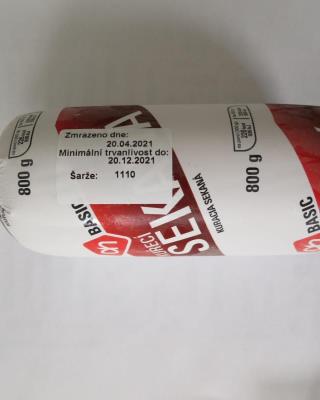
Czech Republic – Deep – frozen chicken meatloaf – Salmonella

Potravinynapranyri

Illustration photo no. 1

Place of inspection:
Modrice ( U dálnice 744, 664 42 Modřice )
Company ID: 44012373
Food group: Meat and meat products Uncooked perishable meat products for heat treatment

Deep – frozen chicken meatloaf
Category: Dangerous food
Unsatisfactory parameter:

Salmonella

The product has been found to contain the pathogenic bacterium  Salmonella Enteritidis , which can cause salmonellosis.

Lots: 1110
Date of minimum durability: 12/20/2021
Packaging: PE foil with print
Quantity of product in package: 800 g
Producer: Poultry plant Klatovy as, 5. května 112, 339 01 Klatovy
Date of sampling: 14. 6. 2021
Reference number: 21-000214-CAFIA-CZ
The sample was found by an official inspection of the State Agricultural and Food Inspection Authority.

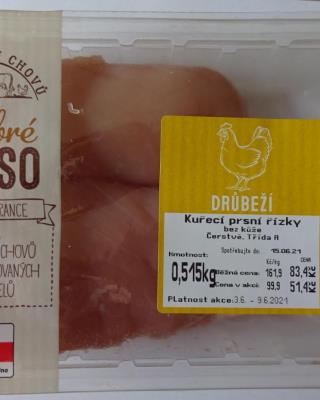
Czech Republic – From Czech farms Good meat Poultry Chicken breast fillets without skin – Salmonella

Potravinynapranyri

Illustration photo no. 1

Place of inspection:
Pilsen ( Lidická 1095/24, 323 00 Pilsen )
Company ID: 64945880
Food group: Meat and meat products Packaged meat

From Czech farms Good meat Poultry Chicken breast fillets without skin
Category: Dangerous food
Unsatisfactory parameter:

Salmonella enteritidis

The product has been found to contain the pathogenic bacterium Salmonella enteritidis , which causes salmonellosis.

Lots: L: 1154
Expiration date: 15.06.21
Packaging: PE tray, PAP label
Quantity of product in package: 0.515 kg
Producer: Poultry plant Klatovy as, 339 01 Klatovy, 5 May 112
Country of origin:  Czechia
Date of sampling: 8. 6. 2021
Reference number: 21-000208-CAFIA-CZ
The sample was found by an official inspection of the State Agricultural and Food Inspection Authority.

USA – Serenade Foods Recalls Frozen Raw Breaded Stuffed Chicken Products due to Possible Salmonella Enteritidis Contamination

FSIS USDA

WASHINGTON, Aug. 9, 2021 – Serenade Foods, a Milford, Ind. establishment, is recalling approximately 59,251 pounds of frozen, raw, breaded and pre-browned stuffed chicken products that may be contaminated with Salmonella Enteritidis, the U.S. Department of Agriculture’s Food Safety and Inspection Service (FSIS) announced today. FSIS issued a public health alert on June 2, 2021 related to these products.

The frozen, raw, breaded and pre-browned, stuffed chicken items were produced on February 24, 2021 and February 25, 2021. The following products are subject to recall: [View Labels]

  • 5-oz individually plastic-wrapped packages of “Dutch Farms Chicken with Broccoli & Cheese” with lot code BR 1055 and BEST IF USED BY FEB 24 2023.
  • 5-oz individually plastic-wrapped packages of “MILFORD VALLEY CHICKEN WTH BROCCOLI & CHEESE” with lot code BR 1055 and BEST IF USED BY FEB 24 2023.
  • 10-oz box of two individually plastic-wrapped packages of “MILFORD VALLEY CHICKEN CORDON BLEU” with lot code CB 1055 and BEST IF USED BY FEB 24 2023.
  • 5-oz individually plastic-wrapped packages of “KIRKWOOD Raw Stuffed CHICKEN, BROCCOLI & CHEESE” with lot code BR 1055 and BEST IF USED BY FEB 24 2023.
  • 5-oz individually plastic-wrapped packages of “KIRKWOOD Raw Stuffed CHICKEN CORDON BLEU” with lot code CB 1056 and BEST IF USED BY FEB 25 2023.

The products subject to recall bear establishment number “P- 2375” inside the USDA mark of inspection. These items were shipped to distributors nationwide.

FSIS has been working with the Centers for Disease Control and Prevention (CDC) and public health partners to investigate a multistate outbreak of 28 Salmonella Enteritidis illnesses in 8 states, with onset dates ranging from February 21 through June 28, 2021. Unopened intact packages of raw, frozen, breaded chicken stuffed with broccoli and cheese were collected from an ill person’s home and tested positive for the outbreak strain of Salmonella Enteritidis. FSIS continues to work with the CDC and state and local public health partners on this investigation.

Consumption of food contaminated with Salmonella can cause salmonellosis, one of the most common bacterial foodborne illnesses. The most common symptoms of salmonellosis are diarrhea, abdominal cramps, and fever within 12 to 72 hours after eating the contaminated product. The illness usually lasts 4 to 7 days. Most people recover without treatment. In some persons, however, the diarrhea may be so severe that the patient needs to be hospitalized. Older adults, infants, and persons with weakened immune systems are more likely to develop a severe illness. Individuals concerned about an illness should contact their health care provider.

The products of concern may appear to be ready-to-eat but are in fact raw and need to be fully cooked according to the manufacturer cooking instructions on the package before consumption. The labels for these products identify cooking instructions for preparation in an oven. The products should not be prepared in the microwave or air fryer. FSIS advises all consumers that particular attention needs to be taken to safely prepare and cook these frozen, raw poultry products to a temperature of 165 F. The only way to confirm raw poultry products are cooked to a temperature high enough to kill harmful bacteria is to use a food thermometer that measures internal temperature, as indicated in this chart. Additionally, FSIS advises all consumers to keep raw poultry away from other food that will not be cooked. Use one cutting board for raw poultry and a separate one for fresh produce and cooked foods.

FSIS is concerned that some product may be in consumers’ freezers. Consumers who have purchased these products are urged not to consume them. These products should be thrown away or returned to the place of purchase.

FSIS routinely conducts recall effectiveness checks to verify recalling firms notify their customers of the recall and that steps are taken to make certain that the product is no longer available to consumers. When available, the retail distribution list(s) will be posted on the FSIS website at www.fsis.usda.gov/recalls.

Media and consumers with questions regarding the recall can contact the Serenade Foods Hotline at (866) 873-7589.

Consumers with food safety questions can call the toll-free USDA Meat and Poultry Hotline at (1888-674-6854) or live chat via Ask USDA from 10 a.m. to 6 p.m. (Eastern Time) Monday through Friday. Consumers can also browse food safety messages at Ask USDA or send a question via email to MPHotline@usda.gov. For consumers that need to report a problem with a meat, poultry, or egg product, the online Electronic Consumer Complaint Monitoring System can be accessed 24 hours a day at https://foodcomplaint.fsis.usda.gov/eCCF/.

Product Images

Company Information

Milford, IN

ESTABLISHMENT ID

M2375+P2375

PROCESSING CATEGORY

Raw – Intact

Company Contact Information

COMPANY MEDIA CONTACT
Serenade Foods
Serenade Foods Hotline

FSIS Contact Information

MEDIA CONTACT
Congressional and Public Affairs
Meredith Carothers
(202)720-9113

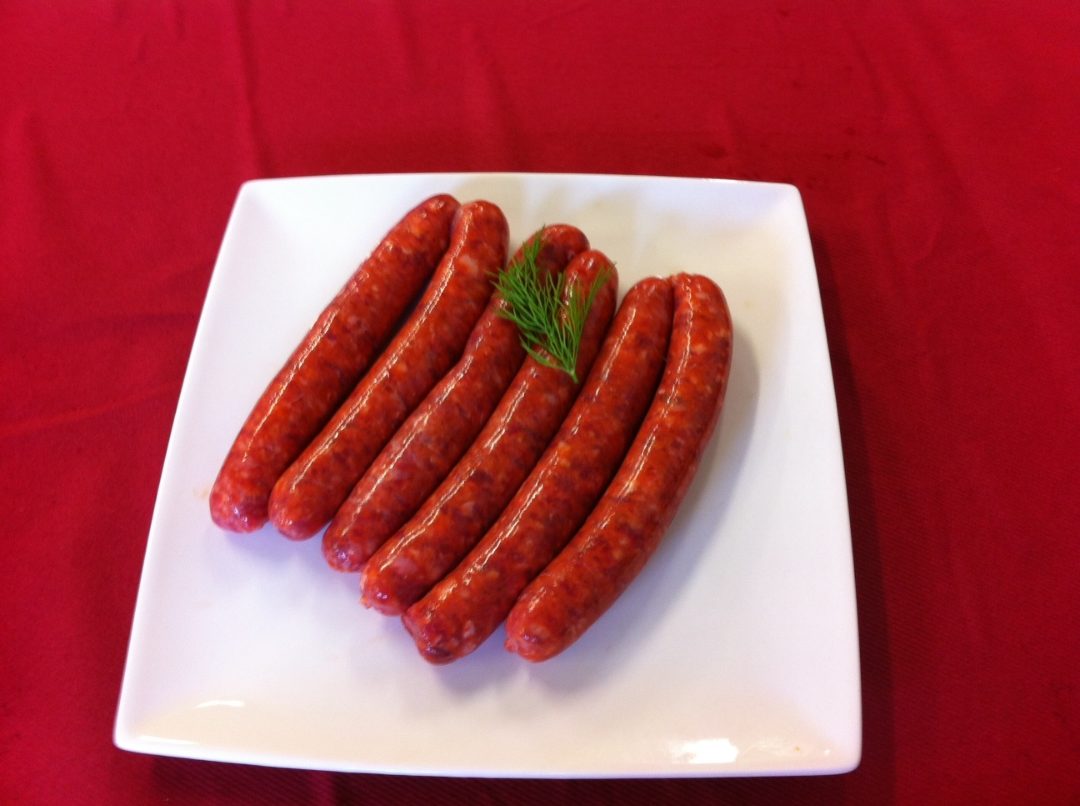
France – Real Beef-Lamb Merguez x22 – Salmonella

Gov france

Identifying information for the recalled product

  • Product category Food
  • Product sub-category Meats
  • Product brand name Father Anselme
  • Names of models or references Real Beef-Lamb Merguez x22
  • Product identification
    GTIN Lot Dated
    3476305030047 210.30 Use-by date 08/20/2021
  • Packaging Initially in a modified atmosphere tray, then sold at retail
  • Start date / End of marketing From 07/29/2021 to 08/06/2021
  • Storage temperature Product to be stored in the refrigerator
  • Further information Retail product
  • Geographical sales area Whole France
  • Distributors Wholesalers / Butcher
  • List of points of sale Withdrawal _-_ Recall_Merguez.pdf

Practical information regarding the recall

  • Reason for recall Presence of Salmonella
  • Risks incurred by the consumer Salmonella spp (causative agent of salmonellosis)
    Other risk
  • Additional description of the risk Presence of Salmonella
  • Consumer behaviour Stop consuming
    Stop using the product
    Return the product to the point of sale
    Destroy the product
  • Sanitary recommendation Food poisoning caused by salmonella results in sudden onset gastrointestinal disorders (diarrhoea, vomiting) often accompanied by fever and headaches which generally occur 6 to 72 hours after consumption of the contaminated products. These symptoms may be more pronounced in young children, pregnant women, immunocompromised individuals and the elderly. People who have consumed these products and who present these symptoms are invited to consult their doctor, notifying him of this consumption. In the absence of symptoms within 7 days after consuming the affected products, there is no need to worry and consult a doctor. If the product must be cooked before consumption:
  • Contact number0472900554
  • Compensation modalities Repayment
  • End date of the recall procedure Monday 23 August 2021

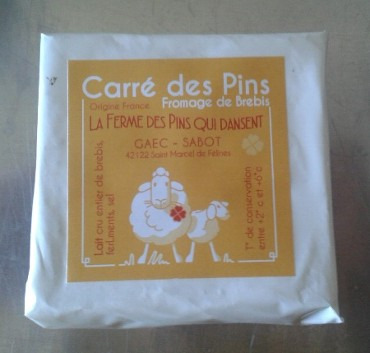
France – CARRE DES PINS – Salmonella

Gov france

Identifying information for the recalled product

  • Product category Food
  • Product sub-category Milk and dairy products
  • Product brand name CARRE DES PINS
  • Names of models or references CARRE DES PINS
  • Product identification
    Lot Dated
    LOT 7C Use-by date 07/31/2021
    LOT 7C Use-by date 08/10/2021
  • Packaging Cheese prepackaged in camembert-type paper.
  • Start date / End of marketing From 07/15/2021 to 08/02/2021
  • Storage temperature Product to be stored in the refrigerator
  • Geographical sales area Departments: LOIRE (42), RHONE (69)
  • Distributors Producers store: “Les Paysans de l’Ouest” Grocery store: L’Echoppe

Practical information regarding the recall

  • Reason for recall Presence of salmonellosis on self-checking sample.
  • Risks incurred by the consumer Salmonella spp (causative agent of salmonellosis)
  • Consumer behavior Stop consuming
    Destroy the product
  • Sanitary recommendation Food poisoning caused by salmonella results in sudden onset gastrointestinal disorders (diarrhoea, vomiting) often accompanied by fever and headaches which generally occur 6 to 72 hours after consumption of the contaminated products. These symptoms may be more pronounced in young children, pregnant women, immunocompromised individuals and the elderly. People who have consumed these products and who present these symptoms are invited to consult their doctor, notifying him of this consumption. In the absence of symptoms within 7 days after consuming the affected products, there is no need to worry and consult a doctor. If the product must be cooked before consumption:
  • Contact number0684356076
  • Compensation modalities Repayment
  • End date of the recall procedure Wednesday 25 August 2021

Research – Antimicrobial Efficacy and Spectrum of Phosphorous-Fluorine Co-Doped TiO2 Nanoparticles on the Foodborne Pathogenic Bacteria Campylobacter jejuni, Salmonella Typhimurium, Enterohaemorrhagic E. coli, Yersinia enterocolitica, Shewanella putrefaciens, Listeria monocytogenes and Staphylococcus aureus

MDPI

Contamination of meats and meat products with foodborne pathogenic bacteria raises serious safety issues in the food industry. The antibacterial activities of phosphorous-fluorine co-doped TiO2 nanoparticles (PF-TiO2) were investigated against seven foodborne pathogenic bacteria: Campylobacter jejuniSalmonella Typhimurium, Enterohaemorrhagic E. coliYersinia enterocoliticaShewanella putrefaciensListeria monocytogenes and Staphylococcus aureus. PF-TiO2 NPs were synthesized hydrothermally at 250 °C for 1, 3, 6 or 12 h, and then tested at three different concentrations (500 μg/mL, 100 μg/mL, 20 μg/mL) for the inactivation of foodborne bacteria under UVA irradiation, daylight exposure or dark conditions. The antibacterial efficacies were compared after 30 min of exposure to light. Distinct differences in the antibacterial activities of the PF-TiO2 NPs, and the susceptibilities of tested foodborne pathogenic bacterium species were found. PF-TiO2/3 h and PF-TiO2/6 h showed the highest antibacterial activity by decreasing the living bacterial cell number from ~106 by ~5 log (L. monocytogenes), ~4 log (EHEC), ~3 log (Y. enterolcolitcaS. putrefaciens) and ~2.5 log (S. aureus), along with complete eradication of C. jejuni and S. Typhimurium. Efficacy of PF-TiO2/1 h and PF-TiO2/12 h NPs was lower, typically causing a ~2–4 log decrease in colony forming units depending on the tested bacterium while the effect of PF-TiO2/0 h was comparable to P25 TiO2, a commercial TiO2 with high photocatalytic activity. Our results show that PF-co-doping of TiO2 NPs enhanced the antibacterial action against foodborne pathogenic bacteria and are potential candidates for use in the food industry as active surface components, potentially contributing to the production of meats that are safe for consumption. View Full-Text

Research – Raw Meat-Based Pet Feeding and Food Safety: Netnography Study of Pet Owner Comments and Review of Manufacturers’ Information Provision

Journal of Food Protection

Feeding raw meat to domestic pets is a popular practice. Because of the potential food safety implications associated with handling raw meat, concerns about pet owner health have increased. For this study, a netnographic content analysis approach was used to analyze posts from ‘PetForums Community’ online archives, relating to ‘raw meat-based feeding’ and ‘food safety’ ( n =308). UK manufacturer/supplier websites ( n =33) were reviewed for provision of food safety information relating to raw meat-based pet feeding. The data were analyzed using qualitative thematic approach and quantitative methods. Pet owner forum comments indicated potential malpractices and indifference towards the possible food safety hazards when preparing raw meat-based pet food. Many were risk aware but indicated confusion regarding appropriate food safety practices. Although emotional concern about the safety of the pets and children was expressed, contracting a foodborne disease was not perceived as a personal risk. Additionally, the review identified that the majority (61%) of manufacturer/supplier websites failed to provide any food safety instructions or warnings to pet owners regarding raw meat-based pet food. Information was inconsistent and varied between sources. The most comprehensive sources of information were provided by manufacturers approved by the UK Pet Food Manufacturers’ Association. This is the first netnography study to explore pet owner online reports and the provision of food safety information, related to raw pet feeding. Findings suggest pet owners may not fully appreciate the potential risks associated with raw meat-based pet feeding. Consequently, there is a need for credible and consistent strategies to inform the pet owners about potential implications associated with feeding raw meat to pets, as well as about safe food handling practices.

USA – Core Investigation Table Update

FDA