Category Archives: Salmonella

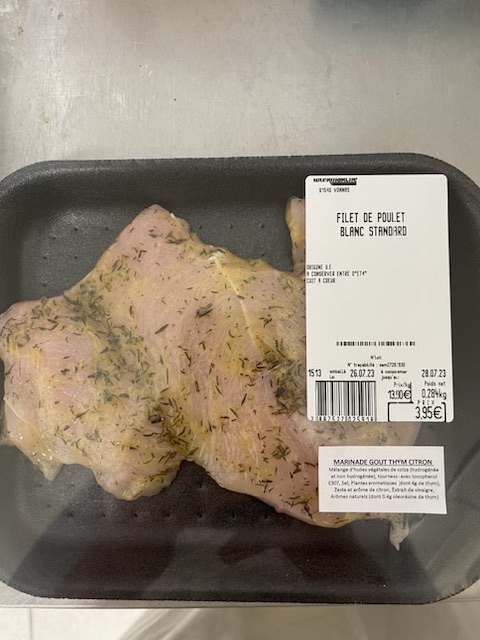
France – Lemon thyme marinated chicken fillet – Salmonella

Gov france

Identification information of the recalled product

  • Product category Feed
  • Product subcategory Meats
  • Product brand name WITHOUT
  • Model names or references Lemon thyme marinated chicken fillet
  • Identification of products
    GTIN Batch Date
    28875270259918 07/17/2023 Use-by date 07/19/2023
  • Packaging tray under film
  • Marketing start/end date From 07/17/2023 to 07/19/2023
  • Storage temperature Product to be stored in the refrigerator
  • Geographic area of ​​sale Vonnas
  • Distributors Intermarché Vonnas

Research – A smart package for monitoring food contamination

Advanced Science News

Governments perform sanitary checks at different points of the food production chain to reduce the risks of foodborne illnesses. The reference method to detect food pathogens is culture, which verifies pathogens’ presence by testing their ability to grow under optimal conditions. However, this method is laborious and slow (it can take a week for bacteria and longer for fungi) as it requires sampling at the production site, shipping samples to the laboratory, and analyzing them using specialized equipment and trained personnel.

To address these limitations, Associate Professor Tohid Didar and colleagues from McMaster University in Canada joined their efforts. They designed a smart device, which they named lab-in-a-package, that can sense dangerous levels of bacteria quickly and without even opening the package.

In this work, they designed a sensor specific for Salmonella Typhimurium (S. Typhimurium), a species of Salmonella most commonly associated with chicken and other poultry products. With lab-in-a-package, the team successfully detected S. Typhimurium in contaminated chicken on site, with high sensitivity and specificity, and in real-time.

Research – Food Safety Monitoring of Salmonella spp. in Northern Italy 2019–2021

MDPI

Abstract

Salmonella is the second most frequent bacterial pathogen involved in human gastrointestinal outbreaks in the European Union; it can enter the food-production chain from animal or environmental sources or from asymptomatic food operators. European food legislation has established microbiological criteria to ensure consumer protection. Salmonella is listed under both process hygiene criteria and food safety criteria. Each EU member state designates an agency to organize or perform controls and other official activities. This paper describes the official control plans performed by competent authorities in Northern Italy in the three-year period 2019–2021. A total of 4413 food samples were delivered to the IZS Food Safety laboratories for Salmonella detection, of which 36 (0.8%) tested positive. Salmonella was most frequently detected in poultry meat samples (25/36 positive samples) followed by other meat products and pork products. The official controls for the protection of consumer health apply the EU’s farm-to-fork approach: the samples were collected during production (food production plants), from products on the market, and from collective catering (restaurants, cafeterias, canteens). This manuscript will provide information about the presence of Salmonella in foodstuffs that can help competent authorities to set control plans based on risk assessments.

USA – Persistent Strain of Salmonella Infantis (REPJFX01) Linked to Chicken

CDC

Foodborne Pathogen

REPJFX01

REPJFX01 is a persistent, multidrug-resistant strain of Salmonella Infantis bacteria that has caused illnesses and outbreaks in the United States and globally.

Illness caused by this strain was first reported to PulseNet in 2012. As of December 31, 2022, information from 2,900 patients with REPJFX01 infection was reported to PulseNet. The median age of patients was 54 years (interquartile range, 27–70 years), and 62% were female. The isolate source was stool in 65% and urine in 27% of cases. Illnesses caused by this strain occur year-round but are most common in July and August. In the past, REPJFX01 has spread to people through contaminated chicken in the United States and through exposures during international travel.

Among a subset of 251 patients with records in Foodborne Disease Active Surveillance Network (FoodNet) during 2018–2020, 10% of patients traveled internationally in the 7 days before their illness began; most traveled to the Dominican Republic (45%), Peru (25%), or Ecuador (10%). Among the same subset of patients, 29% were hospitalized, 7% were admitted to the intensive care unit, and fewer than 1% died. Among 85 patients who received antibiotics recommended as first-line or alternative treatment for salmonellosis, 78% had an isolate that was resistant to that antibiotic.

This strain of Salmonella Infantis is relatively diverse genetically. Bacteria in the strain are within 82 allele differences of one another by core genome multilocus sequence typing (cgMLST). This is more genetically diverse than typical multistate foodborne outbreaks, in which bacteria generally fall within 10 allele differences of one another.

Germany – BDMP – Fish Goldband Selar dried, 100g – Salmonella

LMW

Alert type: Groceries
Date of first publication: 27.07.2023
Product name:

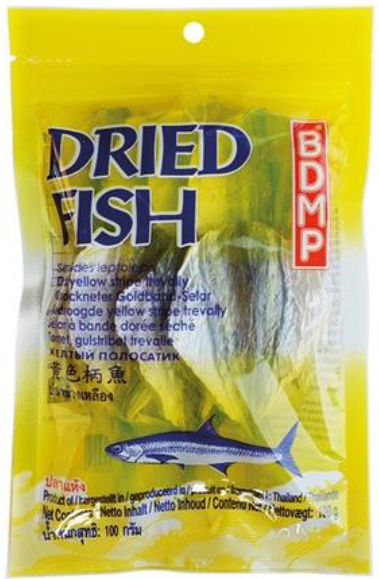
BDMP – Fish Goldband Selar dried, 100g

Product images:

Product Image.PNG

customer information

Manufacturer (distributor):

Distributor: Monolith International GmbH, Hertzstraße 3/1, D-71083 Herrenberg

Reason for warning:

The reason for the recall is salmonella, which can trigger gastrointestinal diseases (salmonellosis). We therefore strongly advise against consuming this product.

Packaging Unit: 100g
Durability: MHD: 01.09.2024
Lot identification: LOT: 65253A
Additional Information:

Further information can be found in the attached customer information.

Click to access 11936+Produktaushang+DE+-+10.07.2023.pdf

RASFF Alerts- Salmonella – Polish Chicken Products – Lamb Fillets – Black Pepper from Brazil – Sesame Seeds – Ice Cream – Baby Leaf Salad – Peking Duck Filet – Beef Carpaccio- Chicken – Chicken Legs

RASFF

Salmonella Typhimurium in chicken filet from Poland in the Netherlands and UK

RASFF

Salmonella spp. in lamb fillet from New Zealand in Germany, Netherlands and Sweden

RASFF

Salmonella Enteritidis in chicken kebab from Poland, via Slovenia in Austria, Croatia, Hungary, Italy

RASFF

Salmonella group CO in 25g in 2 out of 5 tested chicken fillet samples from Poland in Slovakia and Czech Republic

RASFF

Salmonella spp. in black pepper from Brazil in Germany

RASFF

Salmonella spp. in black pepper from Brazil in Germany

RASFF

Salmonella enteritidis in chicken meat from Poland in Luxembourg and Belgium

RASFF

Salmonella spp in sesame seeds from Nigeria in Greece

RASFF

Salmonella spp in sesame seeds from Nigeria in Greece

RASFF

Salmonella spp in chicken kebab and chicken leg meat from Poland in the Czech Republic and Austria

RASFF

Salmonella Enteritidis and Salmonella Newport in Pekin duck fillet 300g from Poland in Estonia

RASFF

Salmonella in beef carpaccio from Ireland in the Netherlands and Belgium

RASFF

Salmonella infantis in baby leaf salad from Germany in Austria

RASFF

Salmonella in ice cream from France in Luxembourg

RASFF

Salmonella C1 in frozen poultry kebab from Poland in the Czech Republic

RASFF

Detection of salmonella enteritidis in a batch of chicken from France in Italy, Netherlands, Romania and UK

RASFF

Salmonella infantis in frozen chicken legs from Netherlands in Italy

RASFF Alerts – Animal Feed – Salmonella – Soya Meal Feed – Feed (Made of Chicken Products)

RASFF

Salmonella in soybean meal from Italy in Germany and Austria

RASFF

Salmonella Infantis and Salmonella Enteritidis in frozen chicken products for feed in Poland and Latvia

EFSA – Multi-country outbreak of Salmonella Senftenberg ST14 infections possibly linked to cherry like tomatoes

EFSA

Abstract

Since August 2022 and as of 12 July 2023, 92 cases of Salmonella Senftenberg have been reported in Austria (5), Belgium (4), Czechia (4), Estonia (1), Finland (12), France (16), Germany (26), Ireland (1), the Netherlands (5), Norway (1), Sweden (11), the United Kingdom (4), and the United States (2). In total, 69.6% of the reported cases were female. One patient has died of the infection. The first case was reported in France with an isolation date of 22 August 2022 and the most recent case was reported on 24 June 2023 in Sweden. Most cases were reported between October 2022 and March 2023, with a decline in the number of countries with exposures after December. In Austria, Germany, and France, cherry-like tomatoes were identified as the food exposure most reported by interviewed cases. The outbreak strain was detected in France from a mixed salad dish, containing cherry tomatoes and green leafy vegetables, prepared on 17 August 2022 but not served. Tomatoes from the salad in France and tomatoes in Austria were suspected as the vehicle of infections by national authorities and were traced back to wholesalers in Germany, the Netherlands and Spain, and to growers in the Netherlands, Spain and Morocco. In the absence of microbiological evidence from the tomatoes, the source of the infections could not be established. The genetic similarity of the human outbreak strains suggests a likely common source(s) causing a prolonged, cross-border food-borne outbreak with cases intermittently reported in 11 EU/EEA countries, the UK, and the US for about 10 months. The contamination may have originated from farms growing tomatoes. Since December 2022, as the number of cases has declined, the risk of new infections has decreased to a low level.

Belgium – Chicken thighs 2 kg (frozen) of the Everyday brand – Salmonella

AFSCA

Product: Chicken thighs 2 kg (frozen) of the Everyday brand.
Problem: Possible presence of Salmonella.
During an internal check, the presence of Salmonella Enteritidis was found in a sample of Everyday whole chicken thighs (frozen) with the dates of minimum durability 19/9/2024, 21/9/2024 and 30/9/2024 .

In consultation with the FASFC, Colruyt has therefore decided to withdraw the products concerned from sale.

Customers who have purchased this product are invited not to consume it and to bring it back to the store, where they will be reimbursed. In the meantime, all stores have removed the affected products from the shelves.

Product description:

Everyday whole chicken thighs 2 kg (frozen)
Date of minimum durability (BDD): 19/9/2024, 21/9/2024 and 30/9/2024
Sale period: from 29/3/2023 to 25/7/2023 included
Article number: 13650

Luxembourg – EVERYDAY BRAND CHICKEN THIGHS – Salmonella

SAP

Name Chicken thighs (frozen)
Brand Everyday
Unit 2kg
Bundles – DLCs 3,078,040 – 09/19/2024

3,080,041 – 09/19/2024, 09/21/2024, 09/30/2024

Sale period 03/29/2023 – 07/25/2023

Danger  : Possible presence of Salmonella

Salmonella can cause symptoms such as nausea, vomiting, abdominal cramps, diarrhea, fever and headache within 6 to 72 hours after consumption. These symptoms may be aggravated in young children, immunocompromised subjects and the elderly. People who have consumed these products and have these symptoms are invited to consult a doctor and report this consumption to him.

The product can be distributed by various points of sale in Luxembourg.

Information Source: Recall Notification