Category Archives: Salmonella in Chicken

RASFF Alerts – Salmonella – Polish Chicken Products – Sesame Seeds – Brazilian Chicken Products – Dried Dill – Parsley – Frozen Scallops – Frozen Pork and Chicken Dumplings – Chicken Mince – Sesame Paste

RASFF

Salmonella Enteritidis in chicken elements from Poland in the Czech Republic

RASFF

Salmonella in Indian Sesame Seeds in the Netherlands

RASFF

Salmonella spp. and benzoapiren in dried dill from Egypt in Poland

RASFF

Salmonella in sesame seeds from Nigeria in Greece

RASFF

Salmonella in parsley from Egypt in Spain

RASFF

Salmonella spp. in frozen scallops from Canada in Belgium, France, Italy, Luxembourg, Monaco, Netherlands, Portugal

RASFF

Poultry elements – Salmonella Typhimurium from Poland in Poland

RASFF

Salmonella in chicken meat preparation from Brazil in the Netherlands

RASFF

Salmonella in frozen salted chicken half breasts from Brazil in the Netherlands

RASFF

Salmonella in frozen chicken and pork dumplings from Belgium in Germany

RASFF

Salmonella spp. in halva from Egypt in Germany

RASFF

Salmonella Typhimurium in Batches of Chicken Mince from Ireland in Northern Ireland

RASFF

Salmonella spp. in sesame paste from Turkey in Germany
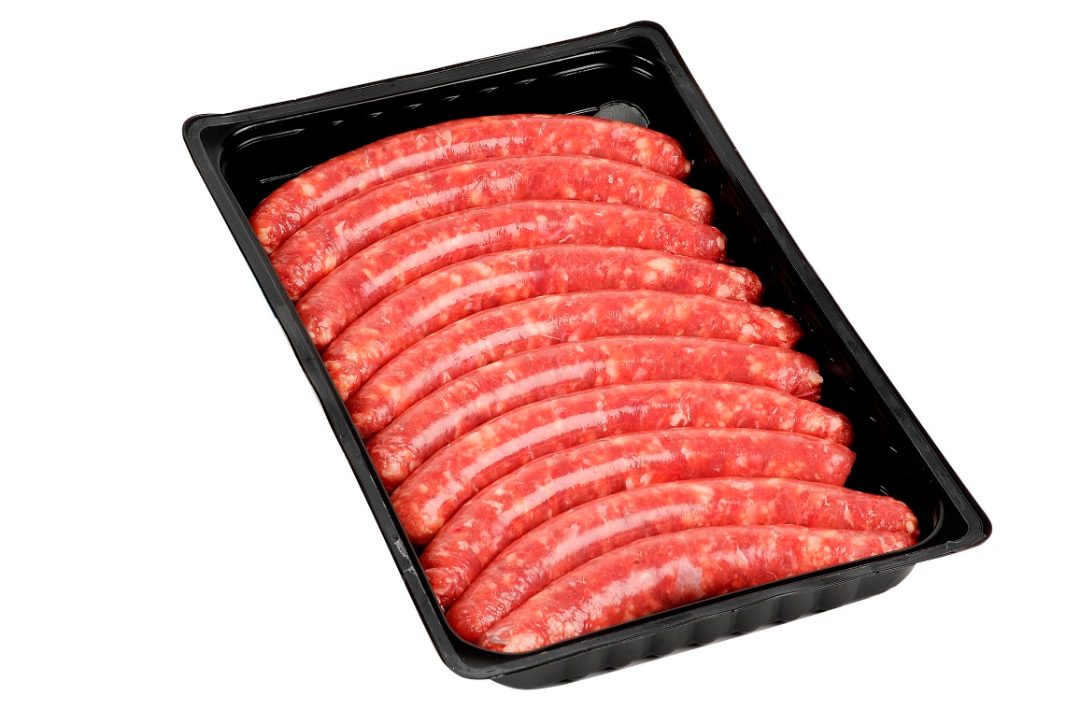
France – Poultry sausage (corizo, father rigaud, herbs, cheese, nature) – Salmonella

Gov france

Identification information of the recalled product

  • Product category Feed
  • Product subcategory Meats
  • Product brand name Neutral / Id’halal
  • Model names or references Poultry sausage corizo ​​Poultry sausage father rigaud poultry sausage herbs Poultry sausages cheese plain/chipo poultry sausage
  • Identification of products
    Date
    Use-by date between 02/20/2023 and 02/21/2023
  • Products List Product_list.pdfAttachment
  • Packaging Per 5kg, 2.6kg Under atmosphere
  • Marketing start/end date From 06/02/2023 to 13/02/2023
  • Storage temperature Product to be stored in the refrigerator
  • Health mark FR.69.135.001.CE
  • Further information The products were sold in the traditional department / butcher’s shop
  • Geographic area of ​​sale Whole France
  • Distributors See seller list
  • List of points of sale Vendor_list.pdf

Practical information regarding the recall

  • Reason for recall Presence of salmonella on an ingredient

Belgium – Coq des Prés brand chicken chipolatas – Salmonella

AFSCA

Recall of Coprobel SC
Product: Coq des Prés brand chicken chipolatas.
Problem: Possible presence of Salmonella.
Routine analyzes of the self-checking procedure of the Ardenne Volaille slaughterhouse have detected the possible presence of Salmonella in chipolatas of the Coq des Prés brand (see affected batches below). These chipolatas were made with chickens from Coprobel SC.

Coprobel SC has therefore decided, in agreement with the FASFC, to withdraw this product from sale and asks consumers not to consume this product. The products concerned (unopened) can be returned to the point of sale in which they were purchased, where they will be reimbursed.


Product description

– Product name: Organic chicken chipolatas
– Brand: Coq des Prés
– Use-by date (BBD) (“Use by”): 02/15/2023
– Batch numbers: 521963, 521964, 521957, 521987
– Sales period: from 02/09/2023 to 02/13/2023 –
Type of packaging: controlled atmosphere tray
– Weight: packs of 5 pieces or 2 kg

The product was distributed by:

– ​​Interbio – Rue de la Basse Sambre 24, 5140 Sombreffe
– Marma – FRED CHAFFARTLAAN 11, 3300 Tienen
– Isabelle – Chaussée Rue de l’Eglise 22, 6220 Fleurus
– Françoise Demand – RUE DE BELVAUX 4, 5377 Sinsin
– Bastin Joël – LA VAULX RICHARD 20, 4970 Stavelot
– Pont Farm – RUE DIEU LE GARDE 6A, 4280 Hannut – Degroote – FRUMONT 19
, 5520 Onhaye
– Graux Farm – RUE SART HELMAN 6, 5380 Fernelmont , contact: Mr. Rouchet francois.rouchet@coqdespres.be

Ireland – Salmonella infections more than double as one outbreak reported

Irish Times

Salmonella infections this year are more than double the level seen at the start of 2022, and one outbreak has occurred, linked to international travel.

It comes as last month’s recall of potentially infected chicken products continues, though health officials say no cases of salmonella are so far linked to this recall.

There were 39 cases of salmonellosis in the first five weeks of the year, according to the Health Protection Surveillance Centre (HPSC), compared with 18 in the same period last year. Six cases were recorded in the week up to February 4th.

One outbreak has been notified to the HPSC this year, involving fewer than five cases and associated with international travel, the Health Service Executive said.

Research – Assessing the Impact of Different Technological Strategies on the Fate of Salmonella in Chicken Dry-Fermented Sausages by Means of Challenge Testing and Predictive Models

MDPI

Abstract

Salmonella is the main relevant pathogen in chicken dry-fermented sausages (DFS). The safety of shelf-stable DFS must rely on the production process, which should not only prevent growth but promote inactivation of Salmonella. The aim of the study was to assess the behaviour of Salmonella during the production process of two types of low-acid chicken DFS. The impact of the use of starter culture, corrective storage and high-pressure processing (HPP) at different processing times was assessed through challenge testing, i.e., inoculating a cocktail of Salmonella into the meat batter (at 6 Log10 cfu/g) used for sausage manufacture. Sausages of medium (fuet-type, FT) and small (snack-type, ST) calibre were elaborated through ripening (10–15 °C/16 d) and fermentation plus ripening (22 °C/3 d + 14 °C/7 d). Physico-chemical parameters were analysed and Salmonella was enumerated throughout the study. The observed results were compared with the simulations provided by predictive models available in the literature. In FT, a slight decrease in Salmonella was observed during the production process while in ST, a 0.9–1.4 Log10 increase occurred during the fermentation at 22 °C. Accordingly, DFS safety has to be based on the process temperature and water activity decrease, these factors can be used as inputs of predictive models based on the gamma-concept, as useful decision support tool for producers. Salmonella lethality was enhanced by combining HPP and corrective storage strategies, achieving >1 and 4 Log10 reductions for FT and ST, respectively.

RASFF Alerts – Salmonella – Polish Chicken Products – Sesame Seeds – Rubbed Thyme – Chicken Products from Ireland- Live Razor Clams – Bay Leaves – Beef Brisket

RASFF

Salmonella Typhimurium in Batches of Chicken Products from Ireland in the Netherlands

RASFF

Salmonella in live razor clams (Ensis ensis) from the Netherlands in Belgium, Denmark, Italy, France, Luxembourg, Netherlands and Spain

RASFF

Presence of salmonella in bay leaves from Turkey in Spain

RASFF

Salmonella spp in Frozen Chicken breast fillet from Poland in the UK

RASFF

Salmonella spp. in rubbed thyme from Czech Republic in Germany

RASFF

Salmonella in sesame seeds from Nigeria in Turkey and Greece

RASFF

Salmonella Dublin in Frozen Beef brisket from Poland in Estonia and Finland

Ireland – Precautionary Extended Recall of Some Western Brand Raw Chicken Products Due to Possible Presence of Salmonella

FSAI

The Food Safety Authority of Ireland (FSAI) today advises that a precautionary extended food recall is underway by Western Brand of a number of specific raw chicken products due to the possible presence of Salmonella. This recall is linked to the ongoing investigation by the Department of Agriculture, Food and the Marine into incidences of Salmonella infection in a number of broiler flocks. To date, there have been no confirmed cases of human illness linked to this investigation. The FSAI is warning consumers who may have the affected chicken products at home not to eat them.

The products being recalled are listed in the food alert.

Dr Pamela Byrne, Chief Executive, FSAI has warned consumers not to eat the affected chicken products.

“If anyone has any of the affected chicken product at home, we are advising them not to eat it. To date, there have been no confirmed cases of human illness linked to this investigation. Just as a reminder to consumers, raw chicken should always be handled hygienically to prevent cross contamination with ready-to-eat food and raw chicken should never be washed. Always wash your hands after handling it and always wash any utensils you’ve used to prepare it. Raw chicken should always be cooked thoroughly before eating it.”

The FSAI is liaising with the Department of Agriculture, Food and the Marine in its ongoing investigation into broiler flocks and additional testing continues.

Research – Lysine-Derived Maillard Reaction Products Inhibit the Growth of Salmonella enterica Serotype Typhimurium

MDPI

Abstract

An emerging consumer trend to purchase minimally heated and ready-to-eat food products may result in processing methods that do not effectively reduce pathogenic populations. Crude Maillard reaction products (MRPs) are naturally generated compounds that have been shown to display antimicrobial effects against pathogens. Crude MRPs were generated from reducing sugars (fructose (Fru), glucose (Glc), ribose (Rib) or xylose (Xyl)) with lysine and the melanoidin equivalence was measured using an absorbance of 420 nm (Ab420). The relative antimicrobial activity of each MRP was measured by examining both the length of lag phase and maximum growth rate. MRPs were found to significantly shorten the lag phase and decrease the maximum growth rate of S. Typhimurium (p < 0.05). Glucose-lysine MRP (GL MRP) was determined to have the highest relative melanoidin (1.690 ± 0.048 at Ab420) and its efficacy against S. Typhimurium populations was measured at 37 °C and at pH 7.0 and estimated on xylose lysine deoxycholate (XLD) agar. GL MRP significantly reduced S. Typhimurium populations by >1 log CFU/mL at 8 and 24 h after inoculation (p < 0.05). GL MRPs also further decreased S. Typhimurium populations significantly under thermal stress condition (55 °C) compared to optimal (37 °C) by ~1 log CFU/mL (p < 0.05). Overall, GL MRP demonstrated effective antimicrobial activity against S. Typhimurium at 37 °C and 55 °C.

Research- Repeated cross-sectional study identifies differing risk factors associated with microbial contamination in common food products in the United Kingdom

Science Direct

Highlights

E. coli was found in 29–99% of the five food types studied.

Salmonella was higher in imported frozen chicken than domestic chilled chicken.

E. coli and Klebsiella detection were higher in summer and autumn for leafy greens.

Klebsiella detection was higher in summer for chicken and pork.

Vibrio contamination was common in raw prawns at 60.4%.

Abstract

All foods carry microbes, many of which are harmless, but foods can also carry pathogens and/or microbial indicators of contamination. Limited information exists on the co-occurrence of microbes of food safety concern and the factors associated with their presence. Here, a population-based repeated cross-sectional design was used to determine the prevalence and co-occurrence of Escherichia coli, Klebsiella spp., Salmonella spp. and Vibrio spp. in key food commodities – chicken, pork, prawns, salmon and leafy greens. Prevalence in 1,369 food samples for these four target bacterial genera/species varied, while 25.6% of all samples had at least two of the target bacteria and eight different combinations of bacteria were observed as co-occurrence profiles in raw prawns. Imported frozen chicken was 6.4 times more likely to contain Salmonella than domestic chicken, and imported salmon was 5.5 times more likely to be contaminated with E. coli. Seasonality was significantly associated with E. coli and Klebsiella spp. contamination in leafy greens, with higher detection in summer and autumn. Moreover, the odds of Klebsiella spp. contamination were higher in summer in chicken and pork samples. These results provide insight on the bacterial species present on foods at retail, and identify factors associated with the presence of individual bacteria, which are highly relevant for food safety risk assessments and the design of surveillance programmes.

Ireland – Extended recall by Western Brand of some batches of various raw chicken products due to the possible presence of Salmonella

FSAI

Summary
Category 1: For Action
Alert Notification: 2023.02 (Update 1)
Product: Please see table below.
Batch Code: Please see table below.
Country Of Origin: Ireland

Message:

Further to Food Alert 2023.02 Western Brand is undertaking a precautionary recall of further batches of various raw chicken products due to the possible presence of Salmonella. Please see table below for details of the implicated batches. Point-of-sale recall notices will be displayed in stores supplied with the implicated batches.

Nature Of Danger:

People infected with Salmonella typically develop symptoms between 12 and 36 hours after infection, but this can range between 6 and 72 hours. The most common symptom is diarrhoea, which can sometimes be bloody.  Other symptoms may include fever, headache and abdominal cramps. The illness usually lasts 4 to 7 days. Diarrhoea can occasionally be severe enough to require hospital admission. The elderly, infants, and those with impaired immune systems are more likely to have a severe illness.

Action Required:

Manufacturers, wholesalers, distributors, caterers & retailers:

Retailers are requested to remove the implicated batches from sale and to display a point-of-sale recall notice in stores where the affected batches were sold.

Consumers:

Consumers are advised not to eat the implicated batches. If the chicken has already been consumed, cooking should remove the risk. Raw chicken should always be handled hygienically when defrosting and preparing it, and also cooked thoroughly before eating it.

Western brand Chicken Products Table