Category Archives: Research

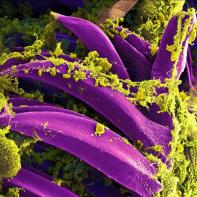
Norway – Norway investigates source of Yersinia increase

Food Safety News

kswfoodworld.com

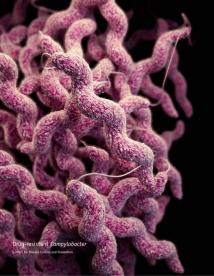
Image CDC

Officials in Norway are investigating an increase in Yersinia infections in the past month.

The Norwegian Institute of Public Health (Folkehelseinstituttet) reported a Yersinia enterocolitica O3 infection has been detected in 13 people living in several counties.

Outbreak investigations to find the source of infection have been started with local authorities, the Veterinary Institute and Norwegian Food Safety Authority (Mattilsynet).

Patients are between 2 and 57 years old and most are women. They live in Agder, Oslo, Rogaland and Trøndelag.

Bacteria with similar DNA profiles have been found in all 13 people and samples were taken during the last two weeks of May and first week of June.

Research – The European Union control strategy for Campylobacter spp. in the broiler meat chain

Wiley Online

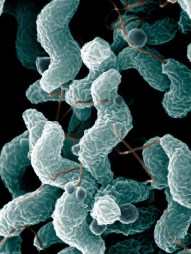
Campylobacter

Image CDC


Campylobacter is the most common cause of bacterial gastroenteritis worldwide and the most frequently reported foodborne pathogen in the European Union (EU). While campylobacteriosis is generally self‐limiting, some patients could develop severe sequelae. The predominant source of infection is poultry. This review addresses the most relevant factors influencing the prevalence and contamination level of Campylobacter spp. in the poultry chain continuum. The emphasis was put on the novel control strategy for Campylobacter that is based on evidence‐based risk assessment and the introduction of process hygiene criterion intended for monitoring the prevalence and counts of Campylobacter spp. on broiler carcasses at slaughter level. The reduction of Campylobacter spp. in the poultry meat chain in the EU can only be achieved with an integrated meat safety assurance approach. This includes primary interventions at the level of the poultry farm, implementation of effective control measures at slaughterhouses, and fostering awareness campaigns aimed at consumers.

Research – Transmission of Legionnaires’ Disease through Toilet Flushing

CDC CDC legionella

We describe 2 cases of healthcare-associated Legionnaires’ disease in patients in France hospitalized 5 months apart in the same room. Whole-genome sequencing analyses showed that clinical isolates from the patients and isolates from the room’s toilet clustered together. Toilet contamination by Legionella pneumophila could lead to a risk for exposure through flushing.

USA -USDA Will Expand non-O157 STEC Testing to Ground Beef

Food Poisoning Bulletin

According to an announcement in the Federal Register, the USDA will expand non-O157 STEC (Shiga toxin-producing E. coli) testing to ground beef, bench trim, and other raw ground beef components. The non-O157 strains include what’s called the “Big Six” E. coli strains: E. coli O26, O45, O103, O111, O121, and O145.

Research – Reusing chicken litter shows benefits against Salmonella

Feed Stuffs


Broiler chickens raised for meat need millions of tons of litter, or bedding material, each year. Reusing chicken litter can save costs, but the practice has some health and safety concerns, according to an announcement from the American Society of Agronomy.

A new study shows that the environment in reused poultry litter can deter growth of pathogens like salmonella.

Research – Campylobacter infection major cause of child stunting

Medical Express

campy2

Image CDC

Gastrointestinal infection with Campylobacter plays a major role in the stunting of children in urban Bangladesh, say the authors of a new study.

The bacteria Campylobacter, which people get from contaminated food and drinks, can lead to severe diarrhoea. Infections of Campylobacter in children under the age of two years are especially frequent in developing countries. According to a WHO factsheet, Campylobacter diarrhoea’s duration and possible complications makes it highly important from a socio-economic perspective.

Stunting may result in neurodevelopmental delays and metabolic disorders later in life. It is a major global health challenge particularly in South Asia where 35 percent of all children are stunted. Worldwide, approximately 144 million children are stunted, according to the UN Children’s Fund.

Research -The European Union control strategy for Campylobacter spp. in the broiler meat chain

Wiley Online

Campylobacter is the most common cause of bacterial gastroenteritis worldwide and the most frequently reported foodborne pathogen in the European Union (EU). While campylobacteriosis is generally self‐limiting, some patients could develop severe sequelae. The predominant source of infection is poultry. This review addresses the most relevant factors influencing the prevalence and contamination level of Campylobacter spp. in the poultry chain continuum. The emphasis was put on the novel control strategy for Campylobacter that is based on evidence‐based risk assessment and the introduction of process hygiene criterion intended for monitoring the prevalence and counts of Campylobacter spp. on broiler carcasses at slaughter level. The reduction of Campylobacter spp. in the poultry meat chain in the EU can only be achieved with an integrated meat safety assurance approach. This includes primary interventions at the level of the poultry farm, implementation of effective control measures at slaughterhouses, and fostering awareness campaigns aimed at consumers.


UK – Tesco’s chicken Campylobacter results above FSA target

Food Safety News


The mega-supermarket chain Tesco has reported 9 percent of chickens tested in the first quarter this year had the highest level of Campylobacter contamination.

This is above the Food Standards Agency (FSA) target of 7 percent and Tesco’s own benchmark of 5 percent of birds with more than 1,000 colony forming units per gram (cfu/g) of Campylobacter.

Tesco data shows 9 percent of 132 samples from January to March had the top level of contamination. It is double the percentage reported in the previous quarter.

“The safety and quality of the food we sell remains our top priority. The results this quarter were affected by a reduced sample size compared to previous tests, and we believe we’ll see levels return to within our expected range in future,” said a Tesco spokesperson.

Another large retailer Asda has not yet provided 1Q figures for 2020 and did not respond to a request for comment.

Korea – ‘Special bank will manage, distribute food poisoning bacteria’

Korea Biomed

The Ministry of Food and Drug Safety said that its food poisoning bacteria resource center has been designated as a bank specializing in managing the pathogen.

It is the first food poisoning bacteria bank. The nation has six specialized banks dealing with pathogen resources in the areas of viruses and zoonotic diseases.

With the latest designation, the new bank will preserve, manage, and distribute the food poisoning bacteria that are separated from food as a national resource.


Research – Mom was right about not touching slime; researchers looking at pathogens in food facilities

Food Safety News biofilm

New research underway seeks to determine how and where bacteria hide in food processing plants so that they can be eliminated, to the benefit of public health and the bottom line of food companies.

The project involves scientists at Texas A&M, Stanford University, and the USDA’s Agricultural Research Service U.S. Meat Animal Research Center’s pilot meat processing facility in Clay Center, NE. Their work has the backing of a $479,000 grant from the U.S. Department of Agriculture (USDA).

While the project could ultimately benefit food facilities from fresh produce processing plants to candy makers, the researchers will be taking an extra close look at the meat industry.

Led by Sapna Chitlapilly Dass, a faculty member in Texas A&M’s Department of Animal Science, the team will be looking at “hotspots” that easily harbor biofilms, also known as slime. Dass and the other researchers are trying to figure out not only where bacteria like Salmonella, Listeria, and E. coli O157: H7 are hiding, but what sanitizers they have become resistant to.