Category Archives: Research

Research – Use of Oxidative Stress Responses to Determine the Efficacy of Inactivation Treatments on Cryptosporidium Oocysts

MDPI

crypto

Cryptosporidium oocysts are known for being very robust, and their prolonged survival in the environment has resulted in outbreaks of cryptosporidiosis associated with the consumption of contaminated water or food. Although inactivation methods used for drinking water treatment, such as UV irradiation, can inactivate Cryptosporidium oocysts, they are not necessarily suitable for use with other environmental matrices, such as food. In order to identify alternative ways to inactivate Cryptosporidium oocysts, improved methods for viability assessment are needed. Here we describe a proof of concept for a novel approach for determining how effective inactivation treatments are at killing pathogens, such as the parasite Cryptosporidium. RNA sequencing was used to identify potential up-regulated target genes induced by oxidative stress, and a reverse transcription quantitative PCR (RT-qPCR) protocol was developed to assess their up-regulation following exposure to different induction treatments. Accordingly, RT-qPCR protocols targeting thioredoxin and Cryptosporidium oocyst wall protein 7 (COWP7) genes were evaluated on mixtures of viable and inactivated oocysts, and on oocysts subjected to various potential inactivation treatments such as freezing and chlorination. The results from the present proof-of-concept experiments indicate that this could be a useful tool in efforts towards assessing potential technologies for inactivating Cryptosporidium in different environmental matrices. Furthermore, this approach could also be used for similar investigations with other pathogens. View Full-Text

Research – The serious and long-term effects of foodborne illness

MSU

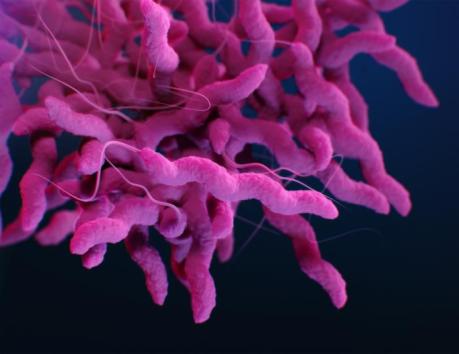
Campylobacter kswfoodworld

Many people think if they eat something “bad” they might spend some uncomfortable time in the restroom then go on with their lives in a day or two. Actually, foodborne illness can lead to chronic disease, permanent disability and even death. Here are some of the lesser-known facts about the long term effects of food borne pathogens.

Reactive arthritis, a type of joint inflammation that affects the knees, ankles or feet can develop after being exposed to Campylobacter jejuni  or Salmonella. Reactive arthritis usually lasts fewer than 6 months, but this condition may recur or become chronic arthritis. Campylobacter is found in raw and undercooked poultry, unpasteurized milk and contaminated water. Salmonella is also found in eggs, undercooked meat and poultry, and can be transferred to other foods through feces. Campylobacter infection afflicts millions of Americans annually and hospitalizes more than 10,000. Campylobacter is associated with Guillain-Barré syndrome (GBS). GBS patients can become permanently disabled and paralyzed; many require hospital care. Campylobacter also can trigger arthritis, heart infections and blood infections.

Foodborne illnesses caused by bacteria also increase the risk of developing irritable bowel syndrome (IBS). IBS is a disorder of unknown cause that is associated with abdominal pain, bloating, and diarrhea or constipation or both. There is no cure for IBS.

Children are the most likely to be infected and have the most serious complications from E. coli O157:H7. They can develop hemolytic uremic syndrome (HUS), HUS can lead to death, or in some cases t long-term or permanent health problems, including end-stage kidney disease, neurological complications, and insulin-dependent diabetes. Adults who had recovered from E. coli O157:H7 infections had increased risks of high blood pressure, kidney problems and cardiovascular disease. E. Coli is found in undercooked ground beef, unpasteurized (raw) milk and juice, soft cheeses made from raw milk, and raw fruits and vegetables (such as sprouts). It can also be found in contaminated water and feces of infected people.

Listeria monocytogenes infects thousands of Americans every year and has been associated with infections of the brain and spinal cord, resulting in serious neurological dysfunctions or death. Most reported cases occur in children under the age of 4, and about 1 in 5 people afflicted die as a result of the infection. In pregnant women, listeriosis can cause miscarriage, premature birth or stillbirth.

Listeriosis survivors often are left with serious neurological dysfunctions, including seizures, paralysis and impaired ability to see, hear, swallow or speak. Severe cases often result in partial to total impairment and can require life-long residential care with no possibility of work. Listeria is found in ready-to-eat deli meats and hot dogs, refrigerated pâtés or meat spreads, unpasteurized (raw) milk and dairy products, soft cheese made with unpasteurized milk, such as queso fresco, feta, brie, camembert, refrigerated smoked seafood and raw sprouts.

The long-term effects of foodborne disease are still not fully understood. New findings unfold as research is performed, but until then, taking foodborne illness seriously can go a long way in protecting health. This is another instance where prevention truly is the best medicine.

Finland – Salmonella outbreak affects 450 in Jyväskylä, Linked to imported lettuce

Outbreak News Today

In a follow-up on the salmonella outbreak in the Jyväskylä region of Finland, the City of Jyväskylä said imported lettuce served in day care centres has been confirmed as the source of an outbreak of salmonella bacterial infections that affected about 450 children and day care centre staff.

The salad contained domestic cucumber, peas and foreign iceberg lettuce. Domestically-produced cucumbers and peas were also suspected to be the cause of the outbreak, but the city said tests had revealed no connection between these products and the salmonella infections.

The most likely source of Salmonella is iceberg lettuce, which came to Finland from Germany via Sweden.

Research – FAO’s work on food safety and quality

FAO

With an estimated 600 million cases of foodborne illnesses annually, unsafe food is a threat to human health and economies globally. Therefore, ensuring food safety is a public health priority and an essential step to achieving food security. Effective food safety and quality control systems are key not only to safeguarding the health and well-being of people, but also to fostering economic development and improving livelihoods by promoting access to domestic, regional and international markets.

The Food Safety and Quality Unit supports the strengthening of systems of food safety and quality control at national, regional and international levels. This involves:

  • Strengthening national food control regulatory capacities and global trade facilitation by providing leadership in supporting countries in the assessment and progressive development of food control systems, including food safety policy and food control regulatory frameworks;
  • Supporting development of institutional and individual capacities for food control and food safety management, including the management of food safety emergencies;
  • Supporting science-based food safety governance and decisions by providing sound scientific advice (through the JECFA and JEMRA expert bodies) to underpin food safety standards at national, regional and international levels;
  • Enhancing food safety management along food chains to prevent diseases and trade disruptions by supporting developing countries to apply risk-based food safety management along food chains that are appropriate for national and local production systems and in compliance with Codex texts;
  • Providing food safety platforms, databases and mechanisms which support networking, dialogue and global access to information and facilitating effective communication internationally on key food safety issues;
  • Developing food safety intelligence and foresight by becoming a major actor in the collection, analysis and communication of food chain intelligence; and
  • Evaluating new technologies to improve food safety and protect public health.

FAO is a recognized leader in the development of global food safety initiatives and translating these into country level action. The Food Safety and Quality Programme supports an integrated and multidisciplinary approach to food safety management and holistic and feasible “food chain” solutions to specific food safety problems as laid out in FAO’s Strategy for Improving Food Safety Globally. The foundations for this approach are based on science.

FAO’s Food Safety and Quality Unit often works in partnership with national and international bodies and organizations where such partnerships are mutually beneficial and where there is a compatibility of mandate and guiding principles.

Ireland – A Foodborne Outbreak of Cryptosporidiosis Likely Linked to Salad Leaves

IMJ

Click to access A-Foodborne-Outbreak-of-Cryptosporidiosis-Likely-Linked-to-Salad-Leaves.pdf

A Silver Lining of the Pandemic: Whole-Genome Sequencing and Food Safety

FAO

Zooming out and taking a broader perspective, WGS benefits are particularly visible in microbiology: WGS provides rapid identification and characterization of microorganisms with a level of precision that no tool has ever reached before. Through WGS, specific novel antibiotic targets (resistance genotypes) are being identified in the area of antimicrobial resistance (AMR)studies. It is a significant stepping-stone because more focused surveillance and more targeted diagnostics and drug development are made possible by identifying them and correlating them to the observed phenotypes. The level of detail provided by WGS makes it possible to refine case definitions precisely, which in turn allows for faster investigation of outbreak clusters, thus preventing additional cases of diseases sooner. For example, in 2014, a multinational Salmonella outbreak investigation was conducted in Europe where WGS was used to identify the root cause, and the data collected pointed to some egg farms in a specific location. While WGS was essential in the investigation, it was the international data-sharing efforts that made the investigation successful and conclusive. Another example is the outbreak investigation of Listeria linked to enoki mushrooms in Canada where the specific sequence of the Listeria strain was internationally shared, resulting in successfully tracing the multinational food safety outbreak and the rapid recall of the affected products.

Research – A Review of Significant European Foodborne Outbreaks in the Last Decade

Journal of Food Protection

Vegetable Bacteria Danger

Foodborne diseases remain a global public health challenge worldwide. The European surveillance system on multistate foodborne outbreaks integrates elements from public and animal health, and the food chain for the early detection, assessment, and control. This review aims to describe the significant outbreaks that occurred in Europe in the last decade. Their significance and relevance in public health laid in the changes, improvements, and novelties that derived and that pushed towards the building of a safer food system in the European Union, certainly driven by the One Health approach. In 2011, a point source monoclonal outbreak of infections caused by Escherichia coli serotype O104:H4 contaminating sprouted seeds recorded hundreds of cases of haemolytic-uremic syndrome and several fatalities. In 2015, a prolonged outbreak of Listeria monocytogenes infections caused by the contamination of frozen corn affected Europe with 47 cases and nine deaths. In 2016, a persistent polyclonal outbreak of Salmonella Enteritidis was linked to the consumption of eggs and was associated with hundreds of cases. These outbreaks commonly highlighted the importance of sharing data (e.g. sequencing and tracing data) with rapidity and the need for harmonizing bioinformatics outputs and computational approaches to facilitate foodborne detection and investigation. Also, they led to the setting of the legal framework for the development of a European collaboration platform to share whole genome sequences data. These outbreaks enabled the enforcement of the existing hygiene and food safety provisions and led the development of new hygiene guidelines and best practises. This paper also briefly touches upon the new trends in information technologies that are being explored in the field of food traceability and safety. Their application aims to enhance the traceability of food throughout the supply chain to redirect the conventional tracing system towards a digitized supply chain.

USA – FDA Releases Cyclospora Prevention, Response and Research Action Plan

FDA

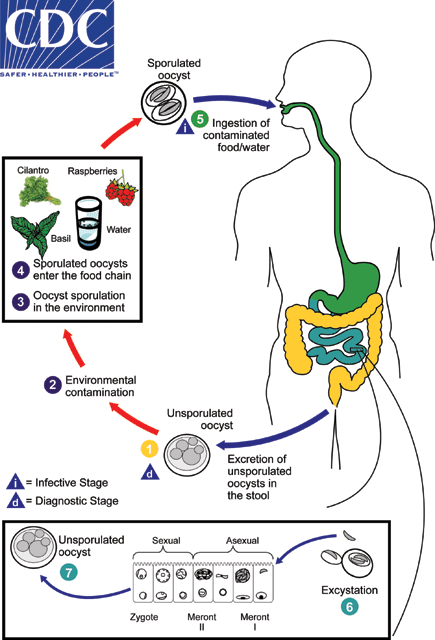
Cyclospora_LifeCycle201

As part of our ongoing efforts to combat foodborne illness and aligned with our New Era of Smarter Food Safety initiative, today, the U.S. Food and Drug Administration released the Cyclospora Prevention, Response and Research Action Plan. Modeled after our Leafy Greens Shiga toxin-producing E. coli (STEC) Action Plan, the plan focuses on improving prevention, enhancing response activities and filling knowledge gaps in order to help prevent Cyclospora contamination of foods and to help prepare for responding to future outbreaks.

Cyclosporiasis is a foodborne intestinal illness caused by Cyclospora cayetanensis. The most common symptoms of cyclosporiasis are diarrhea, weight loss, nausea and fatigue. Cyclospora is historically associated with imported produce or travel outside the U.S.; however, we have also detected Cyclospora in domestically produced foods in recent years.

The FDA first documented Cyclospora in domestically grown produce (cilantro) in 2018 as part of an ongoing sampling assignment of fresh herbs. The testing was done as part of a surveillance sampling, and the cilantro sample was not linked to any illnesses or outbreaks. Not long after, domestically grown produce was again associated with an outbreak linked to a salad mix. During the FDA’s investigations into this outbreak, Cyclospora was also detected in an unused package of the salad containing domestically grown produce.

The availability of new testing methods for Cyclospora developed at the FDA’s Center for Food Safety and Applied Nutrition played an important role in helping the FDA identify these positive samples of Cyclospora in the cilantro and in the salad mix. The number of reported cases of this foodborne illness has been rising in recent years, in part because of better diagnostic and detection methods. According to the Centers for Disease Control and Prevention, there have been roughly 6,000 domestically acquired cases of Cyclospora over the last three years. The number of reported cases typically rises during the spring and summer, usually in May, June and July. Rising case numbers and the emergence of Cyclospora contamination in domestically grown produce prompted the FDA to create the Cyclospora Task Force in 2019. The task force is comprised of multidisciplinary experts across the FDA and CDC, with the goal of reducing the public health burden of foodborne illness caused by Cyclospora in produce.

The task force formulated the action plan announced today, which will serve as a strategic guide to improve prevention, enhance response activities and fill knowledge gaps about the presence of Cyclospora in or on foods. In the area of prevention, the new action plan highlights how we’re addressing this food safety issue through the development and delivery of prevention-focused education materials and outreach to stakeholders. We’re also working with industry to encourage the development of rapid test kits to specifically detect Cyclospora to better facilitate industry testing and root cause analysis activities. In addition, we plan to collaborate with industry to look for ways to more effectively control Cyclospora in the environment and on farms.

In the area of response, the plan is focused on expanding laboratory capacity across the FDA, state, foreign partners and academia to sample and test for Cyclospora, providing greater capacity to investigate during outbreak events. The FDA is also developing a new investigational tool to help guide assessments of farms potentially implicated in a Cyclospora outbreak to determine potential sources and routes of contamination.

Given the emerging nature of Cyclospora contamination in domestic produce, a large number of action items in this plan are aimed at addressing knowledge gaps. In this area, the FDA intends to work with CDC to better understand the case distribution of cyclosporiasis across the U.S. and to advance genotyping methods in clinical, food and environmental samples that will allow us to genetically link clinical cases to food products and environments identified by traceback during an outbreak. As part of this plan, the FDA also intends to work with industry and academia to better understand the prevalence of Cyclospora in agricultural water and to encourage data sharing to help stakeholders identify trends associated with Cyclospora contamination. Our action plan underscores the importance of collaboration across industry, academia, state, federal and foreign government partners, and other stakeholders to reduce the risks and public health burden caused by foodborne Cyclospora. We’ll continue updating this plan as actions are completed and new actions are identified.

While the U.S. has one of the safest food supplies in the world, we are focused on making it better. The FDA is focused on working with all stakeholders to achieve the goals identified in this Cyclospora Prevention, Response and Research action plan.

Research – Cyclospora Infection: What to Know

WebMD

220px-Cyclospora_cayetanensis_stained

parasite that’s too tiny to see without a microscope can make you ill if you eat or drink the food or water it fouls. The illness is called a cyclospora infection (or cyclosporiasis), and it can bring on problems like watery diarrhea and stomach pain.

About 15,000 people in the U.S. catch it each year, and outbreaks of the infection have been linked to different kinds of imported fresh produce.

Here’s what you need to know to stay safe and lower your chances of catching this bug.  See at the link above.

Research – Effect of Gaseous Ozone on Listeria monocytogenes Planktonic Cells and Biofilm: An In Vitro Study

MDPI

Among food-borne pathogens, Listeria monocytogenes continues to pose concerns to food business operators due to its capacity to form biofilm in processing environments. Ozone may be an eco-friendly technology to control microbial contaminations, but data concerning its effect on Listeria monocytogenes biofilm are still limited. In this study, the effect of gaseous ozone at 50 ppm on planktonic cells and biofilm of reference and food-related Listeria monocytogenes strains was evaluated. Ozone caused a reduction in microbial loads of 3.7 ± 0.4 and 3.9 ± 0.4 Log10 CFU/mL after 10 and 30 min, respectively. A complete inactivation of planktonic cells after 6 h of treatment was observed. Biofilm inhibition and eradication treatments (50 ppm, 6 h) resulted in a significant decrease of the biofilm biomass for 59% of the strains tested, whilst a slight dampening of live cell loads in the biofilm state was observed. In conclusion, gaseous ozone is not sufficient to completely counteract Listeria monocytogenes biofilm, but it may be useful as an additional tool to contrast Listeria monocytogenes free-living cells and to improve the existing sanitization procedures in food processing environments. View Full-Text