Category Archives: Pathogen

Canada – Food Alerts – Salmon – Listeria – Clam Stew – Boutulinum – Nut Butters – Salmonella

CFIA – The public warning issued on March 15, 2013 has been expanded to include additional products because the products may be contaminated with Clostridium botulinum

The Canadian Food Inspection Agency (CFIA) is warning the public not to consume the Bar Clams and Bar Clam Stew described below because they may be contaminated with Clostridium botulinum.  Toxins produced by these bacteria may cause botulism, a life-threatening illness.

CFIA – The Canadian Food Inspection Agency (CFIA) is warning the public not to consume and retailers, restaurants and institutions not to sell or use the nut butters, peanuts, sugar or tahini described below because the products may be contaminated with Salmonella or other harmful bacteria.

These products have been distributed in Ontario and Quebec and may have been distributed in other provinces as well.

Consumers who cannot determine the original product identity are  advised to check with their retailer to determine if they have one of  the affected products.

There have been no reported illnesses associated with the consumption of these products.

CFIA – The Canadian Food Inspection Agency (CFIA) and Central-Epicure Food Products Ltd. are warning the public not to consume Central-Epicure brand Smoked Atlantic Salmon because it may be contaminated with Listeria monocytogenes.

There have been no reported illnesses associated with the consumption of this product.

The manufacturer, Central-Epicure Food Products Ltd., Toronto, Ontario, is voluntarily recalling the affected product from the marketplace.  The CFIA is monitoring the effectiveness of the recall.


USA – Salted Black Beans – Recall – Clostridium botulinum

Food Poisoning Bulletin Clost

GL Food Wholesale, Golden Dharma International Corp., Waylong Marketing, and Mandalay Trading Corporation are recalling Tausi Brand Salted Black Beans because they may be contaminated with Clostridium botulinum or other spoilage organisms. The recalls were announced in the weekly FDA enforcement report. There are three separate recalls because the product codes and “best by” dates are different and because the distribution of the product is different for each firm.

The beans are in a 180 gram (6.34 ounce) package, 100 cans to the carton. The product is in a two piece can with a single seam. The can is wrapped with a label containing red, yellow, and black text.

USA – FDA – Recall – Pet Food – Salmonella

FDAFDA

Jones Natural Chews Co of Rockford, IL is recalling 245 boxes of Woofers (beef patties) because it has the potential to be contaminated with Salmonella. Salmonella can affect animals and there is risk to humans from handling contaminated pet products. People handling dry pet food and/or treats can become infected with Salmonella, especially if they have not thoroughly washed their hands after having contact with the chews or any surfaces exposed to these products.

Healthy people infected with Salmonella should monitor themselves for some or all of the following symptoms: nausea, vomiting, diarrhea or bloody diarrhea, abdominal cramping and fever. Rarely, Salmonella can result in more serious ailments, including arterial infections, endocarditis, arthritis, muscle pain, eye irritation, and urinary tract symptoms. Consumers exhibiting these signs after having contact with this product should contact their healthcare providers.

Pets with Salmonella infections may be lethargic and have diarrhea or bloody diarrhea, fever, and vomiting. Some pets will have only decreased appetite, fever and abdominal pain. Infected but otherwise healthy pets can be carriers and infect other animals or humans. If your pet has consumed the recalled product and has these symptoms, please contact your veterinarian.

The recall was the result of a routine sampling program by Colorado Department of Agriculture Feed Program which revealed that the finished products contained the bacteria.

RASFF Alerts – Salmonella – Histamine – Aflatoxin

RASFF – Salmonella typhimurium (presence /25g) in frozen turkey breasts from Poland in Denmark

RASFF – Histamine (346 mg/kg – ppm) in frozen cobia (Rachycentron candum) from Indonesia in Germany

RASFF – Aflatoxins (B1 = 7.4; Tot. = 7.8 µg/kg – ppb) in groundnut kernels from India, via the Netherlands in Germany

RASFF – Aflatoxins (B1 = 117.5 / B1 = 102.5 µg/kg – ppb) in maize from Hungary in Germany

UK – Research – Guidance – Pseudomonas aeruginosa in Water Systems

Health Protection Scotland

Guidance on management of Pseudomonas aeruginosa in water systems

On 12 March, the UK Department of Health published an addendum to the Health Technical Memorandum 04-01 Water sources and potential Pseudomonas aeruginosa contamination of taps and water systems – Advice for augmented care units.

The document is concerned with controlling and minimising the risk of morbidity and mortality due to P. aeruginosa associated with water outlets and provides guidance on:

  • forming a Water Safety Group and developing water safety plans
  • assessing the risk to patients when water systems become contaminated with P. aeruginosa or other opportunistic pathogens
  • remedial actions to take when a water system becomes contaminated with P. aeruginosa
  • protocols for sampling, testing and monitoring water for P. aeruginosa.

The guidance is directed towards healthcare organisations providing patient care in augmented care settings, and is specifically aimed at estates and facilities departments, and infection prevention and control teams. [Source: DH News Release, 12 March 2013. http://www.dh.gov.uk/health/2013/03/pseudomonas-addendum]

In Scotland, the same issues have been addressed in Health Protection Scotland’s Guidance for neonatal units (NNUs) (levels 1, 2 & 3) adult and paediatric intensive care units (ICUs) in Scotland to minimise the risk of Pseudomonas aeruginosa infection from water. This is due for imminent publication with an accompanying CEL letter. SHTM 04-01 Parts A&B have also been amended to reflect this latest guidance and will be published on the Health Facilities Scotland website along with the new Part G (following a consultation period) at the end of March.

USA – FDA Tips to Feed Pets Without Contracting Salmonella

FDAFDA

The Food and Drug Administration is giving consumers, especially reptile owners, tips on how to prevent Salmonella infection from handling feeder rodents and reptiles. Feeder rodents are mice and rats—both frozen and live—used to feed some reptiles, such as certain snakes and lizards, as well as some amphibians. Feeder rodents, reptiles, and amphibians can be sources of Salmonella infection for people.

Salmonellosis is an infection with bacteria called Salmonella. People get salmonellosis by ingesting Salmonella germs. Persons infected with Salmonella develop diarrhea, fever, and abdominal cramps 12-72 hours after infection. The illness usually lasts 4-7 days, and most persons recover without treatment. However, the illness can be serious, even fatal, in some people. Children under 5 years of age, the elderly, and people with weakened immune systems are at higher risk for salmonellosis and may develop more severe illness.

Rodents and reptiles can naturally carry Salmonella in their intestines but show no signs of illness. The animals shed the bacteria in their feces and droppings. These, in turn, contaminate the environment with Salmonella, including the outside of the animals’ bodies and their habitats. Freezing does not kill Salmonella, so both frozen and live feeder rodents can be contaminated with these germs. Over 500 human cases of salmonellosis in three countries, including the U.S., were linked to frozen rodent exposure between 2008 and 2010.

People may become infected with Salmonella after handling feeder rodents, reptiles, or amphibians, surfaces that have been in contact with these animals, or the environment in which the animal lives.

Contaminated surfaces may include countertops, microwave ovens, refrigerators and freezers, kitchen utensils, and glasses and bowls used to store, thaw, and prepare frozen feeder rodents. Reptile and rodent habitats, including their cages or enclosures, bedding, basking rocks, food and water dishes, and other objects in their cages or enclosures may also be contaminated with Salmonella. Germs picked up from touching the animal or habitat can be spread to other people or surfaces. Therefore, people should wash their hands thoroughly with soap and water right after touching these animals, their food, or anything in the area where they live and roam. Running water and soap are best, but hand sanitizers may be used if running water and soap are not available.

UK – FSA – HPA – Cryptosporidum 2012 Outbreak

FSA763px-Cryptosporidium_parvum_01

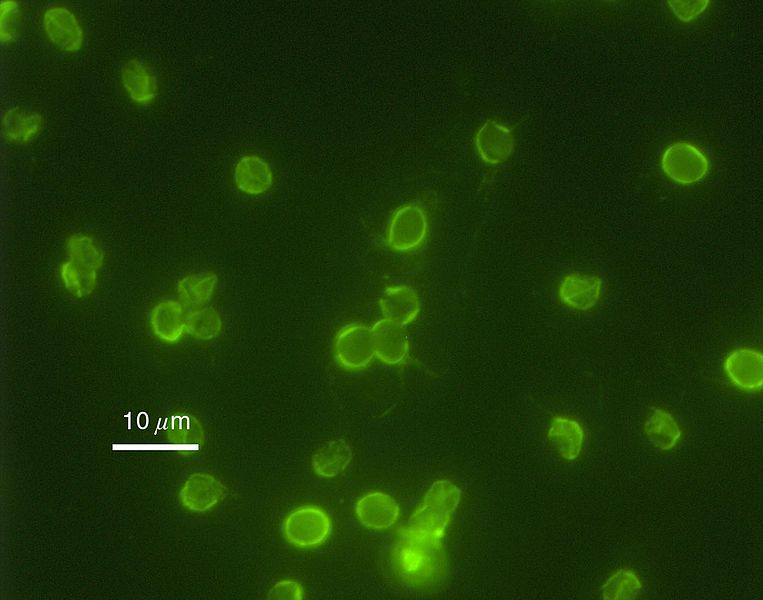
The Health Protection Agency (HPA) today published findings of an investigation into an outbreak of Cryptosporidium infection that affected around 300 people in England and Scotland in May 2012.

The Food Standards Agency was part of the outbreak control team, led by the HPA, and gathered information on the production and distribution of salad vegetables to help identify the likely source of the outbreak.

The full HPA statement can be read via this HPA link

Research – Norovirus Shedding

Cambridge Journals OnlineNorovirus

Norovirus is a common cause of gastroenteritis in all ages. Typical infections cause viral shedding periods of days to weeks, but some individuals can shed for months or years. Most norovirus risk models do not include these long-shedding individuals, and may therefore underestimate risk. We reviewed the literature for norovirus-shedding duration data and stratified these data into two distributions: regular shedding (mean 14–16 days) and long shedding (mean 105–136 days). These distributions were used to inform a norovirus transmission model that predicts the impact of long shedders. Our transmission model predicts that this subpopulation increases the outbreak potential (measured by the reproductive number) by 50–80%, the probability of an outbreak by 33%, the severity of transmission (measured by the attack rate) by 20%, and transmission duration by 100%. Characterizing and understanding shedding duration heterogeneity can provide insights into community transmission that can be useful in mitigating norovirus risk.

RASFF Alerts – Salmonella in Feed

RASFF – Salmonella Senftenberg (presence /25g) in rape seed from Estonia in Finland

RASFF – Salmonella Bredeney (presence /25g) in organic soybean meal from China in Cyprus

RASFF – Salmonella Senftenberg (1out of 10 samples /25g) in soy bean meal pellets from Brazil, via Germany in Sweden

RASFF Alerts – Norovirus –

RASFF – Norovirus (genogroup I and II detected) in oysters from Spain in Norway

RASFF – Norovirus (Norovirus GGI and GGII found in all 4 samples) in chilled oysters (Crassostrea Gigas) from the Netherlands in Denmark